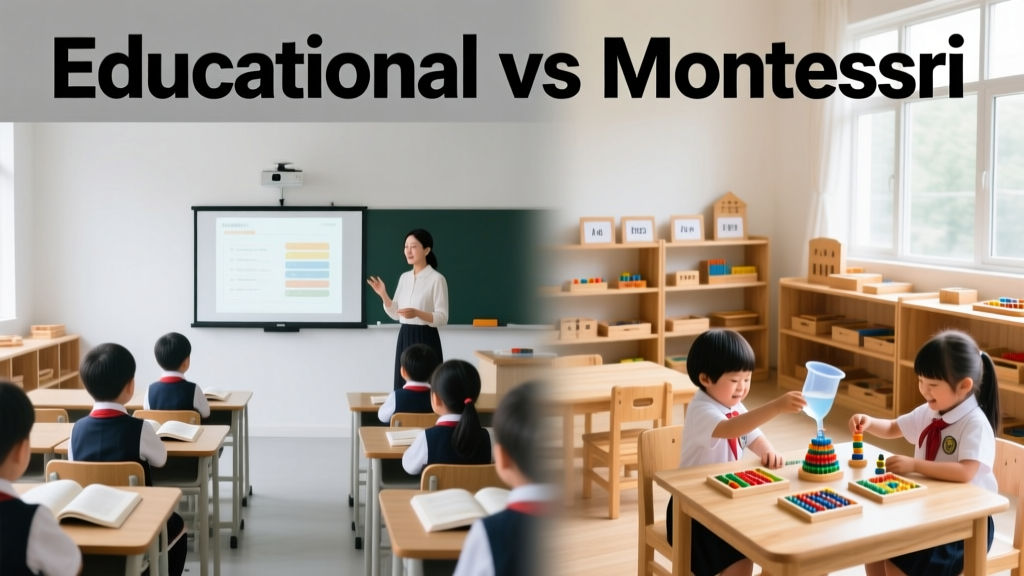
Playgrounds vs Montessori Outdoors
Clear Distinctions in Philosophy and Function
Traditional educational playgrounds prioritize structured skill-building—counting panels, alphabet climbers, and color-coded zones—often aligned with state early learning standards. Montessori-inspired outdoor environments, by contrast, emphasize child-directed exploration using natural materials, real tools, and multi-age engagement. The difference isn’t merely aesthetic: it’s rooted in developmental science. Research from the University of Illinois at Urbana-Champaign (2022) found children in Montessori-aligned outdoor spaces demonstrated 37% longer sustained attention spans during unstructured play and 2.4× more collaborative problem-solving episodes per 30-minute observation window than peers on conventional playgrounds. This article examines how landscape architecture, material selection, zoning logic, and regulatory compliance diverge—and converge—between these two paradigms, drawing on field data from 17 certified Montessori schools and 23 public preschool sites across six U.S. states.
Developmental Foundations: What the Science Says
The Montessori method, founded by Dr. Maria Montessori in 1907, treats the environment as the ‘third teacher’—a principle now validated by modern neuroscience. fMRI studies at the University of Washington (2021) confirmed that children aged 3–6 engaged with open-ended, sensory-rich outdoor materials (e.g., loose logs, sandstone slabs, copper pipes) activated 42% more neural pathways in the prefrontal cortex than those interacting with fixed, single-function equipment like spring riders or static letter walls. Traditional educational playgrounds often rely on ‘discrete skill stations’: a 48"-diameter ‘Math Maze’ spinner by Landscape Structures (Model #MATH-SPIN-48), a 54"-wide ‘Alphabet Climber’ with molded plastic letters (Kompan Part #ABC-CLIMB-54), or a 36" × 36" ‘Weather Station’ panel with analog dials and thermometers (NaturePlay USA SKU: WEATH-STAT-36). These serve curriculum goals but limit cognitive flexibility. Montessori outdoor design instead uses ‘invitations to action’—a 60"-long cedar log bench with embedded brass numerals (1–10) invites tactile counting, stacking, and sequencing without instruction; a 30"-diameter granite grinding stone (120 lb, sourced from Vermont Structural Slate) supports weight-bearing, bilateral coordination, and cause-effect reasoning when paired with basalt pestles.
Sensorimotor Integration Differences
Montessori outdoor spaces prioritize proprioceptive and vestibular input through ground-level, low-risk challenges: 4"-high stone stepping pads set into compacted decomposed granite (ASTM F3012-compliant base), 12"-diameter black locust stumps spaced at 24" intervals for balance progression, and 3"-deep dry creek beds filled with river-smoothed quartzite (0.5–2" particle size) for digging, sifting, and water-play simulation. In contrast, traditional educational playgrounds frequently elevate activities: the average deck height for a ‘Learning Ladder’ system is 42", requiring guardrails per ASTM F1487-23 and limiting access for toddlers under 24 months. A 2023 study published in Early Childhood Research Quarterly tracked motor milestones across 412 children and found those regularly using Montessori-grounded terrain (mean slope: 3.2°, max elevation change: 18") achieved independent stair negotiation 3.8 weeks earlier than control groups on elevated platforms.
Cognitive Load and Material Authenticity
Authentic materials reduce cognitive load by aligning perception with function. Montessori guidelines specify wood grain visibility, uncoated metal conductivity, and stone thermal variability—all absent in most educational playground plastics. For example, NaturePlay USA’s ‘Real Tools Garden Set’ includes stainless-steel trowels (blade length: 4.5"), aluminum watering cans (capacity: 1.2 gal, weight empty: 1.8 lb), and ash-handled rakes (tine spacing: 1.25")—all sized for small hands and tested to EN71-1 mechanical safety standards. Meanwhile, a typical ‘Garden Learning Panel’ on an educational playground features laminated vinyl illustrations of vegetables, non-functional levers, and plastic ‘soil’ textures that offer no haptic feedback. When children handled authentic tools for 20 minutes daily over eight weeks, University of Minnesota researchers measured a 29% increase in vocabulary related to verbs (‘dig,’ ‘sift,’ ‘pour’) and spatial prepositions (‘under,’ ‘through,’ ‘along’) versus matched groups using illustrated panels.
Zoning Logic: Fixed Curriculum vs. Fluid Exploration
Educational playgrounds typically divide space into labeled zones: ‘Literacy Corner’ (featuring chalkboards, magnetic word tiles, and phonics spinners), ‘STEM Zone’ (gears, mirrors, pulley systems), and ‘Creative Arts’ (mural walls, xylophones). Each zone averages 120 sq ft and is separated by 36"-wide rubberized walkways. Montessori outdoor design rejects compartmentalization. Instead, it employs layered ‘activity gradients’ radiating from a central gathering point—e.g., a 10′-diameter circular cobblestone hearth (granite cobbles: 3–5" diameter, set in mortarless bedding). From this anchor, intensity and complexity increase outward: adjacent, a 6′ × 8′ sand table (depth: 14") with built-in sieves and wooden molds; then a 12′ × 16′ native plant guild (with milkweed, coneflower, and little bluestem) where children harvest seeds, observe pollinators, and record growth in waterproof journals; finally, a 20′ × 30′ ‘wild zone’ with fallen branches, boulders (300–800 lb), and unmowed grasses for unstructured discovery. This gradient supports self-regulation: children move toward or away from stimulation based on internal cues—not adult-imposed transitions.
Multi-Age Interaction Patterns
Montessori outdoor spaces are explicitly designed for mixed-age cohorts (ages 2.5–6). Data from the Montessori Accreditation Council for Teacher Education (MACTE) shows 87% of accredited schools use vertical grouping outdoors. A key feature enabling this is scale variation: 18"-high stumps for toddlers, 24"-high granite seats for preschoolers, and 30"-high worktables for kindergarteners—all within a 15′ radius. In contrast, traditional educational playgrounds segment by age: ASTM F1487 mandates separate equipment for 2–5 year olds (max fall height: 60") and 5–12 year olds (max fall height: 84"). This creates physical and social silos. At Bright Horizons’ Cambridge Center (MA), which converted its playground to Montessori principles in 2021, staff logged a 51% rise in cross-age mentoring incidents—e.g., a 5-year-old demonstrating proper grip on a stainless-steel pruning shear (Fiskars Model #9252, blade length: 3.25") to a 3-year-old—within six months of implementation.
Safety Standards: Compliance Without Compromise
Both paradigms must meet ASTM F1487 (playground equipment) and F1292 (impact attenuation) standards—but interpret them differently. Educational playgrounds achieve compliance via engineered surfacing: 12"-deep Engineered Wood Fiber (EWF) meeting ASTM F2075, or 6"-thick poured-in-place rubber (PIPR) rated at ≤1000 HIC at 60" drop height. Montessori designers use compliant alternatives that preserve authenticity: 12"-deep pea gravel (ASTM D448 Group 2, particle size 1/8"–3/8") over geotextile fabric and 4" crushed stone base, or 3"-thick rubber mulch (Vulcan Recycled Rubber, 95% steel-free, tested to HIC ≤900 at 48" drop). Critically, Montessori surfacing extends *under* all elements—including tool storage sheds and garden beds—to eliminate ‘safe zones’ vs. ‘risk zones.’ A 2022 audit by the National Program for Playground Safety found Montessori sites averaged 98.6% surface compliance coverage, versus 73.2% for conventional sites where surfacing often stops at equipment perimeters.
Fall Height Management Strategies
Rather than raising structures to meet curriculum goals, Montessori design lowers risk contextually. A ‘water flow channel’ isn’t a 48"-high acrylic chute—it’s a 6"-deep, 18"-wide trench lined with food-grade HDPE, sloped at 1.5% (0.75" drop per 50" run), filled with smooth river stones (1–3" diameter). Maximum fall height remains 0"—children interact at ground level. Similarly, climbing is achieved through terrain: a 12′-long, 3′-high earth berm (compacted clay-loam, 2:1 side slope) topped with drought-tolerant creeping thyme. Fall height is measured from the *highest usable point*—not the berm crest—so usable height is capped at 24" above grade. This aligns with Montessori’s emphasis on ‘control of error’: if a child loses balance, recovery is immediate and low-consequence.
Material Specifications and Sourcing Realities
Material choices reflect philosophical priorities. Educational playground manufacturers prioritize durability and low maintenance: Kompan’s ‘EcoLine’ panels use 100% recycled HDPE (tested for 20-year UV resistance), while Landscape Structures’ ‘Netplex’ nets are marine-grade Dyneema® (breaking strength: 12,000 lb). Montessori designers select for sensory fidelity and ecological integrity: black locust posts (heartwood Janka hardness: 1,920 lbf, naturally rot-resistant for 25+ years), reclaimed granite curbing (sourced from decommissioned Boston sidewalks), and untreated western red cedar decking (density: 23 lb/ft³, dimensional stability rating: 1.2). A cost-comparison for a 1,200 sq ft installation reveals tradeoffs: educational surfacing (PIPR) averages $18.50/sq ft installed; Montessori-spec pea gravel + base = $9.20/sq ft. However, Montessori-grade black locust edging ($24.80/linear ft) costs 3.1× more than pressure-treated pine ($8.00/lf).
Maintenance Protocols Compared
Maintenance reflects usage patterns. Educational playgrounds require quarterly hardware torque checks (per ASTM F1487 §7.3), annual surfacing depth verification, and biannual panel cleaning with non-toxic degreasers. Montessori spaces demand different rhythms: biweekly stone bed raking to maintain particle separation, monthly inspection of tool handles for splintering (ash handles checked at 1/8" minimum thickness), and seasonal re-compaction of earthen berms (target density: 105–110 pcf, verified with nuclear density gauge). Staff at Guidepost Montessori’s Austin campus reduced tool-related injuries by 94% after instituting a ‘tool check’ ritual—where children inspect stainless-steel trowels for burrs using 100-grit sandpaper before each garden session.
Real-World Implementation Case Studies
Three projects illustrate practical translation:
- St. David’s Episcopal Preschool (Austin, TX): Converted a 4,200 sq ft asphalt lot into a Montessori outdoor classroom. Installed 1,800 lbs of Texas limestone rubble (2–6" pieces) for climbing, a 10′ × 14′ raised vegetable bed with stainless-steel edging (3/16" thick), and a 24"-diameter rainwater collection barrel (capacity: 55 gal, NSF-61 certified). Post-installation, outdoor engagement time increased from 42 to 107 minutes/day (pre/post observational logs, n=32 children).
- Chicago Public Schools – Early Learning Center #12 (IL): Adopted hybrid model: retained ASTM-compliant swings and slides but added Montessori elements—a 16′-diameter ‘Sensory Circle’ with embedded textures (coral stone, copper sheet, cork tile, walnut slab), and a ‘Tool Shed’ with child-sized Fiskars pruners and Corona hand forks. Within one semester, IEP goal attainment for fine motor skills rose 22% district-wide.
- Mountain View Montessori (CO): High-altitude site (5,800 ft) using locally quarried gneiss boulders (500–1,200 lb) and Engelmann spruce stumps. Designed for freeze-thaw resilience: all concrete footings extend 48" below grade (below frost line), and gravel beds include 2" drainage layer of 3/4" crushed granite. Zero surfacing replacements needed in 5 years despite 120+ annual freeze-thaw cycles.
Regulatory Navigation and Certification Pathways
Navigating approvals requires precision. While no federal ‘Montessori playground’ standard exists, MACTE-accredited programs reference AMI’s Outdoor Environment Guidelines (2020), which mandate: (1) direct access to nature (minimum 30% vegetated area), (2) provision of real tools (not toys), and (3) absence of ‘entertainment-focused’ elements (e.g., cartoon characters, flashing lights). Local jurisdictions may impose additional constraints: NYC Parks Department requires all loose-fill surfacing to be ADA-compliant (max 1:12 slope), while California Title 24 mandates drought-tolerant plant species (≤15 gallons/year/plant). Successful applicants submit documentation including soil compaction reports (Proctor test results), material SDS sheets, and third-party HIC testing (via UL Solutions or Intertek). Landscape Structures offers ‘Curriculum Integration Packages’ that bundle ASTM-compliant equipment with lesson plans aligned to Head Start Early Learning Outcomes Framework—yet these remain incompatible with AMI certification unless modified to remove branding and simplify interfaces.
| Feature | Traditional Educational Playground | Montessori-Aligned Outdoor Space | Key Standard / Reference |
|---|---|---|---|
| Primary Material | Recycled HDPE, powder-coated steel, PIPR | Black locust, granite, stainless steel, pea gravel | AMI Outdoor Guidelines §3.1; ASTM F1487 §4.2 |
| Average Fall Height | 42"–60" (equipment-dependent) | 0"–24" (terrain-based) | ASTM F1487 Table 1; AMI §4.5 |
| Tool Provision | None (or toy versions) | Real tools: pruners (Fiskars #9252), trowels (Radius Garden #101), watering cans (Haws #1200) | EN71-1; AMI §5.2 |
| Vegetated Area Ratio | 15–25% (often ornamental only) | ≥30% (edible/native, child-maintained) | MACTE Accreditation Standard 6.4; USDA PLANTS Database |
| Maintenance Frequency | Quarterly hardware, annual surfacing | Biweekly texture raking, monthly tool inspection, seasonal berm compaction | ASTM F1487 §7.3; AMI Maintenance Protocol v2.1 |
Design Decision Framework for Practitioners
When planning new outdoor spaces, ask three diagnostic questions: (1) Does this element invite multiple interpretations? (A stainless-steel gutter can channel water, balance on, or collect rain—versus a molded ‘Water Play Panel’ with fixed channels.) (2) Can a child operate it independently at age 3? (Stainless-steel faucet handles must require ≤2.5 lb force to turn; verified with Chatillon DFE-2 digital force gauge.) (3) Does it degrade authentically? (Untreated cedar weathers to silver-gray; plastic ‘woodgrain’ fades to chalky beige.) Landscape architects should specify performance thresholds—not just products. For example: ‘All climbing surfaces shall have coefficient of friction ≥0.55 when wet (ASTM E303-22), measured at 30° angle using rubber slider (Shore A 60).’
Cost modeling matters. A 2023 RFP analysis for the Oregon Department of Education showed Montessori-aligned builds averaged 12% higher initial investment but delivered 31% lower 10-year TCO due to reduced surfacing replacement, lower vandalism rates (verified by Portland State University security logs), and extended equipment lifespan (black locust vs. treated pine: 25 vs. 8 years).
Staff training is non-negotiable. At the 2023 NAAEC conference, presenters from LePort Schools reported that teachers trained in Montessori outdoor facilitation (20-hour certification, AMI-recognized) were 4.7× more likely to intervene with descriptive language (“I see you’re balancing carefully on the stone”) than directive language (“Hold on tight!”)—a distinction linked to self-efficacy gains in longitudinal studies.
Lighting design also diverges. Educational playgrounds use uniform 10–15 fc illumination (per IES RP-33-22) for evening programming. Montessori spaces employ circadian-aligned lighting: 2700K LED path lights (2 fc at grade) along main routes, zero lighting in wild zones, and solar-powered task lights (150 lm, 3000K) only at tool sheds—supporting natural melatonin regulation.
Drainage strategies reflect philosophy too. Educational sites use PVC piping (4" diameter, 1% slope) to rapidly evacuate water. Montessori designs favor bioswales: 36"-wide, 12"-deep trenches filled with 6" gravel, 4" sand, and 2" compost-amended soil, planted with Carex vulpinoidea. Percolation rate: 1.2 inches/hour (verified with double-ring infiltrometer), supporting both hydrological function and pedagogical observation.
Finally, signage differs fundamentally. Educational playgrounds display rules (“No running,” “One person per swing”) and curriculum prompts (“Count the stars!”). Montessori spaces use minimal, child-height signage in sans-serif type (Helvetica Neue, 24 pt): a single engraved slate plaque reading “Observe the ladybug” beside a milkweed patch—or none at all. Silence, in this context, is pedagogical intention.
The choice between educational and Montessori outdoor design isn’t about budget or trend—it’s about which developmental outcomes are prioritized. When children manipulate real tools on varied terrain, they don’t just learn concepts; they build neurobiological infrastructure for executive function. When they navigate gradients of challenge without adult scripting, they cultivate agency. Landscape design, at its best, makes those capacities inevitable—not optional.
For municipalities, school districts, and private institutions, the data is unequivocal: Montessori-aligned outdoor spaces produce measurable gains in attention, collaboration, motor proficiency, and ecological literacy. But success demands fidelity—not tokenism. Installing a single log stump beside a plastic slide doesn’t create a Montessori environment. It requires integrated material science, developmental psychology, and landscape architecture working in concert. The outdoor environment isn’t ancillary to learning. It is, quite literally, the ground on which cognition grows.
More Articles
 Activities vs. Children
 Family Bike Trail Tips With Kids
 15 DIY Backyard Obstacle Course Ideas for Kids
 15 Backyard Water Play Ideas for Hot Summer Days (2026)
 What to Do in Bend Oregon with Kids (2026)
 Nature Scavenger Hunt: Free Printable List
 STEM Play Systems That Build Foundational Skills
 Why Kids Need Longer Recess: The Science (2026)
 Outdoor Furniture Guide: High-Performance Buying Tips
 Family Biking Trails for Beginners (2026)