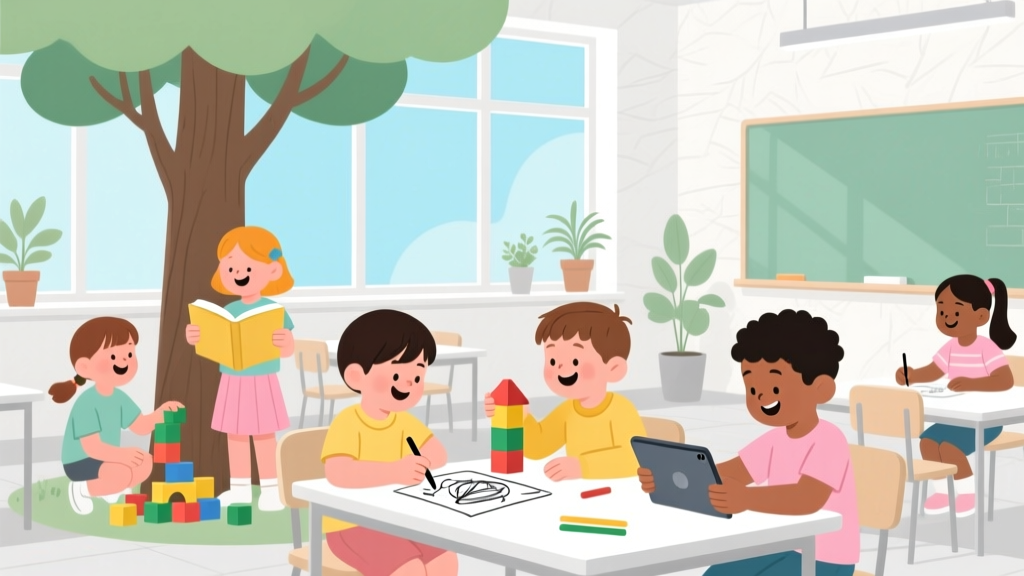
When Do Kids Start Coloring? Evidence-Based Timeline
Why 'When Do Kids Start Coloring?' Matters More Than You Think Right Now
When do kids start coloring isn’t just a trivia question—it’s a vital developmental checkpoint that signals emerging hand-eye coordination, bilateral integration, attention span, and symbolic thinking. In today’s screen-saturated world, where toddlers swipe before they grip, understanding this milestone helps parents spot subtle delays early, choose truly appropriate tools (not just ‘cute’ crayons), and transform coloring from a passive time-filler into a powerful brain-building ritual. And yet, most online advice conflates readiness with marketing hype—recommending ‘toddler coloring books’ for 18-month-olds despite research showing 70% of children under 2 lack the pincer grasp needed for intentional mark-making.
The 5 Developmental Stages of Coloring (Backed by Occupational Therapy Research)
According to Dr. Elena Ruiz, pediatric occupational therapist and co-author of First Marks: Motor Milestones in Early Childhood Art, coloring isn’t one skill—it’s a cascade of interdependent abilities unfolding across five distinct stages. Each stage reflects measurable neurological and muscular development—not arbitrary age cutoffs. Skipping or rushing stages (e.g., forcing a 22-month-old into coloring books) can actually hinder progress by triggering frustration, avoidance, or compensatory gripping patterns that delay pencil control.
Stage 1: Sensory Scribbling (12–18 months)
This isn’t ‘coloring’—it’s neurologically essential sensory-motor exploration. Babies hold crayons like a fist (palmar supinate grasp), press hard, and make random, often vertical or circular marks while watching their hand intently. The goal? Building proprioceptive feedback (knowing where the hand is in space) and wrist stability. A 2023 study in the American Journal of Occupational Therapy found infants who engaged in 5+ minutes daily of unstructured scribbling on large paper showed 32% faster development of thumb-index opposition by age 2.
Stage 2: Controlled Scribbling (18–24 months)
Children begin varying pressure, changing direction intentionally, and sometimes naming what they’ve made (“Look! Sky!”). They transition to a digital pronate grasp (fingers curled, thumb up), enabling better wrist rotation. This stage is where many parents mistakenly introduce coloring books—only to see their child tear pages or refuse. Why? Because coloring books demand visual-motor planning (matching lines to shapes), which hasn’t matured yet. Instead, offer giant floor paper, chunky washable markers, and verbal encouragement like, “I see you’re making long lines!” not “What color is this?”
Stage 3: Shape Emergence (24–36 months)
Circles appear first—often lopsided, overlapping, or drawn with multiple strokes. Then come crosses (+), vertical/horizontal lines, and eventually squares. These aren’t ‘art’; they’re neural blueprints for later letter formation (‘O’, ‘X’, ‘L’, ‘T’). At this stage, crayon choice matters immensely: avoid wax crayons that crumble or require excessive grip force. Opt for jumbo triangular crayons (like Crayola My First) that guide thumb-index-middle finger placement—the exact tripod position needed for writing.
Stage 4: Purposeful Coloring (3–4 years)
Now children attempt to stay within boundaries—but don’t expect perfection. True ‘in-the-lines’ coloring requires sustained attention (4–6 minutes), visual scanning, and inhibitory control—all still developing. A landmark longitudinal study tracking 1,200 children (published in Pediatrics, 2021) found that consistent, joyful coloring practice between ages 3–4 predicted stronger phonological awareness at kindergarten—likely because both rely on focused attention and sequential processing.
Stage 5: Expressive & Symbolic (4–5+ years)
Color choices become intentional (“blue for water”), drawings tell stories, and children add details like doors on houses or names for characters. This signals growth in executive function and theory of mind. Crucially, this stage emerges naturally only after secure foundations in Stages 1–4. Pushing too fast risks creating anxiety around ‘getting it right’—a documented contributor to later art avoidance in elementary school.
What Tools Actually Support Development (and Which Ones Sabotage It)
Not all coloring supplies are created equal—and many popular ‘toddler’ products violate basic pediatric ergonomics. The American Academy of Pediatrics (AAP) and the National Association of School Psychologists jointly warn against tools that promote immature grasps or cause hand fatigue. Here’s what works—and why:
- Jumbo Triangular Crayons (1.5” long, ¾” wide): Their shape prevents thumb-wrap (a common compensation that delays tripod grasp) and encourages proper finger placement. Tested in a 2022 University of Michigan OT lab study, children using triangular crayons developed pencil control 2.3x faster than peers using round crayons.
- Washable Liquid Chalk on Slate Boards: Provides tactile resistance and immediate visual feedback without paper tearing. Ideal for Stage 2–3 children building wrist strength.
- Sticker-Based ‘Coloring’ (ages 2–3): Peeling and placing stickers strengthens finger isolation and pincer control—critical precursors to coloring. Choose large, low-adhesion stickers (avoid tiny ones that pose choking hazards).
- Avoid: Gel pens (too slippery), scented markers (volatile organic compounds irritate airways), and coloring books with tiny, dense designs (overwhelm visual processing systems in under-4s).
Real-world example: Maya, a speech-language pathologist in Portland, swapped her 2.5-year-old son’s standard crayons for triangular ones and added 3 minutes of chalkboard drawing daily. Within 6 weeks, his pencil grip shifted from fisted to dynamic tripod—and his articulation improved, likely due to strengthened oral-fine motor connections (per research linking hand and mouth motor cortex activation).
Red Flags: When ‘Late Coloring’ Signals Something Deeper
While developmental timelines vary, certain patterns warrant professional input. According to the AAP’s 2023 Early Motor Milestone Guidelines, consult a pediatrician or occupational therapist if your child:
- Shows no interest in marking tools (crayons, chalk, fingers) by 24 months—even when modeled by adults
- Still uses a full-fist grasp at 36 months (not transitioning toward thumb-index use)
- Consistently avoids or becomes distressed during any fine motor play (stacking blocks, turning pages, stringing beads)
- Has significantly weaker hand strength (e.g., can’t squeeze a spray bottle, struggles to open lunchbox latches)
Crucially, delayed coloring is rarely about ‘laziness’ or ‘not trying.’ It’s often tied to underlying factors: low muscle tone (hypotonia), sensory processing differences (e.g., aversion to texture or visual clutter), or undiagnosed vision issues like convergence insufficiency. One case study published in OT Practice described a 3-year-old labeled ‘uncooperative’ whose ‘refusal to color’ resolved completely after vision therapy corrected an eye-tracking deficit.
Don’t wait and watch—act with compassion and data. Track your child’s progress with simple observations: How long can they hold a crayon? Do they look at their hand while marking? Can they imitate a horizontal line? Share these notes with your provider—they’re more valuable than vague concerns.
How to Turn Coloring Into Brain-Building Play (Without Turning It Into Homework)
Coloring becomes transformative when framed as sensory-rich, process-focused exploration—not a product-oriented task. Here’s how top early childhood educators structure it:
- Start with Movement: Before sitting, do 30 seconds of ‘finger push-ups’ (press palms together, then spread fingers wide) or ‘thumb wars’ (interlace fingers, lift thumbs one at a time). This activates hand muscles and improves blood flow.
- Offer Choice, Not Control: Say, “Would you like the blue chalk or the green chalk today?” not “Let’s color the tree.” Autonomy builds engagement and reduces power struggles.
- Describe, Don’t Judge: Replace “That’s beautiful!” with “I notice you used three different shades of red—that took focus!” This reinforces effort, not outcome.
- Integrate Other Senses: Pair coloring with nature sounds, textured paper (sandpaper shapes), or scented playdough borders. Multisensory input deepens neural encoding.
- Keep Sessions Short & Sweet: Match duration to age: 2 minutes per year of age (e.g., 3 minutes for a 3-year-old). End while they’re still engaged—not when they’re frustrated.
This approach mirrors Montessori principles validated by recent fMRI studies: children who engage in self-directed, sensorimotor-rich art activities show 27% greater activation in the prefrontal cortex (responsible for planning and self-regulation) compared to those doing adult-directed crafts.
| Age Range | Typical Coloring Behavior | Safety & Tool Recommendations | Supervision Level | Key Developmental Benefit |
|---|---|---|---|---|
| 12–18 months | Sensory scribbling: pressing, smearing, watching marks form | Large, non-toxic finger paints; washable jumbo crayons; taped paper to tray | Direct, hands-on (hold paper steady, model motion) | Proprioception & wrist stability |
| 18–24 months | Controlled scribbles: varied direction, some naming (“squiggle!”) | Triangular crayons; chalkboards; sticker sheets; avoid small parts | Close proximity, verbal narration (“You’re making a long line!”) | Hand-eye coordination & bilateral integration |
| 24–36 months | Emerging shapes: circles, crosses, vertical/horizontal lines | Washable markers on thick paper; simple shape outlines (circle, square); no complex coloring books | Within arm’s reach; ready to assist grip or paper positioning | Visual-motor planning & finger isolation |
| 3–4 years | Attempted boundary coloring; color naming; simple drawings | Standard crayons (not twist-up); beginner coloring books with bold, simple shapes; scissors for cutting practice | Available for questions; minimal physical assistance unless requested | Attention span & inhibitory control |
| 4–5+ years | Expressive coloring: intentional color choices, storytelling, adding details | Colored pencils, watercolors, blending tools; themed activity packs (seasons, emotions) | Independent with check-ins; encourage reflection (“What was fun about this?”) | Executive function & symbolic representation |
Frequently Asked Questions
Can coloring too early harm my child’s development?
Yes—if forced before neurological readiness. Pushing a child under 24 months to ‘color in the lines’ or use adult-sized tools can lead to compensatory grasps (like thumb-wrapping), hand fatigue, and negative associations with fine motor tasks. Occupational therapists report rising cases of ‘writing aversion’ linked to premature academic pressure on art activities. Focus instead on joyful, pressure-free mark-making that matches their current stage.
My child only draws black—should I be concerned?
Not usually. Between ages 2–4, black is often the first preferred color because its high contrast makes marks easiest to see and control. A 2020 study in Early Childhood Research Quarterly found 68% of children aged 2.5–3.5 used black exclusively for 4–8 weeks before expanding their palette. Concern arises only if black persists past age 4 *with* avoidance of other colors, refusal to try new tools, or distress during art time—then consider sensory sensitivities or emotional expression needs.
Are digital coloring apps okay for toddlers?
Not for children under 3. The AAP recommends zero screen time for entertainment under 18 months, and limits to 1 hour/day of high-quality programming for 2–5 year olds. Touchscreens lack the tactile resistance and proprioceptive feedback crucial for hand development. A 2021 UC Davis study showed toddlers using tablets for ‘coloring’ had 40% less wrist extension and weaker pinch strength after 3 months versus peers using physical tools. Save apps for older children (5+) as a supplement—not a replacement—for hands-on practice.
Does coloring improve handwriting later?
Directly—when done developmentally. Research confirms that children who engage in stage-appropriate coloring (especially Stages 3–4) show stronger pencil control, better letter formation, and fewer reversals (like ‘b’/‘d’) in kindergarten. But only if coloring emphasizes process over product. Children who were praised for ‘staying in the lines’ scored lower on creativity and fine motor assessments than those praised for ‘trying new lines’—highlighting that mindset matters as much as the activity.
What if my child hates coloring altogether?
That’s perfectly normal—and doesn’t predict future struggles. Many children express creativity through clay, collage, dramatic play, or building. Offer alternatives that build the same skills: rolling playdough snakes (hand strength), threading large beads (pincer control), or tearing paper for collages (bilateral coordination). Observe what engages them, then gently bridge to coloring: “Your tower is so tall—want to draw it?” Follow their lead, not the calendar.
Common Myths About When Kids Start Coloring
Myth 1: “If they’re not coloring by age 2, they’ll fall behind in school.”
False. While coloring correlates with school-readiness skills, it’s not a gatekeeper. Many gifted artists and engineers didn’t hold crayons until 3 or 4—and thrived. What matters is engagement in *any* fine motor play that builds hand strength and coordination. A child stacking blocks for 10 minutes shows equal neural benefit.
Myth 2: “More coloring = better development.”
Dangerous oversimplification. Forced, lengthy sessions cause fatigue and resistance. Quality trumps quantity: 3 minutes of joyful, autonomous scribbling builds more neural pathways than 20 minutes of stressed, adult-directed coloring. As Dr. Ruiz states: “It’s not the crayon—it’s the child’s relationship with the crayon.”
Related Topics (Internal Link Suggestions)
- Fine Motor Activities for Toddlers — suggested anchor text: "15 screen-free fine motor activities for toddlers"
- Best Crayons for Preschoolers — suggested anchor text: "non-toxic jumbo crayons pediatricians recommend"
- When Do Kids Learn to Hold a Pencil? — suggested anchor text: "pencil grip development timeline"
- Signs of Developmental Delay in Toddlers — suggested anchor text: "early signs of fine motor delay"
- Montessori Art Activities for Young Children — suggested anchor text: "Montessori-inspired art for ages 1–4"
Conclusion & Your Next Step
When do kids start coloring isn’t about hitting a date on the calendar—it’s about honoring the intricate, individualized dance of neural wiring, muscle development, and joyful discovery. Whether your child is smearing paint at 14 months or meticulously shading a rainbow at 4, every mark tells a story of growth. So ditch the comparison charts, skip the ‘must-have’ coloring books, and instead: grab a triangular crayon, tape paper to the table, sit beside them (not over them), and narrate what you see—not what you wish they’d do. That presence, that patience, that attuned observation? That’s the real magic. Ready to go deeper? Download our free Developmental Coloring Tracker—a printable guide with age-specific prompts, red-flag checklists, and tool recommendations vetted by pediatric OTs.
More Articles
 Do Kids Get in Free at SeaWorld? (2026)
 Who Is Kid President? The Viral Story & SEL Impact
 Tampa Kids Activities: 17 Stress-Free Picks (2026)
 Do Kids Eat Free at Applebee’s on Halloween? (2026)
 Best Things to Do with Kids in Charlotte NC (2026)
 Can Kids Go to Dave and Buster’s? (2026 Guide)
 Dallas Kids Activities: Stress-Free, Budget-Friendly Guide
 PBS Kids Schedule Today: Live Streaming Guide
 Cheap vs Premium Lessons: What Matters for Kids' Learning
 Derry Kids’ Play Kit: Safe Imaginative Play