Montessori Toys for Home Learning (2026 Picks)
What Makes a Toy Montessori?
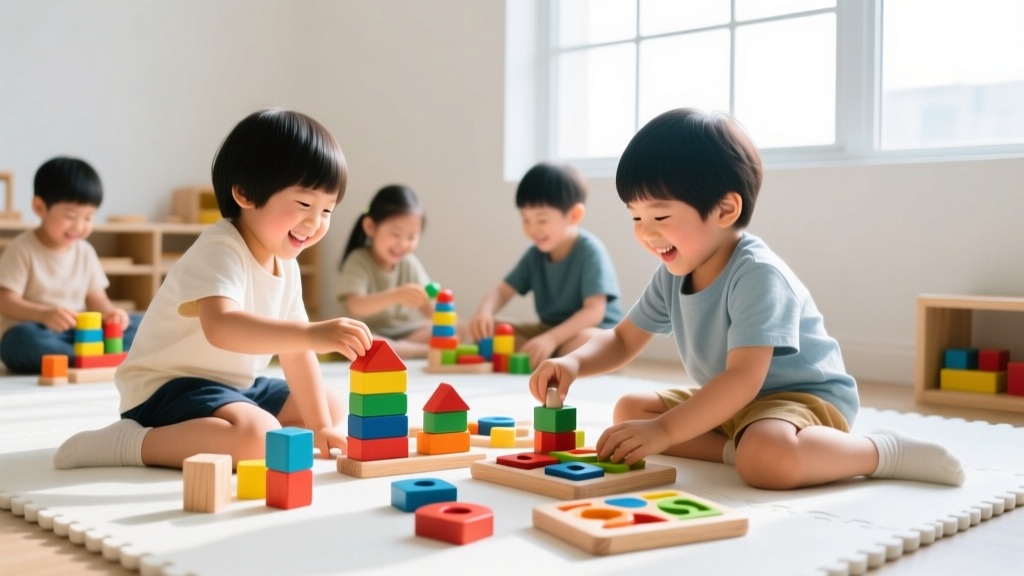
Montessori toys are simple, purposeful, and made from natural materials. They have a clear learning purpose, allow self-correction, and grow with the child. No batteries, no flashing lights — just focused, hands-on learning.
Top Montessori Toys by Age
Ages 1-2: Sensory and Motor Development
Object Permanence Box: A wooden box with a hole and tray. Baby drops a ball through the hole, it disappears, then reappears in the tray. Teaches that objects exist even when unseen.
Stacking Rings: Wooden rings of different sizes on a post. Teaches size discrimination, hand-eye coordination, and the concept of order.
Shape Sorter: Classic for good reason. Children learn to match shapes to openings, developing spatial reasoning and problem-solving skills.
Ages 3-5: Practical Life and Early Math
Practical Life Tools: Child-sized broom, dustpan, watering can, and kitchen tools. Real tools for real tasks build confidence and independence.
Number Rods: Ten wooden rods increasing in length by one unit. Children learn to count, compare quantities, and understand that numbers represent real amounts.
Sandpaper Letters: Letters cut from sandpaper mounted on wood. Children trace the shape with their fingers while saying the sound. Multi-sensory letter learning.
Pink Tower: Ten cubes decreasing in size. Children stack them largest to smallest. Develops visual discrimination of size and fine motor control.
Ages 6-9: Advanced Concepts
Golden Beads: Concrete representation of the decimal system. Units, tens, hundreds, thousands. Children physically manipulate quantities to understand place value.
Movable Alphabet: Wooden letters for building words without needing handwriting skills. Children can compose stories and practice spelling kinesthetically.
Geometry Cabinet: Drawer set with inset shapes. Children learn geometric vocabulary and properties through tactile exploration.
Setting Up a Montessori Play Space
Low, open shelves with limited choices (6-8 toys at a time). Each toy has a designated place. Rotate toys every 2-3 weeks to maintain interest. Everything should be accessible without adult help.
Budget Montessori Alternatives
Many Montessori materials can be DIY'd. Cut sponges for transferring activities. Use kitchen tongs for fine motor work. Paint rocks for counting. The philosophy matters more than the specific materials.
What to Avoid
Toys that do the work for the child (push-button entertainment). Toys with a single "right" way to play. Overstimulating toys with multiple sounds and lights. Too many choices at once.
More Articles
 MLK for Kids: Truth-Filled, Joy-Centered Teaching (2026)
 Genghis Khan’s Kids: How Many Sons & Daughters?
 How Many Kids Did Ghengis Khan Have
 Step Stool FAQ: Toddler Safety & Real-World Use
 Where Can I Stream Butch Cassidy And The Sundance Kid (2026)
 Did Blackbeard Have Kids? Truth, Myths & Teaching Tools
 How Many Kids Did Frederick Douglass Have? (2026)
 When Did Cassie Date Kid Cudi? The Real Timeline (2026)
 Billy the Kid Imposters: A Classroom History Mystery
 What Happened to Kid Ink? The Truth (2026)