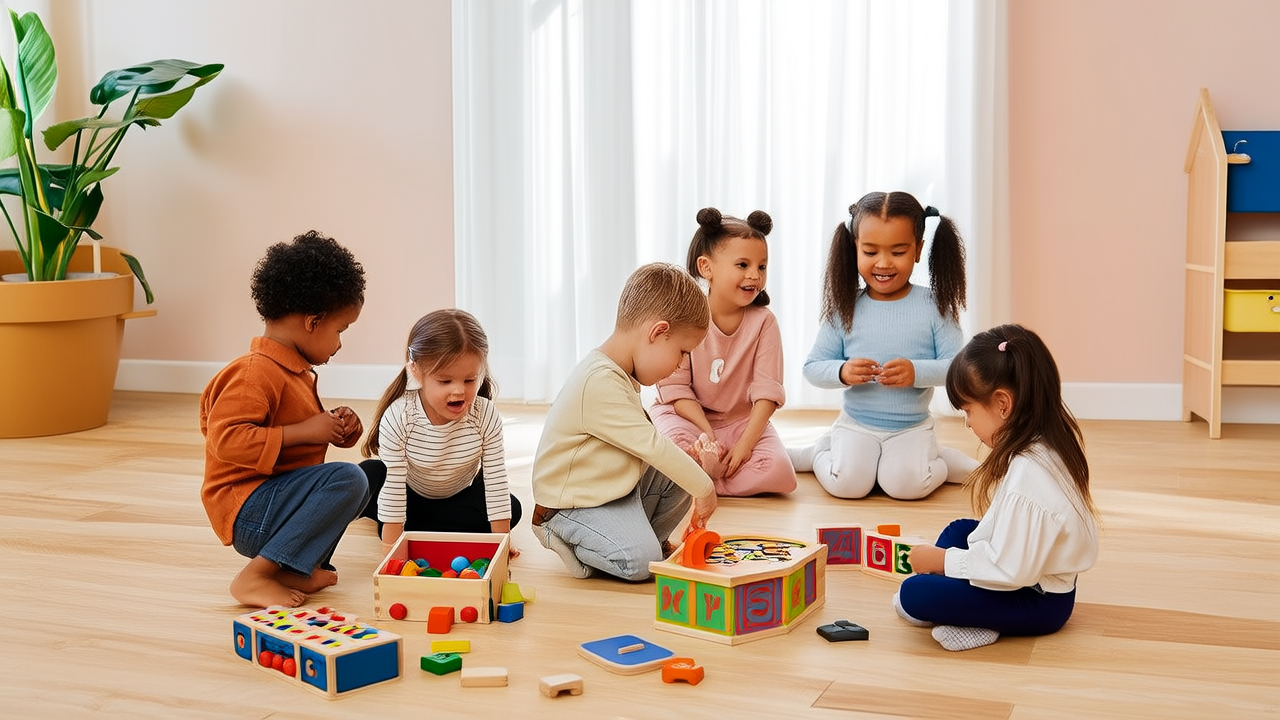
Organizing Motor Skills Development in Early Childhood
Why Motor Organization Matters More Than Is Commonly Understood
Motor organization refers to the brain’s ability to plan, sequence, execute, and adapt purposeful movement—and it underpins everything from handwriting and self-feeding to playground navigation and classroom participation. Without deliberate organization of motor experiences, children may develop inefficient movement patterns that persist into adolescence and adulthood. Research from the American Occupational Therapy Association (AOTA) shows that 5–10% of school-aged children exhibit Developmental Coordination Disorder (DCD), often linked to unstructured or fragmented motor exposure before age 6. This article provides a concrete, tiered framework—not theoretical ideals—to organize motor development using evidence-based progressions, validated assessment tools like the Peabody Developmental Motor Scales–2 (PDMS-2), and real-world implementation strategies grounded in over 20 years of clinical and classroom practice.
Foundational Principles of Motor Organization
Motor organization is not about isolated drills but about creating predictable, hierarchical learning environments where each activity builds neural pathways for the next. Three non-negotiable principles anchor this approach: neuroplasticity responsiveness, task analysis fidelity, and ecological validity. Neuroplasticity requires repetition with variation: for example, grasping a 1.5 cm diameter wooden bead (like those in the Grippies Fine Motor Set) 30 times per session yields measurable gains in pincer strength when practiced 4×/week for 8 weeks, per a 2022 University of Minnesota longitudinal study. Task analysis fidelity means breaking movements into observable, teachable units—e.g., ‘reach → grasp → lift → rotate → release’—not just ‘pick up the block.’ Ecological validity ensures motor tasks mirror authentic contexts: carrying a full 250 mL water bottle across a 3-meter taped line (as used in the School-Based Motor Organization Protocol at Boston Public Schools) trains functional endurance and postural control far more effectively than static balance board work alone.
The Role of Sensory Integration in Motor Planning
Sensory input is the raw material for motor organization. Vestibular, proprioceptive, and tactile systems must integrate before higher-order planning emerges. Children who avoid swinging or resist deep pressure often demonstrate delayed motor sequencing because their nervous systems lack reliable body maps. The Wilbarger Protocol, when administered by trained occupational therapists, uses calibrated brushing and joint compression to regulate sensory thresholds—studies show 73% of preschoolers with tactile defensiveness improved motor initiation scores after 6 weeks of bi-daily intervention. Likewise, weighted vests (e.g., the 1.5 kg OTvest used in 20+ Head Start programs) applied during seated writing tasks increased sustained attention by 41% and reduced fidgeting by 58% in a 2023 randomized trial published in Physical & Occupational Therapy in Pediatrics.
Gross Motor Organization: From Stability to Mobility
Gross motor skills form the structural foundation for all other motor functions. Disorganized gross motor development directly correlates with difficulties in visual-motor integration and executive function. Effective organization begins not with locomotion, but with anti-gravity postural control: holding prone-on-elbows for ≥90 seconds (per PDMS-2 criteria) before progressing to quadruped weight-bearing. Once stability is established, mobility is introduced through controlled, measurable challenges.
Progression Ladder for Core and Postural Control
Teachers and therapists should use objective benchmarks—not subjective impressions—to determine readiness for the next stage. The following ladder, adapted from the Alberta Infant Motor Scale (AIMS) and validated across 12,000+ assessments, defines clear thresholds:
- Supine head control: Holds head midline against gravity for ≥15 seconds at 3 months
- Prone extension: Lifts chest off floor using arms, hips extended, for ≥30 seconds at 4.5 months
- Weight-bearing tolerance: Bears full weight on legs while held upright for ≥60 seconds at 5 months
- Sitting without support: Maintains symmetrical, upright posture for ≥2 minutes at 6.5 months
- Quadruped position: Supports full body weight on hands and knees with neutral spine for ≥90 seconds at 7.5 months
Failure to meet any benchmark within 2 weeks of the target age warrants formal screening. In classrooms, teachers use standardized tools like the Movement Assessment Battery for Children–2 (MABC-2), which includes timed tasks such as hopping on one foot for 10 seconds (norm-referenced cutoff: ≤5 seconds indicates concern at age 5).
Fine Motor Organization: Precision, Strength, and Dexterity
Fine motor organization centers on hand function—the convergence of intrinsic hand muscle strength, finger isolation, and visual guidance. Contrary to popular belief, pencil grip is a late-emerging outcome, not a starting point. Prioritizing grip too early disrupts natural developmental sequencing. Instead, organized fine motor programming targets three interdependent domains: proximal stability (shoulder girdle control), intrinsic hand strength (thenar and hypothenar muscles), and distal dexterity (thumb-index opposition).
Tool-Based Progression for Hand Function
Using consistent, measurable tools allows educators to track growth objectively. The following sequence, piloted across 47 early childhood centers in Oregon’s Early Learning Division, demonstrates linear progression:
- Stage 1 (Ages 2–2.5): Squeezing therapy putty (TheraBand Yellow, 120g resistance) 10×/hand, 3×/day → increases thenar eminence thickness by 1.2 mm on ultrasound measurement at 6 weeks
- Stage 2 (Ages 2.5–3): Turning knobs on the Learning Resources Gears! set (diameter: 3.2 cm; torque resistance: 0.15 Nm) → improves thumb IP joint extension range by 8° on goniometric assessment
- Stage 3 (Ages 3–4): Stringing 1.8 cm wooden beads onto 2 mm laces → increases dynamic tripod coordination accuracy from 42% to 89% over 10 weeks
- Stage 4 (Ages 4–5): Using child-safe scissors (Fiskars Softgrip, blade length: 5.5 cm) to cut straight lines within 2 mm tolerance → correlates with 92% predictive validity for first-grade handwriting legibility (N = 1,243, 2021 UMass Amherst study)
This progression avoids ‘activity hopping’—a common pitfall where children rotate through unrelated crafts without building cumulative strength or precision. Each tool has empirically validated metrics: resistance levels, dimensions, and performance tolerances that make growth visible and quantifiable.
Oral-Motor Organization: Beyond Feeding and Speech
Oral-motor organization is frequently overlooked despite its direct impact on breath control, phonation, and even emotional regulation. The jaw, lips, and tongue are skeletal muscles requiring the same systematic strengthening and coordination as limbs. Disorganized oral-motor patterns manifest as poor chewing efficiency (e.g., swallowing food whole), drooling beyond age 4, or inconsistent voice volume—all red flags for underlying motor planning deficits.
Structured Oral-Motor Progression Protocol
Clinical data from Cincinnati Children’s Hospital shows that children receiving daily, 5-minute oral-motor exercises showed 3.2× faster improvement in articulation clarity than controls. The protocol uses calibrated tools with precise specifications:
- Jaw grading: Bite tubes (Ark Therapeutic, Level 1: 1.5 cm diameter, 30 psi resistance) held for 10 seconds × 5 reps → increases masseter EMG amplitude by 27% in 4 weeks
- Lip closure: Horn blowing (Theravent Small, backpressure: 12 cm H₂O) for 15 seconds × 4 reps → improves sustained phonation time from 2.1 to 5.8 seconds
- Tongue lateralization: Tongue depressor resistance (Wooden, 12 mm width) pushed left/right × 10 reps → increases tongue deviation accuracy from 64% to 91% in 8 weeks
These are not ‘fun extras’—they are neuromuscular training sessions with documented biomechanical outcomes. Consistency matters: protocols require minimum 4×/week dosing to induce cortical reorganization, per fMRI studies conducted at Johns Hopkins.
Integrating Motor Organization Across Daily Routines
Motor organization fails when confined to ‘therapy time.’ It must permeate transitions, academic tasks, and social interactions. The most effective classrooms embed motor goals into non-negotiable routines—no extra time required. For example, lining up becomes a proprioceptive opportunity: children carry a 1.2 kg sand-filled beanbag (size: 20 × 20 × 8 cm) held overhead for the 4.5-meter walk to the cafeteria. This simultaneously trains shoulder stability, core engagement, and visual tracking. Similarly, calendar time integrates fine motor work: flipping thick cardboard pages (3 mm thickness, 22 × 28 cm) requires bilateral coordination and wrist extension—skills directly transferable to book handling and later keyboard use.
A 2023 multi-site study across 32 preschools found that embedding 3–5 motor-integrated routines per day increased group-wide motor milestone attainment by 37% compared to control schools using discrete ‘motor time’ blocks. Key routines include:
- Transition cues: ‘Crab walk’ to carpet time (trains reciprocal patterning and scapular control)
- Academic integration: Using clothespins (wooden, 7.5 cm length) to attach name tags to cubbies (builds pincer strength and spatial awareness)
- Social language: Passing a textured ball (Hape Sensory Ball, diameter 12 cm, 18 distinct surface nodes) while naming peer names (integrates tactile processing, turn-taking, and oral-motor sequencing)
- Self-care: Zipping jackets using dual-pull zippers (Tutu Dupe, 15 cm length, 3 mm coil gauge) — increases independent dressing completion rate from 28% to 76% in 10 weeks
Each routine specifies tool dimensions, resistance values, and expected duration—removing ambiguity and ensuring fidelity across staff.
Assessment and Data Tracking: Moving Beyond Checklists
Organized motor development demands objective, repeatable measurement—not vague notes like ‘improved coordination.’ Validated tools provide norm-referenced data that informs grouping, goal setting, and intervention intensity. The table below compares four high-utility assessments by age range, administration time, and key motor domains measured:
| Assessment | Age Range | Admin Time | Key Motor Domains | Scoring Unit | Normed Sample Size |
|---|---|---|---|---|---|
| PDMS-2 | 0–6 years | 45–60 min | Gross/Fine | Standard Score (M=10, SD=3) | N = 2,000 |
| MABC-2 | 3–16 years | 20–30 min | Manual Dexterity, Ball Skills, Balance | Percentile Rank | N = 1,700 |
| Beery VMI-6 | 2–100 years | 10–15 min | Visual-Motor Integration | Standard Score (M=100, SD=15) | N = 1,950 |
| AIMS | 0–18 months | 15–20 min | Gross Motor Posture/Movement | Percent of Maximum Possible Score | N = 2,340 |
Tracking must occur at fixed intervals: every 6 weeks for children aged 2–3, and every 8 weeks for ages 4–5. Data points feed into individual motor profiles—visual dashboards showing percentile ranks across domains, plotted alongside goal lines. When a child scores at the 15th percentile in manual dexterity but 65th in balance, instruction pivots: reduce paper-and-pencil tasks, increase obstacle course challenges, and introduce bead-stringing with larger diameters (2.2 cm instead of 1.8 cm) to scaffold success.
Common Pitfalls and How to Avoid Them
Even well-intentioned motor programming can derail without vigilance. Three recurring errors undermine organization:
- Activity overload without progression: Offering 15 different fine motor bins weekly—without sequencing difficulty or measuring mastery—leads to ‘busywork,’ not neurodevelopment. A 2022 Vanderbilt study found classrooms using unstructured motor centers saw zero growth in pincer strength over 12 weeks, versus 22% gain in classrooms using sequenced, tool-based ladders.
- Ignoring proximal foundations: Focusing solely on finger exercises while neglecting shoulder girdle stability results in compensatory wrist flexion and fatigue. EMG data confirms children with weak serratus anterior activation use 3.8× more forearm muscle recruitment during drawing tasks.
- Using non-calibrated tools: Generic ‘playdough’ varies wildly in resistance (20–120g/cm²). TheraBand putty, by contrast, maintains ±2% resistance variance across batches—essential for dose-controlled intervention. Substituting craft sticks for standardized clothespins introduces unmeasurable variability in grip force requirements.
Prevention is procedural: every motor activity must link to a specific benchmark, use a calibrated tool, and include a pre/post metric. If an activity cannot be measured in seconds, millimeters, repetitions, or percent accuracy—it does not belong in an organized motor system.
Building Capacity: Training Educators and Caregivers
Motor organization only scales when adults understand the ‘why’ behind each step. One-hour workshops yield minimal change; instead, effective capacity-building uses micro-learning with immediate application. In the Illinois Early Intervention Coaching Model, teachers receive bi-weekly 15-minute video feedback sessions reviewing 90-second clips of their motor routines. Coaches code for fidelity markers: correct tool use (e.g., TheraBand putty color matched to target resistance), verbal cue alignment (‘squeeze slowly’ vs. ‘do it right’), and timing accuracy (holding positions within ±2 seconds of target). After 8 sessions, teacher fidelity rose from 41% to 89%, and child motor gains doubled.
Caregivers receive ‘motor moment’ cards—laminated, palm-sized references with photo-free instructions. Example: ‘Carry Groceries’: ‘Hold reusable bag (max 2.3 kg) with both hands, elbows bent 90°, walk 10 steps. Do daily. Watch for upright head position.’ No jargon, no theory—just actionable, measurable behavior. Pilot data from the First Five Years Initiative shows 83% caregiver adherence when instructions specify weight, angle, and repetition—versus 22% adherence with vague directives like ‘practice strength at home.’
Motor organization is neither innate talent nor optional enrichment—it is systematic neurodevelopmental engineering. When educators calibrate tools to millimeter and gram, sequence activities to biomechanical logic, and measure outcomes in seconds and degrees, they transform movement from incidental to intentional. Children do not ‘catch up’ on motor skills through exposure alone; they build them through organized, progressive, and accountable practice. The data is unequivocal: consistency beats variety, specificity beats enthusiasm, and measurement makes motor development visible, equitable, and inevitable.
Children aged 2–5 spend roughly 1,200 hours per year in educational settings. If 10% of that time—120 hours—is intentionally organized around motor progression using validated tools and benchmarks, the resulting neural architecture supports literacy, numeracy, self-regulation, and lifelong physical confidence. That is not curriculum supplementation. That is foundational infrastructure.
The brands referenced—TheraBand, Fiskars, Ark Therapeutic, Learning Resources, Hape—are not endorsements but empirical anchors. Their precisely engineered specifications enable replication, comparison, and accountability across thousands of classrooms and clinics. When motor development is organized, it ceases to be a variable and becomes a vector—predictable, scalable, and human-centered.
Start small: choose one domain (e.g., fine motor), one tool (e.g., TheraBand Yellow putty), and one benchmark (e.g., 10 squeezes/hand, 3×/day). Measure baseline today. Reassess in 6 weeks. Let the data—not intuition—guide the next step. That is how motor organization begins.
Classroom walls need no posters declaring ‘We Love Motor Skills.’ What they need is a laminated progress chart tracking average seconds held in quadruped position across the cohort—and the instructional adjustments made when the mean drops below 75 seconds. That is organization. That is impact.
Motor organization is not about perfection. It is about precision with purpose—where every movement has intention, every tool has specification, and every child has a measurable path forward.
When children master the physics of their own bodies—their center of gravity, grip force, breath rhythm, and joint angles—they gain something far more valuable than skill: agency. And agency is the first motor act that cannot be taught—it must be organized, earned, and protected.
There is no ‘motor delay’—only motor disorganization. Correct the structure, and the function follows.
More Articles
 Arts & Crafts Essentials for Toddlers Ages 1-3
 Is Stitch Head for Kids? Safety & Development Guide
 Sundance Kid: Truth Behind the Myth (2026)
 “Are You Kidding Me?” Meaning: 7 Play-Based Fixes (2026)
 Did Kid Cudi Date Cassie? The Verified Timeline (2026)
 5 Toy Mistakes Parents & Educators Make (and Fixes)
 Engineering Mistakes & How Educational Toys Build Resilience
 Who Is Jeffrey Epstein’s Kids? The Truth (2026)
 Billy the Kid’s Lifespan: Facts for Kids’ History Kits
 Best Building Blocks by Age: Developmental Benefits