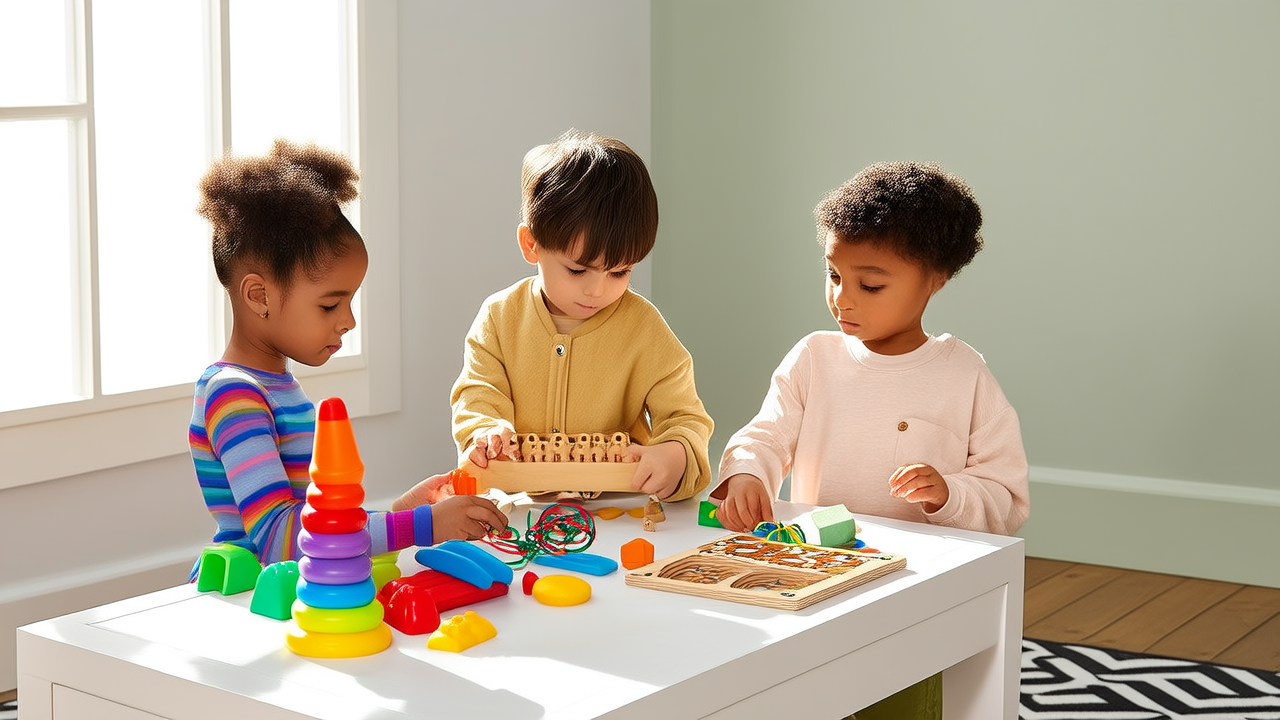
2026 Trends: Educational Toys & Play-Based Learning
Creative Trends 2026 in educational toys point to hybrid making: children build, remix, and narrate physical objects with app-supported feedback. Expect open-ended construction from LEGO and Melissa and Doug, electronics from littleBits and Wonder Workshop, sensory design from Fat Brain Toys, and eco-labelling from Green Toys. The strongest products will support 10 to 20 minute focused play sessions, use parts sized for ages 3 to 12, and teach iteration, empathy, and systems thinking. Parents and teachers should look for tactile core, removable screens, transparent AI prompts, durable materials, and documentation that shows learning outcomes rather than novelty features alone.
Creative Trends 2026: What Educators Should Plan For
Creative Trends 2026 is not a single product category. It is a design shift in which play objects, digital tools, classroom routines, and household materials become part of one learning loop. A child may snap a 1.5 cm connector into a baseboard, photograph the result on a 9.7-inch tablet, record a voice note, then revise the structure using a prompt from a parent or teacher. The value is not screen time alone; it is the ability to make thinking visible. In pilot maker spaces observed by educators, the most successful kits included at least three physical components that could be repurposed, one simple recording method, and a challenge card that took no more than 15 minutes to complete. This pattern matters because attention in early learning environments is often broken into short bursts, and a toy that only works for a single novelty reveal fades quickly.
Another signal is the move away from passive entertainment toward authorship. A 24-piece wooden puzzle from Melissa and Doug can still teach shape matching, but a 2026 creative trend asks what children build next with those pieces. A littleBits Synth Kit with 15 modules can teach sound design, yet the stronger lesson is sequencing: input, transformation, output, and feedback. In classrooms, this means asking students to create a character, a mechanism, or a map, then explain why it works. The toy becomes a stage for reasoning, not just a container for facts.
Tactile Making Goes Digital Without Losing Hands-On Feel
The most durable Creative Trends 2026 products keep the body involved. Fine motor learning benefits from gripping, pressing, sorting, and rotating objects. A 19 cm Fat Brain Toys SpinAgain ring stack, for example, trains hand-eye coordination through repeated placement, while a companion app can add color names or rhythm prompts. The digital layer should be optional and reversible. If a child removes the phone or tablet, the toy should still be playable. That rule protects intrinsic motivation and reduces device dependence.
Micro-Design Kits for Small Hands
Micro-design kits use small but safe parts to teach planning. For ages 3 to 5, parts should measure at least 3.5 cm in diameter to reduce choking risk and support pincer grasp development. For ages 6 to 12, 0.5 cm connectors, 2 mm screws, and 8 mm axles introduce engineering tolerance. The trend is not smaller parts for their own sake. It is a graduated system that lets a child move from chunky blocks to more precise assembly without changing brands every year. LEGO Education STEAM kits often use 10.2 cm motors and 254 pieces, a scale that balances complexity with manageable cleanup.
- A base plate at least 15 cm wide to keep projects stable.
- At least 20 open-ended parts that can be reused in more than one build.
- One simple fastener, such as a 2 mm screw, a snap connector, or a 3 cm clip.
- A photo or voice capture step so children can document their reasoning.
- A repair guide or replacement part list because creative play breaks things.
Brand examples show how this works in practice. Crayola Color Wonder Mess Free markers with a 0.5 mm tip support drawing without staining walls, while Wonder Workshop Dash, a 14 cm tall robot weighing about 1.2 kg, lets children program movement through block coding. The trend is not that every toy needs coding. It is that every toy can create a design brief: What problem does this object solve, and who is it for?
AI-Assisted Creativity Becomes a Normal Classroom Helper
Artificial intelligence enters Creative Trends 2026 as a creative coach rather than a replacement for imagination. The best AI toy features ask questions, suggest variations, and summarize a child's project in plain language. They do not generate a finished product for the child. In a writing toy, AI might prompt, What would happen if the bridge collapsed gently instead of dramatically. In a robot kit, it might analyze a sequence and suggest one step to reorder. The design rule is transparency: children should know when an idea came from a machine, when it came from a friend, and when it came from themselves.
- Start with a physical object: a block tower, a paper circuit, or a clay figure.
- Add one AI prompt that asks for explanation, not perfection.
- Require the child to revise at least one part manually.
- Ask the child to teach the object to another person.
- Save one photo, one voice note, and one short caption for reflection.
Privacy and age limits matter. Toys aimed at children under 6 should avoid cloud accounts, camera streaming, and behavioral profiling. Products for ages 7 to 12 can include local storage or a school-safe account with a 5-minute session cap. The 2026 expectation is not merely compliance; it is visible trust. Packaging and manuals should state what data is collected, how long it is stored, and whether the toy works offline. If a child loses internet access, the creative core must still function.
Sustainable Materials Move From Label to Learning Outcome
Sustainability becomes measurable in Creative Trends 2026. Green Toys, made from recycled plastic, already shows that material choice can be part of play. A 2.8 L recycled plastic recycling bin can teach sorting, volume, and cause-and-effect. But the next step is linking material to learning: a child estimates how many 1.5 cm caps fill the bin, measures weight, then compares a recycled part to a virgin plastic part. That turns eco-labelling into inquiry.
| Trend | Real toy example | Measurement | Learning signal |
|---|---|---|---|
| Hybrid maker play | LEGO Education STEAM kit | 254 pieces, 10.2 cm motor | Systems thinking and iteration |
| App-supported storytelling | Osmo Genius Kit | 9.7-inch tablet compatible, 10 games | Symbolic representation and sequencing |
| Sensory design | Fat Brain Toys SpinAgain | 6 rings, 19 cm height | Hand-eye coordination and planning |
| Recycled material inquiry | Green Toys recycling bin | 2.8 L capacity | Volume, sorting, and ecological cause |
| Sound and circuit creation | littleBits Synth Kit | 15 modules | Signal flow and creative expression |
Parents should ask what happens when the toy is discarded. A kit with metal screws, replaceable 2 mm axles, and a cardboard base that can be cut into new shapes is more sustainable than a sealed electronic toy with no repair path. Brands such as Melissa and Doug use wood and thick cardstock that survive repeated use, while Wonder Workshop robots are designed around durable 14 cm chassis parts. The learning outcome is maintenance: children who repair a toy understand resource cycles better than children who only dispose of one.
STEM and STEAM Blur Into Integrated Project Play
The old separation of science, technology, engineering, art, and mathematics weakens in 2026. Children do not learn through labels; they learn through problems. A bridge project becomes engineering if it holds weight, mathematics if it measures angles, art if it communicates a story, and science if it tests material failure. The most effective kits create one narrative with several measurement points. A 30 cm paper bridge can hold 200 grams, a 15 cm robot track can be timed in seconds, and a 5 cm drawing panel can show how light changes a scene.
Brand Examples: LEGO, Crayola, Wonder Workshop
LEGO remains a strong platform because studs create predictable geometry. A 4-stud square is about 8 mm wide, which supports scaling from small models to large rooms. Crayola contributes color literacy, such as 0.5 mm marker tips for detail and 24-piece wooden puzzles from Melissa and Doug for shape and spatial reasoning. Wonder Workshop adds movement and logic through a 14 cm robot that can turn 90 degrees or 180 degrees in simple code. When combined, these brands support a full project: design a stage, color it, place objects, program movement, then explain the rules.
Classrooms can use a 10-minute cycle: observe, prototype, test, revise, and share. In a maker corner, children can build a weather station with a 15 cm cardboard base, a 3 cm clip for paper, and a 9.7-inch tablet for recording. The station may measure temperature, wind direction, and cloud shapes. The goal is not to make a professional instrument. It is to make a child feel that their measurements and drawings belong to a real inquiry process.
Social-Emotional Design Skills Get Their Own Shelf
Creative Trends 2026 also include toys that teach collaboration, empathy, and emotional vocabulary. A child who builds a puppet theater learns to take turns, negotiate stage directions, and manage disappointment when a prop falls. A child who uses a 24-piece puzzle learns to ask for help without surrendering the task. The key is low-stakes conflict. The toy should allow mistakes without expensive replacement or shame.
Measurement Standards for Age Appropriateness
Age appropriateness is not just a label. It is a set of physical and cognitive thresholds. For toddlers, parts should be larger than 3.5 cm, surfaces should be wipeable, and the play goal should be visible within 60 seconds. For ages 4 to 6, projects should last 10 to 20 minutes and include one simple choice, such as red or blue, high or low. For ages 7 to 12, projects can extend to 45 minutes and include two constraints, such as using only five parts or making a sound last eight seconds.
- Choose toys with open ends so failure can become a new question.
- Include roles: builder, tester, narrator, and repairer.
- Use 15 cm display spaces so children can show work without a large stage.
- Set a 5-minute cleanup routine to build responsibility.
- Add reflection cards asking what surprised you, what frustrated you, and what you would change.
Emotional learning is strongest when it is embedded in making. If a child says, my tower fell, the adult can ask, what part held first, and what part will you redesign? That converts frustration into measurement. It also teaches that creative identity is built through revision, not through instant perfection.
Hybrid Play Spaces: Home, School, and Community Labs
By 2026, creative learning will happen across home tables, classroom shelves, libraries, and after-school labs. The toy should travel well. A 19 cm Fat Brain Toys object, a 254-piece LEGO kit, or a small littleBits set can move between spaces. The trend is modular storage: a 30 cm bin with dividers, a 10 cm card slot, and a 15 cm work mat that defines a maker zone. This structure helps children shift from free play to project play quickly.
Community labs can amplify access. A library might lend a Wonder Workshop robot, a school might rotate a Green Toys recycling bin, and a home might keep a Crayola drawing pad and a Melissa and Doug puzzle box. Shared inventory encourages children to compare tools and develop resourcefulness. The learning outcome is not just using one toy. It is choosing the right object for a goal, a skill that transfers to later design, coding, and science work.
How to Choose Creative Toys That Last Into 2026
When evaluating toys, focus on three dimensions: durability, openness, and documentation. Durability means the toy can survive 30 play sessions without cracked connectors or missing batteries. Openness means a child can invent at least five new uses beyond the instructions. Documentation means the toy supports records, such as photos, voice notes, drawings, or a simple chart. If all three are present, the toy is likely to remain valuable even as app interfaces change.
- Check part size: at least 3.5 cm for young children, smaller precision parts only for older kids.
- Test a 10-minute challenge without adult help.
- Count reusable pieces: aim for 20 or more open-ended components.
- Review data settings and choose offline-first products when possible.
- Ask whether the child can repair, redraw, rebuild, or re-record the project.
- Look for material transparency, such as recycled plastic, FSC-certified wood, or replaceable 2 mm screws.
Creative Trends 2026 reward toys that teach children to be makers, not just consumers of content. The future shelf will include hybrid building systems, transparent AI helpers, sustainable materials, integrated STEAM projects, and social-emotional design routines. The best product is not the one with the most lights. It is the one that makes a child say, I can change this, and then show how it changed.
More Articles
 Interactive Globes That Make Geography Fun
 Are Bin Laden’s Kids Alive? Verified Facts (2026)
 Early Childhood Educational Toys: Fix 7 Common Mistakes
 Sensory Toys for Autism and ADHD: A Parent Guide
 John Wayne Gacy’s Children: The Documented Truth
 Creative Activities Beyond Traditional Academics
 Who Is the Blonde Kid in Happy Gilmore? (2026)
 Did King Kamehameha Have Kids? Lineage & Teaching Tools
 How Many Kids Did Genghis Khan Have In Total
 Best Stacking and Nesting Toys for Toddlers 2026