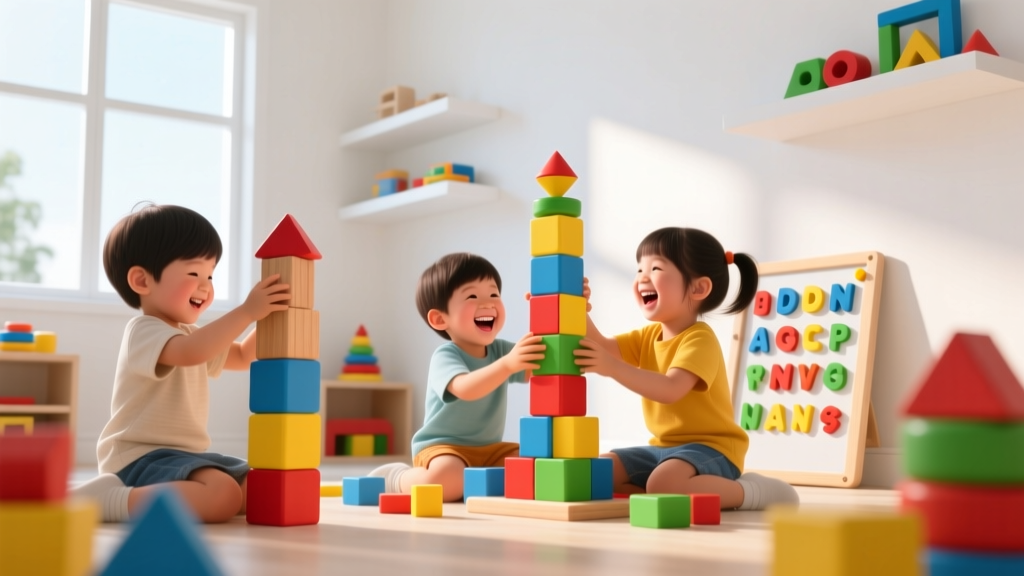
Best Puzzle Toys for Spatial Reasoning in Preschoolers
Why Spatial Reasoning Matters for Preschoolers
Spatial reasoning—the ability to understand and mentally manipulate shapes, sizes, positions, and relationships in space—is a foundational skill for early math, science, engineering, and even reading comprehension. Research shows that strong spatial skills at age 4–5 predict later success in STEM fields and problem-solving. The good news? These abilities aren’t fixed—they grow dramatically through hands-on, playful experiences. For preschoolers (ages 2–5), puzzle toys are among the most effective, joyful, and research-backed tools to nurture this critical cognitive muscle.
What Makes a Puzzle Toy Great for Spatial Development?
Not all puzzles are created equal—especially when it comes to building spatial reasoning. Look for toys that encourage:
- Rotation and orientation practice—pieces that must be turned or flipped to fit
- Part-whole relationships—understanding how smaller shapes compose larger ones
- Visual discrimination—noticing subtle differences in shape, color, and contour
- Self-correcting feedback—immediate physical cues (e.g., pieces only fitting one way)
- Open-ended exploration—toys that support both guided and creative play
Top 6 Puzzle Toys for Ages 2–5
1. Melissa & Doug Wooden Shape Sorting Cube
Ideal for ages 2–3, this classic toy combines shape recognition with fine motor development. Children match 12 wooden blocks—including circles, triangles, stars, and hexagons—into corresponding cutouts on the cube. What sets it apart is the need to rotate each piece to align its orientation correctly—a subtle but powerful spatial workout.
- Encourages trial-and-error and mental rotation
- Durable, screen-free, and sensory-rich (smooth wood, distinct shapes)
- Includes a removable lid for independent play and cleanup
2. Learning Resources Pattern Blocks and Boards Set
Ages 3–5 thrive with this versatile set of colorful geometric tiles (triangles, trapezoids, hexagons) and double-sided activity cards. Kids replicate designs or invent their own patterns—building understanding of symmetry, congruence, and spatial composition.
- Supports both structured learning (following templates) and open-ended creativity
- Introduces foundational geometry vocabulary naturally (“This triangle fits *inside* the hexagon”)
- Includes 36 pattern cards with increasing complexity—great for growing skills
3. Tegu Magnetic Wooden Blocks
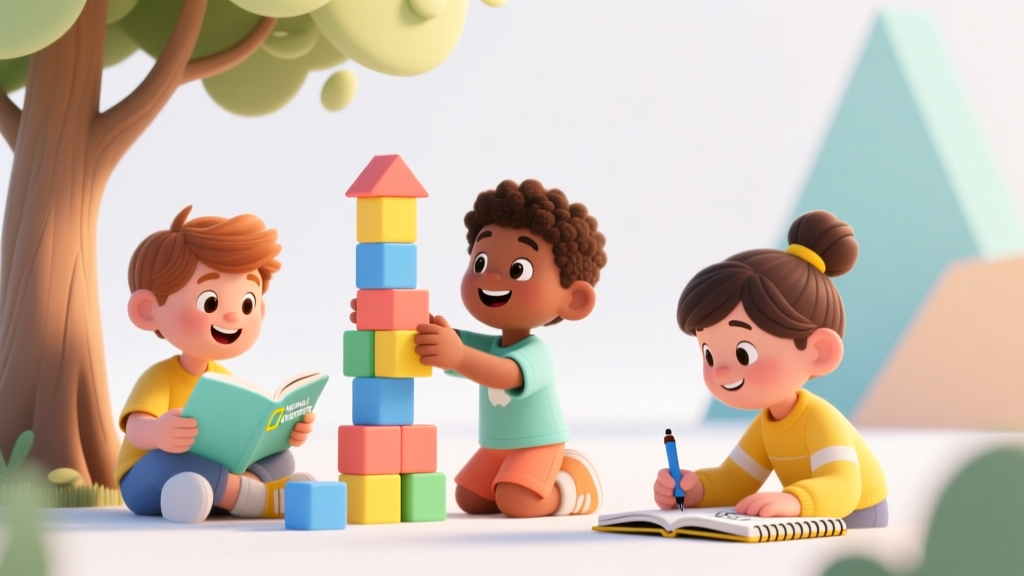
These sustainably sourced hardwood blocks contain embedded magnets, letting children build vertically, horizontally, and in unexpected configurations. Unlike rigid plastic sets, Tegu’s magnetic pull invites experimentation with balance, gravity, and 3D relationships.
- Fosters spatial visualization: “How can I make this tower stay upright?”
- No instructions needed—pure discovery-based spatial reasoning
- Safe for toddlers (large pieces, non-toxic finish) and engaging for older siblings too
4. SmartMax My First Safari Animals
Designed for ages 1–5, this magnetic construction set features chunky animal figures and connecting bars. Children snap pieces together to create animals, vehicles, or imaginative hybrids—practicing alignment, proportion, and spatial sequencing.
- Large, easy-grip pieces reduce frustration and increase engagement
- Integrates storytelling with spatial thinking (“Where does the giraffe’s neck go? How long should it be?”)
- Magnets are safely encased—no choking hazards
5. Perplexus Rookie (3D Maze Sphere)
For confident 4–5 year olds ready for tactile challenge, this clear sphere contains a winding 3D track with ramps, loops, and bridges. Kids tilt and rotate the entire sphere to guide a small metal ball from start to finish.
- Builds dynamic spatial awareness—tracking movement across multiple planes
- Strengthens hand-eye coordination and patience
- Offers progressive difficulty (Rookie edition has fewer obstacles than advanced versions)
6. Osmo Little Genius Starter Kit (iPad-Compatible)
This hybrid learning system blends physical play with gentle digital feedback. Using tangible tiles, letters, and silicone sticks, preschoolers solve puzzles that teach shapes, counting, drawing, and storytelling—all while developing spatial mapping and visual planning.
- Real-time audio/visual guidance supports independent problem-solving
- Adapts to child’s pace—repeating concepts until mastery is achieved
- Parent dashboard tracks progress without screen time overload (max 20 mins/session recommended)
How to Maximize Spatial Learning Through Play
To turn puzzle time into powerful brain-building time, try these evidence-informed strategies:
Use Rich Spatial Language
Describe what your child is doing using precise spatial words—not just “put it there,” but “slide the red triangle under the blue square,” or “turn it clockwise until the points match.” Studies show kids who hear more spatial language develop stronger spatial skills—even before formal instruction.
Ask Open-Ended Questions
Instead of giving answers, prompt thinking: “What do you notice about how these two pieces fit?” or “How could we make this taller without it falling?” This builds metacognition and encourages flexible thinking.
Rotate Toys and Vary Challenges
Keep puzzles fresh by rotating them weekly—and layer in new challenges. For example, after mastering a shape sorter, add a blindfolded version (with supervision) to strengthen mental imagery. Or ask your child to recreate a puzzle design from memory.
Play Along—Then Step Back
Model curiosity and persistence (“Hmm, this piece doesn’t fit—I wonder why?”), then give your child quiet time to explore independently. Resist the urge to “fix” things; struggle is where neural connections form.
Red Flags to Watch For (and When to Seek Support)
Most preschoolers progress at their own pace—but consult your pediatrician or early intervention specialist if your child consistently:
- Struggles to complete simple shape sorters or pegboards by age 3.5
- Avoids puzzles or construction play entirely, even with modeling and encouragement
- Has trouble following multi-step spatial directions (“Put the red block on top of the green one, then slide it left”)
- Shows significant frustration or avoidance during activities involving direction, location, or orientation
Early support makes a meaningful difference—and many spatial challenges respond well to playful, targeted interventions.
Final Thought: Puzzles Are More Than Just Play
Every time your preschooler rotates a puzzle piece, balances a tower, or traces a maze path, they’re strengthening the same neural pathways used to read maps, understand graphs, code robots, or design buildings. The best puzzle toys don’t just entertain—they invite wonder, reward persistence, and quietly lay the groundwork for lifelong learning. So choose thoughtfully, play joyfully, and trust the process: spatial reasoning isn’t taught—it’s discovered, one satisfying click at a time.
More Articles
 Did Lee Harvey Oswald Have Kids? The Truth
 Ed Gein Kids? The Truth Behind the Myth
 Musical Toys for Kids: Brain-Boosting Picks (2026)
 Outdoor vs Kirk: Toy Brand Comparison
 What Is a Tonie for Kids? Screen-Free Learning Explained
 How Many Kids Did Benjamin Franklin Have?
 Did King Kamehameha Have Kids? Lineage & Teaching Tools
 How Many Kids Did King George III Have? (2026)
 How Cars for Kids Work: Safety, Tech & Development (2026)
 Best Kids' Learning Tablets Under $100 (2026)