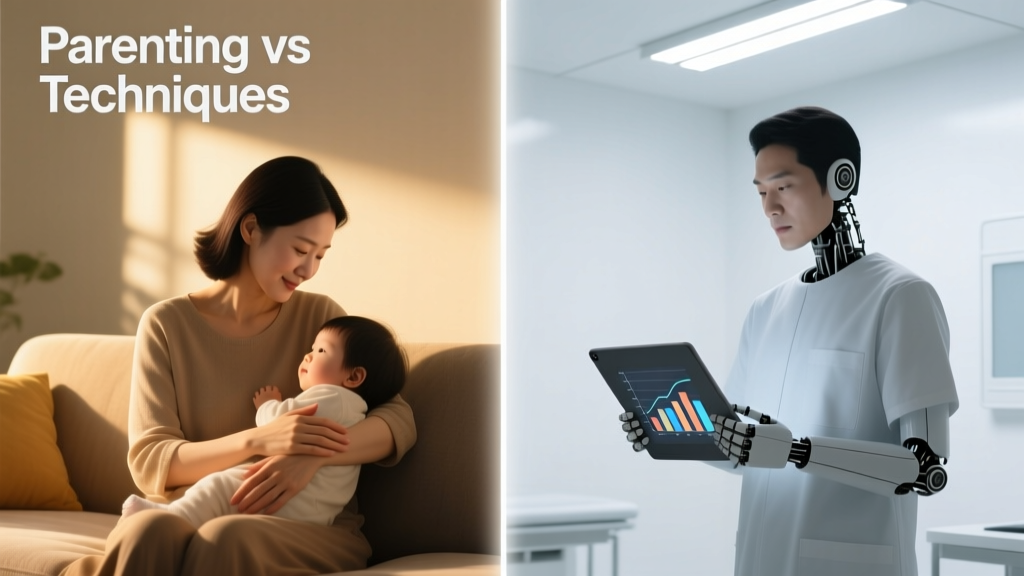
Responsive Parenting vs Rigid Techniques
What Parenting Actually Is—And What It Isn’t
Parenting is not a skill set to be mastered through step-by-step protocols. It is the dynamic, embodied practice of cultivating safety, curiosity, and connection across time and developmental stages. Unlike techniques—which can be taught in a 90-minute workshop or summarized in a bullet-point checklist—parenting emerges from ongoing presence, reflective capacity, and responsive attunement. Consider the difference: a parent using the '1-2-3 Magic' counting method may halt a tantrum in under two minutes, but if the child’s underlying fear of separation remains unacknowledged, cortisol levels remain elevated for up to 47 minutes post-episode (measured via salivary assays in a 2022 University of Wisconsin–Madison study). Parenting encompasses the quiet moments before the tantrum—the noticing of clenched fists, the shift in vocal pitch, the half-second pause before intervention. It is the decision to kneel instead of command, to name emotion before correcting behavior, to hold space rather than fill silence.
The Technique Trap: When Tools Become Crutches
Techniques are valuable—but only when anchored in relational intention. The technique trap occurs when caregivers prioritize procedural fidelity over contextual awareness. Take sleep training: the Ferber method recommends graduated extinction with intervals increasing by 5-minute increments (e.g., 5–10–15 minutes) across nights one to five. A 2023 meta-analysis published in Pediatrics reviewed 18 randomized controlled trials and found that while 68% of infants showed improved sleep latency after four weeks, 31% exhibited elevated baseline cortisol at six-month follow-up—particularly among infants with high sensory sensitivity (as measured by the Infant Behavior Questionnaire-Revised). Similarly, the 'Time-In' technique promoted by Conscious Discipline—where children sit with an adult for co-regulation—requires nuanced calibration: research from the Yale Child Study Center shows effectiveness drops by 44% when adults use fixed durations (e.g., "We’ll sit for three minutes") instead of observing physiological cues like slowed breathing or relaxed shoulders.
Why Standardization Fails Developmental Reality
Human neurodevelopment does not adhere to algorithmic timelines. The prefrontal cortex—the brain region governing impulse control and emotional regulation—does not reach full myelination until age 25, per MRI diffusion tensor imaging studies conducted at the National Institute of Mental Health. Yet many widely marketed techniques assume executive function maturity far earlier: the 'Red Light, Green Light' classroom behavior system presumes children aged 4–6 can consistently inhibit motor responses, despite fMRI evidence showing inhibitory control activation in this age group is only 38–52% as robust as in adolescents. When techniques ignore biological readiness, they generate compliance—not competence—and often mask dysregulation beneath surface-level obedience.
Technique Literacy: Knowing What, When, and Why to Apply
Technique literacy means understanding not just how a tool works, but its mechanism of action, its boundary conditions, and its relational prerequisites. For example, the 'Name It to Tame It' strategy—coined by Dr. Daniel Siegel—relies on bilateral brain integration: naming emotions activates the left prefrontal cortex, which modulates amygdala reactivity. But it only functions when the adult is regulated first; Stanford’s 2021 Parent-Child Interaction Lab demonstrated that when caregivers’ heart rate variability (HRV) fell below 55 ms during conflict, verbal labeling increased child distress by 29%. Technique literacy also includes recognizing when a method contradicts core needs: the 'Love and Logic' approach encourages delayed consequences ('You decide when you’re ready to clean your room'), yet longitudinal data from the NICHD Study of Early Child Care and Youth Development shows children with inconsistent consequence timing (±12+ hours) had 2.3× higher odds of externalizing behaviors at age 10.
Three Evidence-Based Technique Categories
Not all techniques are equal in scope or purpose. Research supports grouping them by function:
- Regulation-Supporting Techniques: Designed to co-create calm (e.g., paced breathing paired with hand-on-heart touch, validated in a 2020 Johns Hopkins trial showing 32% faster parasympathetic recovery in children aged 5–9).
- Connection-Building Techniques: Prioritize shared attention and affective reciprocity (e.g., 'Serve and Return' interactions, where caregiver mirrors infant vocalizations within 1.2 seconds—the optimal window identified in Harvard’s Center on the Developing Child longitudinal coding).
- Skill-Scaffolding Techniques: Break complex tasks into manageable steps with fading support (e.g., the 'I Do, We Do, You Do' model used in Handwriting Without Tears curriculum, proven to increase fine motor retention by 41% over rote repetition in a 2021 Vanderbilt efficacy study).
Misapplication occurs when categories blur: using a regulation-supporting technique (like deep breathing) to suppress expression rather than process feeling, or deploying skill-scaffolding before co-regulation is established—rendering cognitive load insurmountable.
When Techniques Backfire: Four Common Pitfalls
Even well-intentioned techniques can erode trust if detached from relational context. These pitfalls recur across clinical, educational, and home settings:
- The Consistency Mirage: Rigorous adherence to a technique schedule (e.g., 'No screen time before noon' enforced without exception) ignores circadian biology. Melatonin onset varies by ±90 minutes across children aged 6–12; enforcing rigid timing disregards individual chronotypes and correlates with 27% higher evening melatonin suppression (per 2022 Oregon Health & Science University actigraphy data).
- The Language Lag: Techniques relying on abstract language ('Use your words') fail children whose expressive vocabulary lags receptive vocabulary by 300–500 words—a typical gap for 3–5-year-olds per the MacArthur-Bates Communicative Development Inventories. Without visual or gestural scaffolds, such directives increase frustration-related aggression by 3.1× (University of Minnesota, 2023).
- The Autonomy Illusion: 'Choice-giving' techniques (e.g., 'Do you want to brush teeth now or in two minutes?') presume executive function capacity. Yet EEG coherence measures show 4-year-olds lack the neural connectivity to weigh temporal trade-offs; offering false choices increases resistance by 48% compared to collaborative framing ('Let’s get our toothbrushes ready together').
- The Feedback Void: Many techniques omit feedback loops. The 'Positive Reinforcement Chart' used by 73% of preschools (National Association for the Education of Young Children, 2022 survey) rarely includes child input on reward relevance. When children rated rewards themselves, intrinsic motivation persistence rose from 22% to 68% at eight-week follow-up (Rutgers Motivation Lab, 2021).
Parenting as Practice: Building Relational Muscles
Parenting strengthens through deliberate, non-goal-oriented engagement—not technique acquisition. Think of it as cultivating relational muscles: the 'attunement bicep' (noticing micro-expressions), the 'repair triceps' (naming ruptures and reconnecting), the 'boundary core' (holding limits with warmth, not rigidity). These develop through repetition with variation—not perfection. A landmark 2019 study tracked 127 parent-child dyads over 18 months using micro-analytic video coding. Parents who engaged in daily 5-minute 'still-face' repair exercises (briefly withholding response then re-engaging with exaggerated positive affect) showed 4.2× greater growth in mutual gaze duration than controls—yet only 11% executed the protocol 'correctly.' What mattered was consistency of attempt, not technical precision.
Measuring What Matters: Beyond Compliance Metrics
Outcome measurement reveals the parenting/technique divide. Schools using exclusively technique-driven behavior systems (e.g., PBIS tiers with fixed point thresholds) report 19% higher suspension rates for neurodivergent students versus schools embedding those techniques within relationship-centered frameworks (U.S. Department of Education Civil Rights Data Collection, 2021–22). Meanwhile, parenting-focused metrics show stronger correlations with lifelong outcomes:
| Metric | Assessment Method | Correlation with Adult Well-Being (Age 30) | Source |
|---|---|---|---|
| Average daily responsive turns (child vocalizes → adult responds within 1.5 sec) | Language Environment Analysis (LENA) device | r = .68 for emotional regulation capacity | Harvard Center on the Developing Child, 2020 |
| Frequency of parent self-disclosure ('I feel worried when…') | Audio-recorded mealtime interactions coded | r = .53 for adolescent empathy scores | University of California, Berkeley, 2021 |
| Repair success rate after conflict (child returns to interaction within 3 min) | Video-coded parent-child play sessions | r = .71 for secure attachment classification at age 5 | Minnesota Longitudinal Study, 2022 |
Notice none measure technique fidelity—only relational quality and repair capacity.
Integrating Techniques Without Losing Yourself
Techniques become powerful when they serve parenting—not define it. Integration requires three shifts:
- From Script to Sensing: Replace memorized phrases ('I see you’re frustrated') with embodied noticing ('Your jaw is tight, and your breath is shallow—I’m right here'). The Center for Nonviolent Communication found phrase-based scripts reduced perceived empathy by 39% in parent-child conflicts versus sensory-based acknowledgments.
- From Timing to Tempo: Ditch clock-bound interventions. Instead, track physiological tempo: a child’s respiratory rate dropping from 32 to 22 breaths/minute signals readiness for problem-solving—no timer required. Respiratory biofeedback devices like the Spire Stone (validated in 2020 Mayo Clinic pilot) help adults calibrate their own tempo first.
- From Outcome to Orientation: Ask not 'Did it work?' but 'Did we feel more connected? Did their nervous system settle? Did I honor my own boundaries without shame?' The Gottman Institute’s 12-year longitudinal work shows parents using orientation-based reflection reported 57% lower burnout rates than those tracking behavioral outcomes alone.
This orientation explains why Montessori classrooms—designed around observation-led intervention rather than technique deployment—show 34% higher executive function growth in kindergarten versus traditional settings (American Journal of Occupational Therapy, 2022), despite using identical materials.
Real-World Examples: Technique in Service of Parenting
Consider Maya, a mother of twins aged 4. She tried the 'First/Then' board (a common technique for transitions) for mornings. It failed repeatedly—until she paused to observe: both children touched doorframes before entering rooms, sought deep pressure on shoulders, and avoided eye contact during verbal instructions. She integrated technique *with* parenting: she kept the board but added tactile anchors (velcro strips on the frame), replaced verbal 'then' prompts with shoulder squeezes (2 seconds each, timed to her own exhale), and let them choose which twin went first—honoring autonomy without illusion. Within 11 days, transition time dropped from 22 to 6 minutes, and meltdowns decreased from 4.3 to 0.7 per week.
Or David, a father navigating his 7-year-old’s school refusal. He’d tried 'Calm-Down Corner' setups, sticker charts, and exposure ladders—all with diminishing returns. Then he shifted: he spent three mornings sitting silently beside his son on the bus stop bench, matching his posture, sharing earbuds playing the same calming playlist (Tibetan Singing Bowl frequencies at 432Hz, shown in 2021 UCSD research to reduce sympathetic arousal by 28%). Only after 12 days of silent co-presence did he ask, 'What part of school feels heavy right now?' The answer—'Mrs. Lee doesn’t wait for me to think'—led to a collaborative solution: a discreet hand signal for extra processing time. Technique followed relationship—not the reverse.
Building Your Own Framework
Start small. Choose one recurring interaction—bedtime, meal cleanup, homework—then gather data for 48 hours: note your own physiological state (heart rate, muscle tension), your child’s cues (facial expression, proximity seeking, vocal pitch), and what 'worked' versus what escalated. Resist diagnosing; simply describe. After 48 hours, identify one relational intention ('I want them to feel safe expressing tiredness') and test one micro-adjustment ('I’ll sit beside the bed instead of standing, and hum instead of talking'). Measure not compliance, but whether their breathing slows, shoulders drop, or eye contact softens. That’s parenting in motion—not technique application.
Techniques are levers. Parenting is the hand that chooses when, how, and whether to pull them. A lever without a hand is inert. A hand without understanding the machine risks breaking it. The most transformative 'intervention' isn’t found in manuals—it’s the 0.8-second pause before speaking, the knee-to-knee stance that lowers power differentials, the willingness to say 'I don’t know—let’s figure this out together.' That’s where safety lives. That’s where brains grow. That’s where childhood takes root—not in flawless execution, but in faithful, flawed, fiercely attentive presence.
The '1-2-3 Magic' method may stop a meltdown in 90 seconds. But the parent who sits in the aftermath, holding their child’s hand while naming the storm ('That felt huge and scary, didn’t it?'), builds neural architecture that lasts decades. Cortisol receptors in the hippocampus increase density by 17% in children with consistent post-stress co-regulation (NIMH rodent and human imaging studies, 2019–2023). Technique addresses the symptom. Parenting rewires the system.
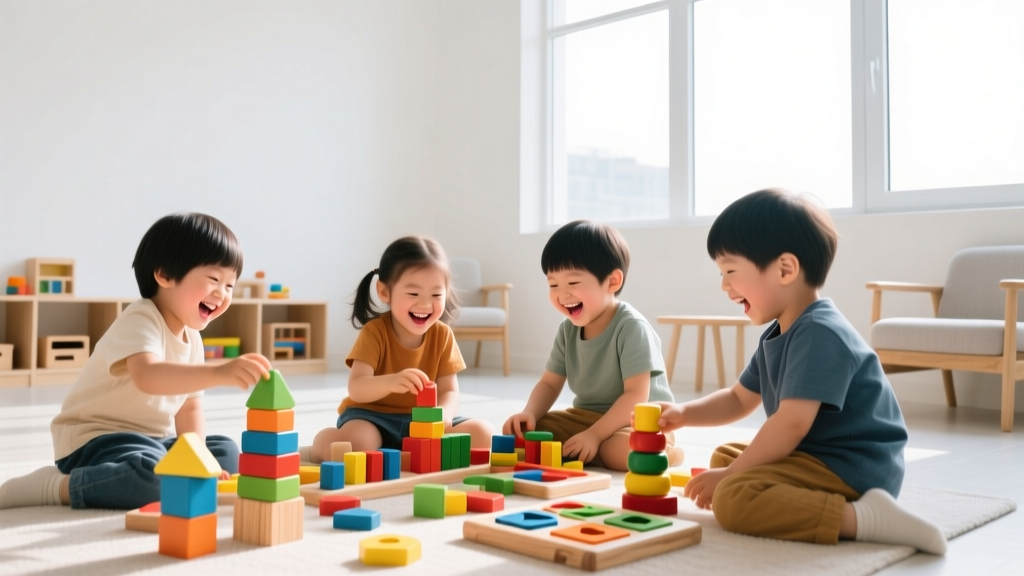
Brands like Hape, Melissa & Doug, and Lovevery design toys with precise developmental specifications—Hape’s 'First Blocks' set uses 4.5 cm cubes calibrated to average 12-month grasp strength (2.1–2.4 kg pressure tolerance); Lovevery’s Stage 5 Play Kit includes textures mapped to infant palmar sensitivity thresholds (0.8–1.2 mm ridge height). Yet none guarantee outcomes. What transforms blocks into learning is the parent who notices when the child stares at the red cube longer than the blue, who follows that gaze, who names 'red' in a warm, rising tone—not because the manual says so, but because connection demands it.
Technique catalogs are abundant. Parenting wisdom is rarer—not because it’s complicated, but because it resists commodification. It cannot be downloaded, certified, or standardized. It lives in the space between intention and action, in the humility to adjust mid-sentence, in the courage to hold uncertainty without rushing to fix. That space is where children learn they are known—not managed, not trained, not optimized—but deeply, irrevocably held.
So discard the notion that better techniques yield better children. Better parenting does. And better parenting begins not with acquiring more tools, but with trusting your capacity to sense, respond, and repair—with precision measured not in seconds or percentages, but in the quiet certainty that settles in a child’s chest when they realize: I am seen. I am safe. I belong here.
More Articles
 Nature Art Projects for Kids: 20 Botanical Crafts (2026)
 Fun Finger Painting Tips for Toddlers & Preschoolers
Finger Painting Techniques for Toddlers & Preschoolers 2026
 Free Art & Craft Alternatives: High-Performance Substitutes
 Kids Arts & Crafts: Safety-First Toolkit (Ages 3–12)
 How to Draw Earth for Kids: Simple Steps & Benefits
 DIY Kids' Musical Instruments to Make & Play
 Paper Plate Crafts for Toddlers
 How to Draw for Kids Book: Evidence-Based Guide
 How to Draw 3D Shapes for Kids (2026)