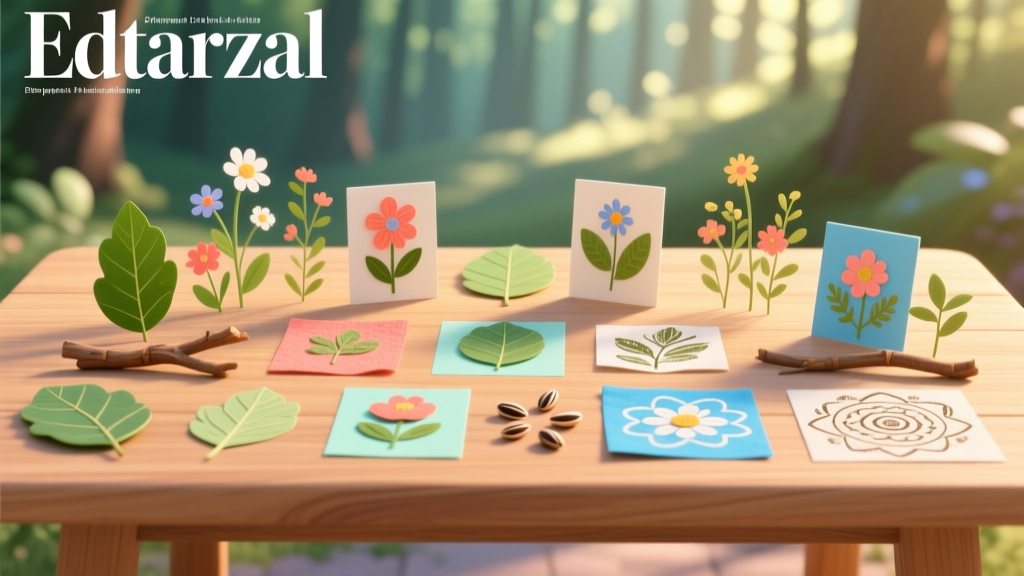
Nature Art Projects for Kids: 20 Botanical Crafts (2026)
🧠 OT Perspective: Why Nature Art Matters
As an occupational therapist, I recommend nature art because it naturally targets the pincer grasp (picking up small petals), bilateral coordination (pressing and pounding), and sensory integration (touching varied textures). Research in the American Journal of Occupational Therapy shows that natural material manipulation improves hand strength 25% more than synthetic clay alone.
Quick Projects (Under 15 Minutes)
1. Leaf Print Bookmarks
Pincer grasp Color recognition
Paint the underside of interesting leaves, press onto cardstock strips, and laminate with contact paper. Instant bookmarks.
Best leaves: Maple, oak, fern fronds (veined side gives best prints).
2. Flower Pounding on Fabric
Bilateral coordination Force modulation
Place fresh flowers between two layers of cotton fabric. Pound with a hammer to transfer natural pigments. The result is a beautiful botanical print.
Best flowers: Pansies, violets, marigolds, roses (anything with strong pigments).
3. Nature Mandala
Spatial reasoning Symmetry
Collect petals, leaves, small stones, and twigs. Arrange in concentric circles on a flat surface. Photograph and release back to nature.
4. Leaf Rubbing Collection
Fine pressure control
Place leaves under paper, rub with crayons or oil pastels. Collect a "leaf encyclopedia" of your neighborhood trees.
5. Dandelion Crown
Bilateral coordination Sequencing
Slit dandelion stems and loop them together. A classic that builds dexterity and patience.
Medium Projects (15-45 Minutes)
6. Pressed Flower Cards
Precision placement Planning
Press small flowers between heavy books for 3-5 days (or use a microwave press for 30 seconds). Glue onto folded cardstock with Mod Podge.
Quick-press hack: Place flowers between paper towels, microwave in 30-second bursts until dry.
7. Leaf Skeleton Art
Soak leaves in water with baking soda for 1-2 weeks. Gently brush away the green tissue to reveal the delicate vein skeleton. Frame or use as stencils.
8. Nature Paintbrushes
Tie pine needles, grass, flower petals, or small leaves to the end of a stick with rubber bands. Dip in paint and see what textures each "brush" creates.
9. Flower Ice Suncatchers
Place small flowers in muffin tins with water and a loop of string. Freeze overnight. Hang in trees and watch them melt into colorful ice art.
10. Bark Rubbing Journal
Take a nature walk with crayons and paper. Do bark rubbings of every tree species you find. Label each one and create a tree identification journal.
11. Seed Mosaic
Glue different colored seeds (corn, beans, rice, lentils) onto cardboard to create mosaic patterns. Great for color sorting and precision.
12. Grass Weaving
Cut long grass or use raffia. Create a simple loom from cardboard and weave nature materials into a small tapestry.
Advanced Projects (Weekend Projects)
13. Botanical Cyanotype Prints
Use sun-print paper (available at craft stores). Arrange pressed leaves and flowers on the paper, expose to sunlight for 3-5 minutes, then rinse. Creates stunning blue-and-white botanical prints.
14. Flower Pressing Book
Build a dedicated flower press from two pieces of wood, bolts, and cardboard layers. Press an entire season's collection and create a botanical reference book.
15. Nature Mobile
Collect interesting sticks, pinecones, seed pods, and dried flowers. String together with fishing line and hang from a branch. Each season, swap in new materials.
16. Leaf Bowl
Layer real leaves over an inflated balloon with Mod Podge. Apply 3-4 layers. Pop the balloon when dry to reveal a beautiful leaf bowl.
17. Botanical Journal
For each season, collect, press, and label 5 specimens. Include the date, location, and a watercolor sketch. Build a year-long nature journal.
18. Eco-Print on Silk
Roll leaves and flowers tightly inside silk fabric. Steam for 1-2 hours. Unroll to reveal permanent botanical prints dyed by the plants themselves.
19. Twig Picture Frames
Collect straight twigs, cut to size, and glue around a cardboard frame. Add pressed flowers at the corners.
20. Nature Shadow Box
Arrange a curated collection of natural materials in a deep frame — feathers, shells, dried flowers, interesting seeds. Label each specimen like a museum exhibit.
Developmental Benefits by Project Type
| Project Type | Primary Skills | Best For |
|---|---|---|
| Pressing & Pounding | Bilateral coordination, force control | Kids who need heavy work input |
| Collecting & Sorting | Visual discrimination, categorization | Analytical thinkers |
| Cutting & Arranging | Scissor skills, spatial planning | Pre-writing readiness |
| Weaving & Tying | Fine motor precision, patience | Older kids (7+) |
Seasonal Collection Calendar
| Season | Best Materials | Featured Projects |
|---|---|---|
| Spring | Cherry blossoms, dandelions, fresh leaves | Flower pounding, dandelion crowns |
| Summer | Roses, sunflowers, grasses, seaweed | Cyanotypes, ice suncatchers |
| Fall | Maple leaves, acorns, seed pods, pinecones | Leaf bowls, nature mobiles |
| Winter | Evergreen needles, dried pods, bark | Bark rubbing, twig frames |
Frequently Asked Questions
Are there any plants I should avoid?
Yes. Avoid poison ivy, poison oak, poison sumac, oleander, and foxglove. When in doubt, stick to plants you can identify. Always supervise young children and teach them never to put unknown plants in their mouths.
How long do pressed flowers last?
Properly pressed and stored flowers can last years. Keep them away from direct sunlight (which fades color) and humidity. Sealing with Mod Podge or lamination extends their life significantly.
Can I do these projects in an apartment?
Absolutely. Many projects work with grocery-store flowers, potted herbs, or leaves collected on walks. Window-sill herb pressing is a great apartment-friendly option.
My child has sensory sensitivities — which projects are best?
Start with leaf rubbing and nature mandalas (dry, predictable textures). Avoid flower pounding (loud, messy) until the child is comfortable. Let them choose which materials to touch.
More Articles
 Clay Modeling Projects for Kids at Home
 Draw a Rabbit for Kids: 5 Simple Steps (2026)
 How to Draw for Kids Book: Evidence-Based Guide
 Easy Rose Drawing for Kids: Step-by-Step Guide
 How to Save Kids Artwork: Realistic, Archivist-Approved Tips
 Clay Sculpting Projects for Children Ages 4-10
 Sensory Art Activities for Kids with Special Needs
 Paper Crafts for Kids: 12 Fine Motor Skills Projects
 Paper Plate Crafts for Toddlers
 Field-Validated Art & Craft Supply Checklist