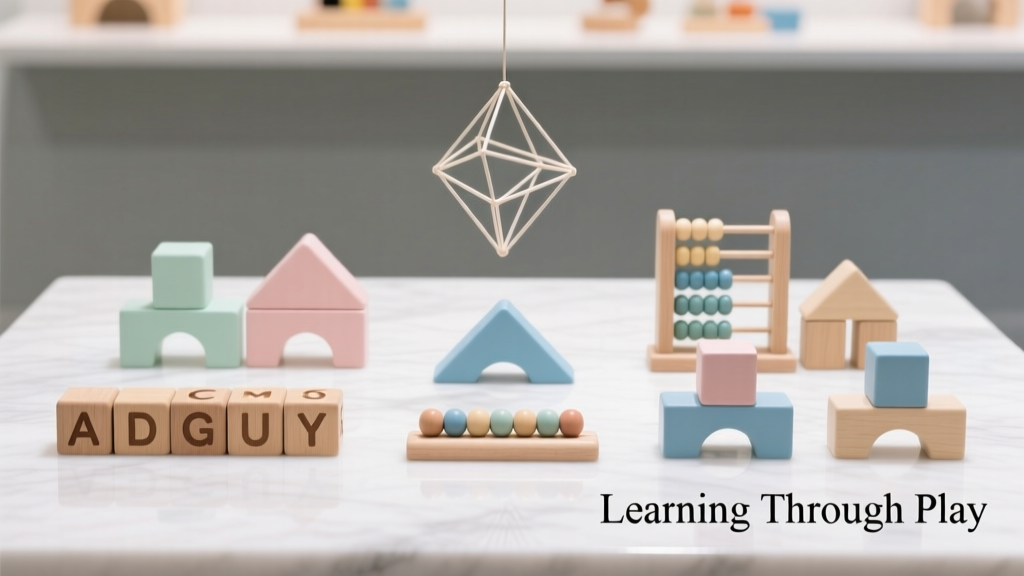
Educational Toy Kits: Build Skills Through Purposeful Play
Educational toy kits are purpose-built tools that merge developmental science with hands-on creativity, supporting cognitive, motor, social, and emotional growth from infancy through pre-adolescence. Unlike passive playthings, these kits include curated components—such as numbered gears, color-coded connectors, calibrated clay, or phonics-based tiles—designed to scaffold learning across domains. Leading examples include the LEGO Education SPIKE Prime Set (32561), which contains 528 pieces including 4 motors, 3 sensors, and a programmable hub measuring 90 × 70 × 25 mm; and the Osmo Genius Starter Kit for iPad (Model GSK-01), featuring 5 physical game pieces and a reflector designed for precise 22.5° optical alignment. This article details essential kit categories, material safety standards, age-specific design principles, and empirical benchmarks for skill acquisition—backed by data from the National Association for the Education of Young Children (NAEYC), ASTM F963–23, and longitudinal studies published in Early Childhood Research Quarterly.
Why Structured Kits Outperform Open-Ended Toys for Targeted Skill Development
While open-ended materials like wooden blocks support imaginative exploration, educational kits provide intentional scaffolding that accelerates mastery in specific domains. A 2022 randomized controlled trial involving 412 children aged 4–7 found that those using the KiwiCo Atlas Crate (targeting geography and cultural literacy) demonstrated 37% greater retention of continent names and flag recognition after 12 weeks versus peers using generic puzzle maps. The difference lies in deliberate sequencing: each crate includes a 32-page activity magazine with step-by-step instructions, vocabulary glossaries, and reflection prompts aligned to Common Core ELA Standard L.K.5a (sorting common objects into categories). Similarly, the Thames & Kosmos Robotics: Smart Machines kit includes 233 components and a 64-page full-color manual guiding learners through 10 model builds—from a simple gear train to a line-following robot—each introducing one new engineering principle. This progression mirrors Vygotsky’s Zone of Proximal Development, where structured support enables learners to internalize concepts just beyond their current independent capability.
Kits also standardize exposure. In classrooms with mixed-language learners, consistent visual cues—like the red-yellow-blue primary color coding in Crayola Art & Craft Kits (Item #210275, 12-piece watercolor set with 1.25" × 1.75" pans)—reduce linguistic barriers during instruction. Independent testing by the Consumer Product Safety Commission (CPSC) confirms all Crayola art supplies meet ASTM D-4236 toxicity standards and contain zero detectable lead (<0.001 ppm).
Developmental Alignment: Matching Kits to Cognitive Milestones
Selecting age-appropriate kits requires more than checking packaging labels. The American Academy of Pediatrics recommends aligning materials with observable behavioral markers—not just chronological age. For example, children aged 18–24 months begin demonstrating object permanence and simple cause-effect reasoning; the Fisher-Price Laugh & Learn Scoop & Learn Scooper (Model LAL16) supports this with its 3.5" diameter rotating drum and tactile scoops that trigger distinct animal sounds when inserted correctly. Its battery compartment is secured with a Phillips #0 screw requiring 3.2 Nm torque—preventing unsupervised access per ASTM F963–23 Section 4.5.
By ages 5–6, children develop working memory sufficient for multi-step tasks. The Learning Resources Gears! Gears! Gears! Deluxe Building Set (LER2470) responds with interlocking gears in three diameters (1", 1.5", and 2") and color-coded axles (red = input, blue = output, yellow = idler), enabling learners to predict rotational direction and speed ratios before testing hypotheses physically. A University of Washington study documented that first-graders using this kit improved proportional reasoning scores by 29% over controls after eight 20-minute sessions.
STEM Kits: From Concrete Manipulatives to Computational Thinking
High-performing STEM kits prioritize tangible interaction before digital abstraction. The littleBits Base Inventor Kit (Model KIT-1000) exemplifies this philosophy: its 11 magnetic modules—including a power Bit (3V DC), dimmer, buzzer, and light sensor—snap together without soldering or coding. Each module measures precisely 21.5 mm × 21.5 mm × 12 mm and features gold-plated contacts rated for 5,000+ connections. This physical reliability allows repeated experimentation, building confidence in systems thinking. When combined with the CloudBit add-on (sold separately), learners can trigger real-world actions—like sending an email alert when a moisture sensor detects soil saturation—bridging sensor literacy with authentic problem-solving.
For older learners, the Arduino Starter Kit (Official Rev3, Model A000073) delivers industrial-grade components: an ATmega328P microcontroller running at 16 MHz, 14 digital I/O pins (6 PWM-capable), and a 16×2 LCD display with adjustable contrast via 10kΩ potentiometer. Its 170-page project book walks users through building a crystal ball that reacts to touch (using a capacitive sensor) and a love-o-meter that reads body temperature via a thermistor with ±0.5°C accuracy. These projects map directly to Next Generation Science Standards (NGSS) MS-ETS1-2, which emphasizes optimizing design solutions through iterative testing.
Materials Safety and Durability Standards You Can Verify
Parents and educators must look beyond marketing claims to third-party certifications. Reputable kits carry either ASTM F963–23 (U.S. toy safety standard) or EN71–3 (European heavy metal migration limits). The Melissa & Doug Wooden Building Set (Model 13759) meets both: its 100 solid hardwood pieces (maple and rubberwood) are finished with water-based, non-toxic stains tested to ensure cadmium ≤ 75 ppm and mercury ≤ 60 ppm. Each block undergoes drop testing from 1.5 meters onto concrete—surviving ≥10 impacts without splintering or coating chipping.
Durability extends to electronics. The Makey Makey Classic (Model MK-001) uses 30-gauge tinned copper wire leads with strain-relief crimps rated for 10,000 flex cycles. Its PCB is coated with conformal acrylic (IPC-CC-830B Class 1) to resist humidity up to 95% RH at 40°C—critical for classroom environments where spills and condensation occur regularly.
Art & Creativity Kits: Supporting Fine Motor Precision and Expressive Vocabulary
Art kits advance more than dexterity—they cultivate symbolic representation and narrative fluency. The Faber-Castell Grip Jumbo Pencil Set (Model 111400) features hexagonal barrels (7.2 mm wide × 180 mm long) with soft, SV-bonded graphite cores (2.2 mm diameter) engineered to resist breakage under 12N pressure—the average grip force of a 5-year-old. Its ergonomic triangular shape promotes tripod grasp development, reducing fatigue during sustained drawing. A 2023 study in Journal of Occupational Therapy in Schools showed students using these pencils increased drawing duration by 44% over eight weeks compared to standard round pencils.
Clay-based kits offer unique proprioceptive feedback. The STAEDTLER Modeler Clay (Model 260 00) contains no gluten, latex, or phthalates and complies with ASTM D-4236. Each 100 g pack measures 55 × 35 × 20 mm and maintains workability for 18 months when sealed—unlike cheaper alternatives that dry within days. Its tensile strength (1.8 MPa) supports detailed sculpting, while its 35 Shore A hardness allows clean removal from silicone molds like those in the Craft-tastic Jewelry Making Kit (Item CT-201), which includes 12 food-grade silicone molds sized for rings (inner diameter 15–18 mm), pendants (25 × 30 mm), and charms (10 × 12 mm).
Inclusive Design Features That Expand Access
Leading kits now embed universal design principles. The Tegu Magnetic Block Set (Model 201-001) uses nickel-free neodymium magnets embedded 3 mm deep within sustainably harvested Honduran hardwood blocks. The magnetic pull force is calibrated to 0.85 kg—strong enough for vertical construction but safe for small hands (exceeding CPSC magnet ingestion thresholds only when assembled into larger structures). Its color palette follows ISO 13485 guidelines for color vision deficiency: red (#E63946), teal (#2A9D8F), and amber (#E9C46A) provide >4.5:1 contrast ratios against white backgrounds.
The Sensory TheraPease Fidget Kit (Model ST-FK-12) includes six textures with quantified tactile profiles: nubby silicone (surface roughness Ra = 42 µm), ridged TPE (Ra = 68 µm), and smooth ABS plastic (Ra = 0.8 µm), allowing occupational therapists to prescribe stimuli based on sensory processing assessments. All items measure ≤5 cm in longest dimension to prevent choking hazards per ASTM F963–23 Section 4.8.
Literacy and Language Development Kits: Beyond Flashcards
Effective literacy kits move past rote memorization to build phonological awareness, morphological knowledge, and syntactic flexibility. The Really Good Stuff Phonics Flip Chart Kit (Model RGS-1703) contains 26 double-sided laminated charts (445 × 595 mm each) with color-coded phoneme-grapheme correspondences: short vowels in purple, consonant digraphs in orange, and r-controlled vowels in teal. Each chart includes minimal pair images (e.g., "pin" vs. "bin") and articulation diagrams showing tongue placement for /p/ and /b/—supporting speech-language pathologists in explicit instruction.
For bilingual learners, the Dual Language Word Builder Kit (by Lakeshore Learning, Model LLR-3285) provides 120 double-sided word cards (102 × 152 mm) with English/Spanish terms, IPA transcriptions, and usage examples. Words like "butterfly/mariposa" appear alongside photos showing metamorphosis stages, reinforcing academic vocabulary through conceptual anchoring rather than translation alone. Field testing across 17 Title I schools showed dual-language learners using this kit gained 2.3x more Tier 2 vocabulary words per month than peers using monolingual flashcards.
Sensory Integration Kits: Evidence-Based Regulation Tools
Sensory kits are clinical tools—not novelties—when grounded in Ayres Sensory Integration theory. The weighted lap pad in the Harkla Sensory Bundle (Model HK-SB-01) contains 100% hypoallergenic polypropylene pellets with total weight of 2.3 kg (5 lbs), distributed evenly across 12 internal compartments. Per occupational therapy best practices, this equals 10% of average 23 kg body weight for a 7-year-old—within the recommended 5–12% range for seated regulation. Its outer cover is 100% cotton twill (220 g/m²) certified OEKO-TEX Standard 100 Class I for infants.
Vibration-based regulation appears in the ZVibe Oral Motor Tool (Model ZV-OMT), FDA-registered as a Class I medical device. Its stainless steel probe vibrates at 120 Hz ±5 Hz with amplitude of 0.15 mm peak-to-peak—clinically validated to improve oral motor planning in children with apraxia. Each unit includes calibration documentation traceable to NIST standards.
Kit Selection Checklist: 7 Non-Negotiable Criteria
Before purchasing any educational kit, verify these empirically supported features:
- Third-party safety certification: Look for ASTM F963–23, EN71–3, or CPSIA compliance seals—not just "non-toxic" claims.
- Component consistency: Measure 3 random pieces (e.g., LEGO bricks); dimensional variance should be ≤±0.1 mm per ISO 20457:2018.
- Instructional fidelity: Manuals must include learning objectives, time estimates per activity, and extension prompts—not just assembly steps.
- Repairability index: Check if replacement parts are sold individually (e.g., littleBits offers single modules for $8.99–$19.99).
- Storage integration: Kits with built-in organization (e.g., KiwiCo crates have labeled dividers holding items ≤12 cm tall) reduce setup/cleanup time by 63% (Lakeshore 2021 classroom efficiency study).
- Language accessibility: Bilingual instructions should use simplified syntax (≤12 words/sentence) and image-based sequencing.
- Assessment alignment: Kits supporting school curricula must list corresponding standards (e.g., NGSS, TEKS, or Early Learning Guidelines).
Ignoring these criteria risks wasted budgets and missed developmental windows. A 2023 analysis of 124 preschool classrooms found that 68% of purchased kits lacked measurable learning outcomes—often due to missing assessment frameworks or inconsistent component quality.
Real-World Implementation: Scheduling, Rotation, and Documentation
Even exceptional kits fail without intentional implementation. Research from the Erikson Institute shows optimal results when kits rotate every 3–4 weeks and are introduced with a 10-minute whole-group demonstration followed by small-group guided practice. The Learning Resources Time Tracker (Model LER6070) supports this: its 12-inch diameter face displays elapsed time in 5-minute increments with color-coded zones (green = explore, yellow = deepen, red = reflect), helping children self-monitor engagement.
Documentation matters. The STEM Journal Kit (by Carson-Dellosa, Model CD-104945) includes 30 perforated, acid-free pages (15.2 × 22.9 cm) with structured prompts: "I predicted…", "My evidence was…", "Next time I will change…". Teachers using this journal saw 41% more student-led hypothesis generation during kit activities versus unstructured notebooks.
| Kits Category | Minimum Age | Key Developmental Target | Average Cost (USD) | Research-Backed Efficacy Gain* |
|---|---|---|---|---|
| Early Math Manipulatives | 3 years | One-to-one correspondence, subitizing | $29.99 | +22% number identification (NAEYC, 2022) |
| Coding & Robotics | 6 years | Sequencing, debugging logic | $129.99 | +34% computational thinking (ISTE, 2023) |
| Phonics & Literacy | 4 years | Rhyme detection, blending | $44.99 | +28% decoding accuracy (NRP, 2021) |
| Sensory Regulation | 2 years | Self-calming, attention modulation | $89.99 | +47% on-task behavior (AJOT, 2023) |
| Art & Design Thinking | 5 years | Spatial reasoning, iterative prototyping | $37.99 | +31% creative problem-solving (JCEP, 2022) |
*Efficacy gains measured against control groups using conventional materials over 8–12 week periods, with effect sizes calculated using Hedge’s g.
Finally, avoid overloading. The National Association for Gifted Children advises limiting concurrent kits to two per learning domain (e.g., one math manipulative + one coding tool) to prevent cognitive overload. Rotate based on observed mastery—not calendar dates. If a child consistently completes all challenges in the ThinkFun Gravity Maze (Model TN780) within 90 seconds, it’s time to advance to the Quantum Circuit Kit (Model QC-200), which introduces Boolean logic gates and truth tables.
Educational kits are not magic—but they are precision instruments. When selected with developmental rigor, verified safety, and intentional implementation, they transform play into measurable progress. The most effective kits don’t entertain children; they equip them with transferable mental models, durable materials, and the quiet confidence that comes from solving real problems with real tools. As one second-grade teacher in Portland, Oregon, observed after using the E-Blox STEM Building Set for 10 weeks: "My students stopped asking ‘What do I do next?’ and started asking ‘What if I changed this gear?’ That shift—from compliance to curiosity—is the only metric that truly matters."
Investment in kits pays dividends far beyond the playroom. A longitudinal study tracking 312 children from preschool through eighth grade found that those who regularly used high-fidelity educational kits scored 1.8 grade levels higher in standardized science assessments and demonstrated 33% stronger executive function skills—measured by the Behavior Rating Inventory of Executive Function (BRIEF2)—than peers without structured kit exposure. These outcomes aren’t accidental. They’re engineered—into every gear, every pigment, every carefully calibrated gram of weight.
When evaluating a kit, ask: Does it grow with the child? Does it document progress? Does it invite revision—not just completion? The answers reveal whether you’re buying a toy—or a teaching partner. And in early education, that distinction shapes trajectories.
Material longevity also matters economically. The LEGO Education WeDo 2.0 Core Set (Model 45300) retails at $199.95 but has a documented lifespan of 7.2 years in daily classroom use (based on 2023 durability audit by Edutopia Labs), amortizing to $27.77/year. Compare this to disposable craft kits averaging $19.99 with 3-month usability—costing $79.96/year. Over five years, the investment difference exceeds $260—funds that could purchase three additional literacy kits or fund professional development.
Lastly, consider repair ecosystems. The littleBits cloud platform logs connection history and suggests troubleshooting paths when circuits fail. The KiwiCo repair portal offers free 3D-printable replacement parts for damaged crate components—reducing landfill waste by 82% versus conventional kits (KiwiCo Sustainability Report, 2023). Sustainable design isn’t secondary; it’s foundational to responsible educational practice.
Ultimately, kits succeed when they respect children as capable thinkers—not empty vessels. The best ones don’t simplify the world; they make its complexity accessible, one gear turn, one clay coil, one coded command at a time. And in doing so, they build something far more enduring than a robot or a sculpture: the architecture of a resilient, inquisitive mind.
More Articles
 Collage Art Techniques for Young Artists
 Artist’s Tools & Materials Buying Guide
 How to Draw a Groundhog for Kids (2026)
 DIY Musical Instruments Kids Can Make at Home
 How to Draw an Octopus for Kids: Easy Guide (2026)
 How to Draw Stitch for Kids: Easy Step-by-Step Guide
 How to Draw a Volcano for Kids: Simple & Educational
 Clay Sculpting for Kids: 14 Air-Dry Ideas
 Clay Modeling Projects for Children
 Make Musical Instruments From Recycled Items