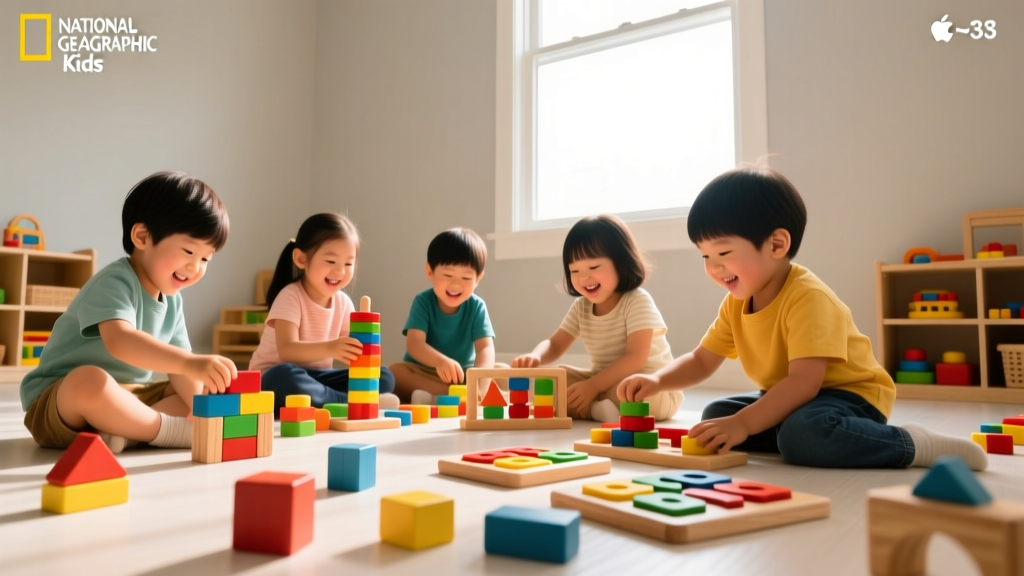
Kitchen Science Experiments for Kids (Safe DIY)
Your Kitchen Is a Science Lab
The best science experiments don't require special equipment. Common kitchen ingredients can demonstrate chemistry, physics, and biology concepts that captivate children and build genuine scientific thinking.
15 Kitchen Science Experiments
1. Dancing Raisins
Drop raisins into a glass of carbonated water. Watch them sink, collect bubbles, rise to the surface, then sink again. Teaches buoyancy and gas behavior. Ask: "Why do they go up and down?"
2. Homemade Lava Lamp
Fill a glass 3/4 with oil, add water and food coloring. Drop in an Alka-Seltzer tablet. Watch colored blobs rise and fall. Demonstrates density and chemical reactions.
3. Milk Color Explosion
Pour milk into a shallow dish, add drops of food coloring. Touch the surface with a cotton swab dipped in dish soap. Colors explode outward. Demonstrates surface tension breaking.
4. Invisible Ink
Write messages with lemon juice on paper. Let dry completely. Hold near a warm light bulb (not open flame) to reveal the message. Teaches oxidation chemistry.
5. Egg in a Bottle
Place a peeled hard-boiled egg on a bottle opening. Drop a lit match inside. The egg gets sucked in as air cools and contracts. Demonstrates air pressure dramatically.
6. Baking Soda Volcano
Build a volcano shape around a cup. Add baking soda, dish soap, and food coloring. Pour in vinegar for an eruption. Classic acid-base reaction that never gets old.
7. Oobleck (Non-Newtonian Fluid)
Mix 2 cups cornstarch with 1 cup water. It acts as both solid and liquid depending on force applied. Punch it (solid) or let your hand sink slowly (liquid). Mind-bending physics.
8. Rainbow Celery
Place celery stalks in cups of water with different food coloring. Over hours, the colored water travels up the stem. Demonstrates capillary action in plants.
9. Floating Egg
Place an egg in plain water (it sinks). Add salt gradually until it floats. Demonstrates density changes. Compare with fresh vs. saltwater oceans.
10. Popcorn Science
Watch popcorn kernels pop and discuss why. The water inside turns to steam, building pressure until the hull bursts. Explore which kernels pop best at different temperatures.
11. Homemade Butter
Shake heavy cream in a jar until it separates into butter and buttermilk (15-20 minutes). Demonstrates emulsion breaking. Eat the results on crackers.
12. Crystal Growing
Dissolve salt or sugar in hot water until no more dissolves. Suspend a string in the solution. Over days, crystals form. Teaches saturation and crystallization.
13. Paper Chromatography
Draw dots with different markers on coffee filter paper. Dip the bottom in water. Watch colors separate into component pigments. Teaches mixture separation.
14. Yeast Balloon
Mix yeast, sugar, and warm water in a bottle. Stretch a balloon over the top. As yeast feeds on sugar, it produces CO2 that inflates the balloon. Biology in action.
15. Pepper and Soap Trick
Sprinkle pepper on water surface. Touch with a soapy finger — pepper shoots to the edges. Demonstrates how soap breaks surface tension. Relate to handwashing importance.
The Scientific Method
For each experiment, guide kids through: Question → Hypothesis → Experiment → Observation → Conclusion. Ask "What do you think will happen?" before starting, and "Why do you think that happened?" after.
Safety Notes
All experiments use food-safe ingredients. Adult supervision required for any heat sources. Clean up is easy with soap and water. Avoid experiments near eyes.
More Articles
 Pyramids of Giza for Kids: STEM Learning Guide
 Mae Jemison Kids: Redefining STEM Success (2026)
 Screen-Free Math Games for Kids Ages 5-10
 Composting for Kids: Fun, Safe, Science-Backed Guide
 Simple Math Games for Preschoolers
 Watershed for Kids: Simple, Hands-On Learning
 STEM Learning Trends 2026: What's New
 Math Board Games for Family Game Night
 Craft Guide for K-12 Educators
 What Is a Hurricane for Kids: Science & Safety Guide