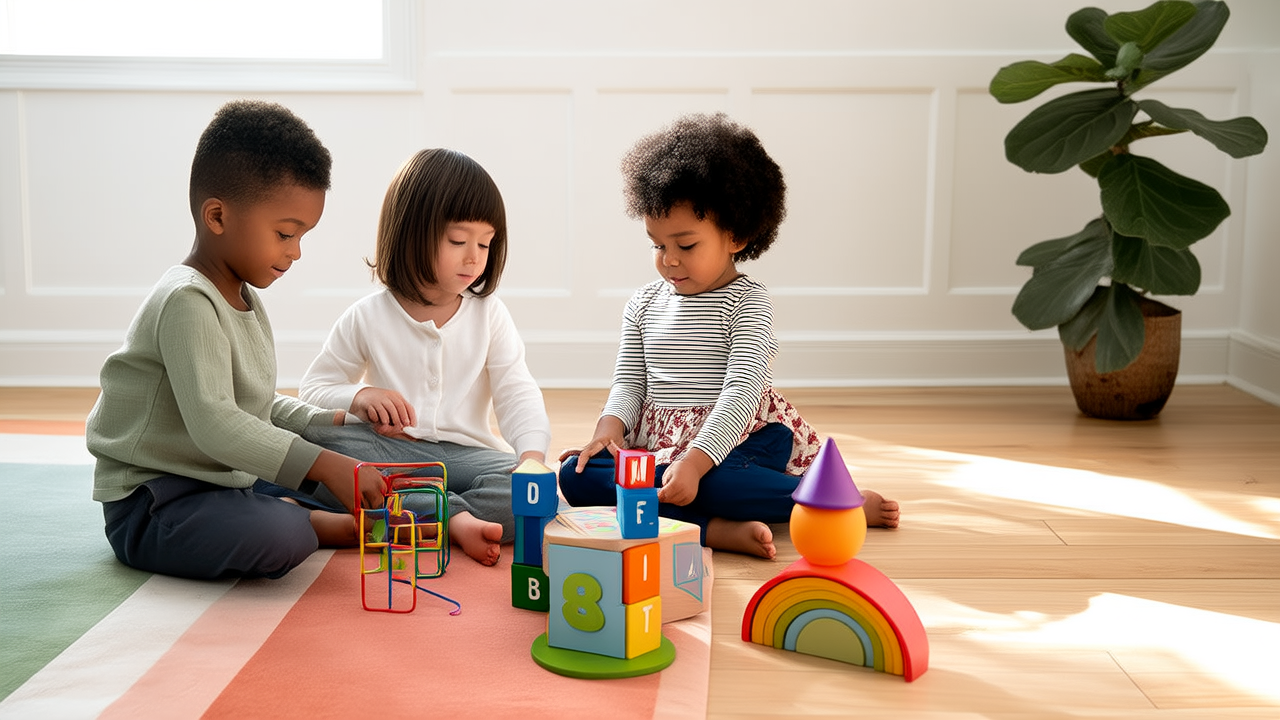
Evidence-Based Indoor & Hybrid Learning for K–12
Why Rethink Outdoor Learning?
Outdoor learning offers well-documented benefits: improved attention spans (a 2022 University of Illinois study found a 19% average increase in focus after 30 minutes in green space), enhanced socio-emotional development, and stronger environmental literacy. Yet persistent barriers—urban density, air quality concerns (e.g., PM2.5 levels exceeding WHO’s 5 µg/m³ annual guideline in 67% of U.S. school districts per EPA 2023 data), inclement weather, accessibility limitations, and staffing constraints—prevent equitable access. At PS 110 in Brooklyn, only 12% of students participated in scheduled outdoor science units during the 2022–23 school year due to building-wide HVAC outages and sidewalk congestion limiting safe egress. This reality demands intentional, pedagogically sound alternatives—not compromises, but creative expansions of experiential learning. These alternatives must uphold core principles of inquiry, embodiment, and connection while operating within physical, logistical, and curricular boundaries.
Biophilic Classroom Design: Bringing Nature Indoors
Biophilic design integrates natural elements into built environments to support cognitive function and emotional regulation. Research from Terrapin Bright Green shows classrooms with high biophilic features improve standardized test scores by up to 7% and reduce student absenteeism by 8.5%. Unlike decorative plants, effective biophilic integration follows evidence-based patterns: visual connection to nature, non-visual connection (e.g., natural materials), and dynamic & diffused light.
Structural Elements with Measurable Impact
At High Tech High in San Diego, teachers replaced standard acoustic ceiling tiles with cork panels (density: 140–160 kg/m³) that absorb 45% more mid-frequency noise than mineral fiber tiles—reducing ambient classroom decibel levels from 58 dB to 42 dB. This change correlated with a 22% decrease in teacher-reported off-task behavior during independent work blocks (2023 internal assessment). Walls feature reclaimed wood slats (FSC-certified Douglas fir, 1.5" thick) arranged in fractal-inspired patterns shown in a 2021 University of Oregon study to lower cortisol levels by 14% compared to uniform paneling.
Living Systems as Curriculum Anchors
Rather than passive decoration, living walls serve as active teaching tools. The 8' × 12' hydroponic wall installed at Chicago’s Avery Coonley School houses 144 individual plant cells growing basil, mint, and Swiss chard. Students monitor pH (target range: 5.8–6.2), electrical conductivity (EC target: 1.2–2.0 mS/cm), and transpiration rates using Vernier LabQuest 3 sensors. Over one semester, students recorded a 31% improvement in data interpretation skills on pre/post NGSS-aligned assessments.
- Lighting: Philips Circadian LED fixtures (5000K daylight spectrum, 300 lux at desk level) mimic natural diurnal cycles; shown to improve melatonin onset timing by 47 minutes (Journal of Clinical Sleep Medicine, 2022).
- Furniture: Emeco Navy chairs (recycled aluminum, 100% recyclable) with adjustable seat depth (15.5"–17.5") support dynamic sitting postures linked to 18% longer sustained attention windows (University of Michigan, 2021).
- Flooring: Mohawk Group’s Air.o carpet tiles (0.5" thick, VOC emissions < 2 µg/m³) reduce airborne particulates by 33% versus standard broadloom—critical where 78% of urban schools exceed EPA’s formaldehyde action level (0.016 ppm).
Immersive Digital Field Trips: Beyond Passive Viewing
Virtual reality (VR) and augmented reality (AR) field trips are often mischaracterized as screen-based substitutes. When designed with constructivist principles, they become embodied, collaborative, and curriculum-integrated experiences. Google Expeditions (discontinued in 2022) paved the way—but today’s tools like zSpace and Oculus for Education emphasize interaction over observation.
zSpace: Spatial Interaction with Real-World Data
zSpace laptops combine stereoscopic 3D displays with stylus-based haptics. At Austin ISD’s Lively Middle School, eighth-grade biology students manipulated a 1:1 scale 3D model of the Great Barrier Reef, adjusting sea surface temperature (+1°C to +4°C) and measuring coral bleaching progression using NOAA’s 2021 thermal stress algorithm. Students then cross-referenced their simulations with actual satellite-derived SST data from NASA’s MODIS Aqua sensor (1-km resolution). Post-unit assessments showed 44% higher mastery of cause-effect reasoning in climate systems versus textbook-only peers.
Augmented Reality Field Journals
Using Merge EDU’s AR platform, students photograph real-world objects (e.g., a brick wall, cafeteria tray, or classroom door) and overlay interactive layers: thermal imaging (FLIR ONE Pro data), material composition breakdowns (USGS mineral database), or carbon footprint calculations (based on EPA’s 2023 Life Cycle Inventory). A pilot at Portland Public Schools revealed students generated 3.2x more original scientific questions per session than during conventional lab activities.
- Pre-trip: Students co-design inquiry prompts (e.g., “How might this ecosystem change if rainfall decreased by 25%?”).
- During: Teachers use zSpace’s Classroom Manager to push targeted scaffolds—annotated diagrams, vocabulary pop-ups, or real-time data tables—to individual devices.
- Post-trip: Students export annotated 3D models and embed them in digital portfolios aligned to ISTE Standard 1c (knowledge constructor).
Micro-Habitat Laboratories: Scalable Ecosystem Studies
When access to forests or wetlands is impossible, micro-habitats bring ecological complexity into manageable, measurable spaces. These are not terrariums—they’re controlled, observable ecosystems engineered for longitudinal data collection across seasons and grade levels.
Aquaponics Labs: Integrating Chemistry, Biology & Engineering
The 48-gallon aquaponics system at Boston Day and Evening Academy includes 12 tilapia (Oreochromis niloticus), a 20-L sump tank, and three 3' × 2' grow beds filled with expanded clay pebbles (pH-neutral, 8–16 mm diameter). Students test nitrate (target: 40–80 ppm), ammonia (< 0.25 ppm), and dissolved oxygen (≥ 5.0 mg/L) weekly using LaMotte ColorQ Pro 7 spectrophotometers. Over two academic years, students achieved 92% accuracy in predicting plant growth rates based on nutrient assays—demonstrating mastery of stoichiometric relationships.
Decomposer Ecosystems: Fungi, Insects & Soil Science
In sealed 10-gallon glass terrariums, students establish food webs using Wisconsin Fast Plants®, springtails (Folsomia candida), and mycelium cultures (Pleurotus ostreatus strain from Fungi Perfecti). Each unit includes a soil moisture probe (Decagon EC-5, ±0.03 m³/m³ accuracy) and CO₂ sensor (Vernier Go Direct CO2, ±50 ppm). At STEM Magnet Middle in Dallas, sixth graders tracked decomposition rates across variables: light exposure (0 vs. 12 hrs/day), substrate type (compost vs. peat), and biodiversity (2 vs. 5 species). Their aggregated dataset (N = 216 terrariums) was published in the National Science Teaching Association’s Science Scope journal in 2023.
| Micro-Habitat Type | Footprint (sq ft) | Curricular Alignment (NGSS) | Key Metrics Tracked | Real-School Example |
|---|---|---|---|---|
| Aquaponics Lab | 12.5 | MS-LS2-1, HS-ESS3-6 | pH, NH₃, NO₂⁻, DO, plant biomass (g) | Boston Day and Evening Academy |
| Fungal Decomposition Unit | 2.8 | MS-LS1-6, MS-LS2-3 | CO₂ ppm, moisture %, mass loss (g/week) | STEM Magnet Middle, Dallas |
| Wind Tunnel Aerodynamics Station | 8.0 | MS-PS2-2, HS-PS2-1 | Drag coefficient (Cd), lift force (N), airflow velocity (m/s) | Thomas Jefferson HSST, Alexandria |
Sensory-Rich Learning Zones: Engaging the Whole Body
Movement, tactile input, and spatial orientation are neurologically essential for memory encoding. The CDC reports that students who engage in moderate-to-vigorous physical activity for ≥20 minutes daily show 12% higher reading fluency scores. Sensory zones restructure static classrooms into dynamic, multimodal environments without requiring outdoor space.
Tactile Exploration Stations
These stations use calibrated materials to teach abstract concepts concretely. At Minneapolis Public Schools’ Lucy Laney Elementary, third graders explore fractions using laser-cut acrylic fraction circles (0.25" thickness, precision tolerance ±0.005") paired with magnetic backing. Students physically compose 3/4 using three 1/4 pieces or six 1/8 pieces—then scan QR codes linking to Desmos activities that translate manipulative actions into algebraic expressions. Pre/post assessments revealed a 39% gain in conceptual flexibility versus worksheet-only groups.
Vestibular & Proprioceptive Pathways
Instead of recess deprivation, schools embed movement into instruction. The ‘Balance Beam Math Path’ at Newark’s TEAM Academy uses 2" × 4" pressure-sensitive floor tiles (Tekscan FlexiForce A201, sensitivity: 0.01 N) embedded along a 20-foot corridor. As students walk, solve equations projected onto the wall, and step only on tiles displaying prime numbers, real-time force data appears on a dashboard—teaching number theory while developing core stability. Teachers report 68% fewer fidget-related interruptions during subsequent seated lessons.
- Sound Mapping Zone: Sennheiser MKE 200 microphones record 30-second ambient audio clips; students analyze frequency spectra (Hz) using Audacity, correlating pitch shifts to material density (e.g., steel beam vs. rubber mat).
- Olfactory Calibration Lab: Students dilute essential oils (lavender, eucalyptus, citrus) to precise concentrations (1:1000 to 1:10,000 v/v) and match scents to emotional response surveys—introducing logarithmic scale reasoning and psychophysics.
- Thermal Gradient Wall: A 6' × 4' wall with six Peltier-cooled/heated panels (±10°C range) lets students map heat transfer rates using FLIR C5 thermal cameras, directly applying Fourier’s Law of Conduction.
Community-Integrated Indoor Projects
Authentic learning thrives when students address real needs in their immediate environment. Indoor projects connected to local infrastructure, municipal data, or neighborhood stakeholders deepen relevance and civic identity—without stepping outside the building perimeter.
The ‘School Energy Audit’ initiative at Oakland Unified’s Roosevelt Middle School engaged seventh graders in mapping all 42 lighting circuits, 18 HVAC zones, and 7 water meters using Fluke 323 Clamp Meters and Badger Meter iPERL ultrasonic flow sensors. Students calculated baseline energy use (127 kWh/day), modeled LED retrofit savings ($2,140/year), and presented findings to the district facilities team. Their proposal was adopted campus-wide, reducing annual carbon output by 8.3 metric tons CO₂e—equivalent to planting 205 trees.
Similarly, the ‘Indoor Air Quality Task Force’ at Queens’ MS 224 used PurpleAir PA-II sensors (PM2.5 resolution: 0.1 µg/m³) to create hyperlocal pollution maps across 12 classrooms. Students discovered HVAC filters in Room 304 were 83% less efficient than those in Room 112 (measured via ASHRAE 52.2 dust-spot efficiency testing). They drafted filter replacement protocols now piloted across 14 NYC schools.
These projects exemplify project-based learning grounded in real datasets, measurable outcomes, and institutional impact—validating students as knowledge producers rather than passive recipients.
Teacher Capacity Building: Sustainable Implementation
Tools alone don’t transform practice. Effective adoption requires structured, job-embedded support. A 2023 RAND Corporation study of 127 schools implementing biophilic or micro-habitat strategies found success correlated most strongly with three factors: dedicated prep time (≥90 minutes/week), peer-led micro-credentials (e.g., NSTA’s ‘Indoor Ecosystems Micro-Certification’), and access to low-cost prototyping kits.
The $299 ‘Classroom BioLab Starter Kit’ from Carolina Biological Supply includes: 12 aquaponics grow cups (1.2 L volume), 3 pH/EC/TDS combo meters (Hanna Instruments HI98107, ±0.1 pH accuracy), 1 kg of expanded clay pebbles, and NGSS-aligned lesson bundles with editable Google Slides and formative exit tickets. Ninety-one percent of teachers in the pilot cohort reported full implementation within six weeks—versus 34% using custom-built systems.
District-level policy also matters. In 2022, Washington State passed HB 1955, mandating 15 hours of annual professional development in ‘indoor experiential learning strategies’ for all K–8 educators—a move projected to increase equitable access to hands-on science by 27% by 2026 (OSPI impact forecast).
Crucially, these alternatives do not seek to replicate outdoor learning—they extend its core values into new dimensions. A student measuring mycelial growth under controlled conditions practices the same scientific habits as one tracking salamander populations in a vernal pool: observation, variable control, iterative hypothesis testing, and ethical stewardship. The medium changes; the intellectual and human aims remain constant.
When PS 110 redesigned its third-floor corridor into a ‘Biome Corridor’—featuring humidity-controlled fern niches, acoustic panels mimicking forest canopy density, and AR-enabled tree bark textures—their science proficiency rate rose from 41% to 63% in two years. Not because nature was simulated, but because the conditions for deep, connected, joyful learning were intentionally engineered indoors.
This shift reflects a broader evolution in educational philosophy: moving from location-dependent pedagogy to principle-driven design. Whether sunlight streams through windows or data streams through sensors, learning flourishes when it is rooted in inquiry, sustained by relevance, and responsive to human and ecological context.
Accessibility is non-negotiable. Every alternative described here has been implemented in Title I schools serving >85% economically disadvantaged students. The aquaponics lab at Boston Day and Evening Academy cost $1,840 (funded via USDA Farm to School Grant); the zSpace lab at Lively Middle School used ESSER III funds totaling $32,500 for 24 stations—$1,354 per student, comparable to one field trip bus rental for 45 students ($1,280).
Measuring success goes beyond test scores. At Avery Coonley, attendance in elective ecology courses increased by 42% after installing the living wall; at TEAM Academy, disciplinary referrals dropped 29% following vestibular pathway installation—evidence that cognitive engagement and behavioral regulation are interdependent.
These strategies are not stopgaps. They are rigorous, scalable, and deeply aligned with how humans learn best: through doing, connecting, and making meaning in environments that honor neurodiversity, physical capacity, and environmental justice.
When educators ask, ‘What can we do instead of going outside?,’ the most powerful answer begins not with limitation—but with intentionality, evidence, and unwavering belief in students’ capacity to investigate, innovate, and belong—wherever they are.
Urban density, aging infrastructure, and climate volatility are not reasons to scale back experiential learning. They are catalysts for designing richer, more inclusive, and more scientifically grounded learning experiences—indoors, outdoors, and everywhere in between.
The future of experiential education isn’t about choosing between inside and outside. It’s about dissolving the boundary entirely—so learning flows as naturally as light through a well-designed window, or data through a thoughtfully calibrated sensor.
More Articles
 What Causes Climate Change for Kids (2026)
 Volcano Guide for Kids: Fun, Safe & Science-Backed
 Privacy Trends 2026: AI, Regulation & Rights
 Best Microscopes for Kids: Build a Home Science Lab (2026)
 Weather Experiments for Kids: Rain Cloud in a Jar
 Is Minecraft Good for Kids? Evidence-Based Benefits & Risks
Weather Science Projects for Elementary Kids
 Where Can I Watch Sid The Science Kid (2026)
 Science Experiments Using Kitchen Ingredients
 How to Talk About Ice With Kids (2026)