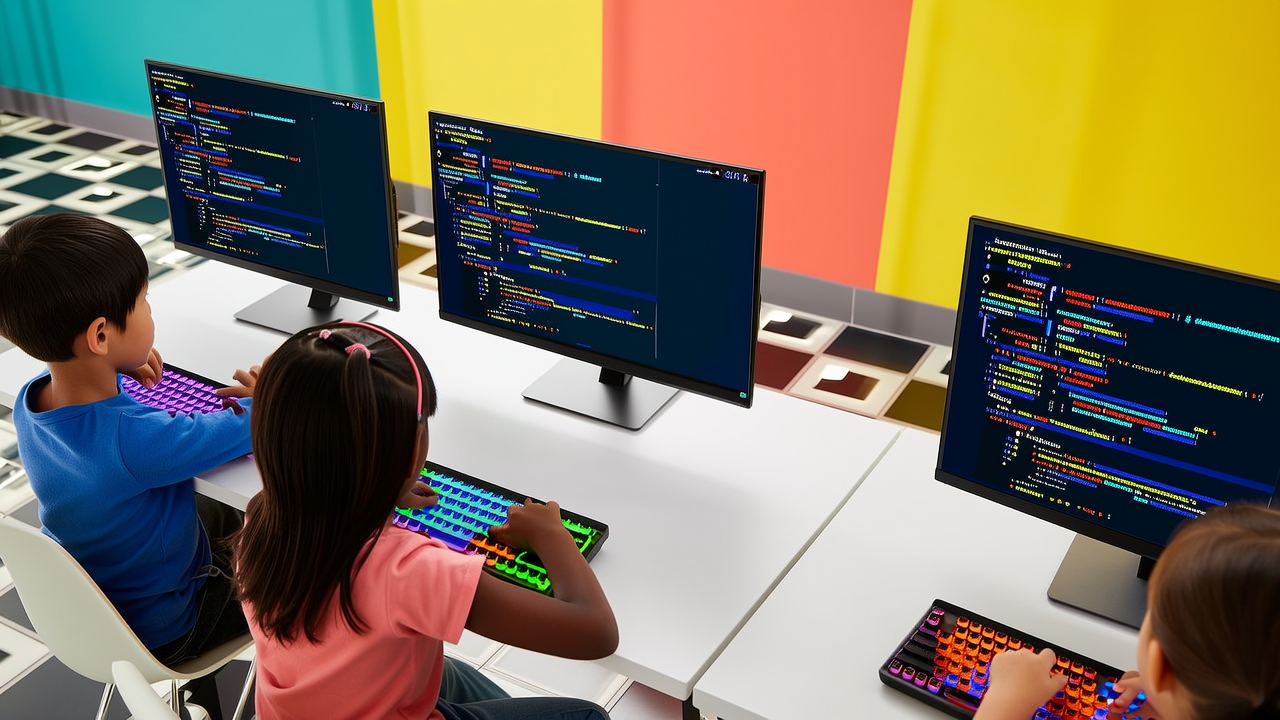
8 Coding Games That Teach Kids Programming
Why Coding Games Work
Game-based coding turns abstract concepts into tangible achievements. Children learn loops, conditionals, and debugging through play.
1. Scratch (Ages 5-10)
MIT's block-based platform. Drag and drop code blocks to create animations and games. Free online with millions of community projects.
2. Code.org Courses (Ages 5-14)
Structured courses with Minecraft, Star Wars, and Frozen themes. Progressive difficulty with teacher resources.
3. Lightbot (Ages 5-9)
Guide a robot through puzzles using programming commands. Teaches sequencing and loops without reading requirements.
4. Tynker (Ages 7-14)
Story-based coding adventures. Build games, control drones, and mod Minecraft. Subscription-based with free starter content.
5. Robot Turtles Board Game (Ages 4+)
Physical board game teaching programming concepts. Players write card sequences to move turtles. No screen needed.
6. Python with Pygame (Ages 10+)
Transition to text-based coding. Create simple games like Snake or Pong. Real programming language with vast career applications.
7. CodeCombat (Ages 9+)
RPG-style game where coding controls your hero. JavaScript or Python syntax in a fantasy adventure setting.
8. Hopscotch (Ages 9-13)
Mobile app for creating games and art with code. Visual blocks with option to see underlying code. Share creations with community.
Tips for Parents
- Start with block-based coding before text
- Let children choose projects they find exciting
- Celebrate debugging as learning, not failure
- Code together to model problem-solving
More Articles
 Simple Math Games for Preschoolers
 Crystal Growing for Kids: Safe, Easy STEM Activities
 Chess for Kids: 5-Minute Daily Method (2026)
 Kinetic Energy for Kids: Simple Explanations & Experiments
 How Cars Work for Kids: STEM Guide & Activities
 Best Kids Microscopes: Beginner to Advanced 2026
 Screen-Free Math Games for Kids Ages 5-10
 Best Math Board Games for Elementary Students
 Scientific Method for Kids: Simple Steps & Activities
 How Many Kids Did Katherine Johnson Have?