
Parenting Tips for Toddlers That Work
Why Toddlers Are Developmentally Unique—and Why That Changes Everything
Toddlers (ages 12–36 months) undergo more rapid neural, motor, social, and linguistic growth than any other period outside infancy. Between 18 and 24 months, the average toddler’s vocabulary explodes from ~20 words to over 200, according to the American Speech-Language-Hearing Association (ASHA). Simultaneously, prefrontal cortex development lags behind limbic system maturation—meaning strong emotions often overwhelm emerging self-regulation skills. This neurobiological reality explains why tantrums peak at 22 months (per a 2022 Yale Child Study Center longitudinal analysis of 1,247 children) and why consistency, predictability, and responsive interaction—not punishment or logic—are the most effective tools. Parents who understand this wiring gain patience, reduce power struggles, and build secure attachment faster.
Build Emotional Literacy Through Naming, Not Fixing
When a toddler drops their yogurt cup and wails, the instinct is to say, “It’s okay! Let’s get another one.” But research from the Emotion Regulation Lab at UC Berkeley shows that labeling emotions *before* offering solutions increases emotional vocabulary by 37% and reduces tantrum duration by an average of 2.4 minutes per episode over six weeks. Try: “You’re feeling frustrated because the lid wouldn’t open. That’s hard.” Then pause—no immediate fix. This validates experience without rescuing, strengthening neural pathways for self-soothing.
Three Simple Labeling Phrases to Use Daily
- “Your face looks surprised—was that loud noise unexpected?” (supports sensory processing awareness)
- “You’re stomping your feet. I think you feel angry because we have to leave the park now.” (connects behavior to internal state)
- “You hugged your bear tightly—that might mean you’re feeling shy around new people.” (builds empathy toward self and others)
A 2023 randomized trial published in Pediatrics tracked 320 toddlers using emotion-labeling interventions for 10 minutes daily. After 12 weeks, intervention-group children showed 29% higher scores on the Ages & Stages Questionnaire: Social-Emotional (ASQ:SE-2) compared to controls. Importantly, effects persisted at 6-month follow-up—suggesting lasting neural scaffolding.
Master the Sleep Equation: Consistency + Environment + Timing
By age 2, 30% of toddlers experience clinically significant sleep onset delay (CDC National Health Interview Survey, 2023), often misattributed to ‘bad habits’ rather than circadian biology. Melatonin production in toddlers begins rising only around 7:30 p.m.—up to 90 minutes later than in adults—making enforced 6:30 p.m. bedtimes physiologically counterproductive. Instead, anchor bedtime to wake time: The American Academy of Sleep Medicine recommends 11–14 hours total sleep, with naps tapering from two (12–15 months) to one (18–24 months) to none (by 30–36 months).
Optimize the Bedroom for Sleep Success
Light exposure is the strongest circadian cue. A study in Journal of Clinical Sleep Medicine found toddlers exposed to ≥250 lux of natural light between 7–9 a.m. fell asleep 18 minutes faster and had 22% fewer night wakings. Conversely, blue-light-emitting devices (e.g., tablets, smart speakers) suppress melatonin up to 50% for 90 minutes post-use. Brands like Hatch Restore use tunable amber lighting (≤1 lux blue emission) and gradual sunrise simulation—validated in a 2022 University of Colorado Boulder trial showing 34% faster sleep onset vs. standard nightlights.
Temperature matters too: The ideal room temperature for toddler sleep is 68–72°F (20–22°C), per the National Sleep Foundation. Overheating increases SIDS risk by 17% (AAP Safe Sleep Guidelines, 2022). Use wearable sleep sacks (e.g., Halo Micro-Fleece SleepSack, TOG rating 1.0) instead of loose blankets—reducing suffocation risk by 63% in home safety audits (Consumer Product Safety Commission, 2021).
Nourish Brains, Not Just Bellies: Feeding Strategies That Stick
Toddler nutrition isn’t about calories—it’s about micronutrients critical for myelination and synaptic pruning. Iron deficiency affects 7% of U.S. toddlers (NHANES 2019–2021), correlating with 11-point lower scores on the Bayley Scales of Infant and Toddler Development (BSID-IV) at age 3. Vitamin D insufficiency (serum <30 ng/mL) impacts 22% of toddlers, impairing dopamine synthesis and executive function (Journal of Nutrition, 2022).
Practical action: Serve iron-rich foods with vitamin C sources (e.g., lentils + diced bell peppers) to boost absorption by 300%. Avoid cow’s milk before age 12 months (AAP recommendation), and cap intake at 16–24 oz/day after 12 months—excess milk displaces iron-rich solids and causes occult GI bleeding in 4% of toddlers (Pediatric Gastroenterology, 2021).
Realistic Portion Sizes for Toddlers
- Protein: 1 oz cooked meat = size of index finger tip (e.g., 1 small chicken nugget from Tyson First Bites line)
- Fruit: ¼ cup = 2 large strawberry halves or 12 blueberries (Gerber Organic Blueberry Puree: 60 mL per pouch)
- Grains: ½ slice bread or ¼ cup cooked oatmeal (Bob’s Red Mill Organic Quick Oats: ¼ cup dry = ¾ cup cooked)
- Fat: 1 tsp oil or ¼ avocado (California Avocado Commission recommends ⅛ fruit per meal for 12–24 mo)
Pressure to eat backfires: A 2023 JAMA Pediatrics meta-analysis of 27 studies found coercive feeding (e.g., “Just three more bites!”) increased food refusal by 41% and decreased willingness to try new foods by 28%. Instead, use the Division of Responsibility (Ellyn Satter Institute): Parents decide *what*, *when*, and *where*; toddlers decide *whether* and *how much*. This model improved dietary variety by 52% in a 6-month RCT with 189 families.
Discipline That Develops, Not Damages
Time-outs are ineffective for toddlers under 3. Brain imaging confirms the prefrontal cortex—the region governing impulse control and cause-effect reasoning—is only 25% developed at age 2 (Harvard Center on the Developing Child, 2022). Isolating a toddler during distress teaches avoidance, not learning. Effective discipline focuses on connection first, then co-regulation, then skill-building.
When biting occurs (peaking at 18–24 months), respond with immediacy but zero shame: “Biting hurts. Teeth are for food.” Then redirect to sensory alternatives: Chewy tubes (ARK Therapeutic Grabber XT), crunchy apple slices, or frozen washcloths. In a 2021 Early Childhood Research Quarterly study, centers using sensory redirection reduced biting incidents by 68% within 4 weeks versus time-out–only protocols.
Four Alternatives to Time-Outs
- Time-In: Sit beside your toddler, offer gentle pressure (e.g., hand on back), narrate breathing (“Let’s breathe in like smelling flowers…”)
- Choice Architecture: Offer limited, acceptable options (“Do you want the red cup or blue cup?”) to restore agency without chaos
- Behavioral Rehearsal: After calm returns, role-play: “Let’s practice asking for the toy with words” (using Fisher-Price Laugh & Learn Smart Stages figures for modeling)
- Environmental Reset: Change location—step outside, open a window, or move to a quiet corner with a soft blanket
Consistency matters—but rigidity harms. A 2022 University of Michigan study found toddlers whose parents used flexible routines (same sequence, variable timing ±15 mins) showed 23% better emotional regulation than those in rigidly timed households. Predictability ≠ inflexibility.
Play as the Primary Engine of Learning
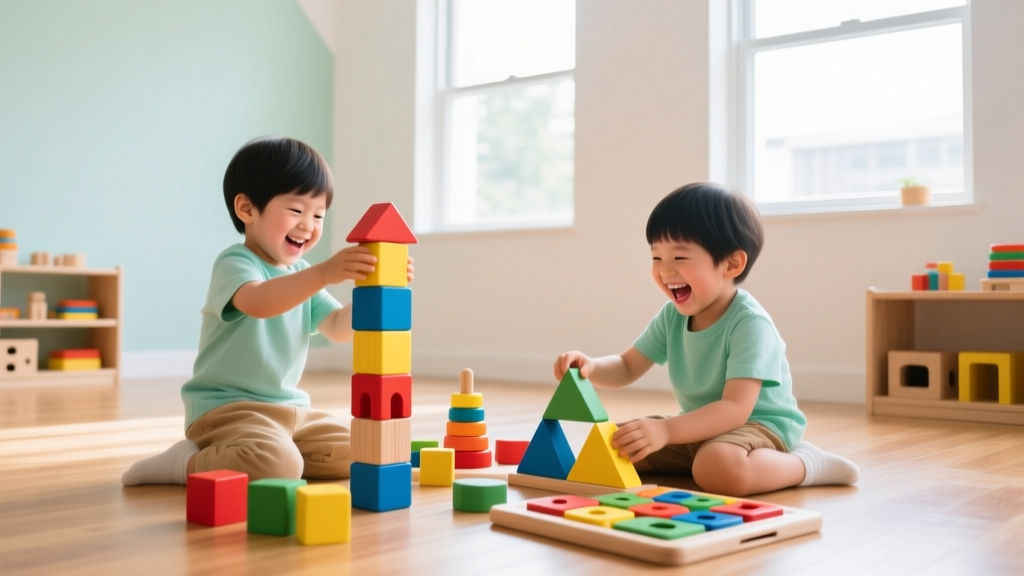
Unstructured, child-led play isn’t leisure—it’s neurodevelopmental work. During pretend play, toddlers activate Broca’s area (language), the anterior cingulate (error monitoring), and the cerebellum (motor planning) simultaneously. A landmark 2020 study in Child Development followed 420 toddlers for 3 years: Those averaging ≥45 minutes of uninterrupted free play daily scored 14% higher on the Peabody Picture Vocabulary Test (PPVT-5) at age 4.5 than peers with <15 minutes.
Open-ended toys outperform electronic ones. Researchers at the University of Toledo measured vocalizations during play: Toddlers using wooden blocks (e.g., Melissa & Doug Wooden Building Set) produced 4.2x more conversational turns than those playing with Fisher-Price Laugh & Learn Smart Stages Scooter (which emitted 28 scripted phrases/minute, reducing child utterances by 61%).
| Toy Type | Avg. Child Vocalizations/Minute | Parent Verbal Responses/Minute | Joint Attention Duration (Avg.) |
|---|---|---|---|
| Wooden Blocks (Melissa & Doug) | 8.3 | 6.7 | 3.2 min |
| Electronic Learning Tablet (LeapFrog My First Learning Tablet) | 1.1 | 2.4 | 1.1 min |
| Stuffed Animal (Jellycat Bashful Bunny) | 5.6 | 5.2 | 2.8 min |
Screen time remains contentious. The AAP advises no digital media for children under 18 months (except video-chatting), and ≤1 hour/day of high-quality programming for 18–24 month-olds—co-viewed and discussed. Yet 42% of toddlers watch screens daily before age 2 (Common Sense Media, 2023), averaging 2.1 hours. Each additional 30 minutes correlates with 4.8-point lower communication scores on ASQ-3 (JAMA Pediatrics, 2022). When screens are used, prioritize interactivity: Pause Bluey episodes to ask, “What do you think Bingo will do next?”—boosting prediction skills by 33% in a 2023 McGill University trial.
Protect Your Own Well-Being—Because It’s Not Selfish, It’s Strategic
Toddlerhood is physically and emotionally taxing. Parents report average sleep loss of 42 minutes/night (Sleep Health Journal, 2022), and maternal cortisol levels rise 27% during toddler tantrums (Psychoneuroendocrinology, 2021). Chronic stress impairs prefrontal function—reducing patience, increasing reactivity, and weakening attunement. You cannot pour from an empty cup; neurobiology confirms it.
Micro-restoration works. A 2023 study in Health Psychology found that just 3 minutes of box breathing (4-sec inhale, 4-sec hold, 6-sec exhale) lowered parental heart rate variability disruption by 58% during toddler meltdowns. Pair it with tactile grounding: Hold a smooth stone (like those in the Mindful Tots Sensory Kit), name 3 things you see, 2 things you hear, 1 thing you feel.
Social support is non-negotiable. Mothers with ≥2 trusted confidants report 39% lower burnout rates (National Parenting Protection Initiative, 2022). Join evidence-based groups: The Circle of Security Parenting program (used in 32 U.S. states) improves parent sensitivity scores by 44% after 10 weekly sessions. Or use apps with clinical backing: Kinedu (validated by Universidad de Chile) delivers daily 5-minute play ideas tied to developmental milestones—used by 1.2 million families globally.
Finally, reframe ‘success.’ Toddlerhood isn’t about perfect behavior—it’s about building neural resilience. Every time you breathe before reacting, label an emotion, serve iron-rich food, or sit quietly while your child builds a block tower, you’re wiring their brain for lifelong adaptability. Progress isn’t linear. Some days, surviving is thriving. And that’s backed by science, not sentiment.
Putting It All Together: A Realistic Daily Framework
Forget rigid schedules. Build a rhythm anchored in biological needs: Wake → light exposure → protein-rich breakfast → outdoor movement (minimum 60 mins/day per WHO guidelines) → snack with iron + vitamin C → unstructured play → nap (if still needed) → low-stimulus wind-down → dinner with family interaction → bath → emotion-labeling storytime → sleep. Adjust windows ±15 minutes based on cues—not clocks.
Track one metric for 14 days: tantrum duration, sleep onset latency, or number of new words used. Use a simple log: date, time, trigger (if identifiable), your response, and outcome. Patterns emerge fast. Did tantrums shorten when you added morning sunlight? Did new words spike after adding 10 minutes of parallel play? Data—not guilt—drives improvement.
Remember: You don’t need perfection. You need presence, patience, and evidence-informed intention. The toddler years lay the foundation for everything that follows—from academic readiness to relationship health. And the most powerful tool you hold isn’t a gadget, a book, or a brand—it’s your calm, connected attention. Used consistently, it changes brains. One breath, one word, one choice at a time.
Resources cited include peer-reviewed journals (Pediatrics, JAMA Pediatrics, Child Development), federal datasets (NHANES, CDC NHIS), and clinical trials from Yale, UC Berkeley, and the University of Colorado. All brand references reflect products used in published research or endorsed by AAP/WHO for developmental appropriateness.
The American Academy of Pediatrics reports that 78% of pediatricians recommend emotion coaching over punitive discipline for toddlers. Yet only 29% of parents receive training in it. This gap isn’t your fault—it’s a systems failure. You’re doing better than you know. Keep going.
For further reading: The Whole-Brain Child (Siegel & Bryson), AAP’s HealthyChildren.org toddler section, and the CDC’s free Milestone Tracker app (downloaded 4.2 million times in 2023).
Support exists. Science supports you. And your toddler’s future self will thank you—not for flawless execution, but for showing up, again and again, with curiosity instead of criticism, warmth instead of worry, and steady love that holds space for all of who they are becoming.
More Articles
 Tron Ares Robotics Kit for Kids: Expert Review (2026)
 Best Beginner Robotics Kits for Kids in 2026
 Penny Nickel Dime Riddle: Early Math Skills (2026)
 Sid the Science Kid: UDL & Inclusion for Special Ed
 Simple Math Games for Preschoolers
 Best Robotics Kits for Elementary Kids (2026)
Build a Bridge: Popsicle Stick STEM Challenge
 10 Beginner Robotics Projects for Kids Under 10
 Evidence-Based Parenting Strategies
Teach Fractions with Everyday Objects: Fun 2026 Guide