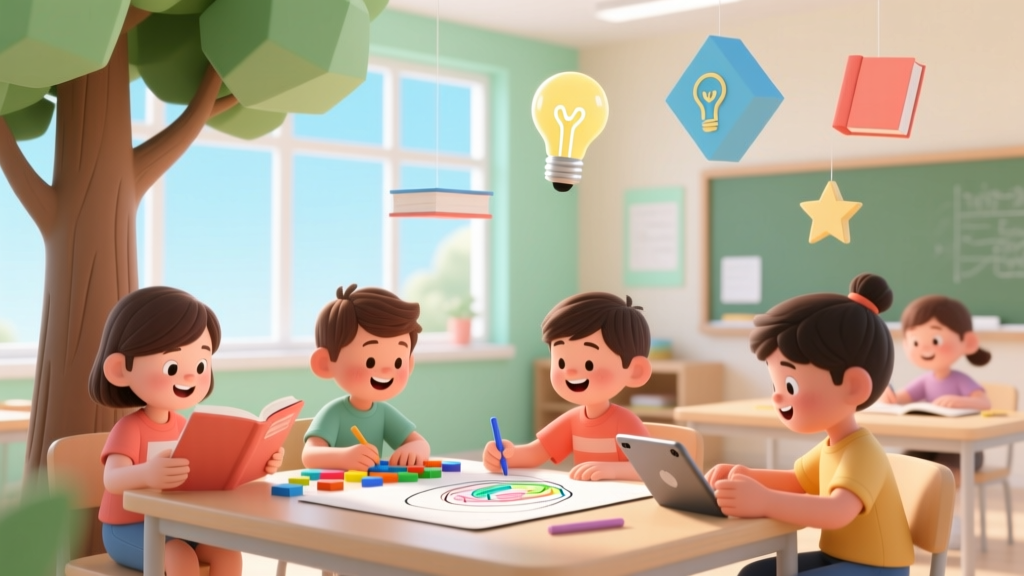
Why Reading Is Important for Kids (2026)
Why This Moment Matters More Than Ever
The question why reading is important for kids isn’t just rhetorical — it’s urgent. In an era where screen time averages 4.5 hours daily for children aged 8–12 (Common Sense Media, 2023), and where only 37% of U.S. fourth graders scored ‘proficient’ in reading on the 2022 NAEP assessment, understanding *how* and *why* reading shapes brain architecture, empathy, and future opportunity has never been more critical. This isn’t about creating ‘bookish’ children — it’s about equipping them with the foundational neural wiring, vocabulary scaffolding, and self-regulation skills that predict high school graduation, college enrollment, and even long-term mental health resilience. Let’s move beyond ‘it’s good for them’ and uncover exactly what happens — biologically, socially, and academically — when a child reads regularly before age 10.
1. Reading Rewires the Brain — Literally (and Before Kindergarten)
Neuroscience confirms that reading isn’t just a skill — it’s a full-system workout for the developing brain. When a 3-year-old hears a story read aloud, their auditory cortex lights up; when they point to pictures and name objects, the visual association areas activate; when they anticipate ‘what comes next?’ in a rhyming text, the prefrontal cortex engages in predictive reasoning. A landmark 2021 fMRI study published in Psychological Science tracked 102 children from ages 3 to 8 and found that those exposed to 5+ read-aloud sessions per week showed 27% greater white matter integrity in the arcuate fasciculus — the neural highway connecting language comprehension and speech production. This isn’t abstract: stronger connectivity here directly correlates with faster decoding, richer vocabulary acquisition, and improved working memory by first grade.
But here’s what most parents miss: the window for maximum neural plasticity for language is widest between ages 0–5. According to Dr. John Gabrieli, MIT cognitive neuroscientist and director of the Athinoula A. Martinos Imaging Center, “Reading exposure before age 5 doesn’t just build vocabulary — it builds the infrastructure for all future learning. Miss that window, and remediation becomes exponentially harder, not because the child is ‘behind,’ but because the brain’s optimal wiring period has passed.”
So how do you harness this? Start small — but start consistently. A 2022 randomized controlled trial (RCT) by the Reach Out and Read program demonstrated that families receiving pediatrician-prescribed books + brief literacy coaching increased daily reading frequency from 2.1 to 5.8 days/week within 3 months. The magic wasn’t in the books — it was in the ritual: same cozy spot, same voice tone, same 10-minute window after bath time. One parent in the study, Maya R., shared: “We started with board books at 6 months — no expectation of ‘understanding.’ Just her kicking, cooing, and grabbing pages. By 22 months, she’d ‘read’ entire books from memory, pointing to characters and making up endings. That confidence? It bled into everything — potty training, sharing toys, even trying new foods.”
2. Beyond Words: How Reading Builds Emotional Intelligence & Social Resilience
When we talk about why reading is important for kids, we often stop at vocabulary and test scores. But the deepest impact may be invisible: reading cultivates theory of mind — the ability to infer others’ thoughts, feelings, and motivations. A 2023 longitudinal study in Child Development followed 412 children from preschool through sixth grade and found that those who engaged in daily narrative reading (fiction, folktales, character-driven picture books) scored 34% higher on standardized empathy assessments at age 12 — independent of socioeconomic status or parental education level.
Here’s how it works: As children hear phrases like *“Lily felt her cheeks grow hot when Sam took her crayon”*, their brains simulate Lily’s physiological response (blushing), her emotional state (shame), and her unspoken need (to be respected). This mental rehearsal builds neural pathways identical to those activated during real-life social interactions — but without risk or consequence. Contrast that with passive screen time: a 2020 University of Toronto analysis found that children watching fast-paced cartoons showed significantly reduced capacity for sustained attention during peer play and lower accuracy in identifying facial expressions of sadness or fear.
Actionable strategy: Use the ‘Feel-Think-Do’ pause. Every few pages, gently ask: “How do you think [character] feels right now? What might they be thinking? What would you do if you were them?” Don’t correct answers — validate them (“That makes sense — she *would* feel scared if the dark closet opened by itself!”). This transforms reading from passive consumption into active emotional mapping.
3. The Academic Domino Effect: How Early Reading Predicts Long-Term Success
Let’s be clear: reading proficiency by third grade isn’t just a milestone — it’s the strongest predictor of high school graduation. According to the Annie E. Casey Foundation’s 2023 ‘Early Warning Report’, students who aren’t reading proficiently by Grade 3 are four times more likely to drop out of high school. But the causality runs deeper than correlation. Reading fuels three interlocking academic engines:
- Vocabulary velocity: Children who read 20 minutes daily encounter ~1.8 million words per year — versus 28,000 for those who read 1 minute/day (Cunningham & Stanovich, 1998). This isn’t just ‘more words’ — it’s exposure to rare, precise terms (‘reluctant,’ ‘fractious,’ ‘luminous’) that form the bedrock of complex thinking.
- Background knowledge scaffolding: Every nonfiction book about volcanoes, bees, or ancient Egypt deposits schema — mental filing cabinets — that help children comprehend future texts on related topics. Without this, reading becomes decoding without meaning.
- Executive function training: Following multi-step plots, remembering character arcs, and holding thematic questions in mind all strengthen working memory and cognitive flexibility — skills essential for math problem-solving and scientific reasoning.
A powerful real-world example: The Harlem Children’s Zone’s ‘Baby College’ program integrates daily shared reading into its prenatal-to-age-3 curriculum. Independent evaluation showed participants were 2.3x more likely to enter kindergarten with age-appropriate literacy skills — and maintained a 15-point advantage on state ELA assessments through eighth grade. Crucially, the program didn’t focus on flashcards or phonics drills. It trained caregivers in responsive reading: following the child’s gaze, expanding on their utterances (“You see the dog? Yes — he’s wagging his tail! Wag-wag-wag!”), and celebrating ‘mistakes’ as thinking-in-action.
4. Making It Stick: The 3 Pillars of Sustainable Reading Habits (No Rewards Required)
Many parents try sticker charts, screen-time bribes, or nightly ‘reading quotas’ — only to watch motivation evaporate by age 7. The research is unequivocal: extrinsic rewards undermine intrinsic motivation for reading (Hidi & Renninger, 2006). Instead, sustainable habits rest on three evidence-backed pillars:
- Autonomy: Let kids choose — even if it’s the same ‘Dinosaur Bob’ book for 47 days. Choice signals respect for their emerging identity as a reader.
- Competence: Scaffold difficulty. Use the ‘Five-Finger Rule’: Open a random page; hold up one finger for each word they don’t know. 0–1 fingers = too easy; 4–5 = too hard; 2–3 = just right.
- Relatedness: Make reading relational — not transactional. Read *with* them (not just *to* them). Take turns pages. Whisper-read together. Laugh at silly voices. Leave space for silence and reflection.
One powerful technique: ‘Book Talk Tuesdays.’ Each week, dedicate 15 minutes to discussing *one* book — not testing comprehension, but exploring: *What part made you laugh? What would you ask the author? If you could change one thing, what would it be?* This shifts focus from ‘getting it right’ to ‘thinking deeply,’ which is where true literacy lives.
| Age Range | Key Developmental Milestones Supported | Recommended Format & Examples | Parent Action Tip |
|---|---|---|---|
| 0–2 years | Sound discrimination, joint attention, object permanence, early vocabulary (50+ words) | Board books with high-contrast images, rhyming texts (Chicka Chicka Boom Boom), touch-and-feel books | Point and name *everything*: “That’s a spoon — shiny and silver! You’re holding the spoon!” Repeat words 3x with exaggerated mouth movements. |
| 3–5 years | Narrative sequencing, theory of mind, phonemic awareness, letter-sound connection | Predictable pattern books (Where the Wild Things Are), simple chapter books with illustrations (Frog and Toad), interactive books with flaps/questions | Ask open-ended questions: “What do you think will happen when the door opens?” Pause 5 seconds. Accept any answer — then add: “In the story, it was…” |
| 6–8 years | Fluency, inference-making, genre awareness, sustained attention (20+ mins) | Early chapter books (Cam Jansen, Magic Tree House), graphic novels (Owly), nonfiction series (National Geographic Kids) | Read aloud *to* them still — even if they can read independently. Model expression, pace, and pausing for thought. Stop mid-chapter: “What’s your hunch about the mystery?” |
| 9–12 years | Critical analysis, perspective-taking across cultures, thematic synthesis, research integration | Complex middle-grade novels (The Giver, Front Desk), historical fiction, memoirs, curated news digests for kids | Start a ‘Reader’s Journal’ together: 1 sentence summary, 1 quote that sparked thought, 1 question to discuss later. Keep it low-pressure — no grading. |
Frequently Asked Questions
My child hates reading — what should I do first?
Don’t panic — and don’t force. First, rule out underlying issues: vision problems (schedule an eye exam), auditory processing challenges (consult a speech-language pathologist), or undiagnosed dyslexia (request a school-based screening). Then, pivot to engagement over endurance. Swap ‘reading time’ for ‘story time’ — listen to audiobooks while drawing, act out scenes with puppets, or explore graphic novels where visuals carry narrative weight. As literacy expert Pam Allyn says: “A child who loves stories but resists print isn’t failing — they’re waiting for the right entry point.”
Is screen-based reading (e-books, apps) as effective as physical books?
It depends — but physical books hold distinct advantages for young readers. A 2022 meta-analysis in Pediatrics found children retained 22% less narrative detail from e-books with animations/sounds versus print books. Why? Cognitive load: flashing buttons and sound effects compete for attention with the story itself. That said, e-books *with minimal interactivity* (no auto-read, no pop-ups) and text-highlighting features can support struggling readers. Best practice: Use physical books for daily read-alouds and e-books for supplemental exploration (e.g., a National Geographic app after reading a print book about sharks).
How much time should my child spend reading daily?
The American Academy of Pediatrics (AAP) recommends at least 15–20 minutes of daily reading — but emphasizes quality over quantity. Ten minutes of rich, interactive dialogue around a single page is more valuable than 30 minutes of silent, disengaged page-turning. For preschoolers, aim for 2–3 short sessions (5–7 mins each). For elementary students, build toward sustained focus — but always end *before* frustration sets in. Think of it like athletic training: consistency and recovery matter more than marathon sessions.
Does reading aloud to older kids (ages 10+) still matter?
Resoundingly yes — and it’s one of the best-kept secrets of literacy development. A 2023 Scholastic survey found 83% of kids aged 6–17 say they love being read aloud to, and 75% wish their parents still did it. Hearing fluent, expressive reading models complex syntax, advanced vocabulary, and emotional nuance far beyond their independent reading level. Plus, shared reading creates a low-stakes space to discuss tough topics (identity, injustice, grief) through story — something many tweens won’t initiate verbally. Try alternating chapters of a gripping novel like The Westing Game or Ghost.
What if English isn’t our home language?
Reading in *any* language builds transferable literacy skills — phonological awareness, narrative structure, vocabulary depth. Bilingual children who read regularly in their home language actually develop stronger metalinguistic awareness (understanding how language works) and outperform monolingual peers on executive function tasks (Center for Applied Linguistics, 2022). Prioritize books in your strongest language first. Then, add bilingual titles or parallel texts. Most importantly: speak, sing, and tell stories richly in your home language — that oral foundation is the rocket fuel for written literacy in any tongue.
Common Myths About Early Reading
Myth #1: “My child must know all their letters before starting to read.”
False. Letter recognition is just one piece — and not the first. Research shows phonological awareness (hearing rhymes, syllables, sounds) is a stronger predictor of reading success than alphabet knowledge. Many children begin ‘reading’ environmental print (stop signs, cereal boxes) long before mastering ABCs. Focus on playful sound games: clapping syllables in names, hunting for rhyming words in songs, stretching out sounds in favorite words (“sssssss-un”).
Myth #2: “If my child isn’t reading by first grade, they’ll fall behind permanently.”
Not supported by evidence. While early intervention helps, the brain remains highly plastic. Children identified with dyslexia who receive structured, multisensory literacy instruction (like Orton-Gillingham) by third grade close the gap in 85% of cases (International Dyslexia Association). Late bloomers often develop deep comprehension and analytical strengths — think of authors like Agatha Christie, who didn’t read fluently until age 12.
Related Topics
- Best Books for Reluctant Readers Ages 6–10 — suggested anchor text: “engaging chapter books for struggling readers”
- How to Choose Age-Appropriate Books Using the Five-Finger Rule — suggested anchor text: “how to pick the right reading level for your child”
- Screen Time Guidelines for Kids Under 10 (AAP-Approved) — suggested anchor text: “healthy screen time limits by age”
- Signs of Dyslexia in Preschool and Early Elementary — suggested anchor text: “early dyslexia indicators and next steps”
- Building a Home Library on a Budget: Thrift Stores, Libraries & Free Resources — suggested anchor text: “affordable ways to grow your child’s book collection”
Your Next Step Starts With One Page
Understanding why reading is important for kids is the spark — but action is the flame. You don’t need a library budget, perfect pronunciation, or hours of free time. You need one book, one quiet corner, and ten uninterrupted minutes tonight. Choose something that delights *you* — because your genuine enthusiasm is the most contagious literacy tool of all. As literacy advocate Mem Fox reminds us: “Reading aloud to children is now the single most important thing that adults can do to help young children learn to read.” So tonight, before bedtime, pull out that slightly dog-eared copy of The Very Hungry Caterpillar, or that new graphic novel your 9-year-old brought home, and read the first page — slowly, joyfully, and with your full presence. That’s not just reading. That’s building a brain, a heart, and a future — one page at a time.
More Articles
 Who Was The Kid Bad Bunny Gave His Grammy Too (2026)
 Stranger Things Kids: Military Ethics Explained (2026)
 Kids Eat Free on Wednesdays: 2026 Verified Deals
 Planet Fitness Kids Policy: Age Rules & Parent Tips (2026)
 Do Kids Eat Free at Outback on Mondays? (2026)
 Teach Multiplication Meaningfully—No Flashcards Needed
 How to Talk When Kids Won’t Listen (2026)
 How Old Are Chip and Joanna Gaines’ Kids? (2026)
 SDF Safety for Kids: 7 Evidence-Based Facts (2026)
 Does Claressa Shields Have Kids? Verified Facts (2026)