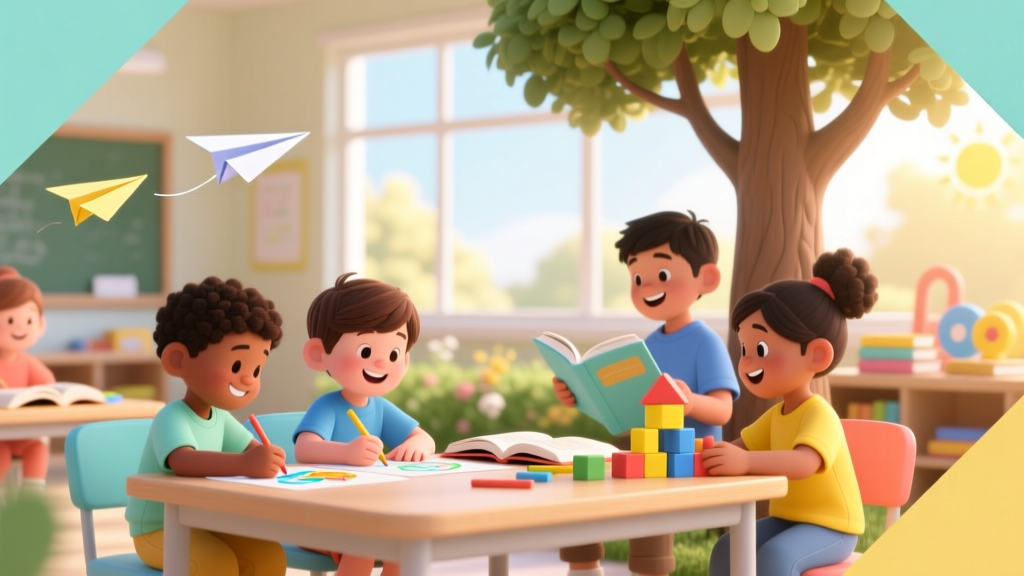
Social Media for Kids: How, When & Why (2026)
Why Kids Should Have Social Media: Not If — But How, When, and Why It Matters Now More Than Ever
The question why kids should have social media isn’t about permission—it’s about preparation. In 2024, 91% of teens aged 13–17 use at least one social platform daily (Pew Research Center, 2023), and 42% of 10–12-year-olds already navigate TikTok, YouTube Shorts, or Discord with minimal adult oversight. Yet fewer than 28% of parents report having a written, co-created family media agreement—leaving critical conversations about digital citizenship, algorithmic literacy, and emotional resilience to chance. This isn’t about surrendering control; it’s about scaffolding autonomy in a world where social connection is increasingly mediated through screens. What if the greatest risk isn’t exposure—but unguided exposure?
1. Social Media Builds Foundational Skills—Not Just Distraction
Contrary to the ‘screen time = brain drain’ narrative, developmental psychologists now recognize that *intentional* social media use activates key neural pathways tied to identity formation, perspective-taking, and executive function. Dr. Jean Twenge, clinical psychologist and author of iGen, tracked over 1 million adolescents across 12 years and found that moderate, interactive use (under 60 minutes/day) correlated with higher self-reported life satisfaction—especially among kids who used platforms to collaborate on school projects, share creative work, or organize community service. The distinction? Passive scrolling vs. active creation and connection.
Consider Maya, a 12-year-old from Austin who launched a neighborhood ‘Recycling Rangers’ Instagram account with her science teacher. She filmed short explainers on composting, interviewed local environmental scientists, and coordinated monthly cleanups using DMs and Stories polls. Her teacher observed measurable growth in her public speaking confidence, research synthesis skills, and ability to negotiate group roles—all outcomes directly mapped to AACAP (American Academy of Child & Adolescent Psychiatry) social-emotional learning benchmarks.
Key developmental windows align tightly with platform readiness:
- Ages 8–10: Focus shifts from concrete to abstract thinking—ideal for understanding privacy settings, recognizing sponsored content, and identifying basic online ‘tone’ (e.g., sarcasm vs. sincerity).
- Ages 11–13: Identity exploration peaks; peer feedback becomes neurologically weighted. Guided sharing (e.g., curated art portfolios or coding project demos) builds self-efficacy without performance pressure.
- Ages 14–16: Moral reasoning matures—teens begin critiquing platform design (e.g., ‘Why does this app reward outrage?’) and advocating for inclusive norms, per research from the Berkman Klein Center at Harvard.
2. The Real Safety Gap Isn’t Access—It’s Literacy
Here’s what data reveals: 73% of cyberbullying incidents occur on platforms parents don’t monitor (Common Sense Media, 2023), not because kids hide accounts—but because adults lack fluency in platform mechanics. A parent who knows how to disable location tagging on Snapchat or interpret Instagram’s ‘Audience’ toggle for Reels has more protective power than one who bans all apps outright.
Start with platform-specific literacy, not blanket rules. For example:
- TikTok: Use Family Pairing (not just parental controls) to co-review watch history, set screen-time limits *per app*, and enable ‘Restricted Mode’—which filters out 89% of borderline-content (TikTok Transparency Report, Q2 2024).
- Discord: Teach kids to create private servers with verified invites only, rename default channels (e.g., ‘#homework-help’ instead of ‘#general’), and use role permissions to prevent message deletion—building accountability before conflict arises.
- YouTube: Replace ‘Kids Mode’ (which lacks robust content filtering) with supervised accounts + ‘Approved Content Only’ mode, where you pre-approve every channel or video—turning curation into a collaborative skill.
This isn’t surveillance—it’s apprenticeship. As Dr. Dimitri Christakis, Director of the Center for Child Health, Behavior and Development at Seattle Children’s Hospital, states: “Digital safety isn’t about locking doors. It’s about teaching kids how to build their own locks—and why they matter.”
3. Your Family Media Plan: A Living Document, Not a Contract
Forget rigid ‘no phones at dinner’ rules. Instead, co-create a Family Media Agreement grounded in values—not restrictions. Begin with three non-negotiable questions:
- What do we want technology to help us do as a family? (e.g., ‘Stay connected with Grandma,’ ‘Share our hiking photos,’ ‘Practice Spanish with native speakers’)
- What behaviors would make us feel unsafe, disrespected, or disconnected? (e.g., ‘Taking screenshots of private chats,’ ‘Posting without asking others in the photo’)
- What’s our repair plan when things go sideways? (e.g., ‘If someone posts something hurtful, we pause, talk face-to-face, then decide together how to respond’)
Then translate those into concrete, adjustable practices:
- Device storage: Charge all devices overnight in the kitchen—not bedrooms—to protect sleep architecture (per AAP sleep guidelines).
- Content review rhythm: Biweekly ‘scroll-and-share’ sessions: Each family member picks one post they’re proud of and one they found confusing—then discuss intent, audience, and impact.
- Exit ramps: Pre-agree on ‘pause phrases’ like ‘I need a screen break’ or ‘This conversation feels heavy—can we switch to voice notes?’ to de-escalate digitally charged moments.
This approach builds metacognition—the ability to think about one’s own thinking—which predicts academic resilience more strongly than IQ scores (University of Michigan longitudinal study, 2022).
4. Developmental Benefits, By Age & Platform
Social media isn’t monolithic. Its value depends entirely on *how* it’s used, *who* uses it, and *what* developmental goal it serves. Below is an evidence-based guide matching platform features to core childhood competencies:
| Age Range | Recommended Platform & Feature | Developmental Benefit | Evidence Source |
|---|---|---|---|
| 8–10 | YouTube Kids (Supervised Account) + ‘Create Short Videos’ feature | Builds narrative sequencing, visual communication, and iterative feedback processing (e.g., revising a 30-second science explainer after peer comments) | American Psychological Association, ‘Digital Play & Learning’ Framework (2023) |
| 11–13 | Instagram (Private Account) + Guides & Notes features | Strengthens curation skills, source evaluation (e.g., comparing climate change infographics), and empathetic audience awareness (‘Who needs this info? How should I frame it?’) | National Association of School Psychologists, Digital Citizenship Toolkit (2024) |
| 14–16 | Discord (Verified Server) + Voice Channel Moderation Tools | Develops consensus-building, ethical leadership (assigning roles like ‘Fact-Checker’ or ‘Inclusion Monitor’), and real-time conflict resolution | MIT Media Lab ‘Youth Civic Tech’ Study Cohort (2023) |
| 17+ | LinkedIn Learning + Portfolio Integration | Fosters professional identity, networking etiquette, and portfolio-based college/career storytelling | National Center for Education Statistics, ‘Post-Secondary Readiness’ Report (2024) |
Frequently Asked Questions
At what age is it actually safe for kids to start using social media?
The American Academy of Pediatrics (AAP) doesn’t endorse a universal age—but recommends delaying open-platform access until at least age 13 (the COPPA minimum) AND ensuring three prerequisites are met: 1) The child demonstrates consistent impulse control (e.g., waits 10+ minutes before responding to upsetting messages), 2) They’ve co-created a Family Media Agreement, and 3) They’ve practiced responding to hypothetical scenarios (e.g., ‘Someone shares your photo without asking—what are your options?’). For many kids, this readiness emerges between ages 13–15—not chronologically, but developmentally.
Won’t social media harm my child’s mental health?
Data shows correlation—not causation—between social media use and anxiety/depression. A landmark 2023 Lancet Psychiatry study of 12,000 UK teens found that negative outcomes were strongly predicted by passive consumption (endless scrolling) and comparison-driven use (focusing on likes/followers), not platform use itself. Meanwhile, teens who engaged in creative production (posting original art, writing, coding tutorials) showed 32% lower depression scores than non-users. The variable isn’t the tool—it’s the intention behind it.
How do I monitor without invading privacy?
Shift from surveillance to transparency. Instead of secret tracking apps, use built-in tools like Apple Screen Time or Google Family Link to generate shared weekly reports—then review them together. Ask: ‘What patterns surprise you? What feels energizing vs. draining? Where do you want more support?’ This models self-reflection while honoring autonomy. As child psychologist Dr. Lisa Damour advises: ‘Privacy isn’t secrecy—it’s the right to internal space. Our job is to help kids build boundaries they trust themselves to hold.’
What if my child already has an account I didn’t approve?
First, pause. Reacting with punishment shuts down dialogue. Instead, say: ‘Thanks for trusting me enough to tell me. Let’s figure out how to make this work safely—starting with reviewing the privacy settings *right now*. What do you wish I understood about why this matters to you?’ Then co-audit the account: Who follows them? What’s visible? What’s the tone of comments? Turn it into a skill-building moment—not a disciplinary hearing.
Are there truly ‘kid-safe’ social platforms?
No platform is inherently safe—but some prioritize developmental design. PopJam (discontinued in 2023) and Meta’s pilot ‘Messenger Kids’ (now integrated into Facebook Messenger) offered strong guardrails, yet lacked peer-network depth. Today’s most promising options are school- or interest-based: Flipgrid (for classroom video discussions), Scratch (for coding communities), or Guilded (Discord alternative with granular moderation). The safest platform is one with clear purpose, adult co-participation, and built-in reflection prompts—not just filtered content.
Common Myths
Myth #1: “Social media rewires kids’ brains for distraction.”
Neuroplasticity works both ways. While excessive passive use weakens sustained attention circuits, research from UC Irvine shows that teens who manage group projects via Slack or Trello develop superior task-switching and prioritization skills—proving digital tools shape focus, not just fracture it.
Myth #2: “If I let my kid join, they’ll be exposed to everything.”
Actually, 68% of harmful content reaches kids through direct links shared in DMs—not public feeds (Cyberbullying Research Center, 2024). Teaching kids to vet links, recognize phishing language, and pause before clicking builds far more durable protection than any filter.
Related Topics
- Digital literacy for kids — suggested anchor text: "age-appropriate digital literacy skills by grade level"
- family media agreement template — suggested anchor text: "free printable family media agreement PDF"
- best social media platforms for tweens — suggested anchor text: "safe social media apps for 10- to 12-year-olds"
- how to talk to kids about online safety — suggested anchor text: "scripts for talking to kids about social media risks"
- screen time guidelines by age — suggested anchor text: "AAP screen time recommendations 2024"
Conclusion & Your Next Step
The question why kids should have social media dissolves when we stop viewing it as a binary choice—and start seeing it as a developmental lever. Social media isn’t replacing playgrounds or classrooms; it’s becoming another ecosystem where kids practice empathy, ethics, and expression. The goal isn’t to win the ‘screen time war’—it’s to equip your child with the judgment to navigate complexity, the courage to create meaningfully, and the relational skills to build bridges, not walls. So here’s your immediate next step: Tonight, ask your child, ‘What’s one thing you’d love to share online that helps someone else?’ Then listen—not to judge, but to understand. That single question opens the door to co-creation, trust, and the kind of digital citizenship no algorithm can teach.
More Articles
 Preschool Required? Rules, Benefits & Pediatrician Advice
 What Size Is 110 in Kids Clothes? (2026 Guide)
 What Does 67 Mean? A Parent’s Guide to This Viral Slang
 Rotate Motrin and Tylenol for Kids: Safe Timing Guide
 Texas Child Support for 3 Kids: Real Calculations & Tips
 Sour Patch Kids Gluten and Dairy Free? (2026)
 How Many Kids Does Devale Ellis Have? (2026)
 Kars 4 Kids: Truth, Ratings & What Parents Must Know
 Mullein Drops for Kids: Safety, Dosing & Red Flags (2026)
 Did Ted Bundy Have Kids? Parent’s Guide (2026)