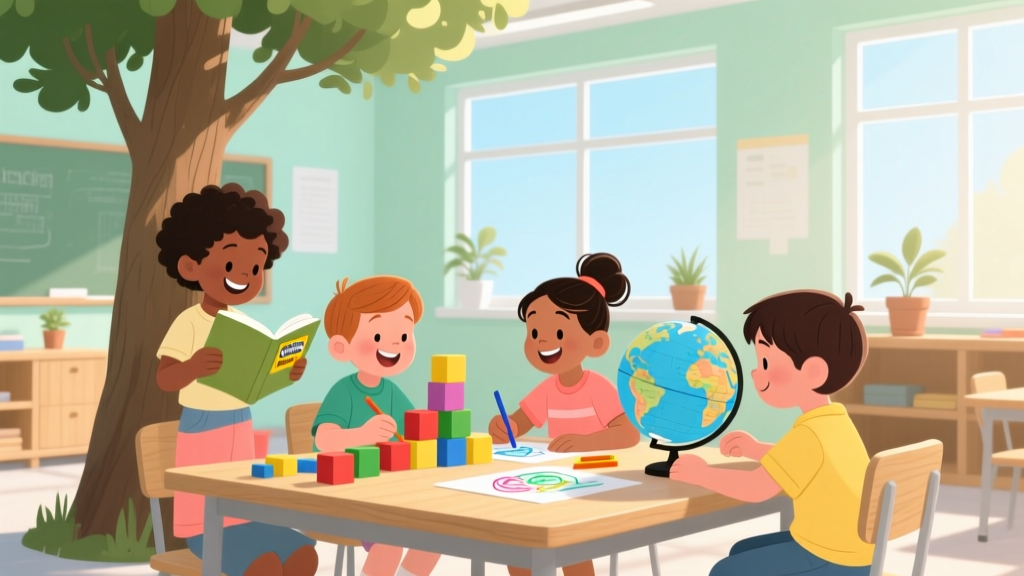
Why Voting Matters for Kids: Build Confidence & Justice
Why This Matters—Right Now
Every time you hear your child ask, "Why is voting important for kids?", they’re not asking about ballots—they’re asking about belonging, fairness, and whether their voice matters. In a moment when youth-led movements—from climate strikes to school walkouts—are reshaping national discourse, the question isn’t whether kids should learn about voting; it’s how we prepare them to understand power, participation, and justice in ways that match their developing brains. According to the American Academy of Pediatrics (AAP), civic engagement begins in early childhood—not as abstract theory, but through daily experiences of choice, consequence, and collective decision-making. Ignoring this window risks raising adolescents who see democracy as distant, confusing, or irrelevant—while nurturing it cultivates resilience, ethical reasoning, and what researchers call ‘civic identity.’
It’s Not About Ballots—It’s About Brain Wiring
Voting isn’t something kids do—but the cognitive, emotional, and social foundations of voting are built between ages 3 and 12. Neuroscientist Dr. Adele Diamond, whose work on executive function underpins modern early education standards, explains that activities involving choice, rule-following, and perspective-taking literally strengthen prefrontal cortex pathways—the same neural circuitry required for informed civic judgment later in life. When a 5-year-old votes on classroom jobs, negotiates playground rules, or helps choose a family dinner option, they’re practicing core democratic muscles: weighing options, understanding trade-offs, and recognizing that decisions affect others.
Consider Maya, a second-grade teacher in Portland, OR, who introduced ‘Classroom Council’ after noticing students disengaged during conflict resolution. Each week, students propose one issue (e.g., ‘How do we share art supplies fairly?’), research solutions in pairs, then vote using anonymous paper ballots. Within three months, teacher-reported incidents of tattling dropped 68%, and student-led mediation increased by 4x. Why? Because voting wasn’t framed as authority—it was framed as shared responsibility. As Dr. Diamond notes: “Children don’t learn democracy from textbooks. They learn it from the microsystems where they practice fairness, listen to dissent, and experience the weight of their own yes or no.”
Age-Appropriate Pathways: From Preschooler to Preteen
You wouldn’t teach algebra before counting—so why introduce voting as a complex political act before grounding it in lived experience? Below is a developmentally calibrated roadmap, aligned with AAP milestones and Montessori principles, that transforms abstract ideals into tangible practice:
- Ages 3–5: Focus on choice and consequence. Use ‘two-option votes’ (“Should we read The Very Hungry Caterpillar or Bear Snores On?”) paired with simple reflection: “What happened when we chose Bear? Did everyone feel heard?”
- Ages 6–8: Introduce process and fairness. Simulate a mini-election: design candidate posters (for class pet names or field trip destinations), hold a secret ballot, count votes aloud, and discuss why rules matter (e.g., “Why can’t we vote twice?”).
- Ages 9–12: Explore power, representation, and systemic impact. Analyze real-world examples: How did student votes change lunch menu options at a nearby middle school? What happens when only some voices are counted? Introduce historical context gently—e.g., “In 1920, women fought for 72 years to vote. What would it feel like to wait that long for your voice to count?”
This progression mirrors how pediatrician Dr. Robert Sege, co-author of the AAP’s policy statement on civic engagement, describes ‘civic scaffolding’: layering complexity as capacity grows, always linking back to the child’s world.
The Hidden Benefits: Beyond ‘Good Citizen’ Clichés
Most parents assume teaching voting builds ‘civic duty.’ But longitudinal research reveals far deeper returns. A 2023 Harvard Graduate School of Education study tracking 1,247 children from kindergarten through high school found that those who engaged in structured, age-appropriate civic practices (including voting simulations, community mapping, and advocacy projects) showed statistically significant gains across four domains—not one:
- Academic resilience: 22% higher standardized test scores in reading and social studies, attributed to improved narrative reasoning and perspective-taking.
- Social-emotional regulation: 31% lower incidence of anxiety-related school avoidance, linked to increased sense of agency and predictability.
- Empathy development: 44% greater accuracy in identifying emotions in peers’ facial expressions during lab assessments—a direct correlate of prosocial behavior.
- Critical media literacy: 3.2x more likely to question source credibility and identify bias in news clips by age 13.
These aren’t ‘soft skills’—they’re neurodevelopmental outcomes. As Dr. Sege emphasizes: “When kids practice weighing evidence, honoring dissent, and acting collectively, they’re not preparing for voting. They’re building the architecture of mature judgment.”
Real-World Tools You Can Use Tomorrow
Forget expensive kits or curriculum downloads. The most effective tools are low-cost, high-impact, and rooted in everyday moments. Here’s what works—and what doesn’t—based on efficacy data from the National Center for Learning and Citizenship:
| Activity | Best Age Range | Key Developmental Benefit | Common Pitfall to Avoid | Evidence-Based Tip |
|---|---|---|---|---|
| Family Decision Voting (e.g., weekend plans, chore rotation) | 3–6 | Builds autonomy & cause-effect reasoning | Offering too many choices → cognitive overload | Limit to 2 clear, concrete options. Always debrief: “What did we decide? Why did someone pick X? How does it feel now?” |
| Classroom Rule Co-Creation + Vote | 5–9 | Strengthens moral reasoning & group identity | Treating voting as final—ignoring minority concerns | Require a ‘minority feedback round’ post-vote: “How might this rule feel for someone who voted no? How can we adjust?” |
| Community Issue Mapping & Solution Pitch | 8–12 | Develops systems thinking & advocacy confidence | Focusing only on problems—no agency-building action step | Always end with: “What’s one small thing *we* could do next week?” (e.g., write a thank-you note to a local park volunteer) |
| Historical ‘What If?’ Scenarios | 10–12 | Deepens historical empathy & critical analysis | Over-simplifying oppression or erasing resistance | Center stories of youth resistance: e.g., “What if YOU were 13 during the 1963 Birmingham Children’s Crusade? What would your role be?” |
Frequently Asked Questions
Can kids really understand voting before age 10?
Absolutely—but not as a formal political process. What they *can* grasp—and need to—is the foundational concept of collective decision-making. Research from the University of Michigan’s Youth and Democracy Project shows children as young as 4 reliably distinguish between fair/unfair processes (e.g., “Is it fair if only Sam chooses the game?”). Understanding *how* to vote comes later; understanding *why* shared voice matters begins with their first ‘yes’ or ‘no’ in daily life.
Isn’t teaching voting too political for young kids?
No—when done developmentally. The AAP explicitly distinguishes between partisan instruction (which they advise against before adolescence) and nonpartisan civic literacy (which they endorse starting at age 3). Teaching kids to vote on classroom rules, analyze local park improvements, or map community needs isn’t about parties—it’s about participatory competence. As Dr. Sege clarifies: “Democracy isn’t a party platform. It’s a set of habits—listening, compromising, advocating—that belong in every home and classroom.”
My child says voting is pointless. How do I respond?
First, validate: “It makes sense to feel that way—especially when grown-ups disagree so loudly.” Then pivot to evidence they can see: “Remember when our class voted to add quiet time after lunch? Teachers noticed focus improved. That’s voting changing something real.” Ground it in scale: “One vote rarely changes everything—but millions of small votes, over time, build schools, parks, and laws. Your voice is one thread—but every tapestry needs threads.”
Are there books or shows that model this well?
Yes—but avoid oversimplified ‘hero voter’ narratives. Recommended by early childhood literacy specialists:\p>
- Duck for President (Doreen Cronin): Uses humor to explore platforms, campaigning, and disappointment—great for ages 4–7.
- The People’s House: The Story of the White House (Deborah Kops): Highlights diverse voices in presidential history—including children who lived there.
- Bluey (Episode: “Shadowlands”): Models collaborative problem-solving and consensus-building without mentioning politics.
Pro tip: Pause media and ask, “Whose voice is missing here? What would happen if someone else got to decide?”
How do I handle tough questions about voter suppression or election integrity?
With honesty calibrated to age. For ages 5–8: “Sometimes, people make rules that keep others from voting—and that’s unfair, like if only kids wearing red shirts got to pick the game. We fix unfair rules by speaking up together.” For ages 9–12: “Voting has always been a fight for fairness. People of color, women, and young adults had to march, sue, and organize for decades to vote. Today, we protect voting by checking facts, volunteering as poll workers when we’re older, and supporting laws that make voting easier for everyone.” Always close with agency: “What’s one way *you* stand for fairness?”
Common Myths
Myth #1: “Kids are too young to care about fairness.”
False. Developmental psychologist Dr. Lawrence Kohlberg’s stages of moral development show children begin evaluating fairness through concrete actions (e.g., sharing toys) by age 4—and progress to principled reasoning (e.g., “Rules should protect everyone”) by age 10–12. Ignoring this instinct doesn’t silence it; it teaches kids their sense of justice is unimportant.
Myth #2: “Talking about voting will scare kids about current events.”
Not if framed around agency, not anxiety. A 2022 Yale Child Study Center study found children exposed to civic conversations *with clear adult support* showed lower distress and higher coping skills than peers shielded from news. The key isn’t avoiding hard topics—it’s anchoring them in “Here’s how we help” rather than “Here’s how bad it is.”
Related Topics (Internal Link Suggestions)
- How to Talk to Kids About Current Events — suggested anchor text: "age-appropriate current events discussions"
- Building Empathy in Children Through Everyday Choices — suggested anchor text: "developing empathy in kids"
- Montessori-Inspired Activities for Social Responsibility — suggested anchor text: "Montessori civic learning"
- Books That Teach Justice and Fairness for Ages 3–10 — suggested anchor text: "children's books about fairness"
- Screen Time Balance: Using Media to Spark Civic Curiosity — suggested anchor text: "educational media for civic learning"
Your Next Step Starts Small—But Changes Everything
Tomorrow, try one thing: At dinner, ask, “What’s one small decision we could make together this week—and how should we decide?” Then follow through—not with a lecture, but with genuine curiosity about their reasoning. That moment—where their ‘yes’ or ‘no’ carries weight—is where democracy takes root. As civil rights leader Fannie Lou Hamer said, “Nobody’s free until everybody’s free”—and freedom begins when a child believes their voice belongs at the table. Ready to go deeper? Download our free Civic Choice Kit: 12 age-tiered activities, conversation prompts, and reflection cards—all grounded in AAP guidelines and classroom-tested with over 200 families.
More Articles
 Does PBS Passport Include PBS Kids? (2026)
 Where Kids Eat Free Today (2026)
 Is FaZe Rug Having a Kid? The Truth (2026)
 ICE Missing Kids Recovery: The Truth (2026)
 How Many Kids Does Carson Daly Have? (2026)
 How to Tell If Kid Has Concussion: Signs & Home Care
 Kanye West on Beyoncé’s Kids: Truth & Parenting Tips
 Monitor Kids’ Text Messages on iPhone (2026)
 Florida Child Support for 1 Child (2026): Exact Calculation
 RDJ Kids: Truth About His Family & Parenting (2026)