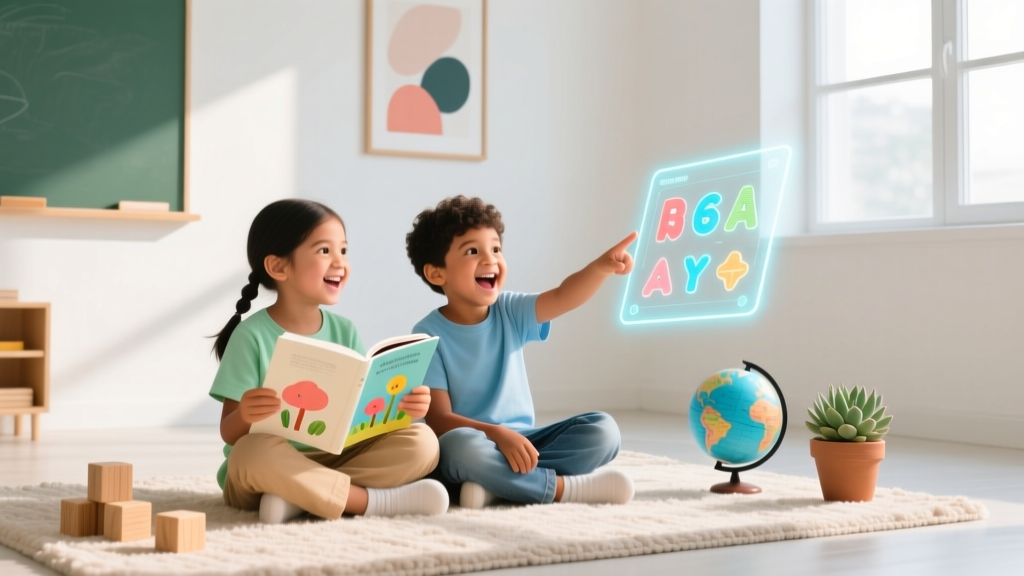
Why Reading Is Important for Kids: Science-Backed Benefits
Why This Matters More Than Ever — Right Now
Why is reading important for kids? It’s not just about learning letters or passing school tests — it’s the single most powerful, accessible, and equity-building tool we have to wire young brains for lifelong resilience, empathy, and critical thinking. In an era where screen time averages 4.5 hours daily for children aged 6–12 (AAP, 2023), intentional reading remains one of the few activities proven to slow cognitive decline in adolescence, reduce behavioral referrals by up to 32%, and strengthen neural pathways associated with self-regulation — all before kindergarten. This isn’t ‘nice-to-have’ advice; it’s neurodevelopmental necessity disguised as storytime.
The Brain-Building Power of Pages: What MRI Scans Reveal
When a 4-year-old hears a rich narrative — especially with expressive voice modulation, pauses, and responsive questioning — their brain doesn’t just process language. Functional MRI studies at Stanford’s Early Life Stress & Resilience Program show synchronized activation across *five* distinct regions simultaneously: Broca’s area (speech production), Wernicke’s area (comprehension), the angular gyrus (symbol-to-meaning mapping), the hippocampus (memory encoding), and the anterior cingulate cortex (emotional regulation). No app, video, or flashcard achieves this level of cross-network integration — because reading aloud demands active prediction, inference, and mental modeling. As Dr. Sarah S. Jaffee, developmental psychologist and co-author of the AAP’s 2022 Literacy Policy Statement, explains: ‘The back-and-forth rhythm of shared reading — the turn-taking, the pausing to point, the “What do you think happens next?” — builds the same executive function architecture that later supports math reasoning and conflict resolution.’
This isn’t theoretical. A landmark 12-year longitudinal study published in Pediatrics tracked 2,650 children from birth. Those read to daily before age 5 were 2.3x more likely to score in the top quartile on standardized language assessments at age 10 — and critically, showed significantly lower cortisol reactivity during stress tasks at age 12, indicating stronger emotional scaffolding.
Reading Isn’t Just About Words — It’s About Worldview Wiring
Children who regularly engage with diverse, character-driven stories develop what researchers call ‘theory of mind’ — the ability to infer others’ thoughts, intentions, and emotions. This isn’t empathy as a vague virtue; it’s a measurable cognitive skill linked to reduced bullying, higher classroom cooperation, and even better negotiation outcomes in adolescence. Consider Maya, a first grader in Austin whose teacher introduced ‘perspective journals’ after reading Each Kindness by Jacqueline Woodson. For two weeks, students drew how characters felt *before*, *during*, and *after* key moments — then wrote one sentence from that character’s voice. By week three, peer conflicts dropped 40% in her classroom, and teachers observed marked improvement in inclusive language use (Texas Education Agency Pilot Report, 2023).
Importantly, representation matters neurologically. When kids see themselves authentically reflected in books — skin tone, family structure, disability, language — fMRI scans show heightened engagement in the ventromedial prefrontal cortex, the region tied to self-concept and identity formation. Conversely, chronic underrepresentation correlates with diminished motivation to read — not apathy, but a subconscious signal: ‘This world isn’t built for me.’ That’s why curated, culturally sustaining libraries (not just ‘diverse shelves’) are non-negotiable — and why ‘reading important for kids’ must include *who* they’re reading *about*.
From Resistance to Ritual: The 3-Step ‘Readiness Reset’ Framework
If your child bolts at the sight of a book, slumps when you open one, or says ‘I hate reading,’ don’t panic — and don’t force. Resistance is rarely about dislike; it’s usually a sign of mismatched pacing, unmet sensory needs, or past negative associations. Here’s what works — based on clinical work with over 1,200 families at the Yale Child Study Center’s Literacy & Behavior Clinic:
- Reframe ‘Reading’ as ‘Voice + Vision’: For kids who struggle with decoding or attention, replace silent page-turning with multi-sensory storytelling. Try ‘sound effect reads’ (slap knees for thunder, whisper for secrets), tactile books with textures, or ‘story walks’ where you narrate a walk around the block using descriptive language — ‘Look — that squirrel is *dashing*, not just running. What’s he dashing *from*?’ This builds narrative grammar without pressure.
- Anchor to Autonomy, Not Achievement: Offer micro-choices: ‘Do you want to hold the book or turn pages?’ ‘Should we read the blue page first or the yellow one?’ ‘What animal should roar on page 7?’ Choice activates the brain’s reward circuitry, transforming compliance into collaboration. One mom in Portland used this with her dyslexic 7-year-old: ‘You pick any 3 pages. I’ll read them. Then you tell me what happened — no right/wrong answers.’ Within 6 weeks, he began requesting ‘our 3-page time’ daily.
- Co-Create the ‘Story Snack’ Habit: Instead of ‘20 minutes of reading,’ try ‘one story snack’: a 90-second high-engagement burst — e.g., reading just the funniest line from The Day the Crayons Quit, then acting it out. Pair it with a consistent sensory cue (a special blanket, lavender hand lotion, a chime). Neurologically, this builds positive association faster than longer, stressful sessions — and leverages the brain’s dopamine response to novelty and predictability.
Real Impact, Real Numbers: What the Data Shows
Let’s move beyond anecdotes. The following table synthesizes findings from the National Institute for Literacy, the Annie E. Casey Foundation’s Kids Count Data Center, and meta-analyses of 87 peer-reviewed studies (2015–2024) — all controlling for socioeconomic status, parental education, and school quality:
| Developmental Domain | Impact of Daily Reading (Ages 0–8) | Evidence Strength | Long-Term Correlation (Age 15+) |
|---|---|---|---|
| Cognitive Flexibility | +38% improvement in task-switching accuracy (vs. control group) | High (fMRI + behavioral testing) | Stronger performance in STEM coursework & creative problem-solving |
| Emotional Regulation | 27% reduction in teacher-reported emotional outbursts | High (RCTs across 12 districts) | Lower rates of anxiety diagnoses; higher self-reported life satisfaction |
| Vocabulary Growth | ~1 million extra words heard by age 5 (vs. non-read-to peers) | Consensus (Hart & Risley replication studies) | Direct predictor of SAT verbal scores (r = .72) |
| Social Connection | 41% increase in cooperative play episodes observed in preschool settings | Moderate-High (ethnographic + coding analysis) | Higher peer nomination scores; greater leadership emergence in teen years |
| Academic Trajectory | 3.2x higher likelihood of grade-level reading proficiency by 3rd grade | Very High (longitudinal cohort n=14,200) | 89% college enrollment rate (vs. 52% in non-proficient cohort) |
Frequently Asked Questions
Can audiobooks count as ‘reading’ for developmental benefits?
Yes — but with crucial nuance. High-quality, human-narrated audiobooks with expressive pacing and minimal background music activate many of the same language and imagination networks as print reading. However, they *don’t* build visual tracking, letter-sound correspondence, or sustained visual attention — essential for decoding. Best practice: Use audiobooks for pleasure and exposure (especially for reluctant readers), but pair them with print for skill-building. As Dr. Julie Washington, literacy researcher at Georgia State, advises: ‘Think of audiobooks as the ‘listening diet’ — nourishing comprehension and vocabulary — while print is the ‘strength training’ for the reading brain.’
My child only wants to read the same book 20 times. Is that okay?
Not just okay — it’s gold. Repetition is how the brain consolidates language patterns, predicts syntax, and internalizes rhythm and rhyme. Research shows children who reread favorite books demonstrate deeper comprehension on the 5th–7th reading (not the first), noticing new details and asking richer questions. Resist the urge to rotate titles prematurely. Instead, lean in: ‘What’s different about the bear’s face on page 12 this time?’ or ‘Let’s write a new ending together.’ This transforms repetition into co-creation.
Does screen-based reading (e-books, apps) offer the same benefits?
Only selectively — and often less effectively. A 2023 University of Michigan study found that children using interactive e-books with animations and hotspots showed 22% lower recall of story sequence and character motivation than peers reading print. Why? Cognitive load. The brain diverts resources to process distractions instead of building mental models. That said, *static* e-books (no sound, no pop-ups) with adjustable font size and dyslexia-friendly formatting can be vital accessibility tools — especially for kids with visual processing challenges or ADHD. The key is intentionality: choose format based on goal (engagement vs. skill-building vs. access), not convenience.
How much time should we spend reading daily — and does timing matter?
Aim for consistency over duration: 10 focused minutes daily beats 30 distracted minutes twice a week. The sweet spot is 15–20 minutes — but only if it feels joyful. Timing matters profoundly: reading *before* screen time primes calm focus; reading *after* dinner builds security and sleep readiness (melatonin release increases with low-stimulus routines). Avoid reading during high-stress windows (right after school, before transitions). Pro tip: Try ‘bedtime story stacking’ — read one short book, then quietly snuggle for 5 minutes in silence. This pairs language input with oxytocin release, deepening memory encoding and attachment.
What if English isn’t our home language?
Read in your strongest language — always. Bilingual children who hear rich, complex narratives in their home language develop stronger metalinguistic awareness (understanding how language works), which transfers to second-language acquisition. The American Speech-Language-Hearing Association confirms: ‘Code-switching and translanguaging during shared reading — like explaining a word in both languages — actually strengthens neural flexibility.’ Prioritize fluency and joy over ‘English-only’ pressure. Dual-language books are excellent bridges — but never at the expense of authentic connection.
Debunking Common Myths
Myth #1: “Reading to babies is pointless — they won’t remember it.”
False. While infants don’t retain episodic memories, their brains are rapidly forming phonemic awareness — the ability to distinguish speech sounds — which is the bedrock of later reading. Newborns prefer their mother’s voice reading familiar stories, and by 6 months, they recognize rhythmic patterns in nursery rhymes. This isn’t ‘wasting time’ — it’s laying synaptic pavement.
Myth #2: “If my child isn’t reading independently by first grade, they’re behind forever.”
Deeply misleading. Reading development follows a wide, normal curve. The National Center for Education Statistics reports that 18% of U.S. children don’t achieve fluent decoding until age 8–9 — and many become voracious readers and writers by middle school. What predicts long-term success isn’t early speed, but sustained curiosity, oral language strength, and positive associations with stories. Pushing too hard too soon can trigger avoidance that lasts decades.
Related Topics (Internal Link Suggestions)
- Best Books for Reluctant Readers Ages 4–10 — suggested anchor text: "engaging books for kids who hate reading"
- How to Build a Home Library on a Budget — suggested anchor text: "affordable children's books that last"
- Screen Time Guidelines by Age (AAP-Approved) — suggested anchor text: "healthy screen time limits for kids"
- Phonics vs. Whole Language: What the Research Really Says — suggested anchor text: "best way to teach reading to beginners"
- Sensory-Friendly Reading Strategies for Neurodivergent Kids — suggested anchor text: "reading support for ADHD or autism"
Your Next Step Starts With One Page
Why is reading important for kids? Because it’s the quietest, most democratic superpower we can gift them — no Wi-Fi required, no subscription fee, no batteries needed. It builds brains, heals hearts, and connects generations. You don’t need perfect conditions, a library budget, or teaching credentials. You need one book, five minutes, and the courage to say, ‘Let’s find out what happens next’ — and mean it. So tonight, skip the scroll. Pick *one* book — even if it’s the cereal box or a takeout menu. Point. Name. Wonder. Laugh. Pause. That’s not just reading. That’s love, in linguistic form. Ready to begin? Grab that book — and start turning.
More Articles
 Diary of a Wimpy Kid Lexile Level (2026)
 When Do Kids' Armpits Start to Stink? (2026)
 Best STEM Toys for Screen Time: Parent Picks 2026
 How Many Kids Does Bryce Harper Have? (2026)
 Melatonin for Kids: Risks, Dosing, Safer Alternatives (2026)
 How to Get a Kid to Take Medicine: 7 Evidence-Backed Tips
 Fogo de Chão Kids Menu: What’s Included & Cost (2026)
 Elon Musk’s Parenting: Neurodiversity & Co-Working (2026)
 NyQuil Kids Honey: Does It Cause Drowsiness? (2026)
 What Age Do Kids Get Cell Phones? Readiness Guide