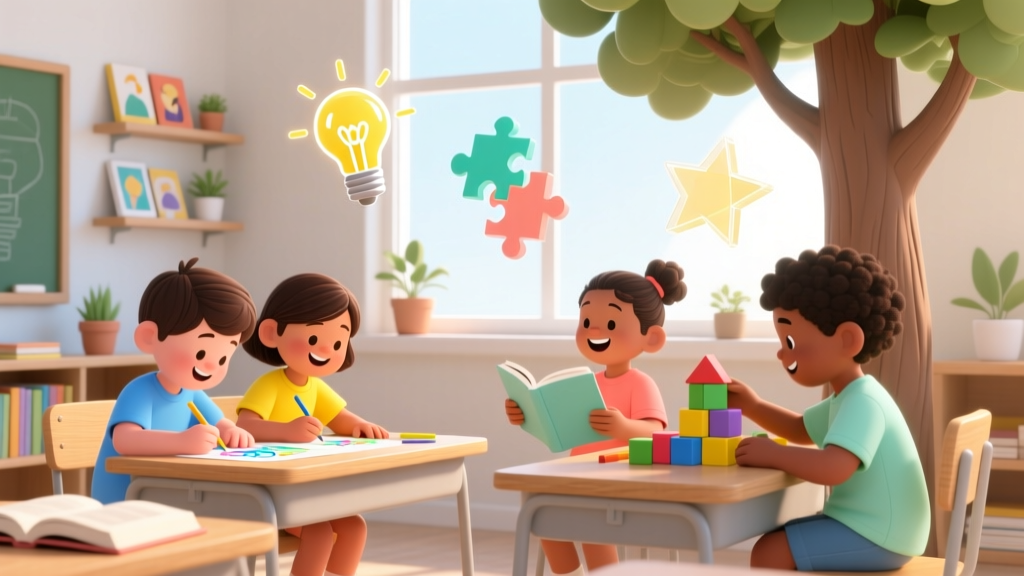
Black History Month for Kids: 7 Truths Parents Need (2026)
Why This Conversation Can’t Wait — And Why It Starts With Your Child’s Curiosity
If you’ve ever paused mid-storytime, wondering how to explain why do we celebrate Black History Month for kids in a way that’s honest without being overwhelming, developmentally appropriate without being superficial, and joyful without erasing struggle — you’re not alone. In fact, research from the American Academy of Pediatrics (AAP) confirms that children begin forming racial awareness as early as 3 years old, and by age 5, many already hold implicit biases shaped by media, environment, and unspoken adult cues. That means the question isn’t *if* your child will notice race and history — it’s *how* and *when* they’ll learn it. And when that learning happens without intention, it often happens through gaps, stereotypes, or silence. This guide gives you the tools, language, and confidence to turn Black History Month into a living, breathing part of your family’s year — not just a February checklist.
What Black History Month Really Is (And What It’s Not)
Let’s start with clarity: Black History Month is not a ‘diversity add-on’ to the curriculum. It’s not a celebration of ‘exceptional’ Black people who ‘overcame’ — though resilience is vital — nor is it a sanitized timeline ending with Dr. King’s ‘I Have a Dream’ speech. As Dr. Khalil Gibran Muhammad, historian and director of the Schomburg Center for Research in Black Culture, explains: ‘Black history is American history — fully, complexly, and continuously. The month is a corrective lens, not a separate exhibit.’ For kids, that means framing it not as ‘a special month for Black people,’ but as ‘a dedicated time to learn more deeply about stories, contributions, and experiences that have been left out or minimized in everyday lessons.’
This distinction matters profoundly. When children hear, ‘We’re learning about Black history this month,’ they may unconsciously infer: ‘This isn’t part of regular history.’ But when they hear, ‘We’re learning about scientists like George Washington Carver — who invented over 300 uses for peanuts — and how his work helped farmers across the South rebuild after slavery,’ they see continuity, relevance, and cause-and-effect. That’s how history becomes meaningful, not marginal.
A powerful real-world example comes from Ms. Lena Torres, a 3rd-grade teacher in Atlanta whose students began asking, ‘Why don’t our textbooks talk about Mary Edwards Walker?’ after reading about her as the only woman awarded the Medal of Honor. Her class launched a ‘Missing Voices Project,’ researching underrepresented figures and creating illustrated biographies displayed schoolwide. Within one semester, student engagement in social studies rose 42%, and parent surveys showed 89% reported deeper conversations at home about fairness and representation.
How to Talk About It — By Age, With Scripts & Sensitivity
Developmental psychologist Dr. Jennifer E. Lansford, co-author of Parenting Across Cultures, emphasizes that children process history through concrete, relational, and emotionally safe frameworks. Abstract concepts like systemic racism or centuries-long oppression require scaffolding — especially before age 10. Here’s how to tailor your approach:
- Ages 3–5: Focus on identity, pride, and community. Use phrases like: ‘People with dark skin have made amazing things — like building cities, writing songs, inventing medicines — and we honor them all year, especially in February.’ Avoid terms like ‘slavery’ or ‘protest’; instead, say ‘some people weren’t treated fairly because of their skin color, so others worked very hard to make things right.’
- Ages 6–9: Introduce key figures as problem-solvers and change-makers. Try: ‘Rosa Parks didn’t just sit down — she sat down to say ‘no’ to unfair rules. And because she did, other people joined her, and laws changed.’ Pair with hands-on activities: mapping Harriet Tubman’s Underground Railroad routes using yarn and toy trains, or designing ‘freedom quilts’ with symbolic patterns.
- Ages 10–13: Discuss systems, legacy, and present-day connections. Ask open-ended questions: ‘How do you think segregation in schools 60 years ago affects which schools get new science labs today?’ Cite data: According to the UCLA Civil Rights Project, schools remain more racially segregated now than in the 1970s — and students in high-poverty, majority-Black schools receive $23 billion less in funding annually than predominantly white districts.
Crucially, always name emotions: ‘It’s okay to feel sad hearing about injustice. It’s also okay to feel proud of people who stood up. And it’s important to feel hopeful — because change happens when people act together.’
Books, Media & Activities That Build Understanding — Not Just Awareness
Choosing resources isn’t about finding ‘the most diverse book’ — it’s about selecting materials that pass three evidence-based filters: accuracy (vetted by historians or cultural consultants), agency (centering Black voices, choices, and joy — not just trauma), and developmental resonance (matching cognitive and emotional capacity). The Cooperative Children’s Book Center (CCBC) at UW-Madison reports that while 29% of U.S. children are Black, only 12.5% of children’s books published in 2022 featured Black protagonists — and fewer than half of those were written by Black authors.
Here’s how to choose wisely — and what to do with what you select:
- Pre-read everything. Check reviews from CBC Books or We Need Diverse Books. Watch for red flags: passive language (‘was freed’ vs. ‘escaped’), absence of resistance narratives, or illustrations that flatten regional/cultural diversity (e.g., all characters wearing kente cloth, regardless of heritage).
- Read aloud — then pause. After each page or chapter, ask: ‘What do you think that person was feeling?’ ‘What would you have done?’ ‘What part surprised you?’ This builds empathy and critical thinking far more than quizzes or worksheets.
- Connect to your child’s world. If reading about Katherine Johnson, NASA’s ‘human computer,’ calculate how many times your child’s favorite video game character jumps per minute — then compare to how many calculations Johnson did per hour. Make math, science, and history tactile.
One standout resource is The Youngest Marcher by Cynthia Levinson — the true story of 9-year-old Audrey Faye Hendricks, who marched in Birmingham in 1963 and spent days in jail. Teachers in Nashville report that after reading it, students initiated their own ‘Kindness Campaign,’ collecting winter coats for unhoused neighbors — proving that age-appropriate history fuels agency, not anxiety.
Building Year-Round Practice — Beyond February
Here’s the truth no one tells you: If Black History Month feels exhausting or performative, it’s likely because it’s isolated. The AAP recommends weaving culturally responsive learning into daily life — not as ‘extra work,’ but as natural extension of literacy, science, art, and civic engagement. Consider these low-lift, high-impact habits:
- ‘Who Made This?’ Game: At dinner, point to food (sweet potatoes), music (hip-hop beats), or tech (text messaging — invented by Black engineer Frieda Riley) and ask, ‘Who helped create this?’ Keep a ‘Contributions Jar’ where kids drop in names or drawings — review monthly.
- Family Heritage Mapping: Create a simple world map. Mark where your family roots are — and where influential Black innovators originated (e.g., Garrett Morgan, Cleveland-born inventor of the traffic light and gas mask). Notice shared themes: migration, invention, community care.
- Support Black-Owned Businesses — With Context: Buy from a Black-owned bookstore? Tell your child: ‘This shop helps share stories like ours — and keeps money in neighborhoods that have been left out of investment for generations.’ Link economics to ethics.
Dr. Ibram X. Kendi, founding director of the Boston University Center for Antiracist Research, stresses: ‘Antiracism is not a destination. It’s a daily practice — like brushing your teeth. And for kids, practice looks like noticing, questioning, and choosing kindness — again and again.’
| Age Group | Key Developmental Milestones | Recommended Approach | Sample Script Starter | Safety & Sensitivity Notes |
|---|---|---|---|---|
| 3–5 years | Concrete thinking; strong sense of fairness; absorbs tone & emotion more than facts | Identity-affirming stories; sensory-rich activities (music, rhythm, collage) | “Did you know Maya Angelou loved to sing and dance? Let’s move like she did!” | Avoid graphic imagery or abstract injustice; emphasize safety, belonging, and joy |
| 6–9 years | Emerging abstract reasoning; moral development peaks; seeks heroes & role models | Biography-based learning; cause-and-effect timelines; creative response (drawing protest signs, writing letters) | “What do you think John Lewis felt when he crossed the Edmund Pettus Bridge? How would you show courage?” | Explain protests as ‘peaceful ways people ask for fair rules’; define ‘fair’ concretely (same rules, same chances) |
| 10–13 years | Abstract thought solidifies; heightened social awareness; questions authority & systems | Primary sources (speeches, photos, oral histories); comparative analysis (then/now); community action projects | “How does the 14th Amendment connect to school funding today? Let’s look at two school budgets.” | Prepare for tough questions; have trusted resources ready (e.g., Teaching Tolerance’s ‘Hard History’ guides); validate anger as moral clarity |
Frequently Asked Questions
Is it okay to talk about slavery with young kids?
Yes — but with precision and purpose. The AAP advises against vague or frightening language (‘bad people hurt others’) and instead recommends naming structures: ‘For hundreds of years, laws said Black people weren’t free — they were owned. That was wrong, and people fought hard to end it.’ For ages 5+, use metaphors like ‘locked doors’ and ‘keys to freedom’ (e.g., Harriet Tubman as a ‘keymaker’). Always follow with stories of resistance, ingenuity, and joy — never ending on trauma. A 2021 study in Child Development found children exposed to balanced narratives (struggle + resistance + triumph) demonstrated higher empathy and lower racial bias than those hearing only ‘happy’ or only ‘sad’ versions.
My child asked, ‘Why is there a Black History Month but not a White History Month?’ — how do I respond?
A brilliant question — and a teachable moment about power and representation. Try: ‘Most history books and movies already focus mostly on white people — so we don’t need a special month to highlight them. But Black people’s stories, inventions, and leadership have often been left out. This month helps us catch up and celebrate what’s been missing.’ Then pivot: ‘What’s something you’d love to learn more about — a scientist, artist, or leader we haven’t talked about yet?’ This honors curiosity while reinforcing equity as fairness, not favoritism.
How do I handle it if my child says something racially insensitive?
Stay calm, curious, and kind — not shaming. Say: ‘I heard you say ___. Help me understand what you meant.’ Often, kids parrot phrases without grasping meaning. Use it as data, not failure. Then reframe gently: ‘In our family, we say “people with curly hair” or “people from Ghana” — specific and respectful.’ Research from the Kirwan Institute shows that correcting bias early, with warmth and explanation, reduces future incidents by up to 68%. Bonus: Name your own learning — ‘I’m still learning too. Thanks for helping me grow.’
Do I need to be an expert to talk about this?
No — and pretending you are undermines trust. Say: ‘I don’t know all the answers — but I love learning with you. Let’s find out together.’ Then model research: watch a short PBS Kids video, call your local library for recommendations, or email a teacher. What matters most is consistency, humility, and showing up — imperfectly and authentically. As educator Dr. Bettina Love writes: ‘Justice isn’t perfect. It’s persistent.’
What if my family isn’t Black — is it still our responsibility to teach this?
Absolutely. Equity isn’t a ‘Black issue’ — it’s a human issue. Children in non-Black families benefit immensely: They develop stronger critical thinking, cross-cultural communication skills, and moral courage. A landmark 2020 study in Social Psychology Quarterly followed 1,200 students for 8 years and found those who engaged in consistent, age-appropriate antiracist learning were 3x more likely to pursue careers in education, public health, and social justice — and reported significantly higher life satisfaction. Inclusion isn’t charity. It’s oxygen for democracy.
Common Myths
Myth #1: “Kids are too young to understand race or history.”
False. As noted earlier, racial cognition begins at age 3. Avoiding the topic doesn’t make children ‘colorblind’ — it makes them ill-equipped to recognize or challenge bias. Silence teaches louder than words.
Myth #2: “Celebrating Black History Month means focusing only on pain and struggle.”
Also false. While honoring resilience is essential, the month equally celebrates joy, innovation, creativity, and leadership — from jazz and hip-hop to NASA and microbiology. Overemphasizing trauma risks defining Black identity solely through oppression — a harmful distortion rejected by scholars and communities alike.
Related Topics (Internal Link Suggestions)
- How to Choose Culturally Responsive Books for Kids — suggested anchor text: "culturally responsive children's books"
- Age-Appropriate Ways to Talk About Racism With Children — suggested anchor text: "how to talk to kids about racism"
- Black Inventors and Scientists Every Child Should Know — suggested anchor text: "Black scientists for kids"
- Montessori-Inspired Activities for Black History Month — suggested anchor text: "Montessori Black History activities"
- How to Support Black-Owned Bookstores and Educational Resources — suggested anchor text: "support Black-owned bookstores"
Your Next Step Starts Today — Not in February
You don’t need a lesson plan, a budget, or perfect knowledge to begin. You just need one intentional moment: Tonight, ask your child, ‘What’s something cool you learned this week — about anyone, anywhere?’ Listen closely. Then say, ‘I’d love to learn something cool about a Black inventor, artist, or leader with you. Any ideas?’ That tiny invitation — rooted in curiosity, respect, and shared discovery — is where real understanding begins. Because why do we celebrate Black History Month for kids isn’t just about history. It’s about raising children who see themselves and others as full, complex, capable, and worthy of belonging — every single day of the year.
More Articles
 How Much Do Foster Parents Get Paid? (2026)
 When Can Kids Start Taking Melatonin? (2026)
 How Many Kids Did the Ingalls Have? (2026)
 Measure Kids' Feet Correctly: 3-Minute Method (2026)
 Is Trump Making Kids Go to School 6 Months? (2026)
 When Can a Kid Sit Without a Booster? (2026)
 Autism Diagnosis Rise: Causes & What Parents Should Know
 What Size Is 6.5 Kids in Women’s? (2026 Conversion Chart)
 Why Charlie Clark Hides Kids’ Ages (2026)
 Alexis Bledel Kids: What We Know (2026)