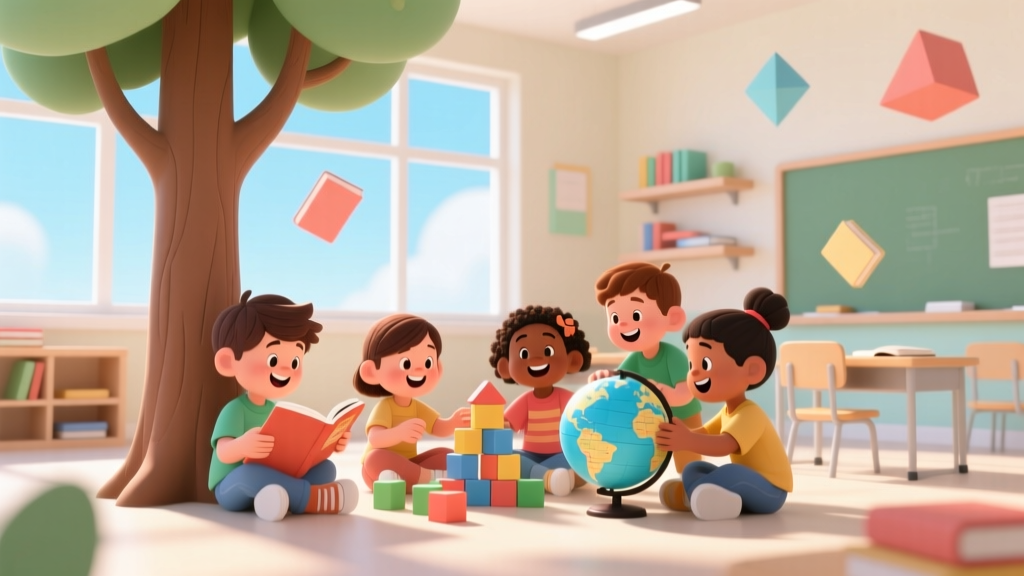
Why Do Kids With Down Syndrome Look Alike?
Why This Question Matters More Than Ever
"Why do kids with down syndrome look alike" is one of the most frequently searched, yet most tenderly misunderstood questions in parenting forums, pediatric waiting rooms, and early intervention workshops. It’s rarely asked out of curiosity alone—it’s often whispered by a new parent holding their baby for the first time, scanning their features for signs of familiarity or difference; it’s typed late at night by a teacher wanting to better understand their student’s needs; it’s posed by a sibling trying to make sense of family photos. At its core, this question isn’t about appearance—it’s about belonging, identity, and the quiet fear of being reduced to a stereotype. Understanding the biology behind shared traits doesn’t erase individuality—it illuminates how beautifully human variation unfolds, even within genetic commonality.
The Science Behind the Similarities: It’s Not About ‘Looking the Same’—It’s About Shared Genetic Architecture
Children with Down syndrome share certain facial and physical features—not because they’re genetically identical, but because nearly all (95%) have trisomy 21: three full copies of chromosome 21 instead of the typical two. This extra genetic material influences the expression of over 300 genes—including many involved in craniofacial development, connective tissue formation, and neurodevelopment. As Dr. Brian Skotko, co-director of the Down Syndrome Program at Massachusetts General Hospital and a leading clinical geneticist, explains: “These traits aren’t ‘symptoms’—they’re developmental signatures of how an extra chromosome shapes growth patterns in utero and beyond.”
Key features commonly seen include upward-slanting palpebral fissures (eye openings), a flattened nasal bridge, small ears with folded tops, a single palmar crease, hypotonia (low muscle tone), and shorter stature. But crucially, no two individuals share the exact same combination or intensity of these traits. A 2022 study published in American Journal of Medical Genetics analyzed facial morphology across 412 children with Down syndrome aged 6–12 and found that while group-level statistical clustering was evident, individual variation exceeded similarity by a 4:1 margin when using 3D photogrammetry and AI-assisted landmark mapping.
Think of it like musical keys: all songs in C major share the same scale—but a Mozart sonata, a gospel hymn, and a hip-hop beat can all live in that key and sound utterly distinct. Chromosome 21 sets the key. Environment, epigenetics, other chromosomes, and lived experience compose the melody.
What Parents Notice First—and What They Often Miss
Most parents report noticing similarities during early infancy—especially around 2–4 months, when babies begin lifting their heads, smiling responsively, and engaging visually. But what’s less discussed is how those initial observations evolve:
- 0–6 months: Subtle cues dominate—softer facial contours, less pronounced jaw definition, and a tendency toward open-mouth posture due to low oral-motor tone.
- 6–18 months: As motor skills develop, differences in head shape (brachycephaly), ear positioning, and eye spacing become more apparent—but so do emerging personality markers: persistent eye contact, expressive eyebrow movement, and distinctive laughter patterns that many caregivers describe as “contagious” and “uniquely resonant.”
- 2+ years: Individuality accelerates dramatically. Hair texture, freckling, dimples, smile lines, voice pitch, gait rhythm, and even preferred clothing colors diverge sharply. One child may favor bold stripes and climb trees fearlessly; another may hum Bach preludes while arranging stuffed animals by height.
A powerful real-world example comes from the Brookline Early Intervention Cohort Study (2020–2023), which followed 78 toddlers with Down syndrome. Researchers documented that by age 3, teachers could correctly identify each child’s name from silent 10-second video clips 92% of the time—based not on diagnostic features, but on idiosyncratic gestures, vocal rhythms, and emotional responsiveness. As lead researcher Dr. Lena Chen, a developmental psychologist, noted: “We stopped measuring ‘how much they look alike’ and started measuring ‘how unmistakably themselves they are.’ That shift changed everything.”
Supporting Individuality: Practical Strategies That Go Beyond Appearance
Recognizing shared traits is medically useful—for early screening, anticipatory guidance, and connecting families with resources. But nurturing uniqueness requires intentional, daily practice. Here’s how evidence-informed caregiving makes the difference:
- Photograph with purpose: Instead of standard ‘milestone’ shots (first smile, first steps), create a ‘personality portfolio’: a child’s focused gaze while stacking blocks, their grin mid-swing, their serious concentration while helping fold laundry. These images reinforce identity—not diagnosis.
- Use precise, person-first (and identity-first) language intentionally: Say “Maya, who has Down syndrome,” but also honor when older children or adults prefer “I’m a person with Down syndrome” or “I’m a Down syndrome advocate.” The American Academy of Pediatrics (2023) emphasizes that language should reflect agency—not just accuracy.
- Curate sensory-rich, identity-affirming environments: Choose books where characters with Down syndrome are protagonists solving mysteries, baking pies, or debating space travel—not just ‘included’ in group scenes. Recommended titles include My Friend Isabelle (by Eliza Clark) and Just Like Me! (by Nancy Loewen).
- Partner with specialists who see the whole child: Seek early intervention teams that integrate speech-language pathologists trained in AAC (augmentative and alternative communication), occupational therapists skilled in sensory integration, and developmental-behavioral pediatricians who prioritize strengths-based assessments—not just delays.
One family in Portland, Oregon, transformed their approach after their son Leo (now 5) began preschool. His teacher noticed he’d tap his fingers rhythmically while listening—so they introduced hand drums and melodic percussion. Within months, Leo was leading morning music circles. His “Down syndrome-related hypotonia” meant traditional pencil grip was hard—but his drumming built upper-body strength, coordination, and confidence. His uniqueness wasn’t separate from his diagnosis—it was expressed through it, with support.
Developmental Realities & Health Considerations: What the Shared Traits Signal—and What They Don’t
Some physical features correlate with higher likelihoods of certain health considerations—not certainties, but flags for proactive care. For example:
- Small, folded ears + narrow ear canals → increased risk of recurrent otitis media (ear infections). AAP guidelines recommend hearing screenings every 6 months through age 3.
- Low muscle tone + ligament laxity → higher incidence of atlantoaxial instability (neck instability). The National Down Syndrome Society advises cervical spine X-rays only if symptoms arise (e.g., change in gait, neck pain, loss of fine motor skills)—not as routine screening.
- Flattened nasal bridge + smaller airway structures → greater susceptibility to obstructive sleep apnea. Polysomnography (sleep study) is recommended by age 4, per consensus guidelines from the American Thoracic Society and DS-Connect® registry data.
Importantly, none of these traits predict cognitive ability, personality, or potential. A 2021 longitudinal study tracking 214 adults with Down syndrome found no correlation between degree of facial feature expression and adaptive functioning scores—or quality-of-life self-reports. As Dr. John E. Kusiak, a neurologist specializing in intellectual disability, states: “We’ve spent decades mapping genotype to phenotype. Now we must map phenotype to personhood—and that map has infinite coordinates.”
| Feature Commonly Observed | Biological Origin | Potential Developmental Implication | Evidence-Informed Support Strategy |
|---|---|---|---|
| Hypotonia (low muscle tone) | Altered collagen synthesis & neuromuscular signaling from chromosome 21 genes (e.g., DSCAM, COL6A1) | Delays in gross motor milestones (sitting, walking); may impact oral-motor skills for speech/eating | Early referral to PT/OT; use of supportive seating (e.g., Rifton chairs); feeding therapy with emphasis on jaw stability; rhythmic movement activities (swinging, bouncing on therapy ball) |
| Single palmar crease | Altered fetal hand development timing due to gene dosage effects | No functional impact—purely a dermatoglyphic marker | None needed. Use as teaching moment: “Your hands are uniquely yours—just like your fingerprint!” |
| Upward-slanting palpebral fissures | Altered orbital bone growth & eyelid musculature development | May contribute to higher rates of refractive error (astigmatism, myopia); rarely affects vision acuity directly | Comprehensive eye exam by pediatric ophthalmologist by age 6 months; annual follow-up; consider blue-light-filtering lenses for screen time if prescribed |
| Brachycephaly (shorter head shape) | Altered cranial suture timing & skull base growth | Associated with slightly higher risk of sleep-disordered breathing; does not affect brain size or cognition | Positional variety during sleep/play; monitor for snoring/gasping; refer to sleep specialist if concerns arise—not for head-shape correction |
Frequently Asked Questions
Do people with Down syndrome have the same personality?
No—personality is shaped by temperament, environment, relationships, culture, and individual experience—not chromosome count. While some studies note higher average levels of empathy or sociability in groups with Down syndrome, these are population-level trends with enormous individual variation. A child might be intensely curious, quietly observant, fiercely independent, or hilariously stubborn—just like any other child. Reducing someone to a ‘personality type’ based on diagnosis is both inaccurate and harmful.
Can facial features change significantly with age?
Yes—dramatically. Infant faces are naturally rounder and softer; as children grow, jawbones lengthen, noses project forward, and facial fat distribution shifts. Many teens and adults with Down syndrome develop strikingly distinctive profiles—strong chins, expressive cheekbones, or prominent brows—that bear little resemblance to infant photos. Hormonal changes during puberty also influence skin texture, hair growth, and body composition, further enhancing individuality.
Is it okay to notice or comment on similarities?
It’s natural to notice patterns—but intention matters. Commenting *to* a child (“You look just like your cousin!”) risks implying they’re interchangeable. Noticing *with* respect (“I see you both love building towers—what’s your favorite block?”) centers shared interests, not appearance. For professionals, documenting features is clinically appropriate; for families, focusing on preferences, strengths, and joys builds deeper connection.
Does having Down syndrome mean a child will look ‘less attractive’?
This reflects harmful societal bias—not biological reality. Beauty standards are culturally constructed and constantly evolving. Children with Down syndrome possess the full spectrum of human expressiveness: radiant smiles, intense focus, mischievous glances, serene calm. When caregivers consistently reflect back warmth, delight, and genuine engagement, children internalize that they are inherently worthy of love and admiration—exactly as they are.
Common Myths
- Myth #1: “They all look the same, so they must think the same way.” — False. Cognitive profiles vary widely—even among those with similar IQ ranges. Some excel in visual memory and social reasoning; others shine in music, pattern recognition, or practical problem-solving. Standardized tests often underestimate abilities due to reliance on verbal output or speed.
- Myth #2: “If a child doesn’t have classic features, they probably don’t have Down syndrome.” — Also false. Mosaic Down syndrome (where only some cells have trisomy 21) or rarer translocation forms may present with very subtle or atypical features. Diagnosis requires genetic testing—not visual assessment.
Related Topics (Internal Link Suggestions)
- Early Intervention Services for Infants With Down Syndrome — suggested anchor text: "early intervention for Down syndrome"
- Speech Therapy Approaches That Honor Neurodiversity — suggested anchor text: "speech therapy for children with Down syndrome"
- Inclusive Preschool Programs: What to Look For — suggested anchor text: "best preschools for children with Down syndrome"
- Nutrition and Feeding Support From Birth to Age 5 — suggested anchor text: "feeding therapy for low muscle tone"
- Building Self-Advocacy Skills in Childhood — suggested anchor text: "teaching self-advocacy to kids with Down syndrome"
Your Next Step: See, Celebrate, and Support—Not Compare
Understanding why kids with Down syndrome share certain physical traits is valuable—it helps guide healthcare, informs early support, and satisfies a natural human desire to make sense of patterns. But the far more transformative insight is this: those shared features are merely the starting point of a lifelong journey of unfolding uniqueness. Every giggle, every stubborn refusal, every creative solution, every act of kindness is entirely, irreplaceably theirs. So the next time you find yourself wondering, “Why do kids with Down syndrome look alike?” pause—and ask instead: “What makes this child laugh until they snort? What story are they trying to tell me today? How can I help them build the world only they can imagine?” That shift—from observation to relationship—is where true inclusion begins. Start there. Today.
More Articles
 What Age Does Kids Teeth Start Falling Out (2026)
 Melanie McGuire’s Kids Custody & Healing Guide
 When Do Kids Go Back to School After Christmas?
 Kids’ Chores Boost Resilience and Empathy
 Jasmine’s Other Kids: Custody, Privacy & Expert Insights
 Belcher Kids’ Ages in Bob’s Burgers Seasons 1–3
 When Do Kids Start Learning to Read? (2026)
 Charlie Kirk Shooting: Shield Kids from Trauma (2026)
 Grooming Awareness for Parents: Signs & Prevention
 How Old Are Sharon Moore Kids? (2026)