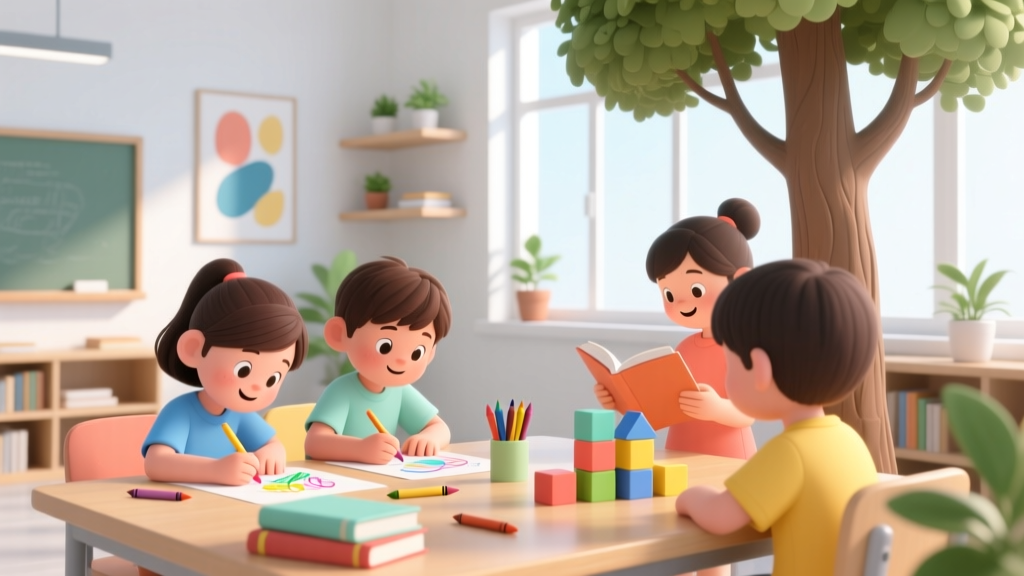
Why Do Kids Bully Others? 7 Evidence-Based Causes
Why This Question Matters More Than Ever
Every time a parent hears the question why do kids bully others, it lands like a quiet punch — part confusion, part fear, part guilt. In an era where cyberbullying escalates before lunchtime, school suspensions rise without clear solutions, and children as young as six report chronic social exclusion, understanding the 'why' isn’t academic — it’s urgent, practical, and deeply relational. This isn’t about labeling children as ‘bullies’; it’s about recognizing bullying as a distress signal — a maladaptive coping strategy rooted in unmet needs, undeveloped skills, or unprocessed experiences. When we shift from punishment-first to curiosity-first, we unlock real change — for the child who bullies, the child targeted, and the entire classroom ecosystem.
It’s Not About Morality — It’s About Developmental Gaps
Bullying behavior rarely stems from inherent ‘meanness.’ Instead, developmental science shows it often emerges when core social-emotional capacities lag behind chronological age. According to Dr. Stephanie M. Jones, developmental psychologist and Harvard Graduate School of Education researcher, children who bully frequently demonstrate measurable deficits in three interlocking domains: emotion regulation, perspective-taking, and moral reasoning. These aren’t character flaws — they’re skill gaps shaped by biology, environment, and experience.
Consider 10-year-old Mateo, referred to his school counselor after repeatedly mocking classmates’ accents during group work. Standard discipline (lunch detention, apology letter) failed. A deeper assessment revealed he’d recently moved from Puerto Rico, struggled with English fluency, and felt invisible — until he noticed peers flinched when he mimicked their speech. His ‘bullying’ wasn’t cruelty — it was a clumsy, painful bid for control and attention in a world where he felt linguistically powerless. With targeted social skills coaching and bilingual peer mentoring, his behavior shifted within six weeks.
Key developmental red flags include:
- Emotion dysregulation: Difficulty naming feelings, escalating quickly to anger or shame, limited calming strategies
- Underdeveloped theory of mind: Struggling to infer others’ intentions, emotions, or perspectives — especially under stress
- Rigid moral frameworks: Viewing rules as absolute (‘I’m right, you’re wrong’) rather than contextual, with little nuance for intent or impact
Crucially, these gaps are teachable. A landmark 2023 meta-analysis in Child Development found that schools implementing evidence-based SEL (social-emotional learning) curricula saw a 23% average reduction in bullying incidents over two years — not by targeting bullies, but by strengthening foundational skills across the whole student body.
The Hidden Role of Family Dynamics & Modeling
Children don’t learn bullying from cartoons or video games alone — they absorb relational blueprints at home. Research from the American Academy of Pediatrics (AAP) confirms that family environments where aggression is normalized — whether through harsh criticism, sarcasm disguised as humor, or inconsistent consequences — significantly increase bullying risk. But it’s subtler than overt abuse. Consider these high-impact patterns:
- Coercive cycles: When parents use threats, yelling, or withdrawal to gain compliance, children internalize power-as-control — then replicate it with peers
- Emotional invalidation: Dismissing a child’s frustration (“You’re overreacting!”) teaches them to suppress or project feelings onto others
- Modeling relational aggression: Gossiping about neighbors, mocking relatives’ appearances, or using contemptuous tone during arguments signals that dehumanizing language is socially acceptable
A powerful counter-strategy? Repair modeling. When adults make mistakes — raise their voice, snap unfairly — naming it aloud (“I just spoke sharply because I was stressed, not because you did anything wrong. Let me try again calmly”) demonstrates accountability and emotional repair in real time. Dr. Becky Kennedy, clinical psychologist and founder of Good Inside, emphasizes: “Kids don’t need perfect parents. They need parents who show them how to course-correct with integrity.”
This isn’t about blame — it’s about leverage. One longitudinal study tracked 412 families for seven years; children whose parents consistently practiced emotion-coaching (validating feelings + guiding solutions) were 48% less likely to engage in bullying by adolescence, even after controlling for socioeconomic status and neighborhood safety.
Neurobiology, Trauma, and the Stress Response System
What if some bullying isn’t willful cruelty — but a dysregulated nervous system screaming for safety? Neuroscience reveals that chronic stress reshapes developing brains. Children exposed to adverse childhood experiences (ACEs) — including neglect, household dysfunction, or community violence — often develop hypervigilant threat detection systems. Their amygdala (fear center) becomes oversized and reactive; their prefrontal cortex (impulse control, empathy) remains underdeveloped.
In this state, a bumped shoulder in the hallway isn’t accidental — it’s an attack. A quiet classmate isn’t shy — they’re ‘weak,’ triggering a dominance reflex wired for survival. As Dr. Bruce Perry, senior fellow at the ChildTrauma Academy, explains: “Bullying can be a trauma response — not the cause of trauma, but its behavioral echo. The child isn’t trying to hurt; they’re trying to feel less terrified.”
This reframing transforms intervention. Punitive responses (detention, suspension) often retraumatize — confirming the child’s worldview that the world is unsafe and authority figures are threatening. Trauma-informed alternatives include:
- Sensory grounding first: Offering fidget tools, movement breaks, or regulated breathing before discussion
- Relationship-based accountability: “I see you’re struggling. How can we figure out what happened — and how to make things right together?”
- Co-regulation support: Training staff in calm, predictable presence — not ‘fixing’ the child, but helping their nervous system settle
Schools adopting trauma-informed practices report up to 65% fewer behavioral referrals — not because problems vanished, but because responses finally matched the underlying biology.
Peer Culture, Social Status, and the Unseen Scripts
Bullying flourishes in ecosystems where social hierarchy is rigid, unspoken, and rewarded. In middle school, status isn’t earned through kindness — it’s seized through dominance, exclusivity, or trend-setting. A 2024 University of Michigan study observed over 1,200 peer interactions: 73% of bullying episodes occurred when bystanders were present, and 61% intensified when peers laughed, filmed, or joined in — not out of malice, but to secure their own social positioning.
This isn’t ‘kids being cruel.’ It’s kids navigating complex, untaught social algorithms. Think of it like software running outdated code: they’ve learned that mocking someone’s lunchbox gains more clout than defending them — because that’s what the environment rewards.
Effective interventions target the culture, not just individuals. The ‘No Blame Approach,’ developed by UK educator Annie Fox, flips traditional discipline: facilitators meet separately with the child who bullied, those targeted, and key bystanders — not to assign fault, but to collaboratively design supportive actions. In one pilot with 14 schools, 89% of cases showed sustained improvement within 6 weeks, with zero recidivism in 72%.
Parents can reinforce this at home by shifting conversations:
- Instead of “Why did you say that?” → “What were you hoping would happen when you said that?”
- Instead of “How would you feel?” → “What do you think [classmate] needed in that moment?”
- Instead of “Don’t be mean” → “What’s one small way you could help someone feel safe today?”
Root Causes of Bullying: Evidence-Based Drivers & Intervention Levers
| Root Cause Category | Developmental/Neurological Basis | Observable Behaviors | Proven Intervention Strategy | Evidence Source |
|---|---|---|---|---|
| Emotion Regulation Deficit | Underdeveloped prefrontal cortex; heightened amygdala reactivity; low heart rate variability (HRV) | Explosive anger over minor frustrations; difficulty calming down; blaming others for own feelings | Explicit instruction in identifying feelings + co-regulation techniques (e.g., 5-4-3-2-1 grounding); daily mindfulness practice | AAP Clinical Report (2022); CASEL Meta-Analysis (2023) |
| Trauma Adaptation | Altered HPA axis function; hyperarousal or dissociation; impaired attachment schemas | Targeting peers perceived as ‘vulnerable’; testing boundaries aggressively; extreme reactions to perceived rejection | Trauma-informed restorative circles; sensory regulation tools; consistent adult attunement (not correction) | Perry & Szalavitz, The Boy Who Was Raised as a Dog (2017); National Child Traumatic Stress Network Guidelines |
| Social Skill Gap | Delayed theory of mind development; weak executive functioning (planning, flexibility) | Misreading social cues; dominating conversations; inability to compromise; literal interpretation of sarcasm | Structured social skills groups using role-play + video feedback; peer-mediated interventions (e.g., buddy systems) | Journal of Abnormal Child Psychology (2021); CDC Youth Risk Behavior Survey Data |
| Family Modeling | Learned behavioral scripts; insecure attachment patterns; internalized coercive communication | Copying parental sarcasm/criticism; using threats to control siblings; dismissing others’ feelings as ‘dramatic’ | Parent coaching in emotion-coaching techniques; family therapy focused on relational repair; modeling vulnerability | American Journal of Family Therapy (2023); Harvard Center on the Developing Child |
| Peer Status Seeking | Heightened sensitivity to social evaluation (ventral striatum activation); dopamine-driven reward seeking | Bullying increases when audience present; targeting those outside ‘in-group’; creating viral social media content at others’ expense | School-wide status-redefinition (e.g., ‘kindness ambassadors’); bystander empowerment training; anonymous reporting + rapid response protocols | University of Michigan Study (2024); UNESCO Global Education Monitoring Report |
Frequently Asked Questions
Is bullying just a phase kids grow out of?
No — and assuming it is can be dangerous. While occasional conflict is normal, persistent bullying (defined as repeated, intentional aggression with a power imbalance) is a red flag for unaddressed underlying needs. Longitudinal research shows children who chronically bully without intervention are significantly more likely to struggle with relationships, employment, and mental health into adulthood. Early, skill-building intervention isn’t ‘overreacting’ — it’s preventing entrenched patterns.
My child says they ‘don’t know why’ they bullied someone. Is that honest?
Yes — and profoundly revealing. Younger children (under 12) often lack the metacognitive capacity to articulate internal states. Teens may genuinely not understand their motivations due to emotional avoidance or shame. Rather than demanding explanations, respond with curiosity: “Help me understand what was happening for you in that moment — what were you feeling? What did you hope would happen?” This builds self-awareness without defensiveness.
Should I punish my child for bullying — or focus only on teaching skills?
Both — but in deliberate sequence. Immediate consequences (e.g., loss of privileges) must be paired with skill-building, not replace it. The AAP recommends: 1) Ensure safety first, 2) Calmly name the behavior and impact (“What you did hurt Sam’s feelings and broke our rule about respect”), 3) Collaborate on repair (“How can you make this right?”), and 4) Practice the missing skill (“Let’s role-play asking for space respectfully”). Punishment without skill-building teaches fear, not empathy.
Can a child who bullies also be a victim of bullying?
Absolutely — and this ‘bully-victim’ profile is common. Research shows up to 40% of children who bully have also been bullied themselves. They often cycle between roles — lashing out to regain control after feeling powerless. Interventions must address both experiences: building safety *and* agency. Ignoring their victimization while punishing their aggression deepens shame and reinforces the cycle.
Does screen time cause bullying?
Screen time itself doesn’t cause bullying — but it changes its landscape. Digital platforms remove nonverbal cues (making empathy harder), enable anonymity (reducing accountability), and extend aggression beyond school hours. However, the root drivers remain the same: unmet needs, skill gaps, and relational dynamics. The solution isn’t just screen limits — it’s digital citizenship education grounded in real-world social-emotional skills.
Common Myths About Why Kids Bully Others
Myth #1: “Bullies have low self-esteem.”
Research consistently debunks this. Most children who bully actually exhibit high self-esteem — sometimes narcissistic traits — and use aggression to maintain status or control. Low self-worth is more commonly linked to victims or bully-victims. Focusing on ‘low self-esteem’ misdirects intervention away from power dynamics and skill deficits.
Myth #2: “It’s just kids being kids — ignore it and it’ll stop.”
Ignoring bullying signals to all involved that cruelty is tolerated. Studies show bystanders who witness unaddressed bullying become desensitized and less likely to intervene later. Worse, targets experience measurable physiological harm — elevated cortisol, sleep disruption, and increased risk of depression — that compounds with each incident. Silence isn’t neutral; it’s complicity.
Related Topics (Internal Link Suggestions)
- How to Talk to Your Child About Bullying — suggested anchor text: "how to talk to your child about bullying"
- Signs Your Child Is Being Bullied (Beyond the Obvious) — suggested anchor text: "signs your child is being bullied"
- Building Empathy in Children: Practical Daily Strategies — suggested anchor text: "building empathy in children"
- What to Do If Your Child Is the Bully: A Non-Shaming Action Plan — suggested anchor text: "what to do if your child is the bully"
- SEL Activities for Elementary Classrooms That Actually Work — suggested anchor text: "SEL activities for elementary classrooms"
Conclusion & Your Next Step
Understanding why do kids bully others isn’t about excusing harm — it’s about responding with precision. When we move past moral judgment to map the neurodevelopmental, relational, and environmental roots, we transform discipline into development. You don’t need to be a psychologist to start. Today, try one small shift: replace “What’s wrong with you?” with “What’s happening inside you?” That single question — asked with genuine curiosity, not accusation — opens the door to connection, insight, and lasting change. Download our free Parent’s Guide to Bullying Prevention (includes conversation scripts, emotion charts, and school advocacy checklists) — because every child deserves to feel safe, seen, and skilled.
More Articles
 Bia’s Cardi B Kids Comment: Ethics & Digital Privacy
 Candy Bomber Berlin: How Halvorsen Delivered Joy Safely
 George Foreman’s Kids Names: Full Verified List (2026)
 Is Serenity Kids Baby Food Safe? (2026)
 Trisha Paytas’s Kids Names & Digital Safety Tips
 Child Support for 2 Kids in Texas (2026 Guide)
 Is Wicked 2 Good for Kids? Pediatrician-Backed Guide
 Elon Musk's Kids' Names: Privacy, Neurodiversity & 2026
 Pre-K Age Requirements: State-by-State Guide (2026)
 Kids Passport to Mexico: Air vs. Land Rules (2026)