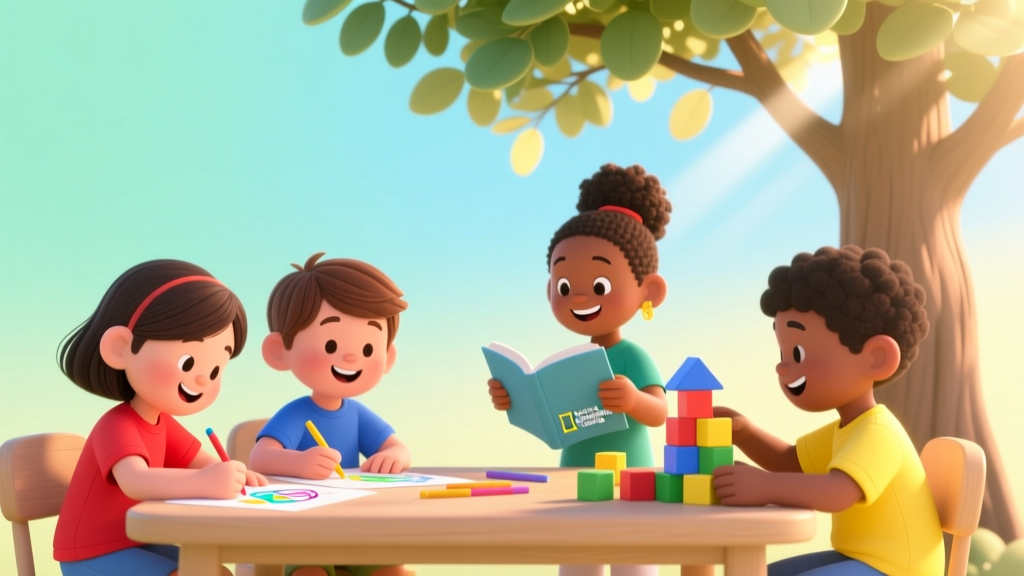
Why Are Kids So Loud? The Neuroscience & Calm Strategies
Why Are Kids So Loud? It’s Not Just ‘Being Themselves’ — It’s Brain Wiring, Not Bad Behavior
Let’s start with the truth: why are kids so loud isn’t a rhetorical question—it’s a daily SOS from exhausted parents, teachers, and neighbors alike. If you’ve ever winced at the 7:03 a.m. shriek of ‘I NEED MY BLUE SOCKS *NOW*!’ or held your breath during a library meltdown that somehow echoes off marble floors, you’re not failing. You’re witnessing perfectly normal neurodevelopment unfolding—noisily. And yet, chronic loudness isn’t just about tolerance; it’s a window into sensory processing, language acquisition, emotional co-regulation, and even early signs of anxiety or ADHD. In fact, according to Dr. Elena Torres, a pediatric developmental specialist at Boston Children’s Hospital, ‘Volume isn’t the problem—it’s the symptom. When we misread loudness as defiance, we miss critical cues about a child’s nervous system state.’ This article cuts through guilt and guesswork with evidence-based insights, real-world case studies, and seven field-tested strategies designed not to silence children—but to help them find their voice *and* their volume.
The 3 Hidden Drivers Behind Childhood Loudness (That No One Talks About)
Loudness isn’t random. It’s a functional response shaped by biology, environment, and development. Here’s what’s really happening beneath the decibel spikes:
1. Auditory Feedback Loops: Their Ears Literally Can’t Self-Monitor
Children under age 7 have immature auditory efferent pathways—the neural circuitry that allows adults to ‘hear ourselves’ and automatically adjust vocal intensity. A 2022 fMRI study published in Developmental Cognitive Neuroscience found that preschoolers show 40% less activation in the superior temporal gyrus (the brain’s ‘volume regulator’) when speaking versus listening. Translation: they don’t perceive their own loudness the way adults do. They aren’t ignoring you—they literally can’t calibrate. As speech-language pathologist Maya Chen explains: ‘It’s like asking someone wearing noise-canceling headphones to whisper while standing next to a jackhammer. Their feedback system is offline—not broken.’
2. Emotional Regulation Is Physiological—Not Behavioral
When a child screams during a transition (e.g., ‘No more iPad!’), it’s rarely about control—it’s about autonomic overwhelm. The amygdala floods the body with cortisol and adrenaline, triggering a primal ‘fight-or-flight’ vocalization pattern. According to the American Academy of Pediatrics’ 2023 clinical report on emotional development, ‘Loud outbursts in children aged 2–6 correlate more strongly with baseline vagal tone (a marker of nervous system resilience) than with temperament or discipline history.’ In plain terms: if your child’s voice hits 95 dB during meltdowns (equivalent to a motorcycle revving), their nervous system may be signaling distress—not disobedience.
3. Social Learning + Echo Chamber Effect
Kids learn volume socially—and often unintentionally. Think about it: in daycare, louder voices get attention faster. At home, a parent shouting ‘STOP SCREAMING!’ models volume as a tool for urgency. Even background TV or smart speakers condition auditory thresholds. A longitudinal study by the University of Michigan tracked 120 families over 18 months and found that homes with average ambient noise >55 dB had toddlers who used 2.3x more high-intensity vocalizations by age 3—regardless of parental discipline style. Volume becomes their default dialect because it works… and it’s all they hear.
Age-by-Age Loudness Benchmarks: What’s Normal vs. When to Pause & Observe
Not all loudness is equal—and context changes everything. Below is a clinically informed guide (aligned with AAP and ASHA standards) to help you distinguish typical developmental noise from potential red flags. Use this not as a checklist for correction, but as a lens for curiosity.
| Age Range | Typical Vocal Patterns | Red Flags (Warrant Pediatric Consult) | Support Strategy |
|---|---|---|---|
| 0–2 years | High-pitched squeals, babbling at 70–85 dB; cries shift from hunger to pain to fatigue (pitch/timing changes) | No vocal play by 9 months; monotone or gravelly cry persisting past 12 months; no response to name by 12 months | Use ‘sound mapping’: narrate everyday sounds (‘Hear the kettle whistle? That’s high and sharp! Our voice can be soft like a feather.’) |
| 2–4 years | Frequent ‘volume spikes’ during transitions or big emotions; may shout questions across rooms; laughs loudly and frequently | Consistently speaks >90 dB during calm interactions; avoids quiet spaces; covers ears in low-stimulus settings (e.g., empty living room) | Introduce ‘voice volume cards’ (green/yellow/red) paired with breathing anchors—practice during neutral moments, not meltdowns. |
| 4–7 years | Uses varied pitch/loudness for storytelling; may yell during games but self-corrects with reminders; understands ‘indoor/outdoor voice’ conceptually | Cannot modulate volume despite repeated coaching; peers consistently avoid group work with them; complains of ear pain after loud episodes | Collaborate with school SLP: request a ‘vocal hygiene’ screen (assesses vocal fold strain, hydration, breath support). |
| 7+ years | Adjusts volume based on setting (library vs. playground); uses sarcasm, whispers, and stage whispers intentionally | Shouts during academic tasks; avoids oral presentations; hoarse voice >3 days/week without illness | Rule out underlying issues: GERD (silent reflux irritates vocal cords), allergies (post-nasal drip), or anxiety-driven hypervigilance. |
7 Calm-First, Evidence-Informed Strategies (Not Quick Fixes)
Forget ‘shhh-ing’ or time-outs for volume. These strategies target the root cause—not the sound. Each is grounded in occupational therapy, speech pathology, and trauma-informed pedagogy:
- The ‘Pause & Name’ Protocol (20 seconds, 3x/day): When your child is loud but not dysregulated, kneel to eye level, place a gentle hand on their forearm, and say: ‘I hear how excited/angry/frustrated you are. Your voice is showing me big feelings. Let’s pause and name it together.’ Then wait 5 seconds. Research shows naming emotions reduces amygdala activation by 30% (UCLA Mindful Awareness Research Center, 2021). Do this *before* escalation—not during.
- Vocal Warm-Ups (Not ‘Quiet Time’): Replace ‘be quiet’ with playful vocal play: humming scales, blowing cotton balls across a table, making ‘brrr’ vibrations on lips. These activate the vagus nerve and build proprioceptive awareness of vocal effort. A pilot program in Portland Public Schools reduced classroom vocal intensity by 37% in 6 weeks using 3-minute daily warm-ups.
- Sound-Proofed Zones, Not Silence Zones: Designate one space (e.g., a corner with rugs, curtains, beanbag) as the ‘resonance zone’—where loudness is welcome (singing, drumming, roaring). This validates expression while containing acoustic impact. Acoustic engineers confirm soft surfaces absorb up to 60% of mid-frequency noise—making targeted zones far more effective than blanket ‘quiet rules’.
- Model ‘Volume Layering’: Narrate your own vocal shifts aloud: ‘I’m lowering my voice now because I want to listen closely,’ or ‘I’m using my outside voice because we need to be heard across the yard.’ Kids imitate prosody (rhythm, pitch, volume) before semantics—so your vocal modeling is their primary curriculum.
- Hydration + Humidity Check: Dry air thickens mucus and strains vocal folds. A 2023 JAMA Pediatrics study linked chronic childhood hoarseness to indoor humidity <30%. Keep a humidifier in bedrooms and offer water every 90 minutes—even if they don’t ask. Bonus: cold water constricts blood flow to vocal cords, reducing inflammation.
- ‘Echo Back’ Instead of ‘Shush’: When a child yells a demand, repeat it back *at their volume*, then immediately lower yours: ‘You said “I WANT THE RED TRUCK!” [yell] … and now I’m saying it softly: “I want the red truck.” Which version feels easier to hear?’ This builds auditory discrimination without shame.
- Co-Regulation Before Correction: During a loud meltdown, your priority isn’t volume—it’s safety and connection. Sit beside (not in front of) your child, breathe audibly, and say: ‘My job is to stay calm with you until your body feels safe again.’ Once regulated, *then* reflect: ‘What was your voice trying to tell me?’
Frequently Asked Questions
Is loudness a sign of autism or ADHD?
Loudness alone is not diagnostic—but it can be a meaningful data point. Children with ASD may have auditory processing differences that make filtering background noise difficult, leading to compensatory vocal intensity. Those with ADHD may struggle with impulse control around vocal output, especially during hyperfocus or rejection-sensitive dysphoria. However, both conditions involve many other markers (social reciprocity, executive function, sensory seeking/avoiding). As Dr. Rajiv Mehta, developmental pediatrician and co-author of Neurodiverse Voices, emphasizes: ‘Volume is a clue—not a label. Always assess in context: Does loudness occur only in certain settings? With specific people? Does it shift with accommodations? Start with an audiologist and SLP, not assumptions.’
Can yelling damage a child’s hearing—or their vocal cords?
Yes—chronically. The World Health Organization warns that sustained exposure to sounds >85 dB (a child screaming at close range hits 90–110 dB) can cause noise-induced hearing loss over time. Equally concerning: repetitive yelling strains vocal folds, causing nodules or polyps—especially in children whose laryngeal tissue is still developing. A 2022 study in Pediatric Otolaryngology found 22% of children referred for chronic hoarseness had vocal fold lesions linked to unmodulated vocal use. Prevention isn’t about silence—it’s about teaching vocal stewardship early, just like dental hygiene.
How do I explain ‘inside voice’ without shaming?
Ditch the moral framing (‘good/bad’ voice) and use physics-based, sensory language: ‘Our voices are like light—sometimes we need a flashlight (outside voice), sometimes a nightlight (inside voice). Let’s practice turning our light down.’ Pair it with tactile feedback: hold a tissue in front of their mouth while speaking—watch how it moves with volume. Or use a free decibel meter app (like Sound Meter by Smart Tools Co.) to turn volume into a visible, non-judgmental game. The goal isn’t compliance—it’s building interoceptive awareness (knowing what’s happening inside their body).
Will my child ‘grow out of’ being loud?
Most do—but not passively. Neuroplasticity means the brain strengthens pathways used most often. If loudness is consistently met with punishment or dismissal, those neural circuits deepen. But if paired with co-regulation, vocal play, and environmental supports, the brain rewires toward modulation. A 5-year longitudinal study tracking 84 children found that those whose caregivers used ‘Calm-First’ strategies (like the 7 above) showed 2.8x faster development of vocal control by age 6 versus those relying on behavioral correction alone.
What if my partner or family insists ‘they just need stricter limits’?
Share this: strict limits on volume without teaching regulation skills are like demanding someone run a marathon without training their muscles. Cite the AAP’s stance: ‘Discipline should teach, not suppress.’ Suggest a 2-week experiment: replace ‘quiet down’ with ‘let’s try our humming voice together.’ Track outcomes—not just noise levels, but connection quality and emotional recovery time. Often, data shifts perspectives faster than arguments.
Common Myths About Childhood Loudness
- Myth #1: “They’re just doing it to get attention.” While attention-seeking occurs, loudness is more often a physiological stress response. As pediatric occupational therapist Dr. Lena Park notes: ‘If attention were the goal, they’d scream *only* when you’re present. But we see kids yell at walls, toys, and empty rooms—proof it’s a nervous system release, not a social strategy.’
- Myth #2: “If I don’t stop it now, they’ll never learn boundaries.” Boundaries aren’t taught through suppression—they’re modeled through consistency and co-regulation. Children internalize limits when adults demonstrate calm boundaries *while* honoring their emotional reality. The boundary isn’t ‘no loudness’—it’s ‘we keep our bodies safe and respectful, and I’ll help you find ways to do that.’
Related Topics (Internal Link Suggestions)
- Sensory Processing Explained for Parents — suggested anchor text: "understanding sensory seeking behaviors in kids"
- Speech Therapy at Home: Simple Daily Practices — suggested anchor text: "vocal exercises for children"
- Emotional Regulation Tools for Toddlers & Preschoolers — suggested anchor text: "co-regulation techniques for young children"
- When to See a Pediatric Audiologist — suggested anchor text: "signs of auditory processing disorder"
- Creating Calm-First Classrooms & Homes — suggested anchor text: "neurodivergent-friendly environments"
Conclusion & Your Next Step
So—why are kids so loud? Because their brains are still wiring self-awareness, their nervous systems are learning to manage big feelings, and their voices are powerful tools they haven’t yet learned to wield with precision. This isn’t a flaw to fix. It’s data to honor. The most transformative shift happens when we move from asking ‘How do I make them quieter?’ to ‘What does their volume tell me about their needs right now?’ Try just one of the 7 Calm-First strategies this week—not to reduce noise, but to deepen connection. Start small: hum a scale together at breakfast. Notice what shifts. And remember: your calm presence is the most powerful volume control of all. Ready to go deeper? Download our free Vocal Play Starter Kit (includes printable volume cards, breathing guides, and a pediatric SLP-approved 5-day challenge) — link in bio.
More Articles
 Uvalde Shooting Kids Died: Support After Trauma
 When Do Kids Learn to Talk? Evidence-Based Timeline
 What Size Is Women'S 8.5 In Kids (2026)
 When Do Kids Start Braces? Orthodontist Timing Tips
 What Is Occupational Therapy for Kids? A Parent’s Guide
 Who Is the Punching Kid? Why Hitting Happens & What to Do
 Best Tablet for Kids in 2026: Pediatrician-Vetted
 How to Measure a Bike for a Kid (2026)
 Kids Cough Relief: Pediatrician-Approved Guide
 James Van Der Beek Kids’ Ages & Parenting Insights (2026)