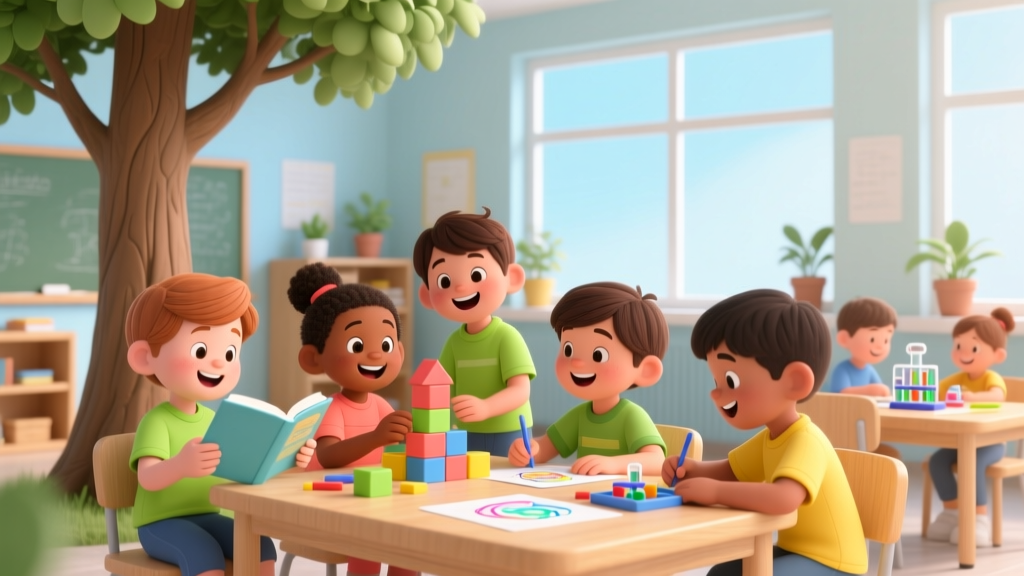
Chapter Books for Kids: Readiness Signs, Not Age
Why 'When to Start Reading Chapter Books to Kids' Isn’t About Age—It’s About Readiness
If you’ve ever stared at a beautifully illustrated early chapter book on your shelf while your 6-year-old demands the same rhyming picture book for the 47th night in a row—or worse, watched them slump over a text-heavy page with glazed eyes—you’re not alone. The question when to start reading chapter books to kids isn’t just about checking a box on a developmental checklist. It’s about protecting their love of stories while nurturing the complex cognitive, linguistic, and emotional scaffolding required to follow multi-threaded plots, track character motivations across chapters, and hold abstract ideas in working memory. Misjudging this transition is one of the most common—and quietly damaging—parenting missteps: research from the American Academy of Pediatrics shows that premature pressure into chapter books correlates with increased reading avoidance by age 9, not accelerated literacy. The good news? Readiness isn’t hidden in a calendar—it’s written in your child’s attention span, vocabulary use, and even how they retell stories after bedtime.
What Chapter Book Readiness *Really* Looks Like (Hint: It’s Not Just ‘Can They Decode Words?’)
Many parents equate reading fluency with chapter book readiness—but decoding words is only the entry ticket. True readiness sits at the intersection of four interdependent domains: oral language comprehension, sustained attention, narrative reasoning, and working memory stamina. According to Dr. Susan B. Neuman, a literacy researcher and former U.S. Assistant Secretary of Education, “A child who reads every word correctly but can’t summarize what happened in the last paragraph—or connect why a character acted a certain way—is not yet ready for chapter books, regardless of grade level.”
Here’s what to observe—not test—for over a 2–3 week window:
- Story Retelling with Cause/Effect: Can they recount a familiar story using phrases like “because…”, “so then…”, or “but then…”? This signals developing narrative logic—the bedrock of chapter book engagement.
- Listening Stamina: Do they sit attentively through 15+ minutes of uninterrupted read-aloud with minimal fidgeting or redirection? Chapter books demand sustained auditory processing before independent reading begins.
- Vocabulary in Context: Do they ask questions like “What does ‘reluctantly’ mean?” or use new words spontaneously (“She was furious!”) after hearing them in stories? Rich oral vocabulary predicts comprehension success far more than sight-word counts.
- Character Inference: When reading picture books, do they comment on feelings or motives (“He’s sad because his friend moved away”) without prompting? This reveals theory-of-mind development essential for tracking nuanced protagonists.
- Self-Correction Habit: While reading aloud, do they pause and re-read sentences that don’t make sense—even if words are pronounced correctly? This metacognitive awareness is critical for navigating longer, less-illustrated texts.
A real-world example: Maya, a first-grade teacher in Portland, noticed her student Leo could decode third-grade phonics lists flawlessly—but when asked to predict what might happen next in a simple 5-chapter animal adventure, he shrugged and said, “I forgot what happened before.” She delayed chapter books for 8 weeks, focusing on oral summarization and graphic organizers for story elements. By November, Leo independently chose The Magic Tree House series and wrote his own 3-chapter sequel. His readiness wasn’t delayed—he was simply waiting for his comprehension to catch up to his decoding.
The Sweet Spot: Age Ranges, Milestones, and Why ‘7 Is Average’ Is Misleading
While publishers often label books as “ages 7–10,” those ranges reflect marketing averages—not developmental universals. The National Center for Education Statistics found that only 58% of U.S. second graders meet the baseline comprehension threshold for early chapter books—and that number drops to 41% among children with language-rich home environments below median income. So what’s the real timeline?
Think in phases—not ages:
- Emergent Chapter Readers (Typically 6–7 years): Need high illustration density (1 image per 2–3 pages), short chapters (2–4 pages), controlled vocabulary, and strong repetition of character names and settings. Think Frog and Toad or Henry and Mudge.
- Confident Chapter Readers (Typically 7–9 years): Handle longer chapters (5–8 pages), subtle humor, light subplots, and 1–2 secondary characters. Expect occasional rereading for clarity. Cam Jansen and My Weird School fit here.
- Independent Chapter Readers (Typically 9–11 years): Sustain focus across 10–15 page chapters, track multiple character arcs, infer themes, and tolerate lower illustration frequency (e.g., 1–2 images per chapter). Wonder and The Giver (with support) belong here.
Crucially, gender, bilingualism, learning differences, and even birth order affect pacing. A 2023 longitudinal study in Child Development tracked 327 children and found that firstborns entered the emergent chapter phase an average of 3.2 months earlier than later-born siblings—likely due to higher exposure to complex caregiver narration. Meanwhile, bilingual children often show “compressed readiness”: they may lag slightly in English decoding but demonstrate advanced narrative reasoning in their home language, accelerating comprehension once vocabulary gaps close.
Your Step-by-Step Bridge Strategy (No Pressure, No Backtracking)
Transitioning isn’t flipping a switch—it’s building a bridge. Here’s how to scaffold it intentionally, based on AAP-recommended practices and classroom-tested methods:
- Start with ‘Hybrid’ Texts: Choose books with 30–40% illustration coverage, sentence complexity that gradually increases per chapter, and built-in comprehension supports (glossaries, character maps, or end-of-chapter questions). Bad Kitty and Elephant & Piggie (yes, technically early readers—but with chapter-like structure and sophisticated emotional vocabulary) are ideal warm-ups.
- Co-Read Strategically: Don’t just read *to* them—read *with* them. Pause every 2–3 pages and ask open-ended questions: “What’s puzzling you right now?” or “How do you think [character] feels—and what in the text tells you that?” This builds metacognitive habits before independence.
- Chunk & Visualize: After each chapter, spend 60 seconds sketching one key scene or creating a 3-bubble “What Happened / Why / What’s Next?” chart. Visualization strengthens memory encoding and reduces cognitive load.
- Normalize Re-Reading: Explicitly praise going back: “Great idea to check page 12—that detail explains why she lied!” This teaches that comprehension is iterative, not linear.
- Let Them Quit (Gracefully): If a book consistently causes frustration after 3 chapters, shelve it. Keep a “Try Again in 3 Months” basket. Forcing endurance undermines agency—the #1 predictor of lifelong reading identity (per Scholastic’s 2022 Kids & Family Reading Report).
Age Appropriateness Guide: Matching Books to Cognitive & Emotional Readiness
| Developmental Stage | Typical Age Range | Key Cognitive & Emotional Indicators | Recommended Book Examples | Red Flags to Pause |
|---|---|---|---|---|
| Pre-Chapter Readiness | 4–6 years | Follows 3-step oral directions; retells stories with sequence words; identifies basic emotions in self/others; enjoys rhymes & alliteration | Little Bear (Else Holmelund Minarik), Mr. Putter & Tabby series | Resists listening past 5 minutes; cannot recall main character’s name after reading; confuses fantasy/reality boundaries frequently |
| Emergent Chapter Reader | 6–7.5 years | Holds 4–5 story details in mind; asks “why” questions about character choices; tolerates mild suspense; self-corrects misreadings | Frog and Toad Are Friends, Junie B. Jones #1, Princess in Black | Skips chapters; closes book mid-sentence; substitutes own endings without regard for plot logic; expresses anxiety about “getting it wrong” |
| Confident Chapter Reader | 7.5–9 years | Tracks 2–3 character perspectives; infers motives from dialogue/action; connects themes across chapters; tolerates ambiguity | Because of Winn-Dixie, Sammy Keyes series, My Life as a Book | Consistently misinterprets sarcasm/humor; needs frequent definitions for Tier 2 vocabulary (e.g., “diligent,” “reluctant”); avoids books with unfamiliar cultural contexts |
| Independent Chapter Reader | 9–11+ years | Compares books to real-world issues; debates character ethics; notices authorial voice/tone; seeks thematic depth over plot | The War That Saved My Life, A Wrinkle in Time, Front Desk | Relies heavily on film adaptations to understand plots; avoids books without movie versions; reads quickly but recalls <5% of content after 24 hours |
Frequently Asked Questions
My child reads fluently at age 5—should I push chapter books now?
No—and here’s why: Fluency ≠ comprehension. A 2021 study in Reading Research Quarterly found that early fluent readers pushed into chapter books before age 6.5 showed significantly lower motivation and deeper comprehension gaps by fourth grade compared to peers who spent extra time with rich picture books and oral storytelling. Their brains hadn’t yet developed the executive function needed to hold multi-layered narratives. Instead, amplify their strength: read complex picture books (The Arrival, They All Saw a Cat) aloud, discuss symbolism, and encourage them to write their own illustrated chapter-style stories with clear beginnings/middles/ends.
What if my child loves being read to but refuses to read chapter books independently?
This is extremely common—and often a sign of healthy development, not resistance. Many children need 6–12 months of consistent shared reading *before* attempting solo chapter books. Try the “chapter sandwich”: read the first half of a chapter aloud, have them read the second half, then discuss together. Or use audiobooks alongside physical copies (a strategy endorsed by the International Literacy Association) to build familiarity with pacing and cadence. Track progress by stamina—not pages: celebrate when they read for 7 uninterrupted minutes, then 10, then 15.
Are graphic novels “cheating” when transitioning to chapter books?
Quite the opposite—they’re neuroscience-approved bridges. Graphic novels develop visual literacy, inference skills, and narrative sequencing *while* reducing decoding load. Dr. Katie Monnin, literacy professor and graphic novel researcher, confirms they activate the same brain regions as traditional prose for plot comprehension—and often boost reluctant readers’ confidence faster than text-only books. Start with hybrid titles like Smile or El Deafo, then move to illustrated chapter hybrids (Big Nate, Diary of a Wimpy Kid).
My child has ADHD. How do I adapt chapter book introduction?
Children with ADHD often thrive with chapter books—but need different scaffolds. Use tactile bookmarks with chapter goals (“Find 1 clue about the mystery”), break chapters into 3-minute “focus sprints” with movement breaks, and choose books with high action-to-description ratios (City of Ember, Percy Jackson). The CHADD (Children and Adults with Attention-Deficit/Hyperactivity Disorder) organization recommends pairing reading with fidget tools and voice-recorded summaries after each chapter to reinforce retention.
Is it okay to skip early chapter books entirely and go straight to middle grade?
Rarely—and usually not advisable. Early chapter books serve a unique developmental function: they teach readers how to navigate textual architecture (chapters, section breaks, glossaries) and build stamina incrementally. Skipping them is like trying to run a marathon without walking first. If your child seems “too advanced,” enrich—not accelerate: add literary analysis (“How does the author make you trust this narrator?”), compare adaptations, or explore nonfiction chapter books on high-interest topics (space, sharks, coding) which often have stronger scaffolding.
Common Myths About Chapter Book Readiness
- Myth #1: “If they can read it, they’re ready for it.” Reality: Decoding ability is necessary but insufficient. Comprehension requires background knowledge, vocabulary depth, and inference skills that develop separately—and often later. A child reading The Hobbit aloud at age 7 may decode every word but miss 80% of thematic layers, cultural references, and moral complexity.
- Myth #2: “More reading time = faster readiness.” Reality: Forced daily reading without comprehension support creates negative associations. The 2023 APA report on childhood stress found that coerced reading correlated with elevated cortisol levels in 68% of children under age 8. Quality trumps quantity: 10 minutes of engaged, dialogic reading builds more neural pathways than 30 minutes of silent, anxious decoding.
Related Topics (Internal Link Suggestions)
- Best Early Chapter Books by Reading Level — suggested anchor text: "top early chapter books for emerging readers"
- How to Build Reading Stamina in Kids — suggested anchor text: "building reading stamina strategies"
- Picture Books That Teach Narrative Skills — suggested anchor text: "picture books that build story comprehension"
- Signs of a Reading Disability in Young Children — suggested anchor text: "early signs of dyslexia in kids"
- Reading Aloud to Older Kids: Why It Still Matters — suggested anchor text: "benefits of reading aloud beyond age 8"
Conclusion & Your Next Step
Knowing when to start reading chapter books to kids isn’t about hitting a date on the calendar—it’s about honoring the intricate, individualized dance between their decoding skills, oral language, attentional capacity, and emotional security. Rushing risks turning reading into a chore; waiting too long may stall confidence. Your most powerful tool isn’t a book list—it’s observation. This week, try the “3-Minute Story Recall Test”: After reading any book (even a picture book), ask your child to tell you what happened—*in their own words*, without prompts. Notice where their memory holds and where it frays. That gap is your readiness compass. Then, pick one book from the Emergent Chapter Reader row in our table above, grab snacks, and commit to 10 minutes of joyful, low-stakes co-reading—no quizzes, no corrections, just shared wonder. Because the goal isn’t finishing chapters. It’s keeping the door to stories wide open.
More Articles
 How Many Kids Does Amber Portwood Have? (2026)
 How to Talk to Kids About Depression (Ages 4–12)
 Erykah Badu Kids: Truth About Her Low-Profile Parenting
 Can Kids Have Magnesium Citrate? Pediatric Facts (2026)
 Netflix Won’t Download on Kids’ iPad? 7 Fixes (2026)
 Where We Bout to Eat at Kid? 7 Stress-Cutting Strategies
 Why Do High School Seniors Wear Kids Backpacks?
 Pinworms in Kids: Symptoms, Treatment & Prevention
 Squid Game for Kids: Age Guide & Safer Alternatives (2026)
 Tom Cruise Kids: Co-Parenting Truth (2026)