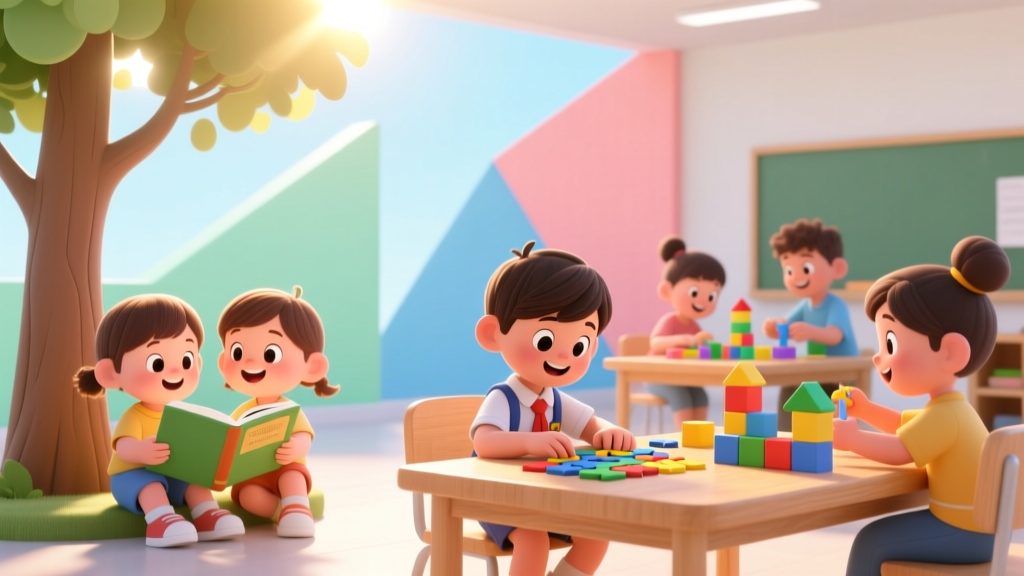
When Should Kids Write Their Name (2026)
Why 'When Should Kids Write Their Name?' Is One of the Most Stressful Questions Parents Ask—And Why It Doesn’t Have a Single Answer
When should kids write their name? That simple question lands like a tiny grenade in the parent group chat: one mom shares her 4-year-old’s perfectly formed cursive signature; another confesses her kindergartener still reverses 'b' and 'd' daily—and suddenly, comparison anxiety spikes. But here’s what pediatric occupational therapists and early childhood development researchers want you to know: name-writing isn’t a test—it’s a neurodevelopmental milestone woven from fine motor control, visual-spatial processing, letter recognition, working memory, and even emotional regulation. Rushing it can trigger avoidance, frustration, and long-term writing aversion. Waiting too long without support may mask underlying needs. So instead of asking 'Is my child on time?', ask 'What foundational skills are they building—and how can I strengthen them joyfully, not judgmentally?'
The Real Timeline: Not ‘By Age X,’ But ‘By These 5 Readiness Signs’
Forget rigid age cutoffs. The American Academy of Pediatrics (AAP) and the National Association for the Education of Young Children (NAEYC) emphasize that readiness—not calendar age—drives success. According to Dr. Elena Torres, a pediatric occupational therapist with 18 years of school-based practice, 'A child who traces shapes with steady pressure at age 3.5 may be more ready than a child who holds a pencil tightly but trembles at age 5.' What matters is the convergence of five interlocking systems:
- Fine Motor Maturity: Can pinch clothespins, cut with safety scissors, string beads, and hold a crayon with thumb-index-middle finger tripod grip (not fist)?
- Visual-Motor Integration: Can copy a cross, circle, square, and diagonal line accurately on paper—and match letters to models?
- Letter Knowledge: Recognizes >10 uppercase letters (especially those in their own name), knows letter sounds, and distinguishes similar shapes (e.g., 'O' vs. 'Q').
- Working Memory Capacity: Holds 3–4 verbal instructions ('Pick up the red crayon, draw a circle, then write your first initial') without losing track.
- Task Engagement & Persistence: Stays focused on a drawing or tracing activity for 5+ minutes without meltdown or escape behaviors.
Most children begin attempting their name between ages 4 and 6—but the quality of that attempt matters far more than timing. A 4.5-year-old who writes 'LILY' with consistent left-to-right orientation, recognizable letters (even if reversed or oversized), and pride in showing it off is thriving. A 5.8-year-old who avoids all writing tasks, grips so tightly their knuckles whiten, and erases every stroke until the paper tears may need gentle assessment—not drills.
What ‘Writing Their Name’ Actually Looks Like at Each Stage (and Why ‘Messy’ Is Magnificent)
Development isn’t linear—it’s spiral-shaped. Children cycle through phases where skill surges, plateaus, and sometimes seems to regress (often before leaps). Here’s what to expect—and why each phase has profound neurological value:
- Scribble Phase (2–3 years): Wild, rhythmic marks—no intent to represent letters. Why it matters: Builds shoulder stability, wrist rotation, and neural pathways for later controlled movement. Don’t correct—celebrate rhythm! Try ‘scribble dances’ with music.
- Symbolic/Pre-Letter Phase (3–4 years): Intentional shapes—zigzags, loops, crosses—sometimes labeled 'Mama' or 'dog.' May 'write' same squiggle repeatedly. Why it matters: Emergence of symbolic thinking—the cognitive bedrock of literacy. Say, 'Oh! You made a special sign for yourself—that’s how writing starts!'
- Letter-Like Forms (4–4.5 years): Attempts at real letters—often starting with first initial, using vertical/horizontal lines and circles. Common errors: mirror writing, inconsistent size, floating letters. Why it matters: Visual discrimination and motor planning in action. Use magnetic letters on the fridge—not worksheets.
- Conventional Attempt (4.5–6 years): Names written left-to-right, with recognizable uppercase letters (lowercase often lags), spacing attempts, and increasing consistency. Reversals (b/d, p/q) are normal until age 7. Why it matters: Integration of phonemic awareness, orthographic knowledge, and sustained attention.
Case Study: Maya, age 4.9, wrote 'MAYA' with all capitals—but 'M' was backwards, 'Y' was upside-down, and she spaced letters unevenly. Her preschool teacher didn’t re-teach; she laminated it and hung it beside her cubby. Two months later, Maya independently corrected the 'M' after noticing her friend’s name tag. 'She didn’t learn from correction,' says her OT, 'she learned from ownership.'
The 7 Daily Micro-Practices That Build Name-Writing Skills—Without a Single Worksheet
Pressure to 'practice writing' backfires when it feels like work. Instead, embed skill-building into sensory-rich, joyful routines. Research from the University of Washington’s Early Learning Lab shows children who engage in daily 3–5 minute play-based motor activities develop writing readiness 42% faster than peers doing formal handwriting drills (2023 longitudinal study, n=1,247).
- Chalkboard Sidewalk Art: Drawing giant letters with sidewalk chalk strengthens shoulder girdle muscles and builds spatial awareness. Trace names in wet sand or shaving cream.
- Play-Doh Letter Sculpting: Rolling snakes to form letters develops hand strength and tactile memory. Add glitter or scented oil for multisensory input.
- Stringing Beads in Name Order: Use large beads labeled with letters. 'Let’s make “L-E-O” — what sound does L make? Where does it go first?'
- Alphabet Scavenger Hunt: Find objects starting with letters in their name ('L' = lamp, 'E' = egg, 'O' = orange). Builds phoneme-grapheme connection.
- Wet Paintbrush on Concrete: No mess, instant feedback. Watch letters 'disappear'—reduces fear of permanence.
- Sticker Stories: Place stickers on paper, then 'connect the dots' to form letters. Great for children with low muscle tone.
- Body Letters: Lie on floor and shape body into 'L', 'O', 'A'. Builds proprioceptive awareness—critical for pencil control.
Avoid these well-intentioned traps: forcing pencil grip corrections before age 5, erasing 'wrong' letters, comparing to siblings, or using dotted-line tracing before the child can copy simple shapes. As Dr. Torres notes: 'The hand learns through repetition—not perfection. Every wobbly 'A' is a neuron firing, strengthening, and connecting.'
When to Pause, Observe, and Seek Support: The 4 Red Flags That Warrant Gentle Assessment
Delay isn’t always cause for alarm—but certain patterns signal deeper needs. AAP guidelines recommend consultation if, by age 5.5, a child shows two or more of these consistently:
- Cannot hold a crayon or spoon with purposeful grasp (still uses fisted grip)
- Struggles to copy a +, O, or X after demonstration (not just free-drawing)
- Shows extreme avoidance of any mark-making—even finger-painting or sand play
- Has difficulty distinguishing basic shapes (circle vs. square) or matching identical letters
Note: Reversals alone (not paired with other issues) are normal. So is preferring uppercase over lowercase (which requires finer motor control). What’s concerning is persistent inconsistency across contexts—e.g., a child who draws detailed dinosaurs but refuses to touch a pencil, or who recognizes letters in books but cannot reproduce any symbol.
Early intervention works. A 2022 study in Pediatrics found that children receiving occupational therapy before age 6 for handwriting delays showed 92% improvement in functional writing (defined as legible, efficient, pain-free output) within 12 weeks—versus 41% in wait-and-see groups. Importantly, therapy focused on play, not paper: climbing walls for core strength, water play for bilateral coordination, and clay work for intrinsic hand muscle development.
| Age Range | Typical Name-Writing Behavior | Foundational Skills to Nurture | Red Flags (If Persistent) |
|---|---|---|---|
| 2–3 years | Scribbles freely; may 'sign' drawings with repeated mark | Gross motor play (climbing, swinging), sensory bins (rice, beans), stacking blocks | No interest in mark-making; avoids touching messy textures; no response to name spoken aloud |
| 3–4 years | Draws circles, crosses, lines; may 'write' name as 2–3 similar symbols | Play-Doh, pegboards, stringing large beads, singing alphabet songs with gestures | Cannot imitate simple shapes after modeling; confuses all letters/sounds; no eye contact during shared reading |
| 4–5 years | Writes first initial or full name with mixed case/size; may reverse letters; proud of attempts | Scissor cutting, threading needles (with yarn), tracing in sand, magnetic letter games | Consistent grip fatigue (shakes hand after 10 sec), avoids all writing tools, cannot identify >5 letters in own name |
| 5–6 years | Names written left-to-right with increasing consistency; lowercase letters emerge; spacing improves | Journaling with voice-to-text support, writing grocery lists, labeling drawings, typing first initials | Still uses fist grip at age 6; erases excessively; complains of hand/wrist pain; avoids writing despite encouragement |
Frequently Asked Questions
Can handwriting apps or tablets replace pencil-and-paper practice?
No—they complement it, but shouldn’t replace tactile experience. Touchscreens lack resistance and proprioceptive feedback critical for motor learning. A 2021 University of Oslo study found children using styluses on tablets developed letter formation accuracy 30% slower than peers using pencils on paper—because the tablet doesn’t require the same force modulation or wrist stabilization. Best practice: Use apps for letter recognition and sound practice (e.g., Endless Alphabet), but keep writing physical. Try a stylus on a textured tablet cover for added resistance.
My child writes their name beautifully on a whiteboard but crumples paper when using pencil. Why?
This is extremely common—and revealing. Whiteboards offer smooth, low-resistance surface and immediate erasure (reducing performance anxiety). Paper requires more pressure control, grip endurance, and tolerance for impermanence. It signals strong visual-motor skills but emerging fine motor fatigue or anxiety about permanence. Solution: Start with thick, easy-grip crayons on large paper; use carbonless copy paper so they see ‘ghost lines’ of their strokes; praise effort, not outcome ('I love how hard you worked on that 'R'!').
Should I teach cursive first to avoid reversals?
No—research strongly advises against it. Cursive requires complex motor sequencing and is developmentally inappropriate before age 7–8. The International Dyslexia Association states that introducing cursive before solid manuscript foundation can worsen letter confusion and increase frustration. Manuscript (print) builds visual discrimination; cursive builds fluency. Let manuscript mature first.
Is it okay to write my child’s name for them on crafts or forms?
Yes—with boundaries. Co-writing (you hold their hand lightly while guiding) builds muscle memory. But avoid completing tasks they could do partially—e.g., write the first letter, then say, 'Your turn for the rest!' This preserves agency. Never sign official documents *for* them without co-creating—authentic authorship matters for identity development.
My bilingual child mixes scripts (e.g., writes Arabic letters in English name). Is this a problem?
No—it’s cognitive flexibility in action. Bilingual children often demonstrate advanced metalinguistic awareness. As long as they understand script functions (Arabic for home, English for school), mixing is temporary and self-correcting. Support by labeling environments: 'This is our English name wall,' 'This is our Arabic name chart.' Celebrate both.
Common Myths
Myth 1: “If they’re not writing their name by kindergarten, they’ll fall behind academically.”
Reality: Writing one’s name is a single data point—not a predictor of reading ability, math reasoning, or overall intelligence. Many gifted writers struggle with fine motor control; many brilliant mathematicians wrote their names late. Focus on oral language, story comprehension, and number sense—these correlate far stronger with long-term academic success.
Myth 2: “More practice = faster progress.”
Reality: Forced repetition without engagement causes neural shutdown. The brain consolidates motor skills during rest—not drill. Five joyful minutes daily outperforms 30 minutes of resistance. As occupational therapist Dr. Torres says: 'You don’t build handwriting muscles by writing more—you build them by playing more.'
Related Topics (Internal Link Suggestions)
- Handwriting Readiness Activities for Preschoolers — suggested anchor text: "play-based handwriting readiness"
- When Do Kids Hold a Pencil Correctly? — suggested anchor text: "developmentally appropriate pencil grip"
- Signs of Dysgraphia in Early Elementary — suggested anchor text: "dysgraphia warning signs before grade 2"
- Best Pencils and Tools for Beginning Writers — suggested anchor text: "ergonomic writing tools for preschoolers"
- How to Support a Child Who Hates Writing — suggested anchor text: "make writing fun without worksheets"
Conclusion & Your Next Step
When should kids write their name? When their bodies, brains, and confidence align—not when a calendar says so. Every scribble, every lopsided 'A', every proud display on the fridge is evidence of extraordinary neurological growth. Your role isn’t to rush the milestone, but to notice the micro-wins: the way they hold a spoon more steadily, trace a raindrop down the window, or hum the alphabet song while tying shoes. Your next step: Tonight, grab a muffin tin, some colorful pom-poms, and your child’s name written on a sticky note. Ask them to drop one pom-pom in each compartment labeled with a letter of their name. No pressure, no correction—just presence, wonder, and the quiet certainty that you’re building far more than handwriting. You’re building a writer.
More Articles
 Does Sam Darnold Have Kids? The Verified Answer (2026)
 Igor Ten Kids: Privacy, Ethics & Parenting Tips
 Joseline Hernandez Kids: Truth About Her Family Life
 Did Selena Have Kids? Legacy, Loss & Fertility Truths
 Tooth Fairy Appearance: Shaping Kids’ Imagination & Sleep
 Voyager Passport Login Guide for Kids (2026)
 How Kids Get Ringworm: Causes & Fast Action Steps
 How To Teach A Kid How To Ride A Bike (2026)
 When Do Kids Get Freckles? Sun Safety Guide
 How Old to Leave Kids Home Alone: State Laws & Readiness