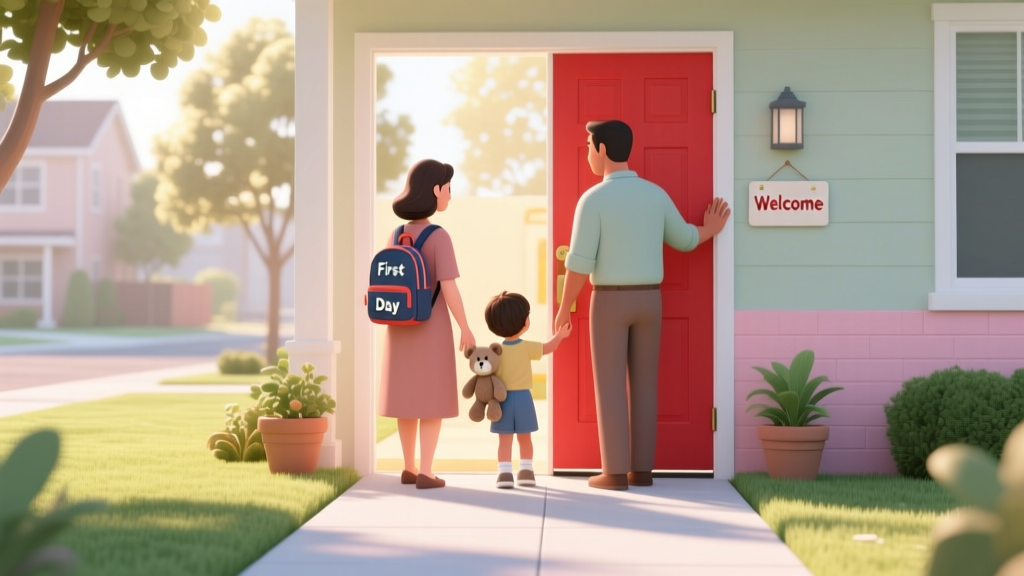
When to Start Daycare: 6 Science-Backed Factors
Every parent faces this question eventually: when is the right time to start daycare? The internet offers contradictory advice — some say 6 weeks is fine, others insist on waiting until age 3. The truth is far more nuanced. Research from developmental psychology, pediatric immunology, and early education reveals that the "right age" depends on six specific factors unique to your child, family, and situation.
What the Research Actually Says About Daycare Timing
The question of optimal daycare timing has been studied for decades, and the findings are more complex than most parenting blogs suggest. The landmark NICHD Study of Early Child Care and Youth Development, which followed over 1,300 children from birth through adolescence, found that quality of care matters far more than timing. However, timing does interact with quality in meaningful ways.
A 2023 meta-analysis published in Child Development reviewed 45 studies covering 120,000+ children and found three distinct patterns:
- Before 12 months: Higher rates of cortisol elevation in low-quality settings; negligible difference in high-quality settings
- 12–24 months: Optimal window for language and social skill gains — IF the child shows readiness signs
- After 24 months: Strongest cognitive benefits, but children may experience more initial separation anxiety
Dr. Amanda Susskind, developmental psychologist at the University of Chicago, summarizes: "There is no universal right age. The right age is when your child's developmental readiness, your family's needs, and the quality of available care align."
The 6 Factors That Actually Determine Readiness
Instead of asking "what age," ask these six questions. Each one matters more than the calendar:
1. Attachment Security
Children with secure attachments to their primary caregivers handle transitions better. If your baby seeks you out for comfort, responds to your voice, and shows clear preference for familiar faces, they have the foundation needed to adapt to new caregivers. Children who haven't yet formed these patterns (typically under 6–8 months) may struggle more with the transition.
2. Immune System Maturity
Daycare means germ exposure — that's unavoidable. By 12 months, babies have received their first round of vaccinations (DTaP, Hib, PCV13), providing a baseline of protection. Before 6 months, babies rely primarily on maternal antibodies, making them significantly more vulnerable to respiratory infections. A 2022 study in Pediatrics found that children starting daycare before 6 months had 2.4× more respiratory infections in their first year compared to those starting after 12 months.
3. Communication Ability
Can your child signal their needs? This doesn't require full sentences — but the ability to point, use simple gestures, or say basic words like "help," "hurt," or "more" dramatically reduces frustration in group settings. Children who can't communicate discomfort, hunger, or pain often experience prolonged distress during the adjustment period.
4. Sleep Pattern Stability
Daycare runs on schedules. Children who have established nap patterns (even if imperfect) adapt more easily than those still in the erratic newborn sleep phase. Most daycares require a consistent nap routine by the time children enroll.
5. Your Family's Actual Needs
This isn't selfish — it's realistic. If both parents work and have no family support, daycare at 8 weeks may be the only viable option. The research shows that consistent, loving care — regardless of who provides it — is what matters most for attachment and development. Guilt about timing is less productive than focusing on quality once the decision is made.
6. Daycare Quality and Ratio
A high-quality daycare with a 1:3 infant ratio and trained staff is fundamentally different from an overcrowded, understaffed facility. The NICHD study found that children in high-quality care showed better language skills and fewer behavior problems than those in home care — but the reverse was true for low-quality settings.
Red Flags: When to Delay Daycare
Certain situations suggest waiting a few more months could significantly ease the transition:
- Recent major life changes: Moving, new sibling, parental job change — stacking transitions overwhelms young children
- Chronic health issues: Uncontrolled asthma, frequent ear infections, or immune concerns warrant discussion with your pediatrician
- Extreme separation anxiety: Some anxiety is normal, but if your child panics when you leave the room at home, they may need more time to build confidence
- Poor-quality options only: If the only available daycare has high staff turnover, unclear sick policies, or feels chaotic — trust your instincts and keep looking
Age-by-Age Guide: What to Expect
| Age Range | Pros | Cons | Best For |
|---|---|---|---|
| 6 weeks – 6 months | Early socialization; parents return to work | Higher illness rate; vulnerable immune system; limited communication | Families with no alternatives; high-quality infant programs |
| 6 – 12 months | Vaccines underway; emerging communication; adaptable | Separation anxiety peaks; still getting frequent colds | Most families balancing work and childcare |
| 12 – 24 months | Language explosion; social interest growing; walking/mobility | Tantrums common; may resist schedule changes | Families prioritizing social/cognitive development |
| 2 – 3 years | Strong communication; toilet training underway; peer play skills | May have stronger opinions/resistance; harder to change routines | Children who stayed home with caregiver previously |
| 3+ years (preschool) | Ready for structured learning; follows rules; peer interaction thrives | May miss individualized attention | Academic preparation; social skill refinement |
How to Make the Transition Smoother
Regardless of when you start, these evidence-based strategies reduce adjustment time from weeks to days:
- Gradual introduction: Start with 2-hour visits, 2–3 times per week, before full days. The University of Oregon's Early Childhood Lab found this cuts adjustment time by 60%
- Consistent goodbye ritual: A specific hug, phrase, or handshake signals "I always come back." Consistency builds trust
- Comfort object: A familiar blanket, stuffed animal, or even a t-shirt that smells like you provides sensory anchoring
- Share your child's routine: Give daycare staff a written schedule of nap times, feeding preferences, and soothing strategies
- Visit together first: Spend 30–60 minutes at the daycare before the first solo drop-off so your child associates the space with safety
Frequently Asked Questions
Is daycare bad for babies under 1 year old?
No — if the daycare is high-quality. The NICHD study found that high-quality infant care does not harm attachment or development. The key factors are: low child-to-caregiver ratio (ideally 1:3 or better), consistent caregivers (low staff turnover), and responsive, warm interactions. Low-quality care at any age is the real concern.
Will my baby get sick constantly in daycare?
Expect more illnesses in the first year — it's normal. The average daycare child gets 8–12 colds per year in their first year of attendance (compared to 2–4 for home-care children). However, research shows this "catch-up" period has a long-term benefit: daycare children actually have fewer illnesses in elementary school than their peers who stayed home.
How do I know if my child is ready for daycare?
Look for these readiness signs: (1) Can communicate basic needs through words or gestures, (2) Has a somewhat predictable nap/feeding schedule, (3) Shows interest in other children, (4) Can be comforted by someone other than you (even if it takes time), and (5) Has received age-appropriate vaccinations. If most of these are true, your child is likely ready.
What's the difference between daycare and preschool?
Daycare focuses on care, safety, and basic socialization for children from infancy through age 3–4. Preschool is an educational program for ages 3–5 that emphasizes early learning, social skills, and school readiness through structured activities. Some facilities offer both — often called "daycare preschool programs."
Can I do part-time daycare instead of full-time?
Absolutely. Many daycares offer part-time enrollment (2–3 days per week). This is an excellent middle ground for families who want the benefits of socialization and early learning without the full commitment. Research shows even 2 days per week provides measurable social and cognitive benefits.
Common Myths Debunked
Myth #1: "Daycare damages parent-child attachment."
The NICHD study — the largest ever on this topic — found that daycare attendance does not damage attachment. What matters is the quality of parenting at home. Children with responsive, engaged parents form secure attachments regardless of daycare attendance. The only exception: children in both low-quality daycare AND low-sensitivity home environments showed slightly higher insecurity rates.
Myth #2: "Stay-at-home kids are always smarter."
Not true. Multiple studies show that children in high-quality early education programs enter kindergarten with stronger language, math, and social skills. The key word is "high-quality." Low-quality programs offer no advantage over home care — and may put children behind.
Myth #3: "Babies who start daycare early are more independent."
Independence develops from secure attachment, not from early separation. Children who feel securely attached to their parents are actually more confident exploring independently — whether they're in daycare or at home. Forced early separation without a secure base can produce anxious, not independent, children.
The Bottom Line
There is no perfect age to start daycare. The right time is when your child shows at least some readiness signals, your family needs it, and you've found a program that meets quality standards. Whether that's at 3 months, 15 months, or 3 years — what matters most is what happens after the decision: choosing a nurturing environment, maintaining consistent routines, and staying engaged with your child's caregivers. Trust your instincts, ask questions during facility tours, and remember — there's no single "right" answer, only the right answer for your family.
More Articles
 How Old Are Shakira’s Kids? Privacy & Expert Advice
 Teach Kids Money Management with Debit Card (2026)
 Sparkling Water for Kids: Safety, Risks & Alternatives
 When Do Kids Start Listening? Neuroscience & Parent Data
 Can People With HIV Have Kids? Yes — Safely (2026)
 When Do Kids With Down Syndrome Start Talking?
 What Is Size 33 in Kids Shoes? (2026 Guide)
 Suki Hana Kids? Her Family Privacy Truth (2026)
 When Do Kids Start Getting Body Odor? (2026)
 Does Drew Barrymore Have Kids? Her Family Truth (2026)