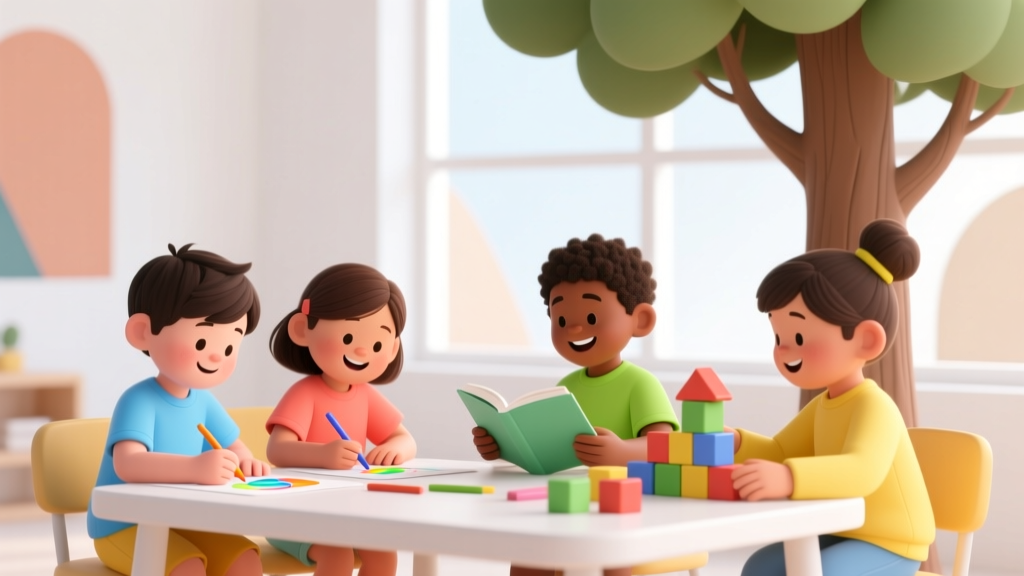
When Should Kids Learn to Read? (2026)
Why This Question Keeps Parents Up at Night—and Why It Matters More Than Ever
The question when should kids learn to read isn’t just academic—it’s emotional, urgent, and often tangled with fear: fear of falling behind, fear of misreading signals, fear of failing our children before they’ve even held a chapter book. In an era of early kindergarten assessments, standardized literacy screenings by age 5, and viral social media comparisons showing 3-year-olds sounding out CVC words, many parents feel like they’re racing against an invisible clock. But here’s what decades of developmental neuroscience and pediatric research confirm: reading is not a switch that flips at age 5—it’s a complex neural scaffold built over years, uniquely calibrated for each child. And getting the timing right—not too early, not too late—is less about calendar age and far more about brain readiness, oral language foundation, and emotional safety.
What Reading *Really* Is (and Why It’s Not Just ‘Sounding Out Words’)
Before we address when, let’s clarify what. Reading isn’t decoding symbols in isolation—it’s the seamless integration of at least five interdependent systems: phonological awareness (hearing sounds in words), letter-sound knowledge, vocabulary depth, syntactic understanding (grammar intuition), and background knowledge. As Dr. Hollis Scarborough, developer of the influential ‘Reading Rope’ model, explains, fluent reading emerges only when both ‘word recognition’ and ‘language comprehension’ strands are braided tightly together—often not before age 6 or 7 for many neurotypical children, and later for others. Rushing one strand (e.g., drilling sight words) while neglecting the other (e.g., rich storytelling, conversation, vocabulary exposure) creates fragile, surface-level ‘reading’ that collapses under complexity—like a house built on sand.
Consider Maya, a bright 5-year-old whose preschool emphasized flashcards and letter tracing. By first grade, she could name all letters and recite 30+ sight words—but couldn’t retell a simple story, confused ‘b’ and ‘d’ daily, and avoided books unless prompted. Her teacher noticed her oral language was strong (she used rich adjectives, asked deep ‘why’ questions), but her phonemic awareness was underdeveloped. With targeted, play-based sound games (rhyming scavenger hunts, syllable clapping to songs, ‘I Spy’ with beginning sounds), Maya began blending sounds naturally by age 6.5—and within months, her reading exploded. Her timeline wasn’t delayed; it was *developmentally aligned*. Her brain needed those extra months to wire sound-symbol connections—not because she was ‘behind,’ but because her neural architecture required time, repetition, and joyful engagement.
The Developmental Sweet Spot: Ages 4–7, Not ‘By Kindergarten’
National data consistently shows the vast majority of children achieve independent, connected reading between ages 4.5 and 7. According to the National Center for Education Statistics (2023), only 17% of U.S. kindergarteners read fluently at year’s end—yet over 82% do so by the end of second grade. The American Academy of Pediatrics (AAP) explicitly advises against formal reading instruction before age 5–6, stating in its 2022 literacy policy statement: ‘Early academic pressure may undermine motivation, increase anxiety, and displace critical play-based learning that builds executive function and self-regulation—foundational skills for lifelong literacy.’
Here’s the nuance: ‘readiness’ isn’t binary. It’s a constellation of observable, evidence-based behaviors—none of which require worksheets or flashcards. Pediatrician Dr. Laura Jana, co-author of The Toddler Brain, identifies three non-negotiable pillars of readiness:
- Oral Language Maturity: Uses full sentences, understands complex directions (‘Put the red block on top of the blue one, then hand me the green crayon’), tells multi-step stories, and asks ‘how’ and ‘why’ questions regularly.
- Phonological Awareness: Plays with sounds effortlessly—rhymes spontaneously (‘cat, hat, bat!’), claps syllables in names (‘El-i-zab-eth = 4 claps’), and isolates beginning sounds (‘What sound does “sun” start with?’).
- Print Motivation & Awareness: Notices environmental print (street signs, cereal boxes), pretends to read books left-to-right, points to words as you read aloud, and chooses books independently—even if just flipping pages or narrating pictures.
If your child demonstrates 4+ of these across categories, they’re likely entering their optimal window. If fewer than 2 are present, structured instruction is premature—and may backfire. Instead, double down on talk, play, and shared reading.
Red Flags vs. Normal Variation: When to Pause, Observe, or Seek Support
Not every variation is cause for concern—but some patterns warrant gentle, timely intervention. The key is distinguishing developmental diversity from potential underlying needs. As speech-language pathologist and literacy specialist Elena Sánchez notes, ‘We don’t diagnose dyslexia at age 4—but we absolutely identify risk factors early, and build resilience before frustration sets in.’
Here’s what to watch for—and what it likely means:
- Consistent letter reversals past age 7 (b/d, p/q) + difficulty recalling letter names/sounds: May indicate phonological processing differences—not laziness or poor teaching. Early phonemic awareness games (e.g., ‘Sound Sorting’ with objects) are highly effective pre-K.
- Strong verbal skills but extreme resistance to print (covers eyes, shuts book, melts down during shared reading): Often signals auditory processing sensitivity or anxiety—not lack of ability. Try audiobooks paired with physical books, or ‘reading’ via puppet shows.
- Memorizes entire books verbatim but can’t identify a single letter in isolation: Suggests reliance on visual memory, not decoding. Gently introduce ‘word detective’ games: ‘What’s the first sound in ball? Can you find something else that starts with /b/?’
- No interest in stories or print by age 5, despite rich language exposure: Warrants discussion with your pediatrician. Could reflect hearing issues, language delay, or vision concerns (many undetected vision problems mimic ‘reading resistance’).
Crucially: bilingual children often follow a different trajectory. A Spanish-speaking 5-year-old might decode English words slowly but comprehend advanced English stories when read aloud—because their ‘language comprehension’ rope is strong, even if ‘word recognition’ lags. This isn’t delay; it’s dual-system development. The AAP recommends continuing rich native-language interaction—it directly strengthens English literacy long-term.
Your Customizable Readiness Checklist & Timeline Table
Forget rigid age cutoffs. Use this evidence-based, pediatrician-vetted guide to track your child’s unique path. Each row represents a milestone cluster—not a deadline. Check off what you observe naturally (no prompting needed). If 6+ are consistently present, structured phonics instruction may be fruitful. Fewer? Prioritize playful language-building.
| Milestone Cluster | Ages 3–4 (Emerging) | Ages 4–5 (Building) | Ages 5–6 (Integrating) | Ages 6–7+ (Fluent) |
|---|---|---|---|---|
| Oral Language | Uses 3–4 word phrases; follows 2-step directions; enjoys rhymes & songs | Tells simple stories; asks ‘why’/‘how’; uses past/present tense correctly | Retells stories with sequence (first, next, last); defines unfamiliar words; jokes with language | Debates ideas; writes simple sentences; reads aloud with expression & pacing |
| Phonological Awareness | Enjoys nursery rhymes; claps to rhythm; says own name clearly | Rhymes spontaneously; segments words into syllables; identifies beginning sounds | Blends 3 sounds into words (/c/ /a/ /t/ → cat); deletes sounds (‘Say “smile” without /s/’ → mile) | Manipulates sounds fluently (‘Change /b/ in “bat” to /c/’ → cat); notices phoneme patterns in spelling |
| Print Concepts | Turns pages right-to-left; points to pictures; names some letters | Points to words as read; knows front/back of book; matches letters to sounds occasionally | Tracks print with finger; knows most letter names & sounds; attempts to write own name/words | Reads decodable texts independently; self-corrects errors using context & phonics |
| Engagement & Motivation | Chooses books; sits for 5-min read-alouds; ‘reads’ pictures | Requests rereads; predicts story endings; draws ‘stories’ with scribbles/letters | Asks to write lists/stories; notices print everywhere (menus, signs); chooses books by topic | Reads for information & pleasure; seeks out new genres; discusses themes & characters |
Frequently Asked Questions
Can my child learn to read too early—and what are the risks?
Yes—especially with drill-based, isolated skill instruction before neural pathways are mature. Research published in Early Childhood Research Quarterly (2021) followed 291 children and found those subjected to formal reading instruction before age 5 showed higher rates of task avoidance, lower intrinsic motivation by Grade 2, and no long-term advantage in reading comprehension. Their brains weren’t inefficient—they were being asked to perform a high-level integration task (sound-symbol-meaning) before foundational circuits (attention, working memory, auditory discrimination) were fully myelinated. Playful pre-literacy—storytelling, singing, drawing—isn’t ‘waiting’; it’s building the essential infrastructure.
My child is 6 and still not reading. Should I be worried?
Not necessarily—but it’s time for intentional observation. First, rule out basics: Is vision/hearing screened? Does your child engage deeply in conversation and storytelling? Can they rhyme, clap syllables, and identify beginning sounds? If yes, they’re likely developing normally—just on their own timeline. If no, consult your pediatrician for referral to a speech-language pathologist. Remember: Finland, consistently ranked #1 in global literacy, doesn’t begin formal reading instruction until age 7—and their students outperform peers who started at 5. Patience, not panic, is the pedagogically sound response.
Do phonics programs work better than whole-language approaches?
Neither works in isolation—and the debate misses the point. The National Reading Panel’s meta-analysis confirms that systematic, explicit phonics instruction is essential for decoding, especially for at-risk learners. But phonics without rich language, vocabulary, and comprehension strategies produces ‘word callers’—children who read aloud fluently but understand little. The gold standard is the ‘balanced literacy’ approach endorsed by the International Literacy Association: explicit phonics embedded in authentic reading/writing, supported by daily read-alouds, shared writing, and wide access to diverse, engaging texts. Think of phonics as the grammar of reading—it’s necessary, but not the entire language.
How much screen time is okay for pre-readers?
Zero minutes of passive screen time (background TV, autoplay videos) supports literacy development. However, interactive, co-viewed apps *can* reinforce phonological awareness—if used intentionally and briefly (max 15 mins/day). The AAP recommends avoiding digital media for children under 18 months (except video-chatting), and limiting high-quality, co-engaged content to 1 hour/day for ages 2–5. Crucially: screens should never replace human interaction. A 5-minute conversation about a leaf outside builds more vocabulary—and thus more reading readiness—than 30 minutes of an alphabet app.
Does learning a second language delay reading in English?
No—bilingualism is a cognitive advantage for literacy. Research from the University of Washington shows bilingual children develop stronger metalinguistic awareness (understanding how language works), which accelerates phonemic awareness and decoding. The apparent ‘delay’ is often just the brain managing two sound systems simultaneously. Key: maintain rich input in the home language. Children with strong native-language foundations transfer those skills to English more effectively—and achieve higher ultimate literacy levels. Suppressing home language harms identity and learning.
Common Myths About When Kids Learn to Read
Myth 1: “If they’re not reading by 6, they’ll never catch up.”
False. Longitudinal studies (e.g., the Avon Longitudinal Study of Parents and Children) show children who begin reading at 7 or 8—without underlying disorders—typically reach grade-level proficiency by Grade 4 and often surpass early readers in comprehension and critical thinking by adolescence. Their later start often reflects deeper processing, not deficiency.
Myth 2: “Reading readiness is mostly genetic—you either have it or you don’t.”
While genetics influence processing speed and memory, environment shapes 70%+ of early literacy outcomes (per NIH-funded twin studies). High-quality interactions—conversational turns, responsive listening, book access, and playful sound games—are powerful, modifiable levers. Your daily habits matter more than inherited traits.
Related Topics (Internal Link Suggestions)
- Phonological Awareness Activities for Preschoolers — suggested anchor text: "play-based phonemic awareness games"
- Best Books to Build Vocabulary Before Reading — suggested anchor text: "rich vocabulary picture books for toddlers"
- Signs of Dyslexia in Preschool and Kindergarten — suggested anchor text: "early dyslexia indicators before formal reading"
- Bilingual Literacy Development Timeline — suggested anchor text: "how bilingual children learn to read in two languages"
- Screen Time Guidelines for Pre-Readers — suggested anchor text: "healthy digital habits for emerging readers"
Final Thought: Trust the Process, Not the Pressure
When should kids learn to read? When their brains are ready, their curiosity is ignited, and their hearts feel safe enough to try—and fail—and try again. That moment isn’t stamped on a calendar; it blooms from thousands of ordinary, irreplaceable moments: your voice reading aloud with warmth, your patience as they trace letters in sand, your delight when they notice the ‘S’ on the stop sign. Stop comparing. Start observing. Celebrate the rhymes, the questions, the scribbled ‘stories.’ Because literacy isn’t a race to a finish line—it’s the slow, steady unfurling of a mind learning to make meaning from the world. Your next step? Tonight, pick one book your child loves—and read it aloud twice. Then ask, ‘What do you think happens next?’ Listen deeply. That’s where real reading begins.
More Articles
 What Channel Is Kid? Safe, AAP-Approved TV Guide
 Kids' Molars Fall Out: Which Ones & When (2026)
 When Can Kids Have Raw Fish? Pediatrician Guide (2026)
 Goat Safety for Kids: Age Guide & Bite Prevention (2026)
 Rachel Zoe’s IVF Journey at 41 and 43
 MMR Vaccine Schedule for Kids: Ages, Rules & Reassurance
 Can Kids Take Pepto? Pediatrician-Approved Guide
 Is There a Mucinex for Kids? Safe Alternatives (2026)
 Most Kids by U.S. President: Surprising Facts & Tips
 How Many Kids Go Missing Each Year in America?