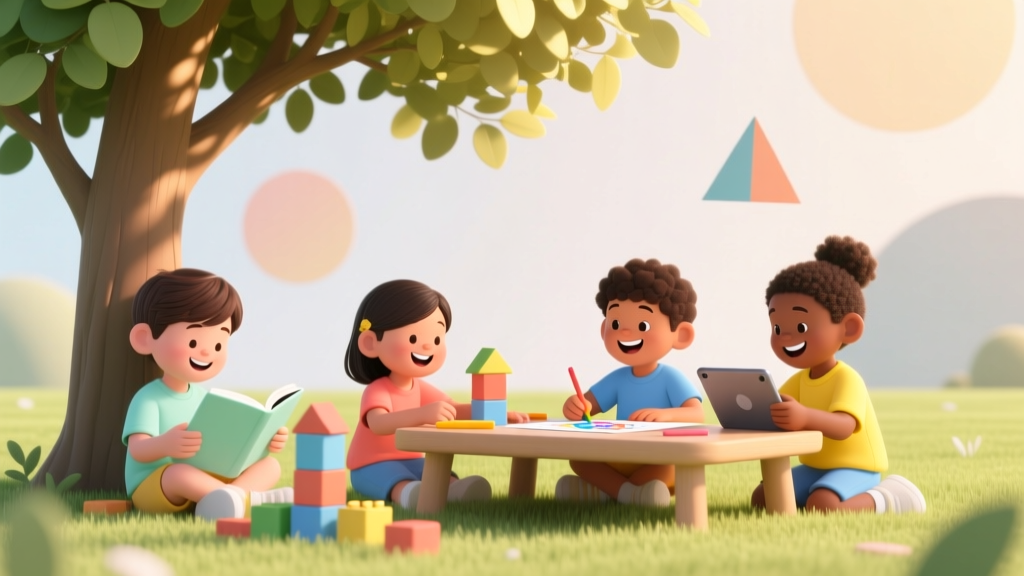
When Should Kids Know Their ABCs? (2026)
Why This Question Keeps Parents Up at Night—and Why It Shouldn’t
When should kids know their abcs? That simple question carries layers of unspoken anxiety: Is my child falling behind? Did I miss a window? Are preschool worksheets enough—or am I overdoing it? You’re not alone. A 2023 National Center for Education Statistics report found that 68% of U.S. parents worry about early literacy readiness before kindergarten—and alphabet knowledge is the #1 litmus test they use. But here’s what decades of developmental science reveal: alphabet mastery isn’t a single ‘on/off’ switch—it’s a layered, individualized progression. And obsessing over recitation speed can actually undermine the deeper phonemic awareness and letter-sound connections that predict long-term reading success.
The Real Timeline: Milestones, Not Deadlines
Let’s reset expectations with clarity from the American Academy of Pediatrics (AAP) and the National Institute for Literacy: alphabet knowledge unfolds across three interwoven phases—not one magical age. What matters most isn’t whether a 3-year-old can sing the ABC song, but whether they’re building the foundational cognitive scaffolding that makes reading possible.
Phase 1: Letter Recognition (Ages 2–3)
Children begin distinguishing letters as visual shapes—often starting with those in their own name. They may point to an ‘A’ on a cereal box or identify ‘B’ in ‘ball’. At this stage, they’re not naming letters consistently, but noticing patterns. According to Dr. Susan Neuman, former U.S. Assistant Secretary for Elementary and Secondary Education and early literacy researcher, “Letter recognition is visual memory work—it’s about seeing differences between curves, lines, and angles, not memorizing names.”
Phase 2: Letter Naming & Sound Linking (Ages 3–4)
This is where many parents fixate—but it’s also where nuance matters most. By age 4, most children can name 10–15 uppercase letters, especially those in familiar contexts (e.g., ‘M’ for ‘Mom’, ‘S’ for ‘Star’). Crucially, emerging phonemic awareness means they start connecting letters to sounds: ‘B says /b/ like ‘bubble’.’ Research from the University of Michigan’s Early Childhood Literacy Lab shows that children who link just 5–7 letters to their most common sounds by age 4 are 3x more likely to enter kindergarten with strong decoding readiness than those who name 20 letters without sound association.
Phase 3: Automaticity & Application (Ages 4–5)
By kindergarten entry, the goal shifts from identification to fluency: recognizing letters instantly (under 2 seconds per letter), distinguishing similar shapes (‘b’ vs. ‘d’), and applying letter-sound knowledge to decode simple words (e.g., sounding out ‘cat’). This phase relies heavily on exposure—not drill. A landmark longitudinal study published in Child Development tracked 1,200 children from age 3 to grade 3 and found that daily, playful letter engagement (e.g., tracing letters in sand, singing sound-based songs, playing ‘I Spy’ with beginning sounds) predicted stronger reading outcomes far more reliably than formal flashcard practice.
Red Flags vs. Normal Variation: What Actually Warrants Attention
Not every child follows the textbook path—and that’s expected. Developmental psychologist Dr. Laura Jana, co-author of The Toddler Brain, emphasizes: “Variability in alphabet learning is normal. What’s concerning isn’t *when* a child knows letters—but *how* they interact with print.” Here’s how to distinguish typical development from potential early indicators of language-based learning differences:
- Green Light (Normal): Names some letters inconsistently; confuses visually similar letters (‘p’/‘q’) until age 5; sings ABC song without knowing letter names; recognizes letters only in logos (e.g., ‘K’ for KFC).
- Yellow Light (Monitor Closely): Cannot match any letters to sounds by age 4.5; avoids books or print-rich activities entirely; struggles to rhyme or clap syllables in words (e.g., ‘ba-na-na’); reverses letters frequently *and* mixes up numbers (e.g., 2/5, 6/9) past age 5.
- Red Light (Consult Early): No letter recognition by age 5; cannot identify first sound in familiar words (e.g., ‘What sound does ‘dog’ start with?’); shows extreme frustration or avoidance during any print-related activity; family history of dyslexia or speech-language delays. In these cases, the AAP recommends a screening by a pediatrician or speech-language pathologist—not waiting until kindergarten.
A real-world example: Maya, a bright, talkative 4-year-old, could sing the ABC song flawlessly but couldn’t identify a single letter when shown flashcards. Her preschool teacher noticed she loved storytelling but rarely pointed to words while reading. An evaluation revealed strong oral language skills but weak phonological processing—a common precursor to dyslexia. With targeted, multisensory instruction (using clay to form letters while saying sounds), Maya caught up to peers by first grade. Her story underscores a critical truth: alphabet knowledge isn’t about performance—it’s about access to meaning.
What Works (and What Doesn’t): Evidence-Based Strategies That Stick
Forget rote repetition. Neuroscience confirms that the brain encodes letters most durably through multisensory, emotionally positive, and context-rich experiences. Here’s what the data supports—and what backfires:
- ✅ Do: Embed letters in meaningful routines. Label your child’s lunchbox with their name (‘Lily’s Lunch’), point out ‘STOP’ on signs, write grocery lists together using magnetic letters. A 2022 study in Early Education and Development showed children who engaged in 5+ minutes/day of purposeful print interaction (not passive screen time) gained 2.3x more letter knowledge than peers using flashcards alone.
- ✅ Do: Prioritize sounds over names—especially early on. Say ‘/m/ like ‘milk’’ instead of ‘M is for monkey’. Why? Because reading begins with hearing sounds, not naming symbols. The International Dyslexia Association stresses that sound-first approaches build stronger neural pathways for decoding.
- ❌ Don’t: Use worksheets before age 5. Fine motor demands often overwhelm cognitive load. Children under 5 learn better through movement (jumping on letter mats), touch (sandpaper letters), and play (letter scavenger hunts) than pencil-and-paper tasks.
- ❌ Don’t: Correct relentlessly. Saying ‘No, that’s ‘B’, not ‘D’’ shuts down curiosity. Instead, model: ‘Oh, you saw the circle part—that’s in both B and D! Let’s feel how B has two bumps and D has one big curve.’
Case in point: The ‘Sound Walk’ strategy used in Reggio Emilia-inspired preschools. Teachers take children outside and ask: ‘What do you hear that starts with /s/? /t/? /f/?’ Then they collect natural items (stones, twigs, feathers) and label them with corresponding letters. One Boston preschool reported a 40% increase in letter-sound retention after implementing this weekly—because children connected abstract symbols to sensory, real-world anchors.
Age-Appropriateness Guide: Matching Activities to Developmental Readiness
| Age Range | Typical Alphabet Skills | High-Impact, Low-Pressure Activities | Safety & Engagement Notes |
|---|---|---|---|
| 2–3 years | Notices letters in environment; may point to 1–3 familiar letters (often in own name); enjoys alphabet songs | • Sing alphabet songs with gestures (‘A’ = arms up, ‘B’ = bounce) • Trace letters in shaving cream or rice • Read board books with bold, isolated letters (e.g., Eating the Alphabet) |
Avoid small-letter manipulatives (choking hazard). Focus on gross motor + auditory input. Keep sessions under 3 minutes. |
| 3–4 years | Names 5–10 uppercase letters; links some letters to sounds; may write scribbles resembling letters | • Play ‘Letter Hunt’ in magazines or packaging • Use playdough to form letters while saying sounds • Sort objects by beginning sound (‘/k/ things’: cat, cup, car) |
Introduce lowercase letters gradually—start with ‘a’, ‘o’, ‘s’ (simplest shapes). Never force writing; model only. |
| 4–5 years | Names 15+ letters; matches most letters to sounds; begins blending sounds into simple words; writes some letters legibly | • Create ‘Sound Stories’ (‘Sam the Snake says /s/… what else slithers?’) • Build words with magnetic letters (C-A-T) • Play ‘Letter Detective’—find hidden letters in nature photos or art |
Respect handwriting fatigue. Offer chunky pencils, slant boards. If child resists, pivot to oral/kinesthetic games—no pressure. |
| Kindergarten+ | Automatic letter naming & sound recall; applies knowledge to decode CVC words; distinguishes similar letters (b/d/p/q) | • Invent ‘Secret Code’ messages using letter sounds • Write short stories using invented spelling • Compare fonts (comic sans vs. Times New Roman) to discuss letter features |
Focus shifts to application—not acquisition. If gaps persist, screen for underlying phonological weaknesses, not ‘laziness’. |
Frequently Asked Questions
Is it bad if my child learns the ABC song but doesn’t know letter names?
No—it’s completely normal and even beneficial. The ABC song builds phonological rhythm and memory, which are foundational for reading. Many children master the melody months before they can isolate individual letters. What matters more is whether they can pause the song and point to ‘A’ or ‘M’ when asked. If they can’t, gently add interactive pauses: ‘A… B… C… [pause]—what letter comes next?’
My 4-year-old confuses ‘b’ and ‘d’. Should I be worried?
Mild letter reversal is typical until age 7. The brain is still refining visual-spatial processing. What’s more telling is whether they reverse letters *consistently* (e.g., always writing ‘b’ for ‘d’ and vice versa) *and* struggle with directional concepts (left/right, up/down) or sequencing (days of week, counting backward). If only occasional and improving, it’s developmental—not diagnostic.
Do bilingual children learn the alphabet later?
Not necessarily—but their trajectory may look different. Bilingual children often develop metalinguistic awareness faster (they understand that languages have different rules), which supports literacy overall. However, they might mix alphabets initially (e.g., using Spanish ‘ñ’ in English words) or focus on one language’s letters first. The key is supporting both languages with rich, interactive exposure—not delaying English instruction.
Are educational apps effective for teaching the ABCs?
Some are—but most aren’t. A 2023 review in Pediatrics analyzed 89 alphabet apps and found only 12% encouraged active learning (e.g., tracing, sound matching). The rest were passive (tap-to-hear) or rewarded speed over accuracy. If using apps, co-view and extend: ‘That’s ‘F’! What food starts with /f/? Let’s find one in the kitchen!’
Does handwriting practice help with alphabet knowledge?
Yes—but only when developmentally ready. Neuroscientist Dr. Virginia Berninger’s research shows that forming letters by hand activates motor memory circuits that reinforce visual recognition. However, forcing pencil grip before fine motor maturity (typically age 5–6) creates frustration. Start with large-motor activities: drawing letters in the air, tracing on a whiteboard, or finger-painting on paper.
Common Myths
Myth 1: “If they don’t know all letters by age 4, they’ll struggle with reading.”
False. The predictive power lies in phonemic awareness (hearing/splitting sounds), not letter count. A child who can’t name ‘X’ but can blend /c/ /a/ /t/ into ‘cat’ is far more prepared than one who names 26 letters but hears ‘cat’ as one blob.
Myth 2: “Teaching lowercase letters first is better because that’s what they’ll read.”
Not supported by evidence. Uppercase letters have simpler, more distinct shapes (‘O’ vs. ‘o’ is clearer than ‘a’ vs. ‘g’), making them easier for young eyes to discriminate. Introduce lowercase alongside uppercase once a child knows 10+ uppercase letters—but prioritize sound connection over case.
Related Topics (Internal Link Suggestions)
- Phonemic Awareness Activities for Preschoolers — suggested anchor text: "phonemic awareness games"
- Best Multisensory Alphabet Learning Tools — suggested anchor text: "tactile letter learning"
- When to Worry About Speech Delays — suggested anchor text: "early speech milestones"
- Screen Time Guidelines for Toddlers — suggested anchor text: "educational screen time limits"
- Montessori-Inspired Literacy at Home — suggested anchor text: "Montessori alphabet materials"
Final Thought: Your Role Isn’t Teacher—It’s Literacy Gardener
When should kids know their abcs? The answer isn’t a date on a calendar—it’s a relationship you nurture daily through curiosity, play, and presence. You’re not drilling facts; you’re cultivating a mindset where letters feel alive, useful, and full of possibility. So put down the flashcards. Pick up a book. Point to the ‘S’ on the stop sign. Ask, ‘What sound does that make?’ And when your child says ‘/sh/’ instead of ‘/s/’? Celebrate the attempt—not the accuracy. Because the real alphabet milestone isn’t recitation. It’s the moment they realize: these squiggles hold stories, secrets, and their very own voice. Ready to build that foundation? Download our free 7-Day Playful Alphabet Challenge—with daily, no-prep ideas tailored to your child’s current stage.
More Articles
 Kids Messenger Safety: 7 Checks Every Parent Must Run
 Did Lizzy Musi Have Kids? The Truth Behind Her Family Life
 Zootopia 2: What Parents Need to Know (2026)
 Georgia Child Support for 1 Child (2026 Guide)
 Kevin Durant’s Fatherhood: Truth, Privacy & Parenting
 Does Summit1G Have a Kid? The Truth (2026)
 Does Max Holloway Have a Kid? Fatherhood Truths (2026)
 How to Teach Kids to Wipe After Pooping (2026)
 Bill Nye’s Parenting Secrets for Science-Minded Kids
 Are Snake Plants Toxic to Kids? (2026)