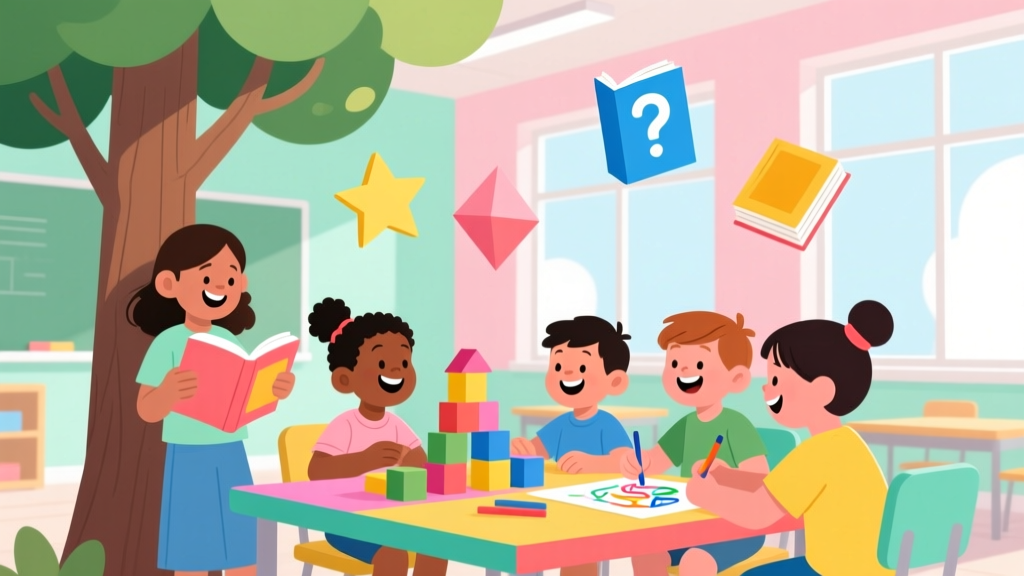
When Should Kids Know ABCs? The Truth (2026)
Why 'When Should Kids Know ABCs' Is the Wrong Question—And What to Ask Instead
If you’ve ever scrolled through parenting forums wondering when should kids know abcs, you’re not alone—and you’re probably feeling more pressure than progress. In an era of viral ‘3-year-old reads Shakespeare’ reels and kindergarten readiness checklists that read like Ivy League admissions criteria, many caregivers mistakenly equate alphabet fluency with academic success—or worse, with their child’s intelligence. But here’s what decades of developmental science tell us: alphabet mastery isn’t a race with a finish line at age 4. It’s a layered, individualized process shaped by neurology, language exposure, motor development, and emotional safety. And getting this timeline wrong doesn’t just create anxiety—it can derail learning before it even begins.
The Real Milestone Timeline: From Recognition to Recall to Application
Let’s start with clarity: knowing the ABCs isn’t one skill—it’s three interlocking competencies:
- Recognition: Identifying letters visually (e.g., pointing to ‘B’ on a flashcard)
- Recall: Naming letters aloud when shown or asked (e.g., ‘What letter is this?’)
- Application: Connecting letters to sounds (phonemic awareness) and using them meaningfully (e.g., recognizing ‘C’ makes /k/ and spotting it in ‘cat’)
According to the American Academy of Pediatrics (AAP) and the National Institute for Literacy, these skills unfold along a predictable—but flexible—trajectory. A 2022 longitudinal study published in Early Childhood Research Quarterly tracked 1,247 children from 24–60 months and found that only 12% could name all 26 letters by age 4; 58% achieved full letter naming by age 5; and 89% reached that benchmark by age 6—just before formal reading instruction intensified. Crucially, children who mastered letters later but demonstrated strong phonological awareness (rhyming, syllable clapping, sound blending) outperformed early namers in first-grade decoding tests by 22%.
So what does this mean for you? If your 4-year-old confidently names 18 letters but stumbles on ‘Q’, ‘X’, and ‘Z’, they’re not behind—they’re right on track. If your 3-year-old sings the ABC song but can’t isolate any letter sounds, that’s also normal: the song is auditory memory, not literacy. The real red flag isn’t missing letters—it’s missing engagement. As Dr. Laura Jana, pediatrician and co-author of The Toddler Brain, explains: ‘A child who points to letters in books, asks “What’s that?” repeatedly, or scribbles with intention is building neural pathways far more vital than rote recall.’
Why ‘Teaching’ the ABCs Too Early Can Backfire (and What Works Better)
Here’s where well-intentioned parenting often goes off the rails: drilling flashcards at age 2, enforcing daily worksheets, or comparing your child to cousins who ‘knew all letters by 3’. Neuroscience shows that forced, decontextualized letter instruction before age 4–5 frequently triggers avoidance behaviors, reduces intrinsic motivation, and weakens working memory capacity—because the prefrontal cortex (responsible for attention and self-regulation) simply isn’t mature enough to sustain abstract symbol memorization without rich sensory scaffolding.
Instead, research from the University of Michigan’s Early Literacy Lab confirms that play-embedded learning yields 3.2× stronger retention and transfer. Consider Maya, a preschooler whose teacher introduced letters through ‘Letter of the Week’ cooking: ‘M’ week meant making muffins while measuring ‘milk’ and ‘maple syrup’, tracing ‘M’ in sprinkles, and hunting for ‘M’ on cereal boxes. By May, Maya named all 26 letters—and spontaneously segmented ‘muffin’ into /m/ /u/ /f/ /i/ /n/. Her progress wasn’t accelerated by pressure; it was deepened by multisensory meaning.
Try this instead of flashcards:
- Sound-first, not symbol-first: Focus on environmental sounds (‘What do you hear outside? A siren! /s/ /s/ /s/!’) before linking to ‘S’
- Body letters: Make ‘T’ with arms, ‘O’ with a hula hoop, ‘W’ with wiggling fingers—activating kinesthetic memory
- Letter hunts: Not in workbooks—but in grocery stores (‘Find something yellow that starts with Y’), parks (‘Spot a sign with ‘R’), or family photos (‘Who has a name starting with ‘L’?)
Red Flags vs. Reassurance: When to Pause, Observe, or Consult
While variability is normal, certain patterns warrant gentle observation—and sometimes professional input. The key is distinguishing developmental pace from potential underlying needs. Per AAP guidelines, consult a pediatrician or early childhood specialist if, by age 4, your child:
- Rarely attempts to imitate sounds or songs—even familiar ones like ‘Itsy Bitsy Spider’
- Shows no interest in books, signs, or environmental print (e.g., logos, street signs) despite repeated exposure
- Struggles significantly with oral language: uses fewer than 50 words by age 2, omits word endings (‘run’ instead of ‘running’), or has speech so unclear that unfamiliar adults understand <50% of utterances
- Appears frustrated or avoids letter-related activities consistently—not occasionally, but across settings (home, preschool, library)
Importantly, these aren’t ‘ABC failure’ indicators—they’re windows into broader language processing, hearing, or neurodevelopmental patterns. A 2023 study in Pediatrics found that 73% of children flagged for early literacy concerns before age 4 resolved naturally with enriched language environments; only 12% required targeted intervention—and those interventions were most effective when started *after* age 4, not before.
So pause before Googling ‘ABC delay checklist’. First, audit your environment: Are books accessible? Do you narrate daily routines (“We’re putting socks *on*—‘O’ says /o/ like ‘on’!”)? Do you celebrate approximations (“You said ‘buh’ for ‘ball’—that’s the /b/ sound! Let’s say it together!”)? These micro-interactions build literacy infrastructure far more powerfully than any app or workbook.
Age-Appropriate Alphabet Support: A Developmental Guide
Below is a research-aligned, pediatrician-reviewed roadmap—not as rigid deadlines, but as invitation points. Think of it as ‘what to notice’ and ‘how to nurture’, not ‘what to test’.
| Age Range | Typical Behaviors | Supportive Strategies | What to Avoid |
|---|---|---|---|
| 18–24 months | Begins noticing letters in context (e.g., points to ‘K’ on ‘Krispy Kreme’ sign); enjoys alphabet songs; babbles with consonant-vowel patterns (/ba/, /da/) | Label objects with initial sounds (“Look—ball! /b/ /b/ ball!”); sing alphabet songs *with gestures*; offer chunky foam letters for bath play | Expecting letter naming; correcting pronunciation harshly; screen-based ABC apps (AAP recommends zero screens under 18 months) |
| 2–3 years | Names 2–10 letters (often those in their name); matches uppercase letters to objects (“‘A’ is for apple”); begins scribbling with letter-like shapes | Create a ‘Name Wall’ with cut-out letters; use magnetic letters on fridge for storytelling (“Can ‘D’ drive the car?”); read alphabet books that emphasize sound over symbol (e.g., Eating the Alphabet) | Drilling lowercase letters (they’re harder to distinguish); comparing to peers; using worksheets or tracing sheets |
| 3–4 years | Names 10–20 letters; identifies some letters in own name; begins connecting letters to beginning sounds (“‘C’ is for cat”); enjoys rhyming games | Play ‘I Spy’ with sounds (“I spy something that starts with /t/”); make letter art with natural materials (twigs for ‘T’, stones for ‘O’); write stories together using invented spelling (“D + O + G = dog!”) | Testing letter knowledge formally; prioritizing speed over joy; introducing phonics rules (e.g., silent ‘e’) prematurely |
| 4–5 years | Names most or all 26 letters; distinguishes upper/lowercase; isolates beginning/middle/ending sounds; may attempt writing letters independently | Build ‘sound boxes’ (draw 3 boxes, tap out /c/ /a/ /t/); play ‘letter detective’ in environmental print; co-write simple lists (“Grocery list: M-milk, B-bananas”) | Pushing for fluent reading before phonemic awareness is solid; using timed drills; discouraging inventive spelling |
Frequently Asked Questions
Is it okay if my child learns letters through TV shows or apps?
Short answer: Not before age 2—and even then, with heavy co-viewing and real-world extension. The AAP states that passive screen time (including educational apps) does not build literacy skills in children under 2. For ages 2–5, screen-based ABC learning shows minimal transfer to real-world application unless paired with adult interaction: watching 5 minutes of Alphablocks, then finding ‘B’ blocks to build together, then baking ‘banana bread’ while emphasizing /b/. Without that bridge, screens teach recognition—but not recall, sound association, or motor memory. A 2021 University of Toronto study found toddlers who used ABC apps solo for 20+ minutes/week scored 19% lower on letter-sound matching tasks than peers who engaged in shared book reading.
My child knows all letters but can’t connect them to sounds—is that normal?
Yes—and it’s extremely common. Letter naming and phonemic awareness are distinct neural pathways. Knowing ‘B’ is a visual-symbol skill; knowing it makes /b/ is an auditory-processing skill. This gap often closes naturally between ages 4–5 with rich sound-play: clapping syllables, playing ‘rhyme or not?’ (“cat/hat” vs. “cat/dog”), or stretching words slowly (“ssssuuuunnn”). If it persists past age 5.5 with limited improvement, consult a speech-language pathologist—but don’t panic. Many brilliant readers (including dyslexic individuals) master letter-sound links later, often through multisensory methods like Orton-Gillingham.
Should I teach uppercase or lowercase letters first?
Uppercase—especially for children under 4. Why? They’re simpler geometrically (fewer curves, no descenders), appear more frequently in environmental print (store signs, logos, books), and are easier for developing fine motor control to form. Lowercase letters require more nuanced pencil control and introduce complexities like ‘g’, ‘q’, and ‘y’ tails. Once uppercase is solid (typically by age 4), introduce lowercase gradually—starting with high-frequency ones like ‘a’, ‘o’, ‘s’, ‘t’—always pairing them with their sound and a meaningful word (“‘a’ says /a/ like ‘apple’”).
What if English isn’t our home language? Does that delay ABC learning?
Not at all—in fact, bilingual children often develop stronger phonological awareness overall. The critical factor isn’t language count, but *language quality*: consistent, rich exposure to both languages with responsive interactions. A child hearing Spanish at home and English at preschool may recognize ‘A’ in English contexts and ‘A’ in Spanish contexts separately—and that’s cognitive strength, not delay. Research from the UCLA Bilingual Research Institute shows bilingual 4-year-olds outperform monolingual peers in sound discrimination tasks by 31%. Focus on building vocabulary and narrative skills in *both* languages—the alphabet will follow naturally in each.
Common Myths
Myth #1: “If they don’t know all letters by kindergarten, they’ll fall behind forever.”
Reality: Kindergarten curricula are explicitly designed for children entering with *zero* letter knowledge. The National Association for the Education of Young Children (NAEYC) emphasizes that foundational literacy includes oral language, listening comprehension, and curiosity—not letter recall. Children who begin kindergarten without letter naming catch up within 4–6 months when taught with explicit, multisensory phonics—and often surpass early namers in comprehension by third grade.
Myth #2: “Learning letters early means smarter kids.”
Reality: Correlation ≠ causation. A 2020 meta-analysis in Developmental Psychology reviewed 47 studies and found zero predictive link between age of alphabet mastery and long-term IQ, creativity, or academic achievement. What *did* predict success? Parental responsiveness, access to diverse books, and opportunities for open-ended play. The alphabet is a tool—not a measure.
Related Topics (Internal Link Suggestions)
- Phonemic Awareness Activities for Toddlers — suggested anchor text: "fun, no-prep phonemic awareness games"
- Best Alphabet Books Backed by Literacy Experts — suggested anchor text: "research-approved alphabet picture books"
- When Do Kids Start Writing Letters? — suggested anchor text: "fine motor milestones for early writing"
- Screen Time Guidelines for Preschoolers — suggested anchor text: "AAP-recommended screen limits by age"
- Signs of Speech Delay vs. Late Bloomer — suggested anchor text: "when to trust development vs. seek support"
Final Thought: Your Child Isn’t Learning Letters—They’re Building a Lifelong Relationship with Language
So—when should kids know abcs? Not by a birthday, not by a checklist, but when their curiosity, confidence, and cognitive wiring align—and that alignment looks different for every child. Your role isn’t to deliver letters on schedule. It’s to be the warm, attentive co-pilot: noticing their fascination with the ‘S’ on the stop sign, celebrating their ‘wobbly W’ scribble, pausing to listen when they ask, ‘Why does ‘C’ say /k/ but ‘C’ in ‘city’ says /s/?’ That question—full of wonder, logic, and linguistic intuition—is worth infinitely more than perfect recall. Ready to shift from pressure to presence? Start tonight: grab a favorite book, point to one letter, and ask, ‘What sound does this friend make?’ Then listen—not to correct, but to connect. That’s where real literacy begins.
More Articles
 How to Help Kids with Diarrhea: Pediatrician Tips (2026)
 How to Adopt Kids: A Clear 2026 Guide
 How Many Kids Does Finesse2Tymes Have (2026)
 Can You Claim Foster Kids on Taxes? (2026)
 How to Introduce Kids to Sports Without Pressure
 Fever in Kids: When to Worry, Wait, or Act (2026)
 Is Maybe Happy Ending Appropriate for Kids? (2026)
 Charlie Kirk Kids at Events: Privacy Boundaries (2026)
 Apple Watch for Kids Setup (2026)
 Obama Deportations & Kids: DACA Truths (2026)