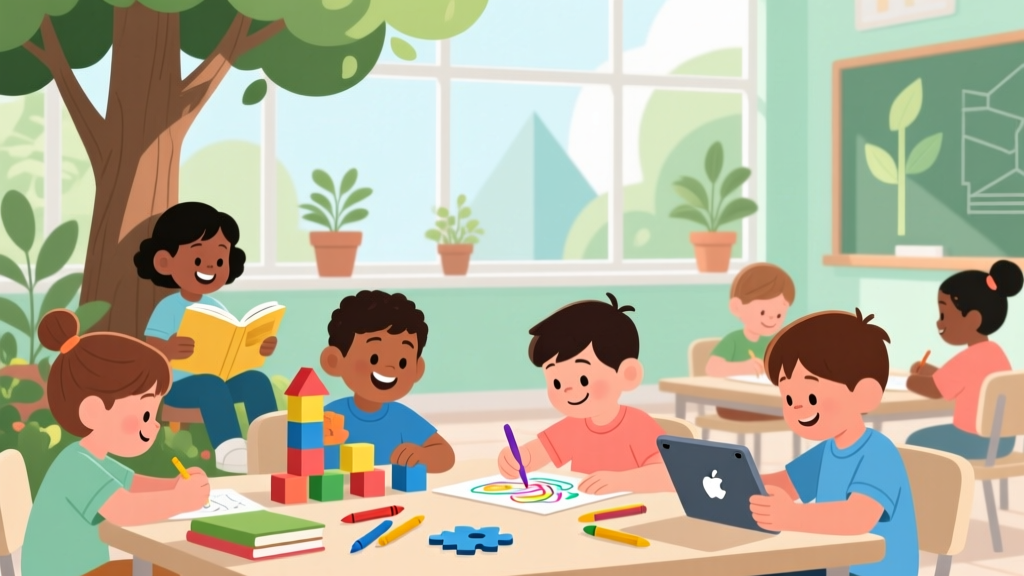
When Should Kids Get Eye Exams? AAP Timeline & Red Flags
Why This Question Is More Urgent Than You Think
If you’ve ever wondered when should kids get eye exams, you’re not just checking a box—you’re safeguarding one of the most critical pathways to learning, social connection, and emotional regulation. Vision isn’t just about reading the blackboard; it’s the foundation for visual-motor integration (think handwriting and catching a ball), attention stamina during screen time or story hour, and even self-confidence in group settings. Yet research from the American Optometric Association (AOA) shows that up to 80% of what children learn is visually processed—and alarmingly, 1 in 4 school-aged kids has an undiagnosed vision problem. Worse: over 60% of children who struggle with reading or behavior in class have never had a comprehensive eye exam—only a school vision screening, which catches less than 30% of functional vision issues. That gap isn’t just academic—it’s developmental.
The Critical Difference: School Screenings vs. Comprehensive Eye Exams
Let’s start with a hard truth: a school vision screening is like checking your car’s oil level without opening the hood. It measures only one narrow function—distance acuity (usually at 20 feet)—and often uses outdated tools like the Snellen chart. What it misses entirely are the ‘hidden’ vision skills essential for learning: eye teaming (how well both eyes coordinate), focusing flexibility (shifting focus from whiteboard to notebook), tracking (smooth eye movement across lines of text), and visual processing speed. A child can pass a screening with 20/20 distance vision and still struggle daily with double vision, headaches after 20 minutes of reading, or skipping lines while copying notes.
Dr. Sarah Chen, OD, FAAO, a pediatric optometrist and clinical instructor at SUNY College of Optometry, explains: “I see children every week who were labeled ‘lazy readers’ or ‘inattentive’—until we discovered they have convergence insufficiency or accommodative dysfunction. These aren’t behavioral problems. They’re treatable neuro-visual conditions that require a binocular vision assessment, not a letter chart.”
Comprehensive eye exams go far beyond acuity. They include pupil response testing, retinoscopy (objective refraction without relying on verbal responses), ocular health evaluation (checking for retinal anomalies, optic nerve integrity, and signs of systemic disease like juvenile diabetes), and age-appropriate assessments of visual-motor integration using tools like the Developmental Eye Movement test or Visagraph eye-tracking software.
The AAP & AOA Recommended Timeline—With Real-World Context
The American Academy of Pediatrics (AAP) and American Optometric Association (AOA) jointly endorse a three-tiered, milestone-driven schedule—not a one-size-fits-all calendar. Here’s why each checkpoint matters, backed by longitudinal data from the Pediatric Eye Disease Investigator Group (PEDIG):
- Birth to 6 months: First comprehensive exam between 6–12 months—even if no concerns exist. Why? Early detection of congenital cataracts, glaucoma, or retinoblastoma (a rare but aggressive childhood eye cancer) dramatically improves outcomes. In fact, infants diagnosed before 3 months have a 95%+ survival rate for retinoblastoma; delays past 6 months drop that to under 70%.
- 3 years old: Critical window for identifying amblyopia (‘lazy eye’) and strabismus (eye turn). Treatment before age 5 yields near-normal vision in >90% of cases—but success drops sharply after age 7. At this visit, doctors use picture-based acuity charts (like LEA Symbols) and preferential looking tests for nonverbal toddlers.
- Before kindergarten (age 5–6): Assesses readiness for sustained near work—reading, writing, and digital device use. This is when subtle deficits in accommodation (focusing) or binocular vision begin manifesting as fatigue, avoidance of close tasks, or holding books unusually close.
- Annually thereafter—especially during academic transitions: Grades 1–3 are high-risk for decompensating vision issues due to increased reading load and standardized testing pressure. A 2023 JAMA Ophthalmology study found that children who skipped their annual exam between ages 6–9 were 3.2x more likely to be misdiagnosed with ADHD than peers who received regular evaluations.
Red Flags That Demand an Exam—Even Between Scheduled Visits
Don’t wait for the next milestone. Trust your instincts—and your child’s behavior. Pediatric optometrists consistently report these 7 warning signs as the strongest predictors of underlying vision dysfunction (based on 12,000+ patient charts reviewed by the College of Optometrists in Vision Development):
- Head tilting or closing one eye when watching TV or reading—often compensating for double vision or astigmatism.
- Frequent eye rubbing or blinking during near tasks, especially after 15–20 minutes—classic sign of accommodative stress.
- Losing place while reading or using a finger to track words—indicates poor saccadic eye movements.
- Complaining of headaches localized around the temples or forehead, particularly in the afternoon—distinct from migraines, often tied to uncorrected farsightedness.
- Holding books or devices within 6 inches of the face—or sitting excessively close to screens—suggests difficulty sustaining focus at normal working distance.
- Light sensitivity (photophobia) paired with squinting outdoors or in fluorescent lighting—can indicate binocular instability or neurological involvement.
- Skipping lines or reversing letters (b/d/p/q confusion) beyond age 7—rarely caused by dyslexia alone; frequently co-occurs with poor visual figure-ground discrimination or directional awareness.
Real-world example: Maya, age 7, was flagged for ‘poor handwriting’ and ‘daydreaming’ in first grade. Her teacher assumed she wasn’t trying. Her parents scheduled an urgent exam after noticing she’d blink rapidly and cover her left eye during homework. Testing revealed significant anisometropia (unequal refractive error) and suppression of the left eye—meaning her brain was ignoring input from that eye to avoid double vision. With corrective lenses and 12 weeks of vision therapy, her handwriting improved 80%, and she began volunteering to read aloud in class.
Care Timeline Table: When to Schedule, What’s Assessed, and Why It Matters
| Age | Recommended Timing | Key Assessments | Why This Stage Is Non-Negotiable |
|---|---|---|---|
| 6–12 months | First comprehensive exam | Ocular health, fixation/stability, pupillary reflexes, retinoscopy, external eye structure | Detects life-threatening conditions (e.g., retinoblastoma, congenital glaucoma) and establishes baseline for neurodevelopmental monitoring. |
| 3 years | Second exam, before preschool entry | Visual acuity (picture charts), stereoacuity (3D depth perception), eye alignment, color vision screening | Peak plasticity for treating amblyopia; identifies strabismus before social stigma or compensatory head postures develop. |
| 5–6 years | Pre-kindergarten exam | Near acuity, accommodation testing, convergence, ocular motility, visual-motor integration (e.g., Beery VMI) | Identifies functional vision deficits that impede early literacy—before reading struggles become entrenched and impact self-concept. |
| Annual | Every year starting at age 6 | Refraction update, binocular vision status, intraocular pressure (if family history), retinal imaging (optional but recommended) | Academic workload increases exponentially; undetected changes in prescription or binocular function directly correlate with declining attention and task persistence. |
| Any age | Immediate referral if red flags present | Full neuro-visual battery: vergence ranges, accommodative facility, saccades, pursuits, visual processing screening | Early intervention prevents secondary impacts: academic frustration, avoidance behaviors, and misdiagnosis as learning disability or behavioral disorder. |
Frequently Asked Questions
Do school vision screenings replace a comprehensive eye exam?
No—they are fundamentally different tools with different purposes. School screenings are public health triage tools designed to flag obvious distance vision issues (like myopia) in large groups. They do not assess eye health, binocular function, focusing ability, or visual processing. According to the AOA, less than 22% of children who fail a school screening actually receive follow-up care—and among those who do, over 65% are found to have additional, undetected vision problems missed by the screening. Think of it this way: a screening asks, ‘Can your child see the big E?’ An exam asks, ‘Can your child use both eyes together comfortably for 45 minutes of reading, shift focus smoothly between desk and board, track moving objects accurately, and interpret what they see efficiently?’
My child passed their last eye exam—do they really need another one next year?
Yes—especially if they’re in elementary school. Children’s eyes change rapidly. A 2022 study in Optometry and Vision Science tracked 1,200 children aged 6–10 and found that 38% experienced a clinically significant refractive shift (>0.50D) within 12 months. More importantly, functional vision (eye teaming, focusing stamina) can deteriorate independently of prescription changes—often triggered by increased screen time, prolonged near work, or growth spurts affecting eye muscle coordination. Annual exams catch these subtle but impactful shifts before they erode confidence or performance.
What if my child refuses to cooperate during the exam?
Pediatric optometrists are trained in developmentally appropriate techniques. For nonverbal or anxious children, they use objective tools like autorefractors (no responses needed), preferential looking cards, and handheld retinoscopes. Many offices offer ‘exam prep’ videos, reward systems, and child-friendly exam rooms with toys and books. Dr. Chen shares: ‘We never force compliance—we build trust first. If a child needs two short visits instead of one long one, we adapt. What matters is gathering accurate data, not rushing through a checklist.’
Are vision therapy or ‘eye exercises’ scientifically supported?
Yes—but only for specific, diagnosed conditions. Evidence-based vision therapy (VT) is a medically supervised, individualized program prescribed for conditions like convergence insufficiency, amblyopia (when glasses alone aren’t enough), and certain forms of strabismus. A landmark 2008 NIH-funded study (Convergence Insufficiency Treatment Trial) proved VT is 3x more effective than placebo or pencil push-ups for convergence insufficiency. However, VT is not a cure-all for learning disabilities, dyslexia, or ADHD—and reputable providers will never promise such outcomes. Always seek VT from an optometrist certified by the College of Optometrists in Vision Development (COVD).
How much does a pediatric eye exam cost—and is it covered by insurance?
Costs vary widely ($75–$250) depending on location and practice type. Most medical insurance plans (not vision-only plans) cover comprehensive pediatric eye exams under preventive care mandates—especially for children under 18—thanks to the Affordable Care Act’s Essential Health Benefits. Medicaid and CHIP cover exams fully in all 50 states. Vision plans typically cover part of the exam fee plus lenses—but verify whether your plan includes ‘medical’ versus ‘routine’ coding. Pro tip: Ask the office upfront if they bill using CPT code 92004 (comprehensive exam) rather than 92015 (routine), as medical insurance is more likely to reimburse the former.
Common Myths
Myth #1: “If my child doesn’t complain about blurry vision, their eyes must be fine.”
Reality: Children rarely know what ‘normal’ vision feels like—and many adapt silently. A child with uncorrected farsightedness may develop chronic headaches or avoid reading, attributing discomfort to ‘boring books’ rather than vision strain. Since 75% of vision problems in kids are asymptomatic until academic demands intensify, waiting for complaints is like waiting for chest pain before checking heart health.
Myth #2: “Sitting too close to the TV or using tablets causes permanent eye damage.”
Reality: Screen use doesn’t cause structural eye damage (like myopia progression), but it *exacerbates* existing functional deficits and contributes to digital eye strain. The real risk is behavioral: excessive near work without breaks suppresses dopamine release in the retina—a key signal that slows axial elongation. That’s why the 20-20-20 rule (every 20 minutes, look 20 feet away for 20 seconds) is evidence-based prevention—not just comfort advice.
Related Topics (Internal Link Suggestions)
- Signs of vision problems in toddlers — suggested anchor text: "early signs your toddler may need glasses"
- Best pediatric optometrists near me — suggested anchor text: "how to find a developmental optometrist"
- Vision therapy for kids — suggested anchor text: "evidence-based vision therapy programs"
- Screen time guidelines by age — suggested anchor text: "healthy screen habits for preschoolers"
- Reading readiness checklist — suggested anchor text: "pre-k vision and literacy milestones"
Your Next Step Starts Today—Not at the Next Well-Child Visit
You now know the exact ages, red flags, and evidence behind when should kids get eye exams. But knowledge only transforms outcomes when it moves into action. Don’t wait for your pediatrician’s reminder—or worse, for your child to say, ‘I can’t see’ or ‘I hate reading.’ Schedule that comprehensive exam with a pediatric optometrist (look for COVD certification or AAP-recommended providers) within the next 14 days. Print this timeline. Tape it to your fridge. And if your child is due between ages 3–6, ask the office about ‘pre-testing’ options—they’ll often send home simple at-home observation guides to track tracking or fixation before the visit. Your child’s ability to learn, connect, and thrive begins with what they see—and how clearly, comfortably, and effortlessly they process it. Give them that advantage. Early. Every time.
More Articles
 Measles Vaccination Age: CDC Schedule & Catch-Up (2026)
 When Can a Kid Move to a Booster Seat? (2026)
 Cerebral Palsy Life Expectancy: What Parents Need to Know
 Did Freddie Mercury Have Kids? | Parenting Truths (2026)
 Can You Get PCOS After Having Kids? (2026)
 How to Work from Home with Kids: Realistic Strategies
 Does Sydney Sweeney Have Kids? (2026)
 Does T.J. McConnell Have Kids? The Truth (2026)
 How Many Kids Does AJ Brown Have? (2026)
 Elon Musk’s Kids: Neurodiversity, Names & Modern Parenting