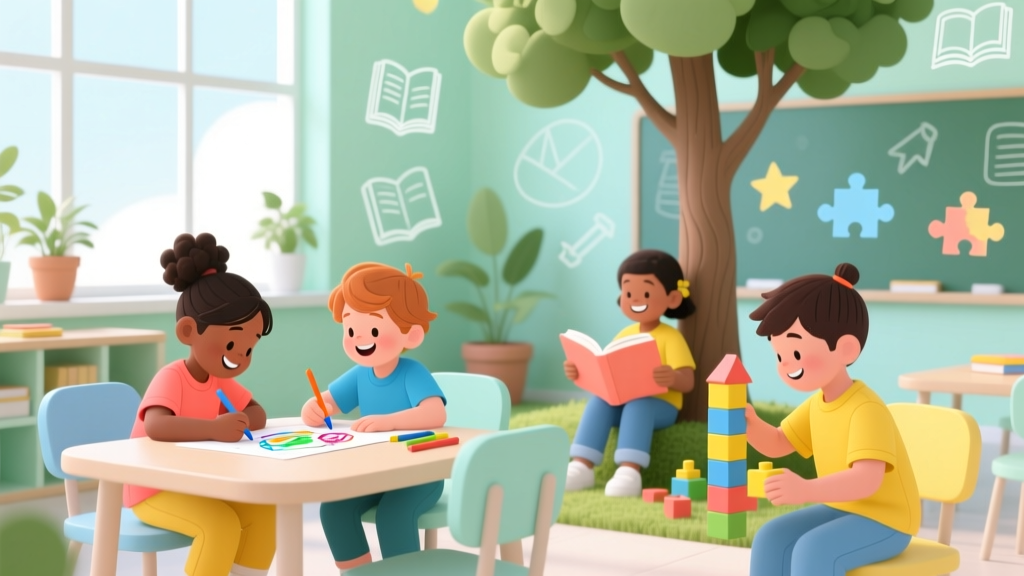
When Should Kids Be Able to Read? (2026)
Why This Question Keeps Parents Up at Night (and Why It Matters More Than Ever)
When should kids be able to read is one of the most frequently searched, most emotionally charged questions in early childhood parenting—and for good reason. In an era of accelerated academic expectations, standardized screenings starting in kindergarten, and viral social media comparisons, many caregivers feel anxious, confused, or even ashamed when their child isn’t decoding words by age 5. But here’s what decades of developmental science confirm: reading is not a switch that flips on a birthday—it’s a layered, neurologically complex skill built across years, shaped by oral language, phonological awareness, print knowledge, motivation, and consistent, joyful exposure. Getting this timeline right doesn’t just ease parental stress—it protects your child’s long-term relationship with learning.
The Real Timeline: What Research Says About Reading Milestones
Let’s start with clarity: there is no universal ‘reading age’ mandated by biology. According to the American Academy of Pediatrics (AAP), most children begin to read simple, decodable texts—like ‘The cat sat on the mat’—between ages 6 and 7, with wide variation considered developmentally normal. A landmark longitudinal study published in Pediatrics (2022) tracked over 3,200 children from birth through third grade and found that only 17% could read fluently by age 5, while 68% achieved foundational fluency between ages 6 and 7—and crucially, no long-term academic disadvantage was found among those who began reading at age 7 versus age 5. What did predict later success wasn’t early decoding, but consistent access to rich oral language, shared book experiences before age 4, and responsive adult interaction during storytime.
Think of reading as a pyramid: the base is spoken language (vocabulary, syntax, narrative understanding); the middle layer is phonological awareness (hearing rhymes, syllables, individual sounds); the top layer is orthographic mapping—the brain’s ability to link letters to sounds and store words for instant retrieval. Rushing the top layer without a strong base leads to fragile, effortful reading—or worse, avoidance. As Dr. Susan Neuman, former U.S. Assistant Secretary of Education and literacy researcher, explains: ‘We’ve conflated “exposure” with “mastery.” A 4-year-old who knows letter names isn’t ready to read—but they are building essential neural architecture.’
What ‘Ready to Read’ Actually Looks Like (Beyond Age)
Instead of asking ‘When should kids be able to read?,’ ask: Is my child showing signs of reading readiness? These aren’t checklist items—they’re observable, everyday behaviors that signal neurological and linguistic preparation. Here’s what to watch for—starting as early as age 2½:
- Oral language stamina: Can hold attention during 5–10 minute read-alouds, asks ‘why’ and ‘what happens next,’ retells familiar stories with key details.
- Phonological play: Enjoys rhyming games (‘cat, hat, bat’), claps out syllables in names (‘El-i-zab-eth’), notices beginning sounds (‘All the words that start with /b/ like ball, bird, bubble!’).
- Print awareness: Understands books have front/back, text moves left-to-right, points to words while ‘reading’ memorized books, recognizes environmental print (STOP sign, cereal box logo).
- Letter-sound connection: Not just naming letters, but linking them to sounds—e.g., says ‘/b/’ for ‘B’, ‘/s/’ for ‘S’. This emerges gradually between ages 3–5 and is the strongest predictor of future decoding success.
- Motivation & persistence: Chooses books independently, attempts to ‘write’ (scribbles, letter-like forms), shows curiosity about how words work—not just passive consumption.
A real-world example: Maya, a quiet 5-year-old in a suburban preschool, didn’t say her first full sentence until age 3 and rarely initiated conversation. Her teacher noticed she’d spend 20 minutes tracing sandpaper letters, hummed songs with clear rhyme patterns, and could identify every animal sound in Over in the Meadow. At 6, she began reading with surprising fluency—not because she was ‘behind’ earlier, but because her brain was integrating auditory, tactile, and visual inputs at its own pace. Her pediatrician confirmed no delay—just asynchronous development common in language-rich, low-pressure environments.
Red Flags vs. Reassuring Variations: When to Observe, When to Act
Not all variation is equal—and discernment matters. Below is a clinically informed framework used by early childhood specialists to differentiate expected developmental diversity from signals warranting gentle, proactive support:
| Milestone | Typical Range | Green Light (Normal Variation) | Amber Light (Monitor Closely) | Red Light (Seek Guidance) |
|---|---|---|---|---|
| Recognizes some letters | Age 3–4 | Knows 5–10 letters, especially those in own name | Struggles to retain letter names after repeated exposure; no preference for print | No letter recognition by age 5; avoids books entirely |
| Matches sounds to letters | Age 4–5 | Can link 3–5 consonants to sounds (/b/, /m/, /t/) in playful contexts | Cannot isolate beginning sounds in simple words (e.g., ‘What sound does ‘dog’ start with?’) | No sound-letter connection by age 6; confuses all consonant sounds |
| Decodes simple CVC words | Age 5.5–7 | Reads ‘cat,’ ‘sun,’ ‘map’ with prompting; self-corrects errors | Relies heavily on picture cues or guessing; cannot blend /c/ /a/ /t/ into ‘cat’ | No blending ability by mid-first grade; reads same word differently each time |
| Reads connected text fluently | Age 7–8 | Reads grade-level texts with ~95% accuracy and expression | Choppy, slow reading; frequent misreads but comprehends orally | Cannot read 1st-grade texts by end of Grade 1; comprehension lags significantly behind oral language |
Note: ‘Red light’ indicators don’t mean your child has dyslexia or a disorder—they signal a need for tailored, evidence-based support. The International Dyslexia Association emphasizes that early intervention (before Grade 2) yields the strongest outcomes, but it must be delivered by trained professionals using structured literacy approaches—not worksheets or flashcards. As Dr. Maryanne Wolf, cognitive neuroscientist and author of Proust and the Squid, reminds us: ‘The brain learns to read by rewiring itself. That process needs time, repetition, and the right kind of input—not speed.’
How to Nurture Literacy—Without Pressure or Preschool Drills
Here’s what actually moves the needle—backed by classroom efficacy studies and parent-coaching trials:
- Read aloud daily—without quizzing. Choose books slightly above their listening level (think: rich vocabulary, complex sentences). Pause to wonder, connect (“This reminds me of when…”), and let them predict—not test. A 2023 University of Michigan study found children whose parents used ‘dialogic reading’ (interactive questioning) showed 32% stronger vocabulary growth than peers in traditional read-aloud groups.
- Play with sounds—not flashcards. Sing nursery rhymes with exaggerated rhythm. Stretch out words slowly: ‘ssssuuuunnn.’ Play ‘I Spy’ with sounds: ‘I spy something that starts with /f/.’ Keep it under 3 minutes, twice a day. No screens, no apps—just voice and presence.
- Write together—messily. Label their drawings (“Zoe drew a dragon!”), co-write grocery lists, make signs for their room. Focus on meaning, not perfect formation. Handwriting fluency develops alongside reading—motor memory reinforces letter-sound links.
- Protect play—and silence. Unstructured play builds executive function, narrative skills, and attention stamina—foundational for reading comprehension. And silence? It allows the brain to consolidate language. Limit background TV; create low-stimulus zones where imagination can breathe.
One powerful shift: stop saying ‘Let’s practice reading.’ Instead, say ‘Let’s figure out this story together.’ That subtle reframe positions you as a collaborator—not an evaluator. A parent in Portland shared how this changed everything for her son Leo: ‘He’d shut down when I opened his leveled reader. But when I said, “This part is tricky—I need your help sounding it out,” he leaned in. He wasn’t performing. He was solving.’
Frequently Asked Questions
My child is 6 and still not reading. Does this mean they have dyslexia?
Not necessarily. While dyslexia is the most common learning difference affecting reading, it’s diagnosed through comprehensive evaluation—not age alone. Many children who begin reading at 6.5–7 are developing typically. Key differentiators include persistent difficulty with phoneme manipulation (blending, segmenting), trouble learning letter-sound correspondences despite quality instruction, and family history of reading challenges. If concerns persist past mid-Grade 1, request a school-based screening or consult a pediatric neuropsychologist—but avoid labeling before assessment.
Should I teach my child to read before kindergarten?
You can—and should—lay the groundwork, but avoid formal instruction before age 5. Early phonics drills often backfire, creating anxiety and superficial ‘guessing’ strategies. Instead, prioritize oral language, sound play, and book joy. The National Institute for Literacy states: ‘Direct, systematic phonics instruction is most effective when introduced in kindergarten or first grade, after children have developed phonological awareness and vocabulary.’ Pushing earlier doesn’t accelerate mastery—it can delay authentic engagement.
My child reads well but doesn’t understand what they’ve read. What’s happening?
This is called ‘hyperlexia’—strong decoding with weak comprehension—and it’s more common than many realize. It often stems from underdeveloped oral language, limited background knowledge, or difficulty making inferences. Solution: Read aloud to them daily at or above their listening level, discuss characters’ feelings and motives, pause to ask ‘What do you think will happen?’ and ‘Why do you think she did that?’ Comprehension is a thinking skill—not a reading skill.
Are reading apps or tablets helpful for early readers?
Some are—but most aren’t. A 2024 JAMA Pediatrics meta-analysis found that interactive e-books with adult co-use (e.g., discussing pictures, predicting) supported vocabulary, but solo tablet use correlated with weaker narrative comprehension. Avoid apps that reward speed or drill isolated skills. Prioritize human interaction: your voice, your questions, your shared laughter over a silly page. As Dr. Jenny Radesky, AAP spokesperson on digital media, advises: ‘The best reading app is a parent holding a book.’
Common Myths About Learning to Read
- Myth #1: “If they’re smart, they’ll read early.” Intelligence and reading onset are not tightly linked. Gifted children may hyperfocus on numbers or patterns instead of letters. Late readers include Nobel laureates, Pulitzer winners, and tech innovators. Reading is a specific neural circuit—not a measure of overall intellect.
- Myth #2: “Phonics-only instruction is the gold standard for all kids.” While systematic phonics is essential, research shows the most effective programs embed it within rich language contexts—stories, songs, drama—not decontextualized worksheets. The Science of Reading movement now emphasizes ‘structured literacy,’ which integrates phonics with vocabulary, morphology, syntax, and comprehension strategy instruction.
Related Topics (Internal Link Suggestions)
- Early Signs of Dyslexia in Preschoolers — suggested anchor text: "early signs of dyslexia before kindergarten"
- Best Books for Emerging Readers (Ages 4–7) — suggested anchor text: "phonics-friendly picture books that build confidence"
- How to Choose a Kindergarten Reading Program — suggested anchor text: "what to look for in a school's literacy approach"
- Screen Time Guidelines for Language Development — suggested anchor text: "healthy screen habits for speech and reading readiness"
- Montessori-Inspired Literacy Activities at Home — suggested anchor text: "hands-on pre-reading materials you can make"
Final Thought: Reading Is a Journey—Not a Race
When should kids be able to read isn’t a question with a single-number answer—it’s an invitation to observe deeply, respond patiently, and trust the unfolding of your child’s unique mind. Every shared giggle over a nonsense word, every ‘read it again!’, every finger-traced letter in sidewalk chalk is literacy in motion. You don’t need to rush the destination. You just need to walk beside them—with curiosity, consistency, and zero shame. So tonight, choose one book you love, sit close, and read it slowly—then ask, ‘What part made you smile?’ That’s where real reading begins. Ready to go deeper? Download our free Reading Readiness Tracker—a printable, non-judgmental tool to note your child’s joyful literacy moments, not just milestones.
More Articles
 Eric Dane’s Kids’ Ages: Facts & Co-Parenting Insights
 Jake Sully’s Kids’ Ages in Avatar 3 (2026)
 Kids Hit: Pediatrician-Backed 5-Step Fix (2026)
 Is PBS Kids Shut Down No Here’s What’s Changed
 How Many Kids Does DanTDM Have? (2026)
 Motrin for Kids: Exact Dosing Timing Rules (2026)
 Princess Cruises Kid Friendly? What Parents Need to Know
 What Happened to the Kids on Everyone Loves Raymond
 When Do Kids Get Molars? Timeline & Red Flags
 Is Knuckle Cracking Bad for Kids? (2026)