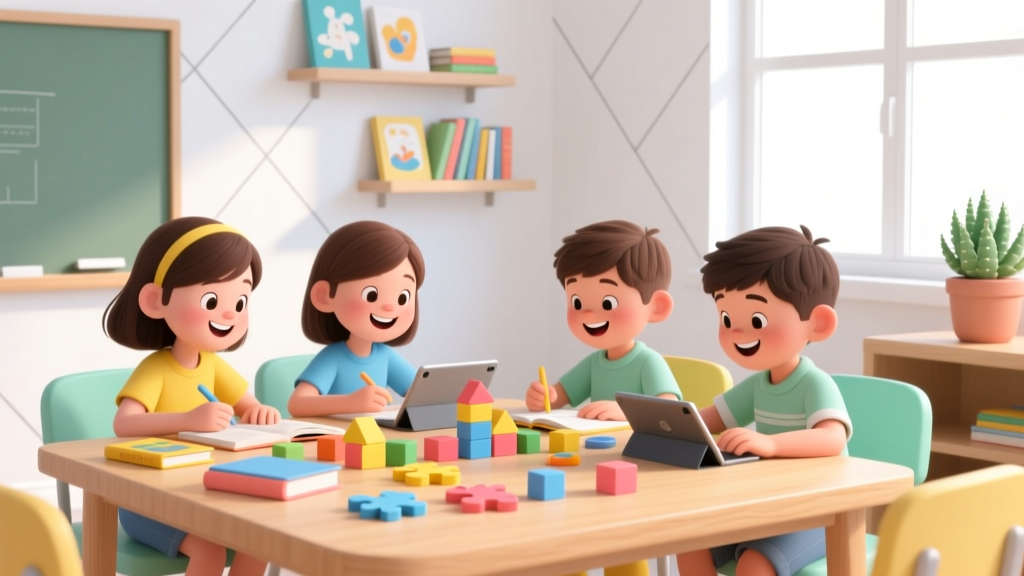
When Should a Kid Start Talking? Milestones & Red Flags
Why This Question Keeps Parents Up at Night — And Why It Matters More Than Ever
When should a kid start talking? That question isn’t just curiosity — it’s often the first quiet tremor of parental worry, echoing in late-night Google searches and pediatrician waiting rooms. Language development is one of the most visible, emotionally charged markers of early brain growth — and yet, it’s also one of the most misunderstood. In an era where screen time starts before age one, multilingual households are the norm (not the exception), and social media amplifies comparison culture, parents are more anxious than ever about whether their child is ‘on track.’ But here’s what leading developmental pediatricians emphasize: timing matters less than trajectory. A child who says their first word at 14 months with steady progress is far more reassuring than one who hits ‘12 months’ on the dot but then stalls for 5 months. This guide cuts through the noise — grounded in American Academy of Pediatrics (AAP) guidelines, longitudinal research from the NIH Early Childhood Longitudinal Study, and real-world clinical experience — to help you spot true signals, respond with confidence, and know exactly when (and how) to seek support.
What ‘Normal’ Actually Looks Like: From Coos to Conversations
Language doesn’t erupt overnight — it builds across overlapping domains: receptive (understanding), expressive (speaking), pragmatic (using language socially), and phonological (sound production). Pediatricians don’t wait for ‘first words’ alone; they assess the whole ecosystem. According to Dr. Nina Kuo, a developmental-behavioral pediatrician at Boston Children’s Hospital and AAP spokesperson, ‘We look for communicative intent long before words appear — eye contact during babbling, taking turns in vocal play, pointing to request or share interest. That’s the bedrock.’
Here’s the evidence-backed progression — not rigid deadlines, but population-based windows where 90% of typically developing children fall:
- 0–6 months: Cooing, smiling responsively, turning toward voices, calming to familiar speech.
- 6–12 months: Babbling with consonant-vowel combos (‘ba-ba,’ ‘da-da’), responding to name, using gestures (waving, reaching), showing joint attention (looking where you point).
- 12–18 months: First true words (intentional, consistent, meaningful — e.g., ‘milk’ used to request milk), understanding simple commands (‘Give me the ball’), vocabulary of 3–20 words.
- 18–24 months: Combining two words (‘more juice,’ ‘daddy go’), following two-step directions, vocabulary of 50+ words, imitating sounds and words.
- 24–36 months: Using 3–4 word sentences, asking ‘what/where/who’ questions, understood by strangers 75%+ of the time, engaging in back-and-forth exchanges.
Crucially, these ranges account for natural variation. A study published in Pediatrics (2022) tracking over 2,400 children found that only 12% said their first word precisely at 12 months — the majority emerged between 10–15 months. And bilingual children? They may say their first word slightly later (by ~1–2 months on average) but reach combined vocabulary benchmarks on time — a finding confirmed by the National Institute on Deafness and Other Communication Disorders (NIDCD).
Red Flags vs. Reassuring Signs: When to Pause, Observe, or Act
It’s normal to wonder — but certain patterns warrant closer attention. The AAP’s ‘Learn the Signs. Act Early.’ initiative identifies key indicators that suggest a need for professional evaluation before age 2:
- No babbling or cooing by 9 months
- No gestures (waving, pointing, reaching) by 12 months
- No single words by 16 months
- No two-word phrases (spontaneous, not just memorized) by 24 months
- Loss of previously acquired words or social skills at any age
- Poor eye contact, limited response to name, or lack of shared enjoyment (e.g., not showing toys)
Importantly, some signs are reassuring, even if your child seems ‘behind’: strong nonverbal communication (pointing, leading you to objects), excellent receptive language (following complex directions, understanding stories), and consistent engagement — all signal intact neural pathways. As Dr. Kuo notes, ‘I’ve seen toddlers with only 10 words at 20 months who are building sentences by 26 months because their brains are wiring for syntax — not just vocabulary. We treat the child, not the calendar.’
One powerful tool: the Communication Development Inventory (CDI), a validated parent-report checklist used in clinics and research. Free versions exist online (like the MacArthur-Bates CDI Short Form). Completing it takes 10 minutes and gives objective data — far more reliable than memory or comparison to siblings or peers.
What Actually Helps Speech — And What Doesn’t (Spoiler: Screens Aren’t Magic)
Parents often reach for quick fixes: flashcards, apps, ‘talking toys.’ But decades of research show the most potent speech catalysts are profoundly low-tech — and deeply relational. Here’s what works, backed by randomized controlled trials and meta-analyses:
- Responsive Interaction: Not just talking at your child, but with them. When baby babbles ‘ba-ba,’ respond with warmth and expansion: ‘Yes! Ba-ba! That’s your bottle!’ — then pause, letting them ‘reply.’ This turn-taking builds neural circuitry for conversation.
- Rich, Descriptive Language: Swap ‘Look!’ for ‘Look — the big red bus is rumbling past our window!’ Narrate routines: ‘Now we’re washing your hands. Soap makes bubbles! Bubbles are slippery!’
- Book Sharing (Even Before 6 Months): Not reading cover-to-cover, but pointing, naming, pausing for vocalizations. A 2023 JAMA Pediatrics study found infants whose parents engaged in interactive book sharing 3x/week had 22% larger vocabularies at age 2.
- Limiting Passive Screen Time: The AAP recommends no screens under 18 months (except video-chatting with grandparents). Why? Because screens don’t respond to infant vocalizations — they break the critical feedback loop. A landmark University of Toronto study showed babies exposed to >1 hour/day of background TV had significantly lower expressive language scores at age 2.
What doesn’t work? ‘Correcting’ every mispronunciation (‘No, say “bottle,” not “baba”’), which can dampen confidence. Or pressuring speech — ‘Say “ball!”’ — which shifts focus from communication to performance. Instead, model gently: ‘You want the ball? Here’s the BALL.’
Supporting Speech in Real-World Contexts: Bilingualism, Hearing, and Neurodiversity
Many families face layered realities — and standard milestones need nuance. Consider these evidence-informed approaches:
- Bilingual/Multilingual Households: Speak your home language(s) authentically. Code-switching (mixing languages) is normal and not a sign of confusion. Research from the Max Planck Institute shows bilingual children develop metalinguistic awareness earlier — a cognitive advantage. Focus on total conceptual vocabulary (words across both languages) rather than counting in one language alone.
- Hearing Concerns: Even mild, fluctuating ear infections can muffle speech sounds, delaying articulation. If your child frequently asks ‘huh?’, turns up volume, or doesn’t respond to soft sounds, request a hearing screening — it’s quick, painless, and covered by insurance.
- Autism Spectrum or Social Communication Differences: Delayed speech is common, but so are other markers: reduced eye contact, limited imitation, sensory sensitivities. Early intervention (EI) services, available in all U.S. states at no cost until age 3, use play-based, relationship-focused strategies proven to accelerate language gains.
Remember: speech delay is a symptom, not a diagnosis. It can stem from oral-motor differences, auditory processing challenges, anxiety, or environmental factors — not just neurodevelopmental conditions. A comprehensive evaluation by a speech-language pathologist (SLP) looks at the whole picture.
| Age Range | Key Receptive Milestones (Understanding) | Key Expressive Milestones (Speaking) | When to Consult an SLP* |
|---|---|---|---|
| 6–12 months | Responds to own name; looks when you point; understands ‘no’ and simple requests | Babbles with consonants; uses gestures; vocalizes to get attention | If no babbling or response to sound by 9 months |
| 12–18 months | Follows simple one-step directions; points to body parts; understands 50+ words | Says 1–3 words meaningfully; imitates sounds; uses ‘uh-oh’ or ‘bye-bye’ | If no words by 16 months, or no gestures by 12 months |
| 18–24 months | Understands ‘in/on/under’; follows two-step directions; enjoys simple stories | Uses 2-word phrases; has 50+ words; names common objects/people | If fewer than 20 words at 18 months, or no 2-word combinations by 24 months |
| 24–36 months | Understands size/color concepts; listens to 3-minute stories; answers ‘what’/‘where’ questions | Speaks in 3–4 word sentences; tells simple stories; strangers understand >75% of speech | If speech is mostly unintelligible to unfamiliar adults, or frequent frustration due to communication breakdowns |
*Consultation does not equal diagnosis — it’s a proactive step for assessment and support planning. Early Intervention (EI) services are free and federally mandated under IDEA Part C.
Frequently Asked Questions
My child is 20 months old and only says ‘mama’ and ‘dada’ — should I be worried?
Not necessarily — but it’s a great time for a proactive check-in. At 20 months, many children have 10–20 words, but the range is wide. What matters more is how they communicate: Do they point, gesture, lead you to things, follow directions, and show excitement when you read? If yes, they’re likely building language foundations. Still, schedule a free Early Intervention evaluation — it’s a low-barrier way to get expert eyes on development without stigma or cost. Most states complete evaluations within 45 days.
Does watching educational videos like Baby Einstein help my baby talk sooner?
No — and evidence suggests the opposite. A landmark University of Washington study found infants aged 8–16 months who watched baby DVDs daily had smaller vocabularies at 16 months than non-viewers. Why? Passive viewing lacks the responsive feedback loop essential for language learning. Your voice, your facial expressions, your pauses — those are the ‘software updates’ your baby’s brain needs. Save screens for family video calls or shared music time — not solo language instruction.
We speak Spanish at home and English at daycare — will this confuse my child or delay speech?
No — bilingualism does not cause delay. Research consistently shows bilingual children reach language milestones within the same overall timeframe as monolingual peers, though their vocabulary in each language may appear smaller initially. Their combined vocabulary (Spanish + English words) typically matches or exceeds monolingual norms. The strongest predictor of success? Consistent, rich input in both languages. Speak the language you know best — your fluency and joy matter more than ‘perfect’ grammar.
My pediatrician said ‘wait and see’ — but my gut says something’s off. What do I do?
Trust your intuition. Pediatricians have broad expertise, but speech-language pathologists (SLPs) specialize in communication development. You have the right to request an evaluation through your state’s Early Intervention program (search ‘[Your State] Early Intervention’) — no referral needed, and it’s free. Document your concerns: record videos of interactions, note specific examples (e.g., ‘doesn’t respond when called from another room,’ ‘uses only grunting to request’). Data + instinct = powerful advocacy.
Are boys really slower to talk than girls? Is that ‘normal’?
On average, yes — studies show boys utter their first words ~1–2 months later than girls, and have smaller vocabularies at 24 months. But this gap is small and disappears by age 3–4. Crucially, individual variation dwarfs gender differences. A boy with strong joint attention and gesture use is far more likely to catch up than a girl with minimal babbling and poor eye contact. Don’t normalize delay based on sex — evaluate the child’s unique profile.
Common Myths
Myth 1: “Late talkers always catch up on their own — no need to intervene.”
While ~50–70% of late talkers (those with only expressive delay, not receptive or social issues) do catch up by age 3–4, research shows early support significantly improves outcomes — especially for vocabulary, grammar, and school readiness. A 2021 Lancet Child & Adolescent Health study found children receiving EI before age 2 had 3x higher odds of entering kindergarten with age-appropriate language skills.
Myth 2: “If my child understands everything, their speech will come naturally — no action needed.”
Receptive language is vital, but expressive output requires different neural pathways and practice. A child who understands well but doesn’t speak may be struggling with motor planning (apraxia), anxiety, or oral-motor coordination. Waiting risks missed windows for neuroplasticity — the brain’s ability to rewire most efficiently before age 5.
Related Topics (Internal Link Suggestions)
- Speech Delay vs. Autism Signs — suggested anchor text: "early signs of autism vs. speech delay"
- Best Toys for Language Development — suggested anchor text: "toys that actually boost toddler speech"
- How to Get a Free Speech Evaluation — suggested anchor text: "free early intervention evaluation near me"
- Bilingual Parenting Tips for Toddlers — suggested anchor text: "raising bilingual toddlers without confusion"
- Screen Time Guidelines by Age — suggested anchor text: "AAP screen time rules for babies and toddlers"
Conclusion & Next Step
When should a kid start talking? There’s no universal clock — but there are clear, observable signposts of healthy language development, and compassionate, evidence-backed ways to nurture them. You don’t need perfection — just presence, patience, and the courage to ask for help when something feels off. The most powerful thing you can do today isn’t buying a new app or toy — it’s putting your phone down, getting face-to-face, and responding to your child’s coos, babbles, and gestures with warmth and words. And if you’re wondering ‘Is this typical?’ — take the 5-minute MacArthur-Bates CDI Short Form online, or call your state’s Early Intervention office. That single call could be the pivot point toward stronger communication, deeper connection, and greater confidence — for both of you.
More Articles
 Kids 5.5 to Women’s Size Conversion Chart (2026)
 What Size Is 6.5 Womens in Kids? (2026 Guide)
 Does Jeanie Buss Have Kids? Truth & Cultural Impact
 School Shooting Deaths 2026: Verified Data & Parent Actions
 When Should Kids Write Their Name? (2026)
 Pharrell Williams Kids: Parenting Philosophy & Tips
 How Many Kids Does Robert Kraft Have? (2026)
 When Should Kids Learn to Swim? Evidence-Based Guide
 Is The Outsiders Musical Appropriate for Kids? (2026)
 How Many Kids Does Yung Miami Have? (2026)