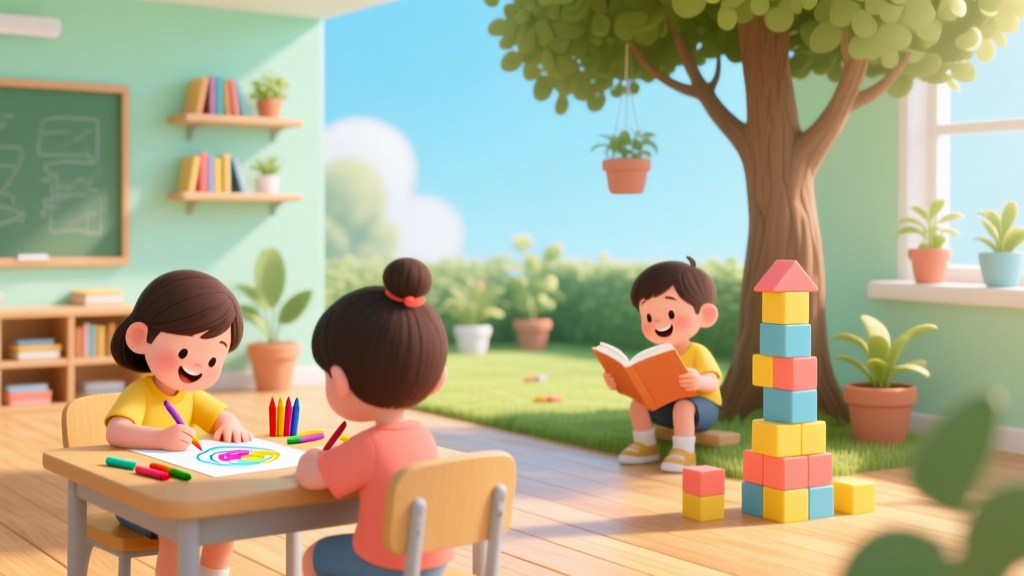
When Should a Kid Know How to Read? (2026)
Why This Question Keeps Parents Up at Night (And Why It Shouldn’t)
When should a kid know how to read? That simple question carries the weight of unspoken fears: Am I failing my child? Is something wrong? Will they fall behind forever? You’re not alone—73% of parents surveyed by the National Center for Education Statistics report moderate-to-high anxiety about early literacy development, often before their child even enters kindergarten. But here’s what most well-meaning blogs, Pinterest boards, and even some preschools don’t tell you: reading is not a switch that flips on a birthday. It’s a complex neurodevelopmental cascade—woven from phonemic awareness, oral language, print concepts, letter knowledge, and sustained attention—that unfolds uniquely for every child. And thanks to decades of longitudinal research—from the NIH-funded Early Childhood Longitudinal Study to the landmark Avon Longitudinal Study of Parents and Children—we now know that healthy reading acquisition spans a remarkably wide window. Let’s replace worry with wisdom.
What Science Says: The Real Reading Milestone Timeline
Forget rigid grade-level mandates. According to the American Academy of Pediatrics (AAP) and the International Literacy Association, reading development follows a predictable *sequence*, not a fixed calendar. Most children begin recognizing letters between ages 3–4, connect sounds to letters (phoneme-grapheme mapping) around age 4–5, decode simple CVC words (e.g., "cat," "dog") between 5–6, and achieve fluent, expressive reading with comprehension by age 7–8. But crucially, this is a bell curve—not a deadline. In a 2023 meta-analysis published in Reading Research Quarterly, researchers found that 12% of typically developing children in high-quality literacy environments didn’t read independently until age 7—and showed no long-term academic deficits. What matters isn’t the calendar date, but the *foundational skills* your child is building daily.
Consider Maya, a bright, talkative 5-year-old who loved storytelling but resisted flashcards and letter tracing. Her preschool teacher noticed she could clap out syllables in her name (“Ma-ya”), identify rhyming words in nursery rhymes, and retell complex picture books with rich vocabulary—but couldn’t yet match “b” to /b/. At age 6, after six months of playful sound games (e.g., “I Spy” with beginning sounds, magnetic letter stories), she began decoding. By second grade, she was reading chapter books aloud with expression. Her path wasn’t delayed—it was *her* path.
The 4 Non-Negotiable Foundations (Before Sight Words)
Pushing sight-word memorization before these pillars are secure is like building a house on sand. Here’s what truly predicts reading success—and how to nurture each:
- Phonological Awareness: The ability to hear and manipulate sounds in spoken language (rhyming, blending, segmenting). Action step: Sing songs with heavy alliteration (“Peter Piper picked a peck…”), play “sound scavenger hunts” (“Find something that starts with /m/!”), and stretch out words slowly (“/c/…/a/…/t/—what word?”).
- Oral Language Richness: Vocabulary size and narrative skill strongly correlate with later reading comprehension. A child who hears 21,000+ words per day (per Hart & Risley’s landmark study) develops stronger neural pathways for decoding meaning. Action step: Narrate your actions (“Now I’m stirring the batter—see how it swirls?”), ask open-ended questions (“What do you think the squirrel will do next?”), and read aloud daily—even if your child “already knows” the book.
- Print Concepts: Understanding how books work (left-to-right, top-to-bottom, that letters carry meaning). Action step: Use your finger to track text as you read, let your child “read” familiar books by recalling pictures and phrases, and point out environmental print (stop signs, cereal boxes, logos).
- Letter Knowledge + Sound Linking: Knowing letter names *and* their most common sounds—not just reciting the alphabet song. Action step: Focus on one letter per week through multisensory play: trace it in sand, build it with pipe cleaners, find objects starting with its sound, and draw it while saying its sound (“B says /b/, like bubble!”).
Notice none of these require worksheets, apps, or flashcards. They happen during bath time, grocery trips, and bedtime stories. As Dr. Susan Neuman, former U.S. Assistant Secretary for Elementary and Secondary Education and literacy researcher, emphasizes: “The richest literacy instruction happens in the context of meaningful, joyful interaction—not isolated skill drills.”
Red Flags vs. Reassuring Variations: When to Pause, Observe, or Seek Support
Not all differences are cause for concern—but some warrant gentle, timely intervention. Here’s how to distinguish typical variation from potential risk:
- Reassuring: Struggles with irregular words (“said,” “was”) at age 6; mixes up similar-looking letters (b/d, p/q) until age 7; reads slowly but accurately with good comprehension; prefers listening to being read to at age 5.
- Pause & Observe: No interest in books or print by age 4; difficulty rhyming or clapping syllables at age 4.5; consistently avoids looking at text during shared reading; can’t remember letter names after consistent exposure by age 5.
- Seek Support: Avoids all print-related activities; confuses basic letter sounds repeatedly after age 5.5; cannot blend two sounds (“c-a” → “ca”) by age 6; shows extreme frustration or physical avoidance (covering eyes, tantrums) during literacy activities; family history of dyslexia or language disorders.
If you notice persistent patterns in the “seek support” category, consult your pediatrician or school’s reading specialist—not for diagnosis, but for screening. Early identification of dyslexia (which affects 15–20% of the population, per the International Dyslexia Association) leads to dramatically better outcomes when evidence-based interventions like Orton-Gillingham or Lindamood-Bell are started before third grade. Importantly: late readers who receive appropriate support catch up—and often surpass peers in critical thinking and comprehension by middle school, as shown in a 10-year follow-up study in Pediatrics.
What Schools Actually Expect (And How to Align Without Pressure)
Kindergarten standards vary wildly by state and district—but national benchmarks (Common Core, NAEYC) clarify expectations:
- By end of Kindergarten: Recognize all uppercase/lowercase letters; isolate beginning/middle/ending sounds; blend and segment CVC words; read common high-frequency words (e.g., “the,” “and,” “is”); demonstrate understanding of stories through retelling.
- By end of First Grade: Decode regularly spelled one-syllable words; read grade-level text with accuracy and fluency; answer literal and inferential questions.
- By end of Second Grade: Read with purpose and understanding; use context clues and phonics to decode unfamiliar words; read aloud with appropriate pace, expression, and accuracy.
Crucially, these are *end-of-year* goals—not prerequisites for enrollment. Yet many parents misinterpret them as “must-haves before kindergarten.” A 2022 survey by the Learning Policy Institute found 68% of kindergarten teachers reported increased parental stress over pre-K reading expectations—despite 92% stating that oral language and social-emotional skills were far more predictive of kindergarten success than early decoding. So how do you align with school expectations without creating anxiety? Prioritize daily read-alouds (even 10 minutes), conversation-rich routines, and playful sound games—not drilling. Ask your child’s teacher: “What foundational skills are you observing?” not “Can they read yet?”
| Age Range | Typical Developmental Behaviors | Supportive Activities (Zero Pressure) | When to Gently Monitor |
|---|---|---|---|
| 3–4 years | Recognizes some letters (often those in own name); enjoys rhyming games; tells simple stories; points to pictures while “reading” familiar books | Play “letter hunt” in grocery stores; sing nursery rhymes with exaggerated rhymes; create storybooks together using drawings and dictation | No response to rhyming games; avoids books entirely; doesn’t recognize any letters in own name by age 4.5 |
| 4–5 years | Names most letters; matches some letters to sounds; claps syllables; “reads” memorized books by picture cues; writes some letters or attempts spelling | Build words with magnetic letters while naming sounds; play “I Spy” with beginning sounds; write grocery lists together (“M for milk!”) | Cannot connect any letters to sounds by age 5; struggles to break words into syllables; shows intense frustration with print |
| 5–6 years | Decodes simple CVC words; recognizes common sight words; reads emergent texts (pattern books) with support; spells phonetically (“fri” for “free”) | Take turns reading pages in easy books; play word-building games (e.g., changing “cat” to “bat” to “rat”); celebrate inventive spelling as evidence of phonics understanding | No decoding attempts by age 6; relies solely on memorization; cannot blend sounds despite consistent practice |
| 6–7 years | Reads simple chapter books aloud; self-corrects errors; uses context and phonics flexibly; comprehends main ideas and details | Discuss characters’ feelings and motivations; predict plot twists; connect stories to real-life experiences (“When have you felt like that character?”) | Still unable to decode unfamiliar words; avoids reading aloud; comprehension lags significantly behind oral language |
Frequently Asked Questions
Is it bad if my child isn’t reading by kindergarten?
No—it’s completely normal and developmentally appropriate. Only about 17% of children read fluently before kindergarten, according to the Early Childhood Longitudinal Study. Kindergarten is designed to teach foundational reading skills, not assume they’re already mastered. What matters more is whether your child has strong oral language, phonological awareness, and curiosity about books—skills that are far easier to nurture than forcing early decoding.
My child reads early—does that mean they’re gifted?
Early reading (before age 5) can signal advanced language development, but it’s not a reliable predictor of overall giftedness or future academic success. Some early readers plateau if foundational comprehension and critical thinking aren’t nurtured alongside decoding. Focus on depth—not speed: ask “Why do you think that happened?” or “How would you change the ending?” instead of just “What does this word say?”
Should I use reading apps or programs like ABCmouse?
Use them sparingly—and only as supplements to human interaction. A 2021 study in JAMA Pediatrics found that screen-based literacy apps showed minimal gains compared to adult-child shared reading, especially for children under 5. Apps lack the responsive feedback, emotional connection, and rich vocabulary modeling that occur during live read-alouds. If you use them, co-view and discuss: “What sound does that letter make? Can we think of another word that starts like that?”
What if English isn’t our home language?
Bilingual children often develop literacy in both languages simultaneously—and may appear to “start later” in English because they’re building two linguistic systems. Research from the University of California, Berkeley shows bilingual kids catch up—and often outperform monolingual peers—in metalinguistic awareness (understanding how language works) by age 8. Continue speaking your home language richly; literacy skills transfer across languages. Ask your school about dual-language programs or culturally responsive assessments.
Does handwriting affect reading development?
Yes—handwriting reinforces letter recognition and sound-symbol mapping. Neuroimaging studies show that forming letters by hand activates brain regions linked to reading more deeply than typing or tracing. But perfection isn’t the goal. Encourage messy, exploratory writing: drawing letters in shaving cream, molding them with clay, or writing in the air. As occupational therapist Dr. Jane Case notes: “The motor act of forming letters builds the neural ‘roadmap’ for recognizing them on the page.”
Common Myths
Myth #1: “If they’re not reading by 6, they’ll never catch up.”
False. Longitudinal data from the Avon study shows children who began reading at age 7–8 demonstrated equivalent or superior comprehension and critical thinking by age 14 compared to early readers—especially when their early years emphasized oral language and curiosity over drill.
Myth #2: “More flashcards = faster reading.”
Counterproductive. Rote memorization bypasses the phonological processing essential for decoding unfamiliar words. Children taught via flashcards often struggle with new words (“blot,” “snack”) because they haven’t internalized sound-letter relationships. Evidence-based approaches like systematic phonics build flexible, transferable skills.
Related Topics (Internal Link Suggestions)
- Phonemic Awareness Activities for Preschoolers — suggested anchor text: "playful phonemic awareness games"
- Best Books to Read Aloud Before Kindergarten — suggested anchor text: "top read-aloud books for emerging readers"
- Signs of Dyslexia in Preschool and Kindergarten — suggested anchor text: "early dyslexia indicators"
- How to Choose a Kindergarten-Readiness Program — suggested anchor text: "kindergarten-readiness checklist"
- Screen Time Guidelines for Early Literacy — suggested anchor text: "healthy screen time for preschoolers"
Your Next Step: Shift from Timeline to Trust
When should a kid know how to read? The most empowering answer isn’t an age—it’s a mindset: When they’ve built the invisible scaffolding of sound awareness, language richness, and joyful engagement with stories. Your role isn’t to rush the clock, but to be the calm, curious co-explorer: noticing their fascination with street signs, celebrating their invented spellings, and choosing connection over correction. Start tonight—grab a favorite book, snuggle in, and read aloud with warmth and wonder. Point to words occasionally, pause to wonder about characters, and let your child turn the pages. That quiet, consistent presence—more than any app, flashcard, or deadline—is the single strongest predictor of lifelong literacy. Ready to build that foundation? Download our free 7-Day Playful Pre-Reading Challenge—with zero worksheets, zero pressure, and maximum joy.
More Articles
 Does HopeScope Have Kids? Real Parenting Insights
 What Size Is a Kids Small? Sizing Decoder Chart
 Is Having Kids Worth It? A Research-Backed Guide
 Kids and Alcohol: Risks, Signs, and Emergency Response
 Does Kai Cenat Have Kids? (2026)
 How to Brush Teeth for Kids: Pediatric Dentist Tips
 Kids Size 7 to Women’s: Sizing Guide & Fixes
 How To Alternate Tylenol And Ibuprofen Kids
 How Many Kids Does Maria Shriver Have? (2026)
 Kids’ Lunch Packing: Stress-Free & Nutritionist-Approved