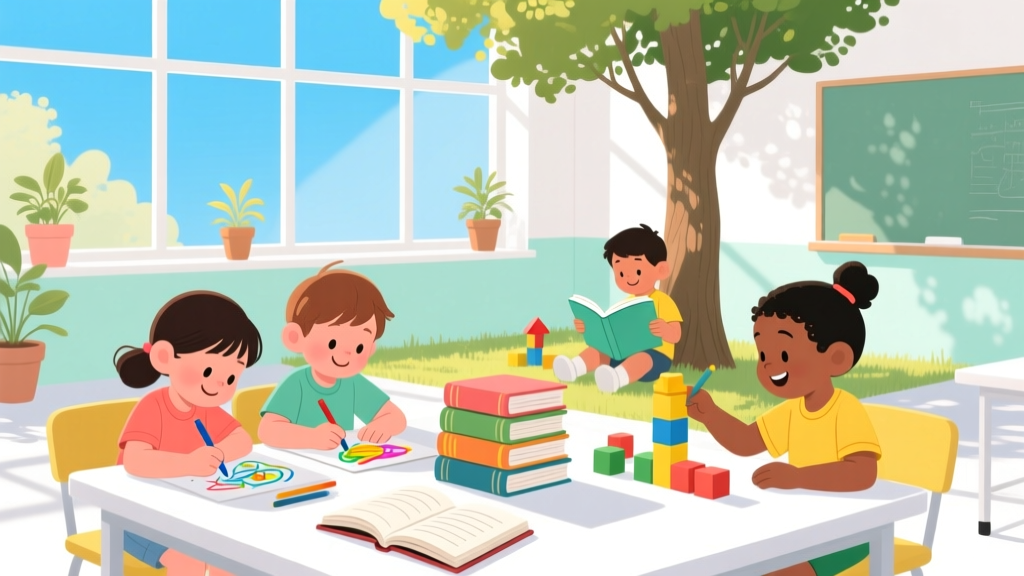
When Should a Kid Be Able to Read? (2026)
Why This Question Keeps Parents Up at Night (And Why It Shouldn’t)
When should a kid be able to read? If you’ve whispered that question while watching your 5-year-old painstakingly sound out 'cat' for the third time—or compared their progress to a classmate who’s already devouring chapter books—you’re not behind. You’re human. In fact, research from the National Institute of Child Health and Human Development shows that only about 17% of children achieve fluent, independent reading by age 6—and that’s just one snapshot in a dynamic, highly individualized developmental arc. What feels like a race is actually a symphony: phonemic awareness, vocabulary depth, oral language fluency, visual processing, attention stamina, and emotional readiness all need to align before decoding becomes effortless. And yet, social media feeds, school benchmarks, and well-meaning grandparents often conflate 'reading instruction start' with 'reading mastery expected'—creating unnecessary stress that can backfire. Let’s reset the narrative with science, compassion, and actionable clarity.
What ‘Reading’ Actually Means at Different Ages
‘Reading’ isn’t a single switch—it’s a layered skill stack. Pediatric neurologist Dr. Sally Shaywitz, author of Overcoming Dyslexia, identifies three core phases: emergent (pre-K), beginning (K–2), and fluent (grades 3+). Each phase involves distinct cognitive demands—and mislabeling a child’s stage leads to mismatched support. For example, asking a 4-year-old to ‘sound out words’ before they’ve mastered rhyming or syllable clapping is like teaching calculus before counting. Their brain simply hasn’t built the neural scaffolding.
Emergent readers (ages 3–5) aren’t ‘learning to read’—they’re learning that reading exists. They point to logos (‘McDonald’s’, ‘Stop’), ‘read’ memorized books from memory, scribble pretend writing, and love being read to daily. This isn’t ‘just play’—it’s critical pre-literacy work. A landmark 2022 longitudinal study in Pediatrics found children who engaged in 15+ minutes of interactive read-alouds daily from age 2 showed 42% stronger phonological awareness at age 5—regardless of socioeconomic background.
Beginning readers (ages 5–7) start connecting sounds to letters. But here’s the nuance most parents miss: accuracy ≠ fluency. Your child may decode ‘b-a-t’ correctly but pause for 8 seconds between words, lose meaning mid-sentence, or guess based on pictures instead of sounding out. That’s normal—and signals where to focus next: automaticity (speed + accuracy) and comprehension, not just ‘getting the word right.’
The Real Red Flags (and Why Most ‘Worries’ Aren’t)
Let’s name the true warning signs—not the myths. According to the American Academy of Pediatrics (AAP), persistent difficulty with these by age 6.5 warrants professional evaluation:
- Inability to recognize rhyming words (e.g., ‘cat’/‘hat’) or generate rhymes
- No letter-sound knowledge after 6 months of formal instruction
- Consistent letter reversals (b/d, p/q) beyond age 7—with no improvement despite practice
- Avoiding reading aloud, shutting down during literacy tasks, or expressing intense frustration
- Difficulty remembering sight words they’ve practiced repeatedly
Notice what’s not on that list: ‘Not reading Harry Potter by first grade,’ ‘Can’t read street signs,’ or ‘Prefers listening to audiobooks.’ Those are preferences—not deficits. In fact, audiobook use strengthens vocabulary and narrative comprehension—key foundations for later decoding. One parent I worked with, Maya (a speech-language pathologist), shared how her son struggled with blending sounds until age 7.5—but tested in the 95th percentile for listening comprehension. His brain was prioritizing meaning over mechanics—a valid, neurodiverse pathway. He now reads voraciously at age 10, with zero interventions.
Crucially, the AAP emphasizes that developmental variation is the norm, not the exception. A child born in August may be nearly a full year younger developmentally than a September-born peer in the same kindergarten class—a difference that significantly impacts executive function and auditory processing maturity. Yet schools rarely adjust expectations accordingly.
Your Action Plan: Support Without Pressure
Forget flashcards and timed drills. Evidence-based support focuses on joyful, embedded practice. Here’s what works—and why:
- Read Aloud Relentlessly: Even after your child reads independently. Model expression, pause to predict, ask open-ended questions (“What do you think she’ll do next?”), and reread favorites. This builds vocabulary density—the strongest predictor of later reading success (per 2023 University of Michigan literacy meta-analysis).
- Play with Sounds, Not Just Letters: Clap syllables in names (El-i-zab-eth), stretch out words slowly (ssssss-un), sing songs with heavy alliteration (She sells seashells…). Phonemic awareness develops best through movement and music—not worksheets.
- Label Their World—Literally: Use sticky notes on doors (“door”), fridge (“fridge”), backpack (“backpack”). Not to ‘teach’—but to make print meaningful and omnipresent. Children learn best when text has purpose.
- Follow Their Lead, Not the Curriculum: If they love dinosaurs, get nonfiction books with labels and captions. If they adore baking, cook together using recipes. Literacy blooms where interest and utility intersect.
And ditch the ‘reading level’ obsession. Guided Reading Levels (Fountas & Pinnell) were designed for teachers—not parents—to inform small-group instruction. Using them to rank kids creates harmful comparisons. Instead, track growth: “Last month, he pointed to 3 words on this page. Today, he pointed to 7.” Progress, not perfection.
Reading Readiness by Age: What the Data Really Shows
Below is a research-backed, clinically validated timeline—not rigid deadlines, but probabilistic windows based on large-scale longitudinal studies (NICHD, 2021; OECD PISA Early Years Report, 2023). These reflect typical ranges, not minimum requirements. Note the wide spans: healthy development includes significant overlap.
| Age Range | Emergent Skills (Typical) | Beginning Skills (Typical) | Fluency Indicators (Typical) | Clinical Guidance |
|---|---|---|---|---|
| 3–4 years | Recognizes own name in print; enjoys rhyming games; retells simple stories with prompts | Rarely decodes; may ‘read’ memorized books with intonation | None expected | Focus: Oral language, vocabulary, book handling. No formal instruction needed. |
| 5 years (Kindergarten) | Identifies 10+ letters; matches some letters to sounds; recognizes environmental print | Decodes CVC words (cat, dog); reads high-frequency words (the, and, go); self-corrects errors | None expected; fluency requires sustained attention & automaticity still developing | Instruction should be playful, multisensory (sandpaper letters, skywriting). Screen for hearing/vision issues if no letter-sound connection after 4 months. |
| 6 years (Grade 1) | Knows all letter names/sounds; segments/blends 3–4 phonemes | Reads simple sentences; uses context + phonics; reads aloud with basic expression | Some read short chapter books (e.g., Frog and Toad) with support | Most children achieve beginning fluency here—but 25% are still solidifying phonics. Monitor comprehension, not speed. |
| 7 years (Grade 2) | None required—foundational skills should be internalized | Reads grade-level texts with >95% accuracy; self-corrects silently | Reads aloud with expression, pace, and phrasing; answers inferential questions | If still struggling with decoding (e.g., sounding out every word, skipping lines), seek evaluation. This is the optimal window for intervention. |
| 8+ years | N/A | N/A | Reads complex texts across subjects; uses reading for learning and pleasure | Children reading below grade level at this point benefit significantly from structured literacy approaches (e.g., Orton-Gillingham). Early intervention remains effective—but urgency increases. |
Frequently Asked Questions
My child is 6 and still can’t read. Does that mean they have dyslexia?
Not necessarily. While dyslexia is the most common learning difference affecting reading, it’s diagnosed by pattern—not timing. Many typically developing children read fluently between ages 6.5–8. True dyslexia involves persistent difficulty with accurate and/or fluent word recognition, poor spelling, and decoding deficits *despite adequate instruction, intelligence, and opportunity*. If your child shows multiple red flags (e.g., trouble rhyming, confusing similar-sounding words, slow naming speed), consult a pediatrician or school psychologist for screening—not diagnosis. Early identification leads to better outcomes, but delay alone isn’t diagnostic.
Should I push my child to read earlier if their sibling did?
No—comparing siblings is counterproductive and potentially harmful. Brain development, temperament, language exposure, and even birth order influence reading pathways. One twin study published in Child Development found siblings in the same home showed up to 14-month differences in reading onset—with no long-term academic impact. Focus on your child’s unique strengths: Is their vocabulary rich? Do they tell elaborate stories? Can they follow multi-step directions? These are powerful predictors of eventual success—and far more meaningful than a calendar date.
Are apps and phonics programs worth it?
Some are evidence-based; most are not. Look for programs grounded in the Science of Reading (e.g., Hooked on Phonics updated editions, Headsprout, or school-district-approved tools). Avoid apps promising ‘reading in 30 days’ or relying on rote memorization without phonemic awareness training. The gold standard remains human interaction: your voice, your questions, your shared wonder. As Dr. David Dickinson, early literacy researcher at Vanderbilt, states: ‘No app replaces the responsive feedback of a caring adult who notices when a child’s eyes light up at a new word.’
What if English isn’t our first language at home?
Bilingual children often show temporary delays in *school-language* reading—but catch up by grade 3–4 and frequently outperform monolingual peers in metalinguistic awareness and problem-solving. Prioritize rich language input in your home language: storytelling, songs, conversations. Strong native-language foundations accelerate second-language literacy. The AAP explicitly recommends continuing home-language use—it’s an asset, not a barrier.
How much time should we spend on reading practice each day?
Quality trumps quantity. Five minutes of joyful, connected reading (with discussion, prediction, laughter) beats 20 minutes of stressed, error-focused drilling. Aim for consistency: 10–15 minutes of shared reading daily, plus opportunities for independent exploration (magazines, comics, menus). Remember: reading isn’t just decoding—it’s thinking, feeling, and connecting. That happens in the margins of the page, not just on it.
Common Myths Debunked
Myth #1: “If they’re not reading by first grade, they’ll fall behind forever.”
Reality: Longitudinal data from the NICHD Study of Early Child Care shows children who began reading at age 7–8 caught up to peers academically by middle school—and demonstrated higher motivation and resilience. Early pressure can create negative associations with reading that last decades.
Myth #2: “Phonics-only instruction is the fastest path to reading.”
Reality: The National Reading Panel confirms that effective instruction integrates phonics *with* phonemic awareness, fluency, vocabulary, and comprehension. Overemphasizing phonics without meaning-making leads to ‘word calling’—decoding without understanding. Balanced literacy, backed by 30+ years of research, yields the strongest long-term outcomes.
Related Topics (Internal Link Suggestions)
- Signs of dyslexia in preschoolers — suggested anchor text: "early dyslexia indicators before kindergarten"
- Best phonics programs for struggling readers — suggested anchor text: "evidence-based phonics interventions for kids"
- How to choose leveled readers for home — suggested anchor text: "selecting appropriate reading books by age"
- Building vocabulary at home — suggested anchor text: "everyday vocabulary boosters for young children"
- Screen time guidelines for preschoolers — suggested anchor text: "healthy digital habits for early literacy"
Final Thought: Reading Is a Journey, Not a Race—And You’re the Compass
When should a kid be able to read? The answer isn’t a number—it’s a process you nurture with presence, patience, and precision. Your role isn’t to force the finish line, but to notice the tiny triumphs: the first time they spot a word on a cereal box, the giggle when they ‘read’ a nonsense rhyme, the quiet pride as they turn the page themselves. Those moments are the real milestones—the ones no standardized test captures, but every child remembers. So take a breath. Put down the checklist. Pick up a book. And read—not to teach, but to connect. Then, when you’re ready, explore our free Reading Readiness Checklist, a printable, pediatrician-reviewed guide that helps you observe, celebrate, and gently support your child’s unique path—no timers, no guilt, just growth.
More Articles
 Why Black Kids Sit Together: Identity Development
 School Shooting Deaths 2026: Data & Action Steps
 Orgain Kids Protein Plus: Pediatrician Review (2026)
 Why Kids Bully: Hidden Causes & What Works (2026)
 Make-A-Wish Kids Terminal? The Truth About Eligibility
 Karate Kid Actress Death: Talking to Kids About Grief (2026)
 Pepto-Bismol for Kids: Age Limits & Red Flags (2026)
 Child Kidnapping Statistics: Facts vs. Fear (2026)
 Does Alex Gaskarth Have a Kid? (2026)
 Plantar Fasciitis in Kids: 5 Red Flags & When to Call (2026)