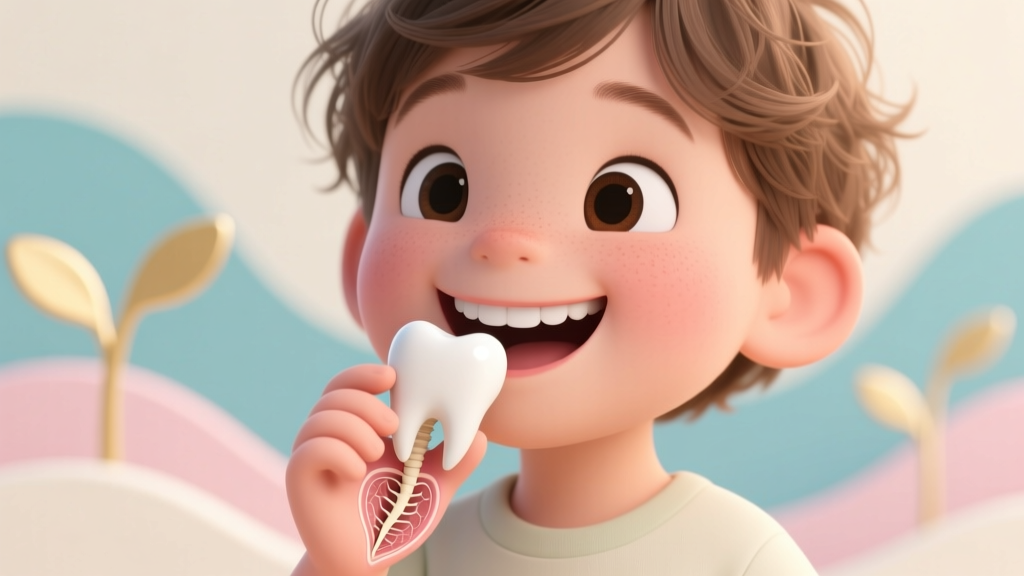
When Do Kids Lose Teeth? Timing, Signs & Support
Why This Milestone Matters More Than You Think
When do kids start losing teeth? Most children begin shedding their primary (baby) teeth between ages 5 and 7 — but that simple fact masks a complex, highly individualized biological process that impacts nutrition, speech development, self-confidence, orthodontic outcomes, and even sleep quality. As a pediatric dentist with over 18 years of clinical experience and co-author of the American Academy of Pediatric Dentistry’s (AAPD) Parent Education Toolkit, I’ve seen firsthand how misinformation — like ‘all kids lose teeth at 6’ or ‘wiggling helps them fall out faster’ — leads to unnecessary anxiety, premature extractions, and missed opportunities to build lifelong oral health habits. This isn’t just about counting lost teeth; it’s about laying the foundation for a lifetime of strong, aligned, cavity-resistant smiles — and doing it with empathy, science, and zero judgment.
The Real Timeline: Not a Calendar, But a Continuum
While textbooks often cite ‘age 6’ as the universal starting point, research from the National Institute of Dental and Craniofacial Research (NIDCR) shows wide natural variation: 10% of children begin losing teeth as early as age 4, while another 10% don’t start until age 8. What matters far more than chronology is sequence and symmetry. Typically, the lower central incisors (front bottom teeth) are first to go — often around age 5½ — followed closely by the upper central incisors. Then come lateral incisors, first molars, canines, and finally second molars, usually concluding by age 12–13. Crucially, teeth tend to shed in the same order they erupted — a pattern pediatric dentists call ‘the eruption-loss mirror.’ Deviations aren’t automatically alarming, but consistent asymmetry (e.g., left side shedding while right remains solid for >6 months) warrants evaluation.
Consider Maya, a bright 5-year-old whose pediatrician flagged her ‘early tooth loss’ at her well-child visit. Her two bottom front teeth became noticeably loose at 4 years 11 months — prompting frantic Google searches and calls to her dentist. What her parents didn’t know? Maya had experienced early dental caries that weakened the roots of those teeth, accelerating resorption. Her dentist confirmed no systemic issue, but used the opportunity to reinforce fluoride varnish application and dietary adjustments. Early loss isn’t always pathology — but it’s always a signal to pause and assess context: diet, oral hygiene, trauma history, and family patterns.
What to Watch For (and When to Call the Dentist)
Not every wiggly tooth is part of the natural exfoliation process. Here’s how to distinguish normal development from potential concerns:
- Pain-free mobility: Mild wiggling during chewing or gentle finger pressure is typical. Sharp, persistent pain when touching the tooth or gum suggests infection or trauma.
- Gum appearance: Healthy gums around a loose tooth are pink, firm, and show no swelling, redness, or pus. A bluish ‘eruption cyst’ is common and harmless; a bright red, bleeding, or ulcerated area may indicate gingivitis or injury.
- Permanent tooth visibility: You should see the permanent tooth ‘bubbling up’ beneath the gum line within 1–3 months after the baby tooth becomes loose. If no sign appears after 4 months, consult your dentist — impaction or crowding may be present.
- Double rows: When a permanent tooth erupts behind a still-firm baby tooth (‘shark teeth’), it’s surprisingly common — occurring in ~10% of children, per AAPD data. It rarely requires intervention unless the baby tooth shows no mobility after 3 months.
According to Dr. Lena Chen, board-certified pediatric dentist and faculty member at UCLA School of Dentistry, ‘The biggest mistake parents make is waiting until pain or infection appears before seeking advice. A proactive 6-month check-up — especially if your child has early decay, thumb-sucking past age 4, or a family history of orthodontic treatment — gives us time to intercept problems, not just treat them.’
How to Support Your Child — Physically & Emotionally
Losing teeth isn’t just physical — it’s a profound psychological milestone. Children often feel vulnerable, self-conscious, or fearful about blood, pain, or looking ‘different.’ Your response shapes their relationship with dental care for decades. Start by naming emotions: ‘It’s okay to feel nervous — lots of kids do!’ Normalize the experience with books (The Tooth Book by Dr. Seuss remains clinically effective for reducing anxiety), and avoid shaming language like ‘Don’t be a baby’ or ‘Just yank it!’
For physical comfort, cold foods (frozen yogurt, chilled cucumber sticks) reduce gum inflammation. Over-the-counter children’s acetaminophen or ibuprofen (dosed by weight, not age) can ease soreness — but never apply aspirin directly to gums (a dangerous myth). And resist the urge to force extraction: ‘Wiggling helps’ is only true if done gently and voluntarily. Aggressive twisting or pulling risks root fracture, gum laceration, or damage to the developing permanent tooth underneath.
A real-world example: When 6-year-old Liam developed a loose upper incisor that bled slightly during brushing, his parents didn’t panic. Instead, they introduced a soft-bristled ‘tooth fairy toothbrush’ and let him choose a fun-flavored fluoride rinse. Within 10 days, the tooth fell out naturally during breakfast — and Liam proudly presented it to his teacher. That sense of agency and calm support built trust he carried into his first cavity filling at age 8.
Care Timeline Table: What Happens When — and Exactly What to Do
| Stage | Typical Age Range | Key Signs & Symptoms | Parent Action Steps | Red Flags Requiring Dentist Visit |
|---|---|---|---|---|
| Pre-loosening | 4–5 years | Slight gum puffiness, increased saliva, mild sensitivity to cold/hot foods | Switch to fluoride toothpaste (pea-sized amount), introduce floss picks, schedule first pediatric dental visit if not already done | No visible permanent tooth bud on X-ray by age 5½; severe decay in primary teeth |
| Initial looseness | 5–7 years | Visible wiggle (Grade I mobility), occasional gum tenderness, minor bleeding when brushing | Encourage gentle wiggling with clean fingers; avoid hard/chewy foods; reinforce twice-daily brushing with soft brush | Severe pain lasting >48 hours; swelling beyond gum margin; fever or lymph node enlargement |
| Active shedding | 6–9 years | Tooth mobility increases (Grades II–III), spontaneous loss, small blood spots on pillow or food | Celebrate with low-sugar rewards; store lost teeth safely (if desired); monitor for permanent tooth emergence | No permanent tooth visible 4+ months post-loss; baby tooth re-stabilizes after initial looseness |
| Permanent eruption | 6–13 years | White ‘cap’ emerging through gum, slight gum irritation, possible mild crowding | Ensure calcium/vitamin D-rich diet; continue sealants on molars; discuss orthodontic screening by age 7 (per AAPD guidelines) | Permanent tooth erupting significantly misaligned (>2mm off midline); persistent pain >72 hours; ‘shark teeth’ lasting >3 months |
Frequently Asked Questions
Can my child lose teeth too early — and is it dangerous?
Yes — and context is everything. Losing teeth before age 4 is uncommon but not always pathological. Causes include severe early childhood caries, trauma (e.g., falls), or rare conditions like hypophosphatasia. However, early loss becomes concerning when it leads to space loss: adjacent teeth drift into the gap, blocking permanent teeth and causing crowding or impaction. That’s why the AAPD recommends a dental evaluation within 30 days of any pre-age-4 tooth loss. Early intervention — like a space maintainer — can prevent costly orthodontics later.
My child swallowed a loose tooth — should I worry?
No — and it’s far more common than most parents realize. Pediatric gastroenterologists confirm that swallowed baby teeth pose virtually no risk: they’re small, smooth, and composed of calcium hydroxyapatite, which dissolves harmlessly in stomach acid. No choking hazard, no intestinal blockage, no need for X-rays. Simply reassure your child that the Tooth Fairy still gets paid — many families use ‘swallowed tooth’ notes to explain missing evidence!
Is it okay to pull a loose tooth myself?
Only if it’s extremely loose (Grade III — moves easily in all directions with minimal pressure) AND your child consents. Never use pliers, string, or door handles — these cause trauma and infection risk. The safest method? Clean hands, gentle rotational pressure — and stop immediately if resistance or pain occurs. Even then, most dentists recommend letting nature take its course: natural exfoliation preserves gum tissue integrity and minimizes bleeding. If the tooth hasn’t fallen out after 2 weeks of significant mobility, consult your pediatric dentist — they can extract it comfortably with topical anesthetic.
Will my child’s permanent teeth look different — and is that normal?
Absolutely — and it’s expected. Permanent teeth are larger, yellower (due to thicker dentin and translucency), and may have ridges called ‘mamelons’ on incisors — tiny bumps that wear down naturally with chewing. Gaps between front teeth (‘diastema’) are also common and often close as lateral incisors and canines erupt. What’s not normal: chalky white or brown spots (early enamel demineralization), pitting, or extreme discoloration — all signs of enamel hypoplasia or fluorosis requiring professional assessment.
How does diet affect tooth loss and permanent tooth health?
Diet plays a dual role: sugar fuels bacteria that cause decay in primary teeth — potentially leading to premature loss — while nutrients like calcium, phosphorus, vitamin D, and protein directly mineralize developing permanent teeth. A landmark 2022 longitudinal study in JAMA Pediatrics found children consuming ≥3 servings/day of dairy + leafy greens had 37% fewer enamel defects in permanent incisors. Conversely, frequent sipping of juice or milk (especially at night) creates constant acid attacks — the #1 preventable cause of early tooth loss. Swap bottles for sippy cups by age 1, limit juice to 4 oz/day, and never let your child fall asleep with a bottle or pouch.
Common Myths Debunked
Myth 1: “Wiggling a loose tooth makes it fall out faster — and that’s good.”
False. Gentle, voluntary wiggling is fine — but aggressive manipulation disrupts the natural root resorption process, increasing risk of gum injury, infection, and damage to the underlying permanent tooth germ. Let biology lead; your child’s body knows the optimal timing.
Myth 2: “If a baby tooth falls out early, the permanent one will come in crooked.”
Not necessarily — but it can. Early loss only causes crowding if the space isn’t maintained. That’s why pediatric dentists may recommend a space maintainer (a simple, removable or fixed appliance) after premature extractions — especially for molars, which hold critical arch width. Without it, adjacent teeth shift inward, leaving insufficient room for the larger permanent successor.
Related Topics (Internal Link Suggestions)
- Best toothpaste for kids losing teeth — suggested anchor text: "fluoride toothpaste for kids losing teeth"
- When to see a pediatric dentist for the first time — suggested anchor text: "first pediatric dental visit age"
- How to soothe teething pain in babies — suggested anchor text: "soothing teething pain naturally"
- Signs your child needs braces — suggested anchor text: "early orthodontic evaluation signs"
- Healthy snacks for kids with loose teeth — suggested anchor text: "soft foods for kids losing teeth"
Your Next Step: Turn Anxiety Into Empowerment
When do kids start losing teeth? Now you know it’s less about a rigid age and more about reading your child’s unique signals — the subtle wiggle, the quiet pride in a new gap, the way they touch their gums with curious fingers. This milestone isn’t something to rush, fear, or control. It’s an invitation: to listen more closely, celebrate small victories, ask thoughtful questions at dental visits, and model calm curiosity instead of urgency. So tonight, when your child shows you that first wiggly tooth, don’t reach for the calendar — reach for their hand. Ask, ‘What does it feel like?’ Then follow their lead. And if uncertainty lingers? Book a 15-minute consult with a pediatric dentist — not because something’s wrong, but because preparation is the most loving form of readiness. Your child’s smile is growing — and so is your confidence as their guide.
More Articles
 Gene Hackman’s Kids: What Their Lives Reveal (2026)
 Is Prime Hydration Good for Kids? (2026)
 When Do Kids Grow Molars? Timeline & Red Flags
 Fever in Kids: What Parents Really Need to Know
 Bedwetting: What’s Normal and When to Worry
 How Many Kids Does Flavor Flav Have? (2026)
 What to Do for Ear Ache in Kids: Pediatrician-Approved Steps
 Is Squid Game Kid Friendly? Expert Guidance (2026)
 What Is a Midgert? Toddler Speech Explained
 What Age Can You Give a Kid Melatonin? (2026)