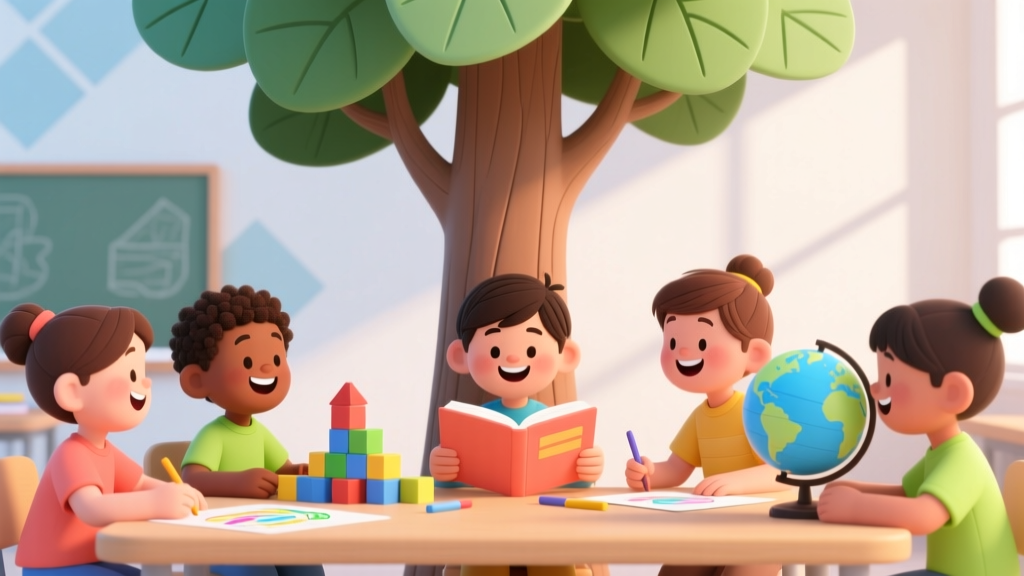
When Do Most Kids Learn to Read? (2026)
Why This Question Matters More Than Ever Right Now
When do most kids learn to read is one of the top developmental questions parents ask in preschool and kindergarten years — and for good reason. In an era where standardized assessments begin as early as age 5, social media feeds overflow with 'early reader' milestones, and well-meaning relatives compare progress like report cards, many caregivers feel quietly anxious: Is my child behind? Am I doing enough? Did I miss a red flag? The truth is far gentler — and more empowering — than most assume. Research shows that reading acquisition isn’t a race, but a complex neurodevelopmental process shaped by genetics, language exposure, oral vocabulary, phonological awareness, and emotional safety. And crucially, when do most kids learn to read falls across a surprisingly wide, healthy window — not a single age or grade.
The Real Timeline: What Research Says (Not What Instagram Says)
Let’s start with clarity: According to the American Academy of Pediatrics (AAP) and decades of literacy research from the National Institute of Child Health and Human Development (NICHD), the majority of children achieve foundational reading fluency — meaning they can decode unfamiliar words, read simple sentences with comprehension, and self-correct errors — between ages 6 and 7. That’s typically the end of first grade or start of second grade in U.S. public schools. But here’s what rarely makes headlines: nearly 20% of children read fluently earlier (ages 4–5), and another 15–20% develop core reading skills closer to age 8 — all within normal developmental variation.
This isn’t ‘delay’ — it’s neurodiversity in action. Brain imaging studies (e.g., Hoeft et al., Psychological Science, 2011) confirm that children who learn to read later often show stronger compensatory neural pathways in areas linked to comprehension, inference, and critical thinking. In other words, slower starters aren’t ‘behind’ — they’re building different, equally valuable cognitive architecture.
Consider Maya, a bright, talkative kindergartener whose teacher noted she struggled with letter-sound blending. Her parents worried — especially after seeing a neighbor’s 5-year-old reading chapter books. But by second grade, Maya wasn’t just catching up; she was leading class discussions on story themes and writing multi-paragraph narratives with rich vocabulary. Her ‘late bloom’ wasn’t a deficit — it reflected how her brain prioritized meaning-making over mechanical decoding.
What Actually Predicts Reading Success (Hint: It’s Not Alphabet Tracing)
If you’ve spent hours drilling flashcards or buying expensive phonics apps, you’re not alone — but you may be focusing on the wrong levers. Decades of longitudinal data (e.g., the NICHD Early Child Care Study and the Avon Longitudinal Study of Parents and Children) reveal that the strongest predictors of eventual reading fluency are not early letter recognition or sight-word memorization — but three deeply relational, low-tech foundations:
- Oral language richness: Number of conversational turns per day, diversity of vocabulary used *in context*, and frequency of shared storytelling (not passive screen time).
- Phonological awareness: Ability to hear and manipulate sounds *before* letters — e.g., rhyming, clapping syllables, identifying beginning/middle/ending sounds in spoken words (‘cat’ → /c/ /a/ /t/).
- Print motivation & environmental print exposure: Genuine curiosity about books — pointing at signs, asking ‘What does this say?’, turning pages independently — not forced drills.
A landmark 2022 study in Child Development tracked 1,200 children from age 2 to 9 and found that toddlers with high conversational turn counts (≥30+ per hour) were 3.2x more likely to read fluently by age 7 — regardless of parental education or income. Meanwhile, children who spent >1 hour/day on structured ‘reading prep’ apps before age 4 showed no advantage in later fluency — and in some cases, lower intrinsic motivation.
So instead of rushing to ‘teach reading,’ invest in being a responsive language partner: narrate your coffee-making (“First I pour the hot water — h-h-h-hot — then add the coffee grounds”), pause mid-story to ask, “What do you think happens next? Why?” and point out environmental print naturally (“Look — that sign says ‘STOP.’ It’s red and has big letters!”).
Red Flags vs. Normal Variation: When to Observe, When to Act
Understanding when do most kids learn to read helps you spot true concerns — not just differences. The AAP and International Dyslexia Association emphasize that persistent difficulty with specific skills (not overall pace) warrants professional insight. Here’s how to distinguish typical variation from potential indicators of dyslexia or language-based learning differences:
| Age Range | Typical Developmental Signs | Consider Gentle Monitoring or Consultation | When to Seek Evaluation (Pediatrician or Literacy Specialist) |
|---|---|---|---|
| Ages 3–4 | Recognizes some letters (especially in name); enjoys rhyming games; pretends to read picture books | Rarely rhymes or plays with sounds; doesn’t recognize own name in print; avoids books altogether | No response to sound-play (e.g., can’t identify ‘ball’ and ‘bat’ start with same sound); no interest in print after repeated, joyful exposure |
| Ages 5–6 (Kindergarten–1st Grade) | Blends 2–3 sounds into words (‘c-a-t’ → ‘cat’); reads familiar words (‘mom,’ ‘go’); writes some letters/words phonetically | Struggles to connect letters to sounds consistently; guesses words based only on pictures; avoids reading aloud | Cannot blend or segment any sounds after 6+ months of explicit instruction; reverses letters frequently *and* confuses order of sounds (e.g., ‘was’ → ‘saw’ consistently); family history of dyslexia |
| Ages 7+ | Reads grade-level texts with expression; self-corrects errors; comprehends main ideas and details | Reads slowly with heavy effort; relies heavily on context/guessing; avoids reading for pleasure | Still unable to decode multisyllabic words; significant spelling difficulties persisting beyond 2nd grade; frustration or avoidance impacts confidence or school participation |
Note: Family history matters. If a parent or sibling has dyslexia, the child’s risk increases to ~40–60%. But early identification — ideally by age 6 — dramatically improves outcomes. As Dr. Sally Shaywitz, co-director of the Yale Center for Dyslexia & Creativity, states: “Dyslexia is not a vision problem or lack of intelligence. It’s a difference in how the brain processes language — and it’s 90% treatable with evidence-based intervention when caught early.”
Your Action Plan: 5 Low-Pressure, High-Impact Strategies (No Worksheets Required)
You don’t need flashcards, apps, or tutors to nurture reading readiness. What you *do* need is consistency, warmth, and intentionality. Here’s what works — backed by classroom teachers, speech-language pathologists, and literacy coaches:
- Build ‘Sound Awareness’ Through Play: Turn phonological awareness into daily fun. Sing songs with heavy alliteration (“Peter Piper picked a peck…”), play ‘I Spy’ with beginning sounds (“I spy something that starts with /b/”), or use magnetic letters to build nonsense words (“Can you make ‘zat’? ‘vib’?”). Keep sessions under 5 minutes — enthusiasm matters more than duration.
- Read Aloud — Then Pause, Question, Connect: Aim for 15–20 minutes daily. But don’t just read *to* your child — read *with* them. Stop every few pages: “What do you think she’ll do next?” “Why do you think he looks sad?” “Have you ever felt like that?” This builds inference, vocabulary, and narrative understanding — the bedrock of comprehension.
- Label Their World — Literally: Use sticky notes to label 3–5 household items weekly (‘door,’ ‘refrigerator,’ ‘window’). Say the word slowly, point to each letter, and connect it to the object. Rotate labels weekly. This builds orthographic mapping — how the brain links sounds to spellings — naturally and repeatedly.
- Embrace ‘Invented Spelling’ Without Correction: When your child writes “I luv dawg,” resist the urge to fix it. Instead, celebrate: “You wrote ‘luv’ — that’s right! It starts with /l/ and ends with /v/. Can you show me where you put the /u/ sound?” This validates effort while gently reinforcing sound-letter links.
- Create a ‘Book Ritual’ — Not a ‘Reading Test’: Designate a cozy, device-free corner with a rotating basket of 5–7 books (mix fiction, nonfiction, poetry). Let your child choose — even if it’s the same book for 12 days straight. Rereading builds fluency, confidence, and joy. As literacy expert Dr. Nell Duke reminds us: “Children don’t fall in love with reading by passing tests. They fall in love with stories that make them laugh, cry, wonder, and feel seen.”
Frequently Asked Questions
My child is 5 and still mixes up b/d/p/q — is this a sign of dyslexia?
Mixing up visually similar letters (b/d, p/q) is extremely common through age 6–7 and is not diagnostic of dyslexia on its own. What matters more is whether your child also struggles with sound manipulation (e.g., blending ‘s-t-o-p’), remembering letter names/sounds, or connecting sounds to letters consistently. Many children outgrow letter reversals naturally as visual processing matures. If reversals persist alongside other challenges (e.g., trouble rhyming, slow naming speed, or family history), consult a specialist — but don’t panic over isolated letter confusion.
Should I teach my child to read before kindergarten?
There’s no developmental or academic advantage to formal reading instruction before age 5–6 — and potential downsides. Research shows early, pressured instruction can reduce intrinsic motivation and increase anxiety around literacy. Instead, focus on rich oral language, sound play, and positive book experiences. As the National Association for the Education of Young Children (NAEYC) states: “Play-based, language-rich environments are the most effective preparation for reading — not worksheets or flashcards.”
My child reads fluently but doesn’t understand what they read — what’s going on?
This is called ‘hyperlexia’ or ‘word calling’ — and it’s more common than many realize. It often signals a gap between decoding (sounding out words) and language comprehension. Strengthen comprehension by: (1) asking ‘why’ and ‘how’ questions during read-alouds, (2) having your child retell stories in their own words, (3) connecting text to real life (“This character feels nervous — when did you feel nervous?”), and (4) explicitly teaching vocabulary *before* reading new texts. A speech-language pathologist can help assess underlying language processing strengths and needs.
Does screen time hurt reading development?
It depends entirely on how screens are used. Passive consumption (YouTube videos, fast-paced cartoons) displaces vital language interaction and reduces attention stamina — both critical for reading. But interactive, co-viewed experiences *can* support literacy: video calls with grandparents (rich conversation), high-quality literacy apps used *with* a caregiver (e.g., talking about the story together), or audiobooks paired with physical books. The AAP recommends no screen time under 18 months (except video chatting) and limits of 1 hour/day of high-quality programming for ages 2–5 — always with adult engagement.
Are bilingual children ‘behind’ in learning to read?
No — bilingual children are not delayed in reading acquisition. While they may initially have smaller vocabularies in *each* language compared to monolingual peers, their total conceptual vocabulary is often larger. Bilingualism strengthens executive function, metalinguistic awareness, and phonological flexibility — all assets for reading. The key is consistent, rich exposure to *both* languages. If reading instruction occurs in English, ensure your child has strong oral English skills first — but never discourage home language use. As Dr. Erika Hoff, bilingual development researcher, affirms: “Supporting the home language is the best way to support English literacy.”
Common Myths About Learning to Read
- Myth #1: “If they’re not reading by first grade, they’ll never catch up.”
False. Longitudinal studies (e.g., the Minnesota Longitudinal Study) show children who begin reading at age 8 often match or exceed peers academically by middle school — especially in comprehension, critical thinking, and writing. Late readers frequently develop deeper analytical skills because they’ve had more time to build oral language and world knowledge.
- Myth #2: “Learning sight words first is the fastest path to reading.”
Partially true for high-frequency words (‘the,’ ‘and,’ ‘said’), but over-reliance on rote memorization undermines phonics development. The National Reading Panel found systematic phonics instruction — teaching sound-letter relationships — produces significantly better long-term outcomes than whole-word approaches alone. Sight words should be taught *alongside*, not instead of, decoding skills.
Related Topics (Internal Link Suggestions)
- Early literacy milestones by age — suggested anchor text: "what should my child know about letters and sounds by age 4"
- Best books for emergent readers — suggested anchor text: "top 10 decodable books for kindergarten"
- How to support a child with dyslexia at home — suggested anchor text: "dyslexia-friendly reading strategies for parents"
- Screen time guidelines for preschoolers — suggested anchor text: "healthy screen time rules for 3- to 5-year-olds"
- Bilingual language development timeline — suggested anchor text: "is my bilingual toddler on track with speech and reading?"
Final Thought: Your Role Isn’t Teacher — It’s Anchor
When do most kids learn to read isn’t a benchmark to chase — it’s a compass to guide your presence. Your calm attention, your curious questions, your willingness to reread ‘The Very Hungry Caterpillar’ for the 47th time — these are the invisible scaffolds that build confident, joyful readers. Forget timelines. Focus on connection. Celebrate effort, not just output. Notice the small wins: the way your child points to the ‘S’ on the stop sign, hums the rhyming line of a poem, or insists on ‘writing the grocery list.’ These aren’t preludes to reading — they are reading, unfolding in real time. So take a breath. Trust the process. And tonight, grab a book, snuggle close, and ask: ‘What part of this story makes you smile?’ That question — asked with genuine interest — is worth more than any worksheet. Ready to build your personalized literacy toolkit? Download our free, pediatrician-reviewed ‘Readiness Roadmap’ checklist — tailored to your child’s age and interests — at [YourSite.com/readiness].
More Articles
 Princess Mononoke for Kids? Age-Readiness Checklist (2026)
 Charlie Heaton Kids? Family Truth (2026)
 How Old Greg Biffle Kids (2026)
 Social Media and Kids: What Parents Need to Know
 Normal Blood Pressure for Kids: Pediatrician Guide (2026)
 Can Kids Take Decongestants? Pediatric Safety Guide
 How Many Kids Does Tommy Lee Jones Have? (2026)
 Do Mormons Have a Lot of Kids? The 2026 Reality
 Child Tax Credit Without a Job: IRS Rules (2026)
 How Old Are the Brady Bunch Kids Now? (2026)