When Do Kids Start Writing Letters? Evidence-Based Timeline
Why This Question Matters More Than Ever Right Now
When do kids start writing letters is one of the most frequently searched developmental questions among parents of toddlers and preschoolers—and for good reason. In an era where kindergarten readiness benchmarks feel increasingly intense, many caregivers worry their child is 'behind' before they’ve even held a pencil. But here’s the truth: letter writing isn’t a single event—it’s a layered, neurologically complex cascade of fine motor control, visual-spatial processing, phonemic awareness, and hand-eye coordination that unfolds uniquely for every child. And according to the American Academy of Pediatrics (AAP), pressuring children to write before their nervous system is ready can actually undermine confidence, trigger avoidance behaviors, and delay progress—not accelerate it.
What ‘Writing Letters’ Really Means (and Why It’s Not Just About Pencils)
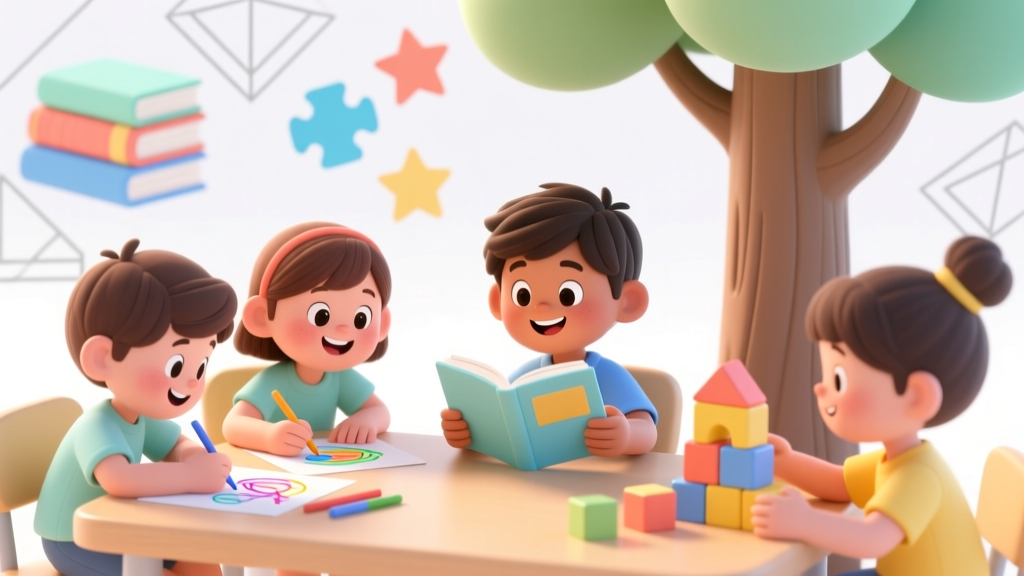
Let’s begin by clarifying terminology—because confusion here fuels unnecessary anxiety. When we say 'writing letters,' we’re not referring to copying alphabet charts or tracing dotted lines on worksheets. True emergent writing includes intentional mark-making with symbolic meaning: a toddler scribbling a wobbly shape and declaring, 'That’s my M!' or a 4-year-old drawing a lopsided circle with three lines and calling it 'B.' These aren’t 'wrong' attempts—they’re critical cognitive milestones signaling that your child understands symbols represent language.
Dr. Sarah Chen, a pediatric occupational therapist with 18 years of experience at Boston Children’s Hospital, explains: 'We see too many families equating “holding a pencil” with “being ready to write.” But the foundation isn’t in the hand—it’s in the shoulder girdle, core stability, and bilateral coordination. A child who can’t sit upright without leaning on their arms or who avoids cutting with scissors likely needs foundational strength work—not letter drills.'
Here’s what the research shows about the natural progression:
- 18–24 months: Random scribbling with whole-arm movement; may name scribbles ('dog', 'car')
- 2.5–3.5 years: Controlled lines (vertical, horizontal, circular); begins imitating simple shapes (circle, cross); may attempt first letter (often 'O', 'X', or own initial)
- 3.5–4.5 years: Writes first recognizable letter(s)—typically uppercase, often name-initial; draws more intentional shapes; may reverse letters (normal up to age 7)
- 4.5–6 years: Writes multiple uppercase letters consistently; begins lowercase forms; spells phonetically ('BES' for 'best'); writes first name legibly
This timeline isn’t rigid—but it’s grounded in longitudinal studies from the National Institute of Child Health and Human Development (NICHD) and validated across diverse linguistic and cultural contexts. Importantly, bilingual children follow the same motor milestones but may show slight variation in letter naming fluency due to dual-language processing demands—a normal, not deficient, pattern.
The 3 Non-Negotiable Foundations (Before Any Letter Is Written)
Skipping these won’t make your child write faster—it will make writing harder, frustrating, and physically uncomfortable. Think of them as the invisible scaffolding beneath every successful letter stroke.
1. Core & Shoulder Stability
Try this test: Ask your child to sit at a table without leaning on their hands or sliding off the chair. If they slump, grip the table edge, or dangle their feet, their proximal stability is underdeveloped. Without a stable base, fine motor control in the fingers collapses. Activities that build this include animal walks (bear crawls, crab walks), wall push-ups, and sitting on therapy balls while stacking blocks.
2. Hand Strength & Dexterity
A child needs enough intrinsic hand muscle strength to hold a pencil with a dynamic tripod grasp—not just pinch it between thumb and forefinger. Weakness shows up as fatigue after 30 seconds of coloring, switching hands mid-task, or using a fisted grip. Strengthen hands through play: tearing paper into confetti, using clothespins to hang 'laundry' on a string, squeezing spray bottles to water plants, or rolling playdough 'snakes' with thumbs and index fingers only.
3. Visual-Motor Integration
This is the brain’s ability to coordinate what the eyes see with what the hands do. It’s why some kids draw circles perfectly but can’t copy a triangle—even if they understand its shape. Practice with low-pressure games: connecting dots to reveal a picture, tracing paths through mazes drawn on whiteboards, or matching puzzle pieces by shape (not color) while describing angles aloud ('This one has two pointy corners').
A real-world case study illustrates this well: Maya, age 4, struggled to copy her name despite daily tracing sheets. Her OT assessment revealed she could identify all letters and sound them out—but couldn’t track her pencil along a line without looking down repeatedly. Intervention focused on visual tracking (following a moving feather with eyes only) and crossing midline (touching left elbow to right knee). Within six weeks, her letter formation improved dramatically—not because she practiced letters more, but because her brain could now guide her hand reliably.
What to Do (and NOT Do) Between Ages 2–5
Parenting advice often falls into two unhelpful extremes: 'Just wait—it’ll happen!' versus 'Start flashcards at 2!' Evidence points firmly to a third path: responsive scaffolding. That means observing your child’s current abilities, then offering just-enough challenge embedded in meaningful, joyful play.
DO:
- Label their scribbles with curiosity: 'You made a long wavy line! Is that the ocean?' instead of 'That’s not an S—let me show you.'
- Integrate letters into daily routines: 'Let’s write a grocery list together—what should we get? You draw the apple, I’ll write the word.'
- Use multi-sensory input: Trace letters in sand, form them with pipe cleaners, stamp them with potato prints, or jump around a giant chalk-letter on the driveway.
- Model writing authentically: Let them see you writing notes, lists, or cards—not just 'schoolwork.' Say aloud what you’re doing: 'I’m writing “milk” so I don’t forget it at the store.'
DON’T:
- Correct reversals ('b' vs. 'd') before age 6—neurologically, spatial orientation is still developing.
- Use worksheets with tiny lines before age 5—most preschoolers lack the precision; wide-lined paper or chalkboards are far more developmentally appropriate.
- Compare to siblings or peers—the AAP explicitly warns against milestone comparisons, noting individual variation is the norm, not the exception.
- Withhold art supplies because 'they’re not writing yet'—drawing, painting, and clay work directly strengthen the same neural pathways as letter formation.
When to Gently Seek Support (Not Panic)
Developmental red flags aren’t about timing alone—they’re about patterns. According to guidelines from the American Occupational Therapy Association (AOTA), consider consulting a pediatric OT if your child, by age 4, demonstrates three or more of the following:
- Consistently avoids drawing, coloring, or handling small objects
- Can’t hold a crayon with thumb/index/middle fingers (uses fist or side of hand)
- Has extreme difficulty with buttons, zippers, or snaps
- Struggles to copy a circle or cross after repeated modeling
- Shows significant frustration or tantrums during fine-motor tasks
- Cannot identify any letters by name despite frequent exposure
Note: This is not a diagnosis checklist—it’s a signal to explore support. Early intervention is highly effective: a 2023 JAMA Pediatrics meta-analysis found that children receiving OT-supported pre-literacy activities before age 5 showed 2.3x greater gains in letter recognition and writing fluency by first grade compared to wait-and-see approaches.
| Age Range | Typical Letter-Writing Behaviors | Supportive Activities (No Worksheets Needed) | Red Flags Requiring Observation |
|---|---|---|---|
| 2–3 years | Scribbles with purpose; may 'write' by making repeated marks; names scribbles; imitates vertical/horizontal lines | Play-dough letter stamps; finger-painting with shaving cream; drawing on vertical surfaces (easel, fridge) | Avoids all mark-making; no interest in books or environmental print (signs, logos); doesn’t respond to their name visually |
| 3–4 years | Draws circles and crosses; copies first letter (often own initial); writes 'name' as invented spelling (e.g., 'J' + random lines); holds crayon with thumb/index/middle fingers | Stringing beads by letter shape (e.g., 'O'-shaped pasta); magnetic letters on fridge; writing grocery lists with pictures + letters | No imitation of lines/shapes after modeling; cannot identify 3+ letters by name; uses only one hand for all tasks (no hand preference emerging) |
| 4–5 years | Writes multiple uppercase letters consistently; attempts lowercase; spells phonetically; writes first name legibly; reverses letters occasionally (normal) | Chalkboard sidewalk messages; making 'secret codes' with symbols/letters; writing stories for stuffed animals; tracing letters in rice or sand | Cannot copy a square or triangle; reverses >50% of letters consistently; avoids writing tasks entirely; complains of hand pain or fatigue |
| 5–6 years | Writes full name legibly; forms most letters correctly; uses lowercase for words; spaces words appropriately; writes short sentences with invented spelling | Journaling with voice-to-text support; creating comic strips with speech bubbles; writing thank-you notes with guided templates | Still uses fist grip; cannot write own name after 6 months of kindergarten; letter formation requires intense concentration and physical effort |
Frequently Asked Questions
My 3-year-old only draws circles—does that mean they’ll never learn other letters?
Not at all. Circles are the first shape most children master because they require continuous, fluid motion—unlike angles or straight lines, which demand precise stopping and starting. In fact, strong circle-drawing predicts later success with 'o', 'q', 'g', and 'c'. Gently model other shapes during play: 'Look, I’m making a slide for your toy car—that’s a straight line!' Then invite them to try. Avoid correcting; celebrate effort: 'You made a line AND a circle—that’s two different kinds of lines!'
Should I teach uppercase or lowercase letters first?
Uppercase—especially for handwriting—is developmentally smarter. They have fewer directional changes (no 'tails' or ascenders/descenders), larger size makes them easier to form, and they’re what children see first in environmental print (store signs, book titles). Save lowercase for when your child shows consistent control with uppercase and expresses interest. Note: For reading instruction, both cases matter—but writing readiness starts with uppercase simplicity.
My child is bilingual—will they start writing letters later?
No. Bilingual children hit motor milestones—including letter formation—at the same ages as monolingual peers. However, they may take longer to *name* letters or connect sounds to symbols in *both* languages simultaneously. This is expected and healthy. Focus on building motor skills first; language labeling follows naturally. Research from the University of Miami’s Dual Language Development Lab confirms bilingual preschoolers show identical fine-motor trajectories—only phonological awareness develops differently (and advantageously).
Are apps and tablets helpful for learning to write letters?
Used sparingly and interactively—yes. But passive tracing apps offer minimal benefit. Effective digital tools require active decision-making: 'Which letter makes the /b/ sound in “ball”?' or 'Tap the letter that looks like a snake!' Even better: use tablets for creation (drawing apps with thick brushes) rather than drill. The AAP recommends no more than 1 hour/day of high-quality screen time for ages 2–5—and emphasizes that physical manipulation (clay, chalk, paint) builds neural pathways screens cannot replicate.
What’s the biggest myth about teaching letters you wish parents knew?
That 'more practice = faster progress.' Neuroplasticity research shows the opposite: forced repetition without engagement creates stress responses that inhibit learning. A 2022 study in Early Childhood Research Quarterly found children who engaged in 10 minutes of playful letter exploration (e.g., finding 'S' shapes in nature, building 'T' with blocks) 3x/week outperformed peers doing 20-minute daily worksheets in both retention and motivation after 8 weeks.
Common Myths
Myth #1: “If they’re not writing letters by age 4, they’ll fall behind in kindergarten.”
Reality: Kindergarten curricula nationwide are designed for a wide range of entry-level skills. The National Association for the Education of Young Children (NAEYC) states that 'readiness' is about social-emotional regulation, curiosity, and oral language—not letter production. Many high-achieving writers didn’t form their first letter until age 5.
Myth #2: “Tracing dotted letters is the best way to learn.”
Reality: Tracing overlines provides minimal motor learning. Children need to generate the shape themselves—through air writing, sand tracing, or large-muscle movements—to build proprioceptive memory. Occupational therapists call this 'motor planning,' and it’s far more effective than passive tracing.
Related Topics (Internal Link Suggestions)
- How to develop fine motor skills in toddlers — suggested anchor text: "fine motor skills activities for toddlers"
- Best pencils and grips for preschoolers — suggested anchor text: "ergonomic pencils for little hands"
- Phonemic awareness games for preschoolers — suggested anchor text: "phonemic awareness activities at home"
- When do kids start reading sight words? — suggested anchor text: "sight word development timeline"
- Signs of dysgraphia in preschoolers — suggested anchor text: "early signs of writing difficulties"
Conclusion & Next Step
When do kids start writing letters isn’t a race—it’s a rhythm. Every child’s path winds through scribbles, shapes, symbols, and stories at their own pace, shaped by biology, environment, and joy. The most powerful thing you can do isn’t drilling letters—it’s noticing their curiosity, celebrating their marks as meaningful, and building the invisible foundations that make writing possible. So this week, try one low-pressure idea: grab a stick and draw big letters in the mud or snow. Let your child stomp on the 'A', jump over the 'L', and giggle at the 'W'. That’s not play—it’s neuroscience in action. Ready to go deeper? Download our free Pre-Writing Play Kit—12 screen-free, research-backed activities calibrated to each age band, with printable guides and video demos from pediatric OTs.
More Articles
 How Old Was Kevin in Home Alone? (2026)
 When Do Kids Start School in Texas? (2026)
 When Do Kids Develop Kneecaps? Knee Biology Explained
 Hepatitis B Vaccine Schedule for Kids (2026)
 Caroline’s Message to Kids: A Trauma-Informed Tool (2026)
 Who Can Claim Kids on Taxes with Child Support?
 What Age Do Kids Start Using Booster Seats (2026)
 What Happened to Home Improvement Kids (2026)
 Charlie Kirk Married? Kids? Truth for Parents (2026)
 Pediasure Dosage for Kids: Age, Weight & Health Goals (2026)