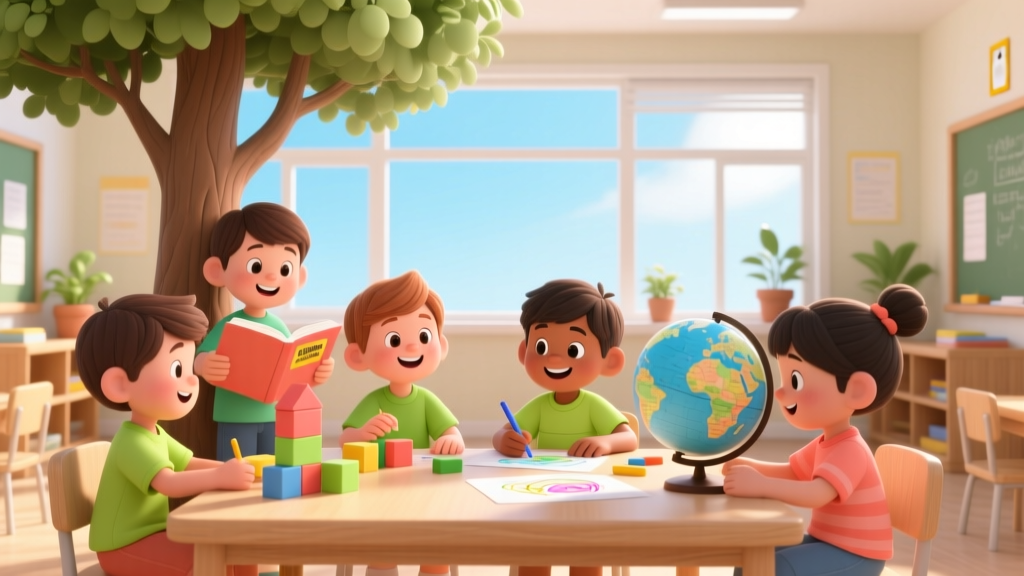
When Do Kids Start to Read? The Real Timeline (2026)
Why This Question Keeps Parents Up at Night (And Why It Shouldn’t)
When do kids start to read is one of the most frequently searched questions among parents of toddlers and preschoolers—and for good reason. In an era where kindergarten classrooms increasingly emphasize early literacy, social media feeds overflow with ‘3-year-old reading chapter books’ videos, and standardized assessments begin as early as first grade, it’s easy to feel like your child is falling behind before they’ve even tied their shoes. But here’s what decades of developmental science tell us: reading isn’t a switch that flips on a birthday—it’s a layered, neurologically complex skill built over years through predictable, individualized stages. And the healthiest predictor of lifelong reading success isn’t how early a child decodes words—it’s whether they associate reading with warmth, curiosity, and connection.
The Four Stages of Reading Development (Not Ages)
Developmental psychologists and literacy researchers—including Dr. Hollis Scarborough, creator of the influential ‘Reading Rope’ model—emphasize that reading emerges from two intertwined strands: language comprehension (vocabulary, background knowledge, syntax) and word recognition (phonological awareness, decoding, sight word fluency). These don’t mature in lockstep—and they certainly don’t align neatly to calendar age. Instead, children progress through four overlapping, non-linear stages:
- Pre-Reading (Ages 0–4): Not about letters—but about oral language, print awareness, and narrative sense. A 22-month-old who points to ‘dog’ in a book and says ‘woof!’ is building foundational comprehension. A 3-year-old who ‘reads’ a memorized book cover-to-cover using pictures and memory is demonstrating story structure understanding—not decoding, but vital cognitive scaffolding.
- Emergent Reading (Ages 4–6): Children begin recognizing environmental print (STOP signs, cereal boxes), match letters to sounds (‘B says /b/’), and use invented spelling. They may ‘read’ familiar books by memory while tracking print left-to-right—a key visual-motor skill. According to the American Academy of Pediatrics (AAP), this stage is best supported through shared reading—not flashcards or worksheets.
- Early Reading (Ages 5–7): Children decode simple CVC (consonant-vowel-consonant) words (‘cat,’ ‘sun’) using phonics, recognize high-frequency sight words (‘the,’ ‘and,’ ‘was’), and self-correct misreads. Fluency is choppy; comprehension is literal. This is when formal instruction typically begins—but only after strong pre-literacy foundations are in place.
- Fluent Reading (Ages 7–9+): Decoding becomes automatic, freeing mental resources for inference, prediction, and critical analysis. Children read silently with expression, adjust pace for genre (slower for poetry, faster for comics), and connect text to personal experience. Importantly, fluency doesn’t mean speed—it means effortless processing that supports deep understanding.
A compelling real-world example: Maya, a bright, talkative child adopted at age 3 from a low-literacy environment, showed no letter knowledge at age 4. Her preschool teacher introduced daily ‘sound play’ games (rhyming, clapping syllables) and co-created personalized picture books. By age 5½, she was blending sounds to read ‘bed,’ ‘map,’ and ‘sit.’ At age 7, she read The Magic Tree House series aloud with expression and asked thoughtful questions about historical context. Her path wasn’t early—but it was deeply rooted, resilient, and joyful.
What the Data Really Says: Age Ranges vs. Developmental Readiness
While many well-meaning blogs cite ‘most kids read by age 6,’ that statistic masks enormous variability—and conflates reading readiness with instructional timing. A landmark 2022 study published in Child Development tracked 1,247 children from birth to age 8 and found:
- Only 17% of children read independently (decoding unfamiliar CVC words without support) before age 5.
- 52% achieved consistent independent decoding between ages 5.5 and 6.5.
- 22% didn’t reach fluent decoding until age 7 or later—and all were reading at or above grade level by age 10, provided they received responsive, multi-sensory instruction.
- Children whose parents focused on oral language enrichment (rich vocabulary, complex sentence modeling, frequent conversations) were 3.2x more likely to enter kindergarten with strong phonological awareness—the single strongest predictor of later reading success.
This data underscores a crucial truth: chronological age is a poor proxy for reading readiness. Neurological maturation, language exposure, hearing health, vision development, and emotional security all shape the timeline. As Dr. Nadine Gaab, neuroscientist and Harvard researcher on dyslexia, explains: ‘The brain’s reading circuitry isn’t fully wired until around age 7–8. Expecting mastery before then is like expecting a toddler to run a marathon—it’s biologically premature.’
Actionable Strategies That Work (Backed by Evidence)
Forget timed drills or pressured ‘reading apps.’ The most effective strategies are relational, playful, and embedded in daily life. Here’s what research consistently validates:
- Read Aloud Daily—With Intention: Not just bedtime stories. Pause to point out rhymes (“cat, hat, sat—what sound do they start with?”), predict (“What do you think happens next?”), and connect (“This reminds me of when we saw a squirrel!”). AAP recommends 15–20 minutes of interactive read-aloud per day—even for infants.
- Build Phonological Awareness Through Play: Sing nursery rhymes with exaggerated rhythm. Clap syllables in names (“El-i-zah-beth = 4 claps”). Play ‘I Spy’ with beginning sounds (“I spy something that starts with /m/…”). These activities strengthen the auditory processing needed for decoding—without a single letter card.
- Create a Print-Rich, Low-Pressure Environment: Label drawers (“socks,” “spoons”), write grocery lists together, leave sticky notes with silly messages (“You’re awesome! – The Fridge”). Let children see reading as functional and fun—not a test.
- Follow Their Lead—Then Stretch Gently: If your child loves dinosaurs, get books with rich vocabulary (Dino Dictionary) and maps of fossil sites. If they adore trucks, explore nonfiction about how engines work. Then ask open-ended questions: “How do you think this crane lifts heavy things?” This builds background knowledge—the silent engine of comprehension.
Crucially, avoid common pitfalls: correcting every mispronunciation (which undermines confidence), comparing siblings (“Your brother knew his letters at 3!”), or replacing shared reading with screen time. A 2023 University of Michigan study found children who used literacy apps >30 minutes/day showed lower growth in expressive vocabulary than peers who engaged in conversational storytelling with adults.
When to Seek Support: Red Flags vs. Normal Variation
Understanding typical development helps spot genuine concerns—without pathologizing natural variation. According to the International Dyslexia Association and AAP joint guidelines, consider consulting a pediatrician or speech-language pathologist if, by age 4, your child:
- Doesn’t enjoy being read to—or actively avoids books
- Shows no interest in letters or scribbling (even symbolic marks)
- Can’t rhyme simple words (“cat”/“hat”) or identify beginning sounds
- Struggles to follow multi-step verbal directions
- Has persistent difficulty pronouncing common words (e.g., saying “wabbit” at age 4, not just age 2)
Note: Late talking alone isn’t predictive of reading delay—many late talkers catch up rapidly. But when oral language challenges persist alongside limited print interaction, early support is highly effective. Early intervention (before age 5) can reduce long-term reading difficulties by up to 80%, per NIH-funded research.
| Age Range | Typical Pre-Literacy Behaviors | Supportive Actions | When to Consider Gentle Inquiry |
|---|---|---|---|
| 12–24 months | Points to pictures on request; babbles with intonation; enjoys board books; imitates animal sounds | Label objects during routines (“Here’s your cup!”); sing repetitive songs; offer sturdy books for exploration | No response to name; doesn’t follow simple gestures (e.g., wave ‘bye-bye’); avoids eye contact during shared reading |
| 2–3 years | Names familiar pictures; repeats rhymes; scribbles with purpose; recognizes own name in print | Play sound games (“What starts with /b/? Ball! Banana! Bear!”); write their name together; visit libraries for storytime | No pretend play; doesn’t combine 2+ words by age 3; cannot follow 2-step directions (“Get your shoes and sit down”) |
| 4–5 years | Counts syllables; identifies beginning sounds; matches letters to sounds; ‘reads’ memorized books with print tracking | Use magnetic letters for word-building; play ‘letter hunt’ in environmental print; write simple stories together | No interest in letters; cannot rhyme; struggles to retell a simple 3-step story; avoids drawing/writing attempts |
| 5–6 years (Kindergarten) | Blends sounds into words (“c-a-t → cat”); reads simple CVC words; writes consonant-vowel-consonant words phonetically (“bok” for “book”) | Practice decoding with decodable books (not leveled readers); celebrate inventive spelling; read together daily with focus on meaning | Cannot blend sounds; confuses similar letters (b/d/p/q) consistently; avoids reading tasks entirely; shows extreme frustration or avoidance |
Frequently Asked Questions
Is it harmful to teach my child to read early?
It’s not harmful—if done relationally and playfully. What is harmful is pushing formal instruction before neurological readiness (typically before age 4–5), using punitive methods, or prioritizing speed over comprehension. Research from the National Institute for Literacy shows early drill-based instruction often leads to short-term gains but long-term disengagement. Children taught via joyful, language-rich methods show deeper retention and stronger motivation.
My child is 6 and still not reading—does that mean dyslexia?
Not necessarily. While dyslexia is a common cause of reading delay, many factors contribute: language exposure gaps, hearing issues (e.g., chronic ear infections), vision processing differences, anxiety, or simply needing more time. Dyslexia is diagnosed through comprehensive evaluation—not by age alone. Early signs include difficulty with rhyming, slow letter naming, and trouble remembering sequences (days of week, alphabet). A pediatrician or school psychologist can guide next steps.
Should I use phonics or whole language to teach reading?
Science strongly supports structured literacy: explicit, systematic phonics instruction integrated with rich vocabulary, comprehension strategies, and authentic texts. The ‘reading wars’ are settled: meta-analyses (e.g., National Reading Panel, 2000; Science of Reading consensus, 2022) confirm phonics is essential for decoding—but must be paired with language development. Avoid programs promising ‘whole-word memorization’ or ‘sight-word-only’ approaches—they fail children who need to crack the code.
Are reading apps and tablets helpful for early readers?
Most are not—and some are actively counterproductive. A 2021 JAMA Pediatrics study found toddlers using literacy apps showed reduced vocabulary growth compared to peers engaging in dialogic reading with adults. Effective tech use is rare: apps should require active adult co-engagement (e.g., pausing to discuss illustrations), avoid fast-paced rewards that prioritize speed over thinking, and never replace human interaction. When in doubt, choose a physical book and your voice.
How much time should my child spend ‘practicing’ reading each day?
For emerging readers (ages 4–6), 10–15 minutes of focused, joyful practice is optimal—split across the day (e.g., 5 minutes of sound play at breakfast, 5 minutes of shared reading at bedtime). Quality trumps quantity: one meaningful conversation about a story builds more neural pathways than 30 minutes of rote flashcards. Above all, protect the relationship—never let reading become a power struggle.
Common Myths
Myth 1: “If my child isn’t reading by kindergarten, they’ll fall behind forever.”
Reality: Brain plasticity remains high through adolescence. With appropriate, evidence-based instruction, children who begin reading at age 7 or 8 routinely achieve grade-level fluency and comprehension. What matters most is early identification of needs and consistent, supportive intervention—not calendar age.
Myth 2: “Learning letters and sounds is the first step to reading.”
Reality: Oral language development—vocabulary, grammar, narrative skills—is the true foundation. A child who hears 30,000+ words per day (per Hart & Risley’s landmark research) enters kindergarten with vastly stronger comprehension scaffolding than a peer exposed to 10,000. Letters come later—but language comes first, always.
Related Topics (Internal Link Suggestions)
- Phonological Awareness Activities for Toddlers — suggested anchor text: "fun phonological awareness games"
- Best Decodable Books for Beginning Readers — suggested anchor text: "research-backed decodable readers"
- Signs of Dyslexia in Preschoolers — suggested anchor text: "early dyslexia indicators"
- How to Choose a Kindergarten Reading Program — suggested anchor text: "what to look for in kindergarten literacy"
- Screen Time Guidelines for Preschoolers — suggested anchor text: "healthy screen time for young children"
Your Next Step: Observe, Connect, Celebrate
Instead of asking ‘When do kids start to read?,’ shift to: ‘What is my child showing me about their language, curiosity, and love of stories right now?’ Notice the way they narrate their block tower’s ‘adventure,’ how they pause to study a ladybug’s wings, or how they giggle at the same page in The Very Hungry Caterpillar for the tenth time. Those moments aren’t preludes to reading—they are reading in its richest, most human form. Grab a favorite book tonight—not to teach, but to share laughter, wonder, and the quiet magic of turning pages together. Your presence, your voice, and your patience are the most powerful literacy tools your child will ever hold.
More Articles
 Does Jennifer Lopez Have Kids? Parenting Truths (2026)
 How Many Kids Does Kodak Black Have? (2026)
 Stevia for Autistic Kids: Safety, Gut & Behavior (2026)
 Who Published Diary of a Wimpy Kid? (2026)
 Hot Tubs and Kids: Hidden Risks Parents Must Know
 Who Are P Diddy’s Kids? Parenting, Privacy & Lessons
 How Many Kids Does Grimes Have? (2026)
 How Much Caffeine Is Safe for Kids? (2026)
 Joe Jonas Kids in A Very Jonas Christmas? (2026)
 How Many Kids Does Tori Spelling Have? (2026)