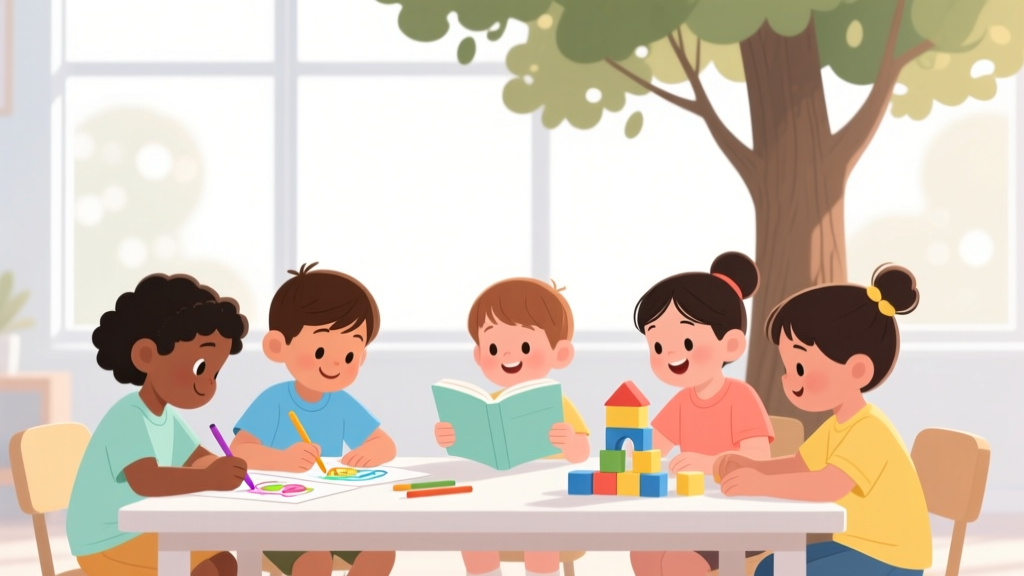
When Do Kids Start Recognizing Letters? (2026)
Why This Question Matters More Than Ever Right Now
When do kids start recognizing letters is one of the most frequently asked questions among parents of toddlers and preschoolers — and for good reason. In an era where early academic pressure creeps into playgroups and kindergarten waitlists feel like Ivy League admissions, many caregivers worry their child is 'behind' before they’ve even held a crayon. But here’s what decades of developmental research confirm: letter recognition isn’t a race — it’s a scaffolded, sensory-rich process that unfolds uniquely for every child. Getting this right doesn’t just set the stage for reading; it shapes your child’s lifelong relationship with learning, self-efficacy, and curiosity.
What the Research Really Says: The Developmental Timeline (Not the Myth)
Contrary to viral checklists circulating on parenting forums, letter recognition doesn’t ‘switch on’ at a single age. According to the American Academy of Pediatrics (AAP) and longitudinal studies from the National Institute of Child Health and Human Development (NICHD), it emerges in overlapping phases — beginning long before formal instruction. Here’s how it actually progresses:
- 18–24 months: Children begin noticing environmental print — logos (McDonald’s arches, Target bullseye), familiar signs (STOP), or packaging (Cereal box characters). This is print awareness, the foundational precursor to letter recognition.
- 24–30 months: Some children identify 1–3 letters — often those in their own name (especially first letter) or high-frequency letters like O, X, or A. Recognition is inconsistent and context-dependent.
- 30–36 months: Most children recognize 5–10 uppercase letters. They may match letters to objects (‘B’ for ball) but rarely connect them to sounds yet. At this stage, visual discrimination (spotting differences between O and Q, or M and W) is more developed than phonemic awareness.
- 3–4 years: Steady growth occurs. By age 4, the average child recognizes 12–18 uppercase letters and begins distinguishing lowercase forms — though lowercase mastery lags significantly due to greater visual complexity (e.g., b vs. d vs. p vs. q).
- 4–5 years: Most children recognize all 26 uppercase letters and 10–15 lowercase letters. Crucially, this is when letter-sound pairing begins — the bridge to phonics. As Dr. Susan B. Neuman, former U.S. Assistant Secretary of Education and early literacy researcher, emphasizes: “Recognition without sound association is a snapshot — not a foundation.”
This timeline reflects population averages — not benchmarks for individual judgment. A 2023 study published in Early Childhood Research Quarterly tracked 1,247 children across diverse socioeconomic backgrounds and found a 14-month natural variation in full uppercase mastery (from age 3.2 to age 4.6), with no correlation to later reading proficiency when supportive home literacy practices were present.
7 Evidence-Based Strategies That Actually Work (No Flashcards Required)
Forget drill-and-kill. The most effective approaches embed letter learning in authentic, joyful interaction — exactly what the brain’s developing neural pathways crave. These aren’t ‘activities’ you schedule; they’re habits woven into daily life, backed by cognitive science and classroom observation:
- Name-first immersion: Prioritize letters in your child’s name — write it everywhere (bathroom mirror with dry-erase markers, lunchbox notes, birthday cards). Neuroimaging shows personal relevance activates the fusiform gyrus (the brain’s ‘letter box’) more robustly than generic exposure.
- Environmental print scavenger hunts: Turn grocery trips into low-pressure games: “Can you find something that starts with ‘S’?” or “Where’s the red ‘K’ on the cereal box?” This builds real-world decoding skills while honoring their current developmental level.
- Tactile letter building: Use playdough, pipe cleaners, sand trays, or magnetic letters on the fridge. Kinesthetic input strengthens memory encoding — especially for children with emerging fine motor control. Montessori educators report 3x faster retention when letters are built, not just viewed.
- Alphabet song with intention: Sing the ABCs — but pause after each letter and ask, “What’s something that starts with B?” Then model: “Banana! B-banana.” This transforms passive recitation into active sound-letter mapping.
- Letter-of-the-week with thematic depth: Choose one letter per week — but go beyond naming. Read 3 books featuring that letter (e.g., ‘P’ week: Pete the Cat, The Pout-Pout Fish, Press Here), cook a ‘P’ food (peanut butter), draw ‘P’ pictures. Depth > breadth.
- Responsive labeling (not quizzing): When your child points to a sign, say: “That’s an ‘R’ — it says ‘RESTAURANT.’” Avoid: “What letter is that?” Pressure triggers avoidance; narration invites engagement.
- Leverage technology wisely: If using apps, choose ones with zero timed responses and rich audio feedback (e.g., Endless Alphabet). AAP guidelines state screen time should be co-viewed and limited to 15–20 minutes/day for ages 2–5 — and never replace human interaction.
A real-world case study from Portland’s Sunnyside Early Learning Center illustrates this well: Two 3.5-year-olds entered with identical letter recognition (4 uppercase letters). One child’s caregiver used only flashcards and quizzes; the other embedded letters in cooking, gardening labels, and storytelling. After 12 weeks, the latter recognized 19 letters and spontaneously began ‘reading’ recipe cards aloud — not because she knew all words, but because she’d internalized letter-sound patterns through meaningful repetition.
Red Flags vs. Reassuring Variations: What Warrants a Conversation With Your Pediatrician
It’s normal for progress to ebb and flow — a child might know ‘M’ and ‘S’ one week, then seem unsure the next. But certain patterns merit professional insight. The AAP and Zero to Three emphasize these as potential indicators for further evaluation (not diagnosis) — always discussed within the context of your child’s full developmental profile:
- No interest in books, signs, or environmental print by age 3
- Inability to distinguish between highly dissimilar letters (e.g., O vs. X, H vs. I) after repeated exposure by age 4
- Consistent reversal of letters *in writing* (e.g., writing ‘b’ for ‘d’, ‘q’ for ‘p’) beyond age 5.5 — note: occasional reversals up to age 7 are typical; persistent, systematic confusion warrants assessment.
- Strong aversion to looking at printed material — turning pages away, covering eyes, or tantrums during shared reading — which may signal visual processing differences or anxiety, not lack of ability.
Importantly, bilingual children often follow a slightly different trajectory — they may recognize letters in both languages but take longer to map sounds consistently across systems. This is not delay; it’s cognitive flexibility. As Dr. Liliana Sánchez, bilingual language acquisition expert at Rutgers University, affirms: “Code-switching brains build denser neural networks — they’re not behind; they’re building two literacy systems simultaneously.”
Age-Appropriateness Guide: Matching Activities to Developmental Readiness
Choosing the right tools and experiences matters deeply — not because younger is better, but because mismatched expectations create frustration for both child and adult. This table synthesizes AAP, NAEYC (National Association for the Education of Young Children), and occupational therapy guidelines to help you align support with your child’s actual stage:
| Age Range | Typical Letter Recognition | Suitable Activities & Materials | Key Safety & Engagement Notes |
|---|---|---|---|
| 18–24 months | Print awareness only (not letter-specific) | Board books with bold logos, textured signs, singing alphabet songs, pointing to letters in names | Avoid small-letter manipulatives (choking hazard); prioritize large, chunky, non-toxic materials (ASTM F963 certified) |
| 2–3 years | 1–5 uppercase letters, often name-related | Magnetic letters on low fridge, foam bath letters, alphabet puzzles with knobs, interactive storytime with letter spotting | Supervise closely with magnets/bath toys; ensure puzzles have smooth edges (CPSC standards); keep sessions under 8 minutes |
| 3–4 years | 5–18 uppercase letters; beginning lowercase awareness | Playdough letter mats, sandpaper letters (Montessori), letter-scavenger hunts, alphabet-themed cooking, simple tracing sheets | Choose non-toxic, washable materials; avoid worksheets demanding prolonged sitting — movement-based learning preferred |
| 4–5 years | All uppercase; 10–20 lowercase; emerging letter-sound links | Phonics games (e.g., matching initial sounds), creating simple word lists (CAT, DOG), journaling with invented spelling, digital apps with voice feedback | Limit screen time to 20 mins/day with adult co-engagement; prioritize handwriting over typing; watch for pencil grip fatigue |
Frequently Asked Questions
Is it bad if my 3-year-old doesn’t know any letters yet?
Not at all — and it’s more common than many realize. Only about 20% of children reliably recognize 5+ letters by age 3, according to NICHD data. What matters more is whether your child engages with books, responds to rhymes, points to pictures on request, and shows curiosity about signs and symbols. These are stronger predictors of future literacy success than early letter recall. Focus on joyful exposure, not testing.
Should I teach uppercase or lowercase letters first?
Uppercase — and here’s why: They’re visually simpler (fewer curves, less variation), appear more frequently in environmental print (store signs, book titles), and are developmentally easier for young eyes to discriminate. Lowercase letters require finer visual processing and emerge naturally once uppercase fluency is established. Pushing lowercase too early can cause confusion (e.g., ‘a’ vs. ‘o’, ‘g’ vs. ‘q’) and unnecessary frustration.
My child keeps mixing up ‘b’ and ‘d’. Is this a sign of dyslexia?
Mixing ‘b’ and ‘d’ is extremely common and developmentally appropriate through age 6 — it reflects ongoing visual-motor integration, not a learning disorder. Dyslexia involves consistent difficulty with phonological processing (sound blending, segmenting), rapid naming, and decoding *despite* adequate instruction and intelligence. If reversals persist past age 7 *alongside* trouble rhyming, remembering sequences, or sounding out new words, consult a pediatrician for screening — but don’t pathologize normal development.
Do educational TV shows like Sesame Street help with letter recognition?
Yes — but with critical caveats. High-quality, slow-paced programming (like classic Sesame Street) shows modest gains in letter naming when co-viewed and discussed. However, a 2022 JAMA Pediatrics meta-analysis found zero benefit — and even negative effects on attention span — when children watch alone or with background TV. The magic isn’t in the screen; it’s in the adult’s responsive commentary: “Look — Big Bird is holding a ‘B’! What else starts with ‘B’?”
What’s the biggest mistake parents make when teaching letters?
Testing instead of narrating. Asking “What letter is this?” turns learning into performance, triggering anxiety and avoidance. Instead, narrate: “This is an ‘F’ — it’s in your friend Fiona’s name!” or “We see ‘F’ on the fruit stand!” This models language, builds associations, and keeps the interaction warm and low-stakes — exactly what developing brains need to form durable neural connections.
Common Myths
Myth #1: “If they’re not recognizing letters by age 3, they’ll fall behind in kindergarten.”
Reality: Kindergarten curricula are explicitly designed for wide developmental ranges. The National Center for Education Statistics reports that only 12% of kindergarteners enter with full letter-name mastery — and reading outcomes at grade 3 show no statistically significant correlation with pre-K letter knowledge when home literacy environments are rich.
Myth #2: “More practice = faster results — so I should drill daily with flashcards.”
Reality: Forced repetition without meaning floods the stress-response system, inhibiting memory consolidation. Brain imaging studies show optimal learning occurs during brief, positive, multisensory interactions — not sustained drills. As occupational therapist and early literacy consultant Maria Gonzalez explains: “The hippocampus learns best through joy, not pressure.”
Related Topics (Internal Link Suggestions)
- How to foster phonemic awareness in toddlers — suggested anchor text: "phonemic awareness activities for 2-year-olds"
- Best non-screen literacy tools for preschoolers — suggested anchor text: "Montessori-inspired literacy materials"
- Signs of speech delay vs. typical language variation — suggested anchor text: "when to worry about toddler speech development"
- Building a home literacy environment on a budget — suggested anchor text: "free printable literacy resources for parents"
- Understanding the difference between letter naming and letter sounds — suggested anchor text: "letter name vs. letter sound confusion"
Your Next Step: Observe, Narrate, Celebrate
You now know that when do kids start recognizing letters isn’t about hitting a date on the calendar — it’s about nurturing the conditions where curiosity, connection, and confidence naturally grow. So this week, try one small shift: Replace one quiz (“What letter is this?”) with one piece of warm narration (“I see an ‘L’ — it’s in ‘LEMON’!”). Notice how your child’s body language changes. Watch for the tiny smile, the pointing finger, the spontaneous repetition. Those are the real milestones — quieter than a test score, but infinitely more meaningful. Ready to go deeper? Download our free Developmental Literacy Snapshot Guide — a printable, pediatrician-reviewed checklist that helps you track progress *without comparison*, spotlight strengths, and suggest personalized next steps based on your child’s unique rhythm.
More Articles
 Tony Romo Kids: Parenting Lessons from NFL Star (2026)
 Presidents’ Kids Secret Service Lifetime Protection
 How to Donate Toys for Kids: Safe, Smart & Tax-Savvy (2026)
 Parental Rights Termination: What Parents Need to Know
 What Is a Fever Temp for Kids? (2026 Guide)
 Catherine O'Hara’s Kids Adopted? Facts & Talking Tips
 How Many Kids Does Joe Flacco Have? (2026)
 What Size Is a Womens 8 in Kids? (2026)
 What Does 67 Mean for Kids? The Real Meaning (2026)
 Missing Kids in Virginia: What Parents Must Know (2026)