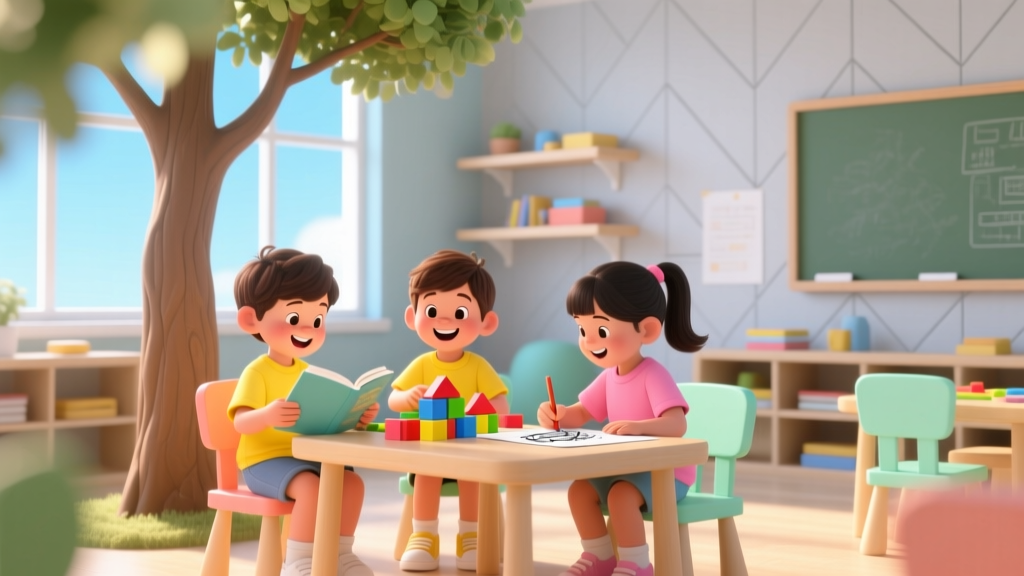
When Do Kids Start Playing Together? (2026)
Why This Question Keeps You Up at Night (and What Science Says)
When do kids start playing together is one of the most quietly urgent questions parents ask — especially when their toddler watches other children intently but doesn’t join in, or when a preschooler insists on controlling every toy in the room. It’s not just curiosity: it’s worry disguised as timing. Is my child socially delayed? Are they missing cues? Could screen time or sibling dynamics be holding them back? The truth is far more nuanced — and reassuring — than most online checklists suggest. Social play isn’t a switch that flips at age 3; it’s a layered, biologically wired progression shaped by brain development, temperament, language growth, and daily relational experiences. And understanding *how* it unfolds — not just *when* — gives you power to support your child with confidence, not comparison.
The 3 Stages of Social Play: What’s Actually Happening in Their Brain
Dr. Mildred Parten, a pioneering sociologist and early childhood researcher, observed hundreds of children in natural settings during the 1920s and identified six stages of play — later consolidated into three core social phases widely validated by modern neuroscience and the American Academy of Pediatrics (AAP). These aren’t rigid boxes, but overlapping, fluid patterns that reflect maturing prefrontal cortex function, mirror neuron activation, and growing theory-of-mind capacity.
1. Solitary Play (Birth–2 years): Your baby explores objects independently — shaking a rattle, mouthing blocks, watching mobiles. This isn’t isolation; it’s essential neural wiring. As Dr. Laura Jana, co-author of The Toddler Brain, explains: “Solitary play builds attention stamina and sensory integration — the very foundation for later joint attention, which is the bedrock of shared play.”
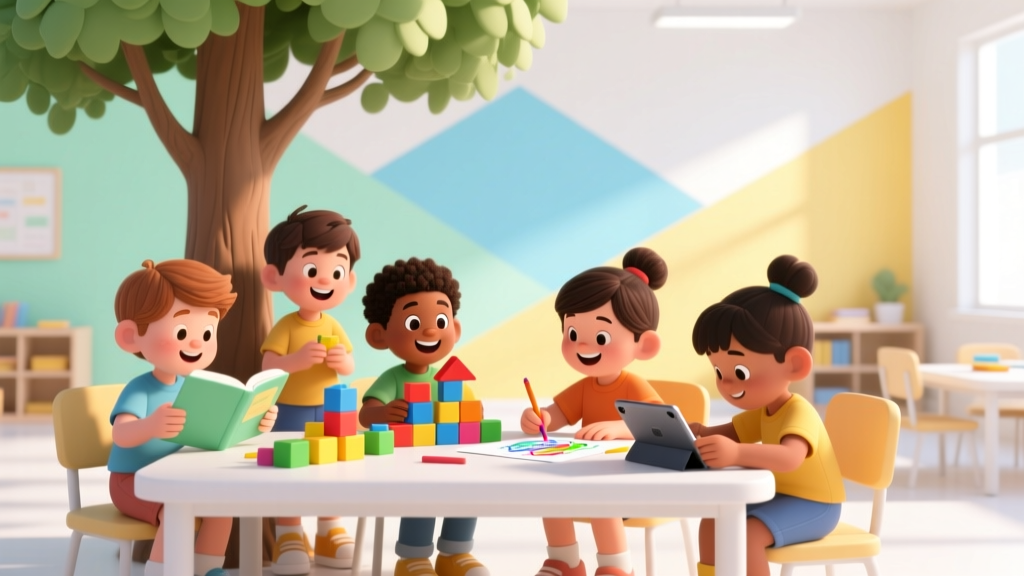
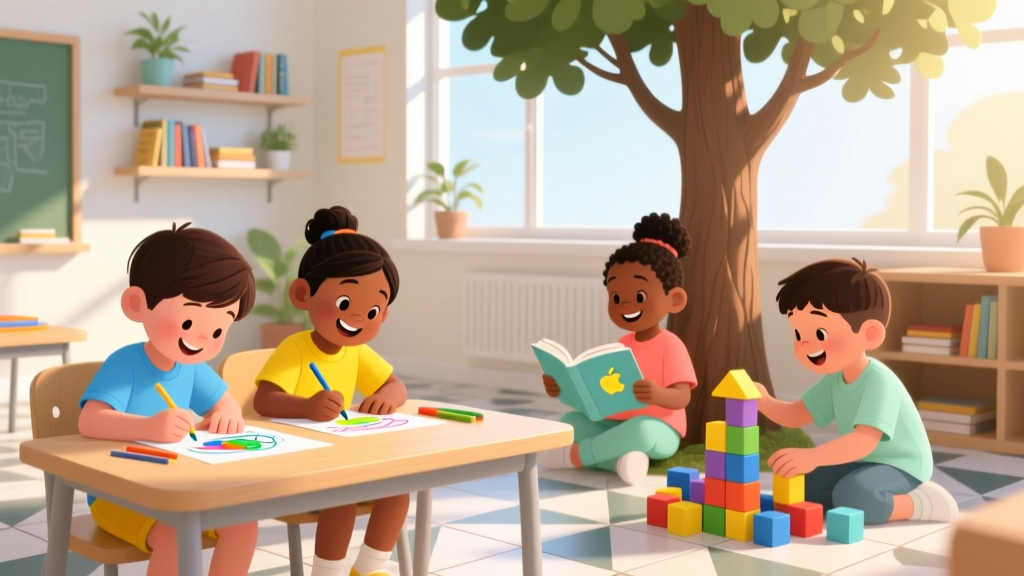
2. Parallel Play (18–36 months): This is where the magic begins — and where most parents misread the signal. Two toddlers sit side-by-side, each building their own tower with identical blocks, glancing occasionally but rarely handing materials or commenting. To the untrained eye, it looks like disconnection. In reality, it’s intense social observation — the brain’s rehearsal studio. They’re mapping facial expressions, testing proximity tolerance, and absorbing turn-taking rhythms. A 2022 longitudinal study published in Child Development tracked 142 toddlers and found those who engaged in rich parallel play at 24 months were 3.2x more likely to initiate cooperative play by age 3.6 than peers who avoided proximity altogether.
3. Cooperative & Associative Play (3–5+ years): Here’s where true ‘playing together’ emerges — not just alongside, but *with*. Children assign roles (“You be the doctor!”), negotiate rules (“No, the slide is for one person at a time”), share materials, and repair conflicts (“I’m sorry I took your shovel”). This requires executive function (inhibiting impulses), language (expressing needs), and emotional regulation (managing frustration). Crucially, AAP notes this stage doesn’t begin uniformly — it’s influenced by language exposure, caregiver responsiveness, peer access, and even birth order.
What’s Normal — And What Might Warrant Gentle Support
Let’s move beyond averages and look at real-world variation. A child may show cooperative play at 2.8 years in a familiar setting with one trusted peer — yet revert to parallel play with new children or in large groups until age 4. That’s not regression; it’s context-sensitive adaptation. According to Dr. Rebecca Landa, Director of the Center for Autism and Related Disorders at Kennedy Krieger Institute, “Social flexibility — shifting between play styles based on environment, partner, and energy level — is itself a sign of robust development.”
So what signals might suggest deeper support is helpful? Not isolated moments of hesitation or preference for solo play — but consistent patterns across settings:
- No shared gaze or pointing to show interest in objects by 18 months
- Avoidance of all peer interaction by age 3 — including no imitation, no response to group songs or games, no reciprocal smiling during play
- Intense distress or aggression *only* during peer attempts (not with adults or siblings), with no recovery or repair attempts
- Language that’s fluent but used exclusively for labeling or scripting — never for requesting, protesting, or sharing experience (“Look! Ball!” vs. “Can I push the car?”)
If these patterns persist for 3+ months across home, childcare, and community settings, consult a pediatrician for referral to an early intervention specialist. But remember: quiet observers, highly sensitive children, and late-talking toddlers often enter cooperative play on their own timeline — and frequently become deeply empathetic collaborators once they do.
7 Evidence-Based Ways to Nurture ‘Playing Together’ — Without Pressure
You don’t need playdates, pricey classes, or forced sharing. Real social scaffolding happens in micro-moments — grounded in connection, not curriculum. Here’s what works, backed by research and thousands of parent observations:
- Model ‘play narration’ during your own interactions: When building with your child, say aloud what you’re doing *and feeling*: “I’m putting the red block on top — oops, it fell! That surprised me. Want to try together?” This builds joint attention and emotional vocabulary — two non-negotiables for shared play.
- Create ‘low-stakes’ proximity opportunities: Set up two identical activity stations (e.g., two trays with playdough, two easels) side-by-side at a table. No instruction needed — just presence. Let parallel play unfold naturally. Add one shared resource (a bowl of beads) only after sustained comfort.
- Use role-play to rehearse social scripts: With stuffed animals or puppets, act out simple exchanges: “May I have the blue crayon?” “Yes! Here you go.” “Thank you!” Keep it light, repetitive, and joyful — not corrective. Children absorb tone and rhythm before words.
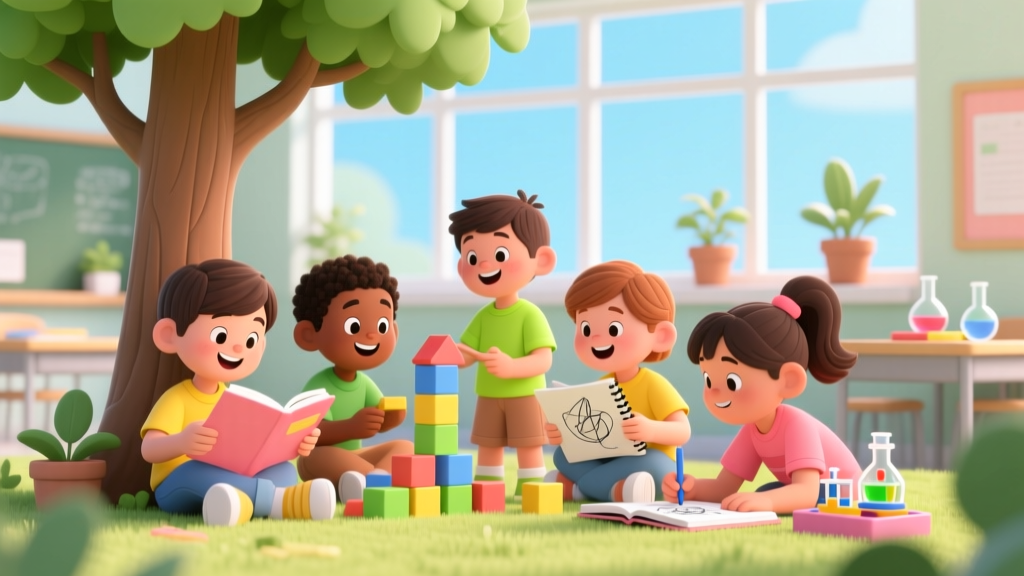
- Protect ‘unstructured’ time — especially outdoors: A University of Illinois study found children in nature-based preschools initiated peer interactions 47% more often than those in traditional indoor settings. Why? Fewer adult-imposed rules = more space to negotiate, collaborate, and problem-solve organically.
- Respond to bids for connection — even tiny ones: If your child hands you a toy while looking at another child, say: “You gave me the truck! Maybe you’d like to show Leo?” Then pause — don’t force. Wait 8–10 seconds. Often, that’s all the courage they need.
- Limit screen time before peer interactions: AAP recommends zero screens for children under 18 months, and <1 hour/day of high-quality programming for 2–5 year olds. Why? Screen use reduces spontaneous vocalizations and decreases eye contact — both critical for reading social cues in live play.
- Embrace ‘playful obstruction’: Gently block access to a desired toy — then wait. Watch how your child problem-solves: Do they gesture? Vocalize? Try to redirect? This builds communication tools faster than any flashcard.
Age-Appropriateness Guide: What to Expect (and When to Relax)
While milestones vary, here’s a research-informed, clinically validated snapshot of typical social play progression — emphasizing ranges, not deadlines:
| Age Range | Typical Social Play Behavior | Key Developmental Drivers | Supportive Parent Actions | Red Flags (If Persistent) |
|---|---|---|---|---|
| 12–24 months | Observes peers intently; may imitate actions (clapping, banging); plays beside others with minimal interaction; uses gestures (pointing, reaching) toward peers | Emerging joint attention; basic imitation circuitry; limited verbal output | Label emotions (“You smiled when she laughed!”); narrate peer actions (“Look — Maya is stacking!”); offer simple choices (“Do you want the green or yellow ball?”) | No response to name; avoids eye contact with familiar people; no shared enjoyment (smiling, laughing) during interactions |
| 24–36 months | Engages in sustained parallel play; may offer toys or take turns briefly; uses 2–3 word phrases to request or protest; shows awareness of others’ feelings (“Baby sad”) | Expanding vocabulary (200+ words); developing theory of mind (understanding others have thoughts/feelings); improving impulse control | Practice turn-taking with everyday objects (“Your turn to stir, my turn to pour”); read books about feelings and friendship; keep playgroups small (2–3 children) | No pretend play by 30 months; doesn’t respond to simple instructions; repeats phrases without communicative intent (echolalia) |
| 36–48 months | Initiates play with peers (“Play with me!”); assigns roles in pretend play; negotiates rules (“We take turns on the swing”); shares toys spontaneously; comforts peers | Matured prefrontal cortex; complex language (4–5 word sentences); empathy development; improved working memory | Ask open-ended questions (“What should we build next?”); praise specific efforts (“You waited so patiently for your turn!”); avoid over-managing conflicts — let them try first | Consistent aggression with no remorse; inability to follow 2-step directions; no imaginative play; extreme distress during transitions |
| 48+ months | Creates elaborate group games with rules; resolves minor conflicts verbally; includes others intentionally; understands fairness and reciprocity | Abstract thinking; moral reasoning; advanced perspective-taking; refined motor coordination | Facilitate collaborative projects (baking, gardening, building forts); discuss fairness scenarios (“What if someone didn’t get a turn?”); model graceful losing | Withdrawal from all peer interaction; persistent fear of new people/situations; inability to describe feelings or understand others’ perspectives |
Frequently Asked Questions
Is it normal for my 2.5-year-old to only play alongside other kids — not with them?
Absolutely — and it’s the expected norm. At 2.5 years, parallel play is developmentally ideal. Your child is gathering vital data: observing how peers handle frustration, learning turn-taking rhythms, and building comfort with proximity. Pushing them into direct interaction too soon can create anxiety that delays true cooperative play. Instead, focus on modeling gentle invitations (“Would you like to roll the ball to Sam?”) and celebrating small connections — a shared smile, a copied action, passing a toy.
My child is very verbal but avoids group play. Could this be shyness — or something more?
Verbal fluency + social avoidance is common in highly sensitive or introverted children — and also seen in some neurodivergent profiles (like autism or selective mutism). Key differentiators: Does your child seek connection in 1:1 settings or with adults? Do they engage in rich pretend play alone? Can they identify emotions in stories? If yes, it’s likely temperament-driven. If they struggle with all forms of social reciprocity — even with family — or seem confused by social cues, consider an evaluation. Early support is always beneficial, but never assume delay equals deficit.
How many playdates does my preschooler need to develop social skills?
Quality trumps quantity — dramatically. One 45-minute playdate with a compatible peer every 1–2 weeks is more valuable than three chaotic, overstimulating group sessions. Research from the Yale Child Study Center shows children learn most through repeated, predictable interactions with the same 1–2 peers — allowing them to master negotiation, repair, and role fluidity over time. Focus on consistency, not frequency.
Does screen time really affect my child’s ability to play with others?
Yes — but not because screens are inherently “bad.” Passive screen use (videos, autoplay feeds) reduces opportunities for bidirectional communication — the back-and-forth exchange that wires social brain networks. A 2023 study in JAMA Pediatrics found toddlers with >2 hours/day of screen time had significantly lower scores on peer interaction assessments at age 3. Interactive video calls (with grandparents, etc.) showed neutral or positive effects — highlighting that human connection, not tech, is the catalyst.
My child gets aggressive during play. Is this normal — and how do I respond?
Physicality peaks between 2–4 years as children lack the language and impulse control to express big feelings. What matters is *how* you respond: Get down to their level, name the emotion (“You felt angry when Leo took the truck”), hold gentle boundaries (“Hands are for hugging, not hitting”), and co-regulate (deep breaths together). Avoid shaming (“Bad boy!”) or lengthy lectures. Most importantly: Notice and praise *every* calm interaction — it rewires their brain toward connection.
Common Myths About When Kids Start Playing Together
- Myth #1: “If they’re not playing together by age 3, they’ll fall behind socially forever.” Reality: Neuroplasticity remains high through age 7 — and social skills are teachable at any point. Many children who entered cooperative play at 4 or 5 became confident leaders in kindergarten. Late bloomers often bring exceptional observational depth and empathy to peer relationships.
- Myth #2: “Forcing sharing teaches cooperation.” Reality: Forced sharing undermines autonomy and trust. Research from the University of Michigan shows children who practice self-directed turn-taking (with timers or visual cues) develop stronger internalized fairness concepts than those subjected to adult-enforced sharing. Let them negotiate — with support, not mandates.
Related Topics (Internal Link Suggestions)
- Parallel play activities for toddlers — suggested anchor text: "parallel play ideas for 2-year-olds"
- Signs of autism in toddlers — suggested anchor text: "early signs of autism checklist"
- How to encourage sharing without forcing it — suggested anchor text: "gentle sharing strategies for preschoolers"
- Best toys for social development — suggested anchor text: "cooperative play toys for toddlers"
- Screen time guidelines by age — suggested anchor text: "AAP screen time recommendations"
Your Next Step: Observe, Trust, and Celebrate the Micro-Moments
When do kids start playing together isn’t a question with a single answer — it’s an invitation to witness your child’s unfolding social intelligence. Forget comparing timelines. Instead, grab your phone’s voice memo app and record 60 seconds of your child during free play this week. Listen back: Did they glance at another child? Hand over a toy unprompted? Laugh at someone else’s silliness? Those micro-moments — not the grand ‘first playdate’ — are the real milestones. They’re proof your child is learning the language of connection, one glance, gesture, and shared giggle at a time. Your job isn’t to rush the process — it’s to be the safe harbor where every attempt, however small, is met with warmth and wonder. Ready to deepen your understanding? Download our free Play Observation Tracker — a printable guide that helps you spot and celebrate 12 subtle but powerful signs of emerging social readiness.
More Articles
 Charlie Kirk Shooting Rumor: Truth & Talking to Kids
 Sharon and Ozzy Osbourne Kids: Family Breakdown (2026)
 When Do Kids Learn to Walk? Evidence-Based Timeline
 Is TikTok Bad for Kids? Pediatrician-Backed Risks (2026)
 What Helps Kids With Constipation (2026)
 Duggar Kids Count: Who Has the Most in 2026?
 When Should Kids Lose Their First Tooth? (2026)
 Charlie Kirk Kids at Events: Privacy Boundaries (2026)
 Is Minecraft Movie OK for Kids? (2026)
 Does Post Malone Have Kids? The Truth (2026)