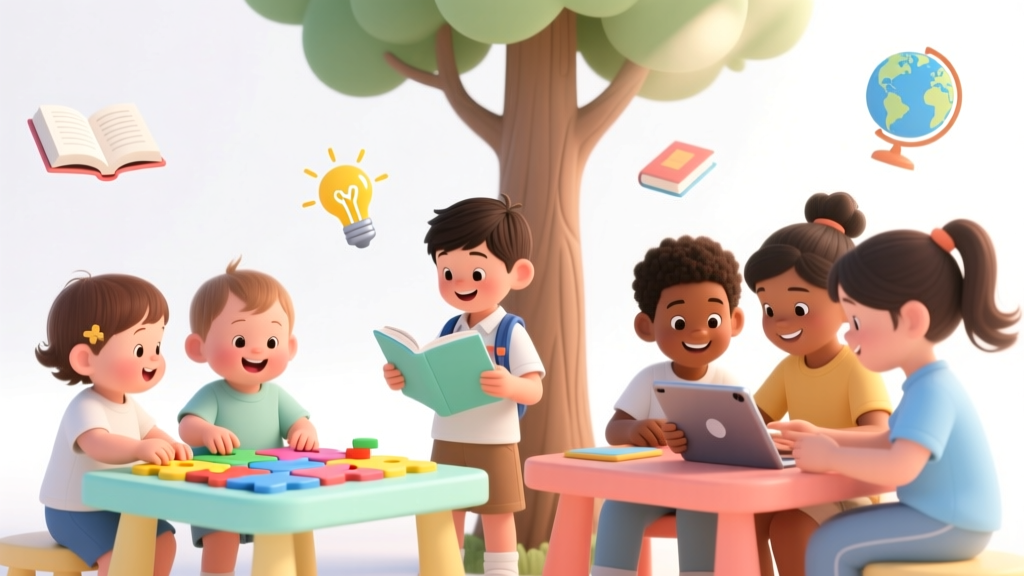
When Do Kids Start Lying? (It’s Normal — Here’s Why)
Why This Question Matters More Than Ever Right Now
When do kids start lying is one of the most searched, yet most misunderstood, developmental questions among parents today — especially as digital communication blurs truth boundaries and social media normalizes performative self-presentation. But here’s what most caregivers don’t know: lying isn’t a red flag of moral failure; it’s often the first visible sign that your child’s prefrontal cortex is coming online. Research from the University of Toronto’s Institute of Child Study shows that children as young as 2 years and 7 months can produce their first intentional falsehood — and by age 4, over 90% tell lies regularly during everyday interactions. That doesn’t mean permissiveness — it means your response matters more than the lie itself. In fact, how you react in those early moments shapes neural pathways tied to conscience development, emotional regulation, and long-term trust.
What Lying Really Signals: A Developmental Milestone, Not a Moral Failure
Lying emerges precisely when three core cognitive abilities converge: theory of mind (understanding others have different beliefs), working memory (holding multiple perspectives in mind), and inhibitory control (suppressing the truth to serve another goal). A landmark 2018 longitudinal study published in Developmental Science tracked 1,020 children from ages 2 to 12 and found that early liars scored significantly higher on standardized tests of executive function at age 6 — even after controlling for IQ and socioeconomic status. As Dr. Kang Lee, co-director of the Human Development Program at the University of Toronto, explains: “If your 3-year-old denies spilling juice while staring directly at the puddle, they’re not being ‘bad’ — they’re demonstrating that they’ve just mastered the mental juggling act required to hold two realities in mind: what happened, and what they wish had happened.”
This isn’t justification — it’s context. Without this foundation, children wouldn’t develop empathy, negotiation skills, or even basic politeness (“No, Grandma, I love the sweater!”). The key distinction lies in intentionality and motivation. A toddler who says “I didn’t do it!” after knocking over a tower is testing cause-and-effect and seeking safety. A 7-year-old who fabricates an alibi to avoid consequences for breaking a rule is exercising moral reasoning — flawed, but active.
Here’s what to watch for:
- Age 2–3: Denials are reflexive, often accompanied by physical cues (covering mouth, avoiding eye contact) and inconsistent with observable reality — think “I didn’t eat the cookie” while chocolate is smeared on cheeks.
- Age 4–5: Lies become more strategic and embedded in narratives (“The dog ate my homework!”), though still fragile under gentle questioning.
- Age 6–8: Children begin distinguishing between types of lies (‘white lies’ vs. harmful deception) and may lie to protect others’ feelings — a sign of emerging empathy.
- Age 9+: Lies grow more complex, socially motivated, and tied to identity management — especially around peer acceptance and academic pressure.
How to Respond — Without Shaming, Punishing, or Overreacting
Most parents default to interrogation (“Who did this?”), moral lectures (“Lying is wrong!”), or punitive consequences — all of which backfire. According to the American Academy of Pediatrics’ 2022 Guidance on Social-Emotional Development, harsh reactions increase lying frequency by up to 47% because children learn that honesty carries disproportionate risk. Instead, use the TRUST Framework, developed by clinical child psychologist Dr. Rebecca Schrag Hershberg:
- T — Take a breath and pause. Count silently to five before speaking. Your calmness signals safety.
- R — Reframe the behavior. Say: “I see the juice spilled. Let’s clean it together — and then talk about what happened.” This separates action from identity (“You spilled” vs. “You’re messy”).
- U — Uncover the need. Ask open-ended, non-accusatory questions: “What were you hoping would happen when you told me the dog did it?” Often, the answer reveals fear of disappointment, desire for autonomy, or confusion about expectations.
- S — State values clearly — without judgment. “In our family, we value honesty because it helps us fix problems and feel safe telling each other hard things.”
- T — Teach repair, not punishment. Co-create restitution: “What can we do to make this right? Would you like to help wipe the floor and draw a new picture for Grandma whose vase broke?”
This approach builds moral agency — the internal compass that guides choices — rather than compliance based on fear. A 3-year-old won’t grasp abstract ethics, but they’ll remember how it felt to be met with curiosity instead of anger when they messed up.
Real-world example: Maya, a preschool teacher in Portland, noticed her 4-year-old student Leo consistently denied drawing on the wall — until she tried the TRUST method. When she said, “I see blue marker on the wall and your hands. Help me understand what was happening,” Leo whispered, “I wanted to draw a rocket like Sam’s… but I wasn’t allowed.” Instead of sending him to time-out, she offered him chart paper and said, “Let’s make the biggest rocket ever — and then show everyone how to hang it safely.” Within two weeks, Leo began volunteering corrections (“That’s not true — I did spill the water”) unprompted.
The Hidden Role of Modeling, Media, and Family Culture
Children don’t learn honesty from lectures — they absorb it through daily observation. A 2021 study in Pediatrics analyzed video recordings of 127 families and found that children whose parents used frequent white lies (“I’m not home!” when answering the phone) were 3.2x more likely to lie themselves by age 5 — even when parents explicitly taught honesty as a value. Why? Because kids prioritize behavioral consistency over verbal instruction. If your words say “always tell the truth” but your actions say “lie to avoid inconvenience,” your child’s brain registers the latter as the operating system.
Media compounds this. Cartoons where characters evade consequences through clever lies (e.g., Phineas and Ferb’s constant rule-bending) normalize deception-as-humor — without showing emotional fallout. Meanwhile, news cycles saturated with political spin and influencer-perfected personas subtly teach that authenticity is optional. As pediatrician Dr. Alan Mendelsohn advises: “Talk with your child about stories — not at them. After watching a show, ask: ‘What did that character want? What happened when they lied? How do you think the friend felt?’”
Family rituals also shape truth-telling norms. Families that practice weekly ‘feeling check-ins’ (“What’s something hard you felt this week?”) and celebrate vulnerability (“Thank you for telling me that — it takes courage”) create psychological safety. Conversely, homes where mistakes trigger sarcasm (“Oh great, another masterpiece!”), shaming (“Why can’t you ever listen?”), or disproportionate consequences train children to conceal — not confess.
When Lying Crosses Into Concern: Red Flags & Professional Support
While occasional, developmentally appropriate lying is universal, certain patterns warrant deeper attention — not alarm, but informed support. According to the American Academy of Child & Adolescent Psychiatry (AACAP), consult a pediatrician or child psychologist if your child exhibits three or more of these signs consistently over 3+ months:
- Lies that cause significant harm (e.g., blaming siblings for theft, fabricating abuse)
- No remorse or attempts to repair after being confronted
- Pattern of lying to gain material rewards (not just avoid consequences)
- Difficulty distinguishing fantasy from reality beyond age-appropriate play
- Withdrawal from trusted adults or sudden academic/social decline
Importantly, chronic lying is rarely about morality — it’s often a coping mechanism for untreated anxiety, ADHD-related impulsivity, trauma, or learning differences. For example, children with undiagnosed dyslexia may lie about completing homework to mask shame. A 2023 meta-analysis in JAMA Pediatrics found that 68% of children referred for pathological lying had co-occurring neurodevelopmental conditions — yet only 22% received comprehensive evaluation.
If concerns arise, start with your pediatrician and request referral to a developmental-behavioral specialist. Avoid labels like “habitual liar” — they become self-fulfilling prophecies. Instead, frame it collaboratively: “We’re noticing some challenges with honesty — let’s figure out what’s making truth-telling feel unsafe or overwhelming.”
| Age Range | Typical Lying Behavior | Underlying Cognitive Skill Developing | Supportive Parent Response | Red Flag Threshold |
|---|---|---|---|---|
| 2–3 years | Simple denials (“Not me!”), often contradicted by evidence; no attempt to maintain story | Emerging theory of mind; limited working memory | Calmly state facts + offer choice (“We clean together, or I clean while you hold the rag”) | Consistent denial of basic needs (e.g., “I’m not hungry” while crying from hunger) |
| 4–5 years | Narrative lies (“The monster took my shoes!”); may laugh or giggle when lying | Inhibitory control strengthening; imagination flourishing | Playfully engage imagination (“What if the monster needed shoes too? Let’s draw him some!”) + gently anchor to reality (“And your shoes are right here in the closet.”) | Lies causing peer rejection or repeated safety risks (e.g., “I can swim!” near water) |
| 6–8 years | Distinguishes ‘white lies’; lies to protect others’ feelings or avoid embarrassment | Moral reasoning developing; perspective-taking maturing | Validate intent (“You wanted to spare Sam’s feelings — that’s kind”) + discuss impact (“How might he feel if he finds out later?”) | Systematic deception across settings (school/home/activities); lies involving money or property |
| 9–12 years | Lies tied to identity, autonomy, and social status; may omit truths selectively | Abstract thinking; understanding of social contracts | Collaborative problem-solving (“What’s the hardest part about telling the truth here? How can we make it safer?”) | Refusal to engage in truth-telling despite clear consequences; lies enabling dangerous behavior (substance use, skipping school) |
Frequently Asked Questions
At what exact age do kids start lying — is there a universal milestone?
Research shows the earliest documented intentional lies occur around 2 years and 7 months, but this varies by individual development and environmental factors. A 2020 replication study across 12 countries found median onset at 34 months (2 years, 10 months), with outliers as early as 25 months and as late as 48 months. Crucially, delay beyond age 4.5 warrants discussion with a pediatrician — not because lying is ‘good,’ but because its absence may indicate delays in theory of mind or social cognition.
Should I punish my child for lying — and if so, how?
No — punishment increases lying frequency and damages trust. AAP guidelines strongly advise against punitive responses. Instead, focus on natural/logical consequences tied to the original behavior (e.g., if a lie covered up broken glass, the consequence is helping vacuum shards and research safe alternatives — not losing screen time). Punishment teaches avoidance; repair teaches responsibility.
My child lies constantly — even about tiny things. Is this normal?
Frequency alone isn’t diagnostic — context is everything. A 5-year-old who says “I brushed my teeth!” while toothpaste sits untouched is testing boundaries. A 10-year-old who fabricates entire weekend plans may be struggling with social anxiety or perfectionism. Track patterns: Does lying spike before transitions (school drop-off, doctor visits)? Is it tied to specific people or settings? Journaling for 2 weeks often reveals triggers far more reliably than assumptions.
Can reading books about honesty actually help?
Yes — but only when paired with discussion. Books like The Boy Who Cried Wolf backfire if framed as ‘this is what happens to liars.’ Better options: Don’t Call Me Special (focuses on honesty about disability), Everyone Tells Lies Sometimes (normalizes small deceptions while modeling repair), and The Truth Fairy (a Montessori-aligned story where characters earn ‘truth tokens’ for owning mistakes). Read aloud, pause to ask “What do you think they’re feeling?” — never “What should they do?”
Does technology make kids lie more — and how do I navigate digital honesty?
Digital environments amplify lying opportunities (anonymous accounts, edited photos, ‘ghosting’ texts) but don’t cause it. The root remains unchanged: fear of judgment, desire for control, or unmet needs. Proactive strategies include co-creating device agreements (“We’ll always tell each other who’s texting — no secrets”), using parental controls transparently (“This shows me app usage so we can talk about screen balance”), and modeling digital integrity (“I accidentally liked your friend’s post — I’ll comment honestly to clarify”).
Common Myths About Childhood Lying
Myth 1: “Lying means my child is manipulative or immoral.”
Reality: Manipulation requires sustained, goal-directed intent across contexts — rare before age 8. Early lies are cognitively demanding, emotionally vulnerable acts. As Dr. Victoria Talwar, leading researcher on children’s deception, states: “Calling a 3-year-old ‘manipulative’ is like calling them ‘quantum physicists’ — it credits them with far more sophisticated planning than their brains can execute.”
Myth 2: “If I catch them in a lie and make them apologize, they’ll stop.”
Reality: Forced apologies teach performance, not accountability. Children who recite “I’m sorry I lied” without understanding why lying hurts relationships internalize dishonesty as a script to survive adult disapproval — not a value to uphold. Genuine remorse emerges from connection, not coercion.
Related Topics (Internal Link Suggestions)
- How to teach honesty to toddlers — suggested anchor text: "teaching honesty to toddlers"
- Executive function activities for preschoolers — suggested anchor text: "executive function games for 3-year-olds"
- When do kids understand consequences — suggested anchor text: "age kids understand consequences"
- Positive discipline techniques for preschoolers — suggested anchor text: "positive discipline for 4 year olds"
- Signs of anxiety in young children — suggested anchor text: "anxiety symptoms in preschoolers"
Conclusion & Your Next Step
When do kids start lying isn’t a question about catching them — it’s an invitation to connect. Every lie is a coded message: “I’m scared,” “I don’t know how,” “I need help navigating this feeling.” By shifting from detective to developmental ally, you transform moments of deception into fertile ground for building conscience, courage, and connection. Your next step? Pick one interaction this week where your child might lie — maybe homework completion, toy cleanup, or snack consumption — and practice the TRUST Framework’s first two steps: pause, then reframe. Notice what changes in your own stress level. Notice what shifts in your child’s willingness to share. Truth isn’t built in grand declarations — it’s woven, thread by thread, in the quiet safety of being seen without judgment.
More Articles
 Bring Your Kid to Work Day 2026: A Parent’s Guide
 Anna’s Kids After His & Hers: Custody, Impact, Advice
 How Many Kids Does Diddy Have in Total? (2026)
 Kids at Political Events: What Research Says (2026)
 Nicki Minaj on Cardi B’s Kids: Truth & Parenting Tips
 How Old Are Charlie Kirks Kid (2026)
 How Many Pizzas for 15 Kids? (2026)
 ICE Missing Kids Recovery: The Truth (2026)
 Canelo Álvarez Kids: How Many & Why He Keeps Them Private
 How Many Kids Does Donald Trump Have? (2026)