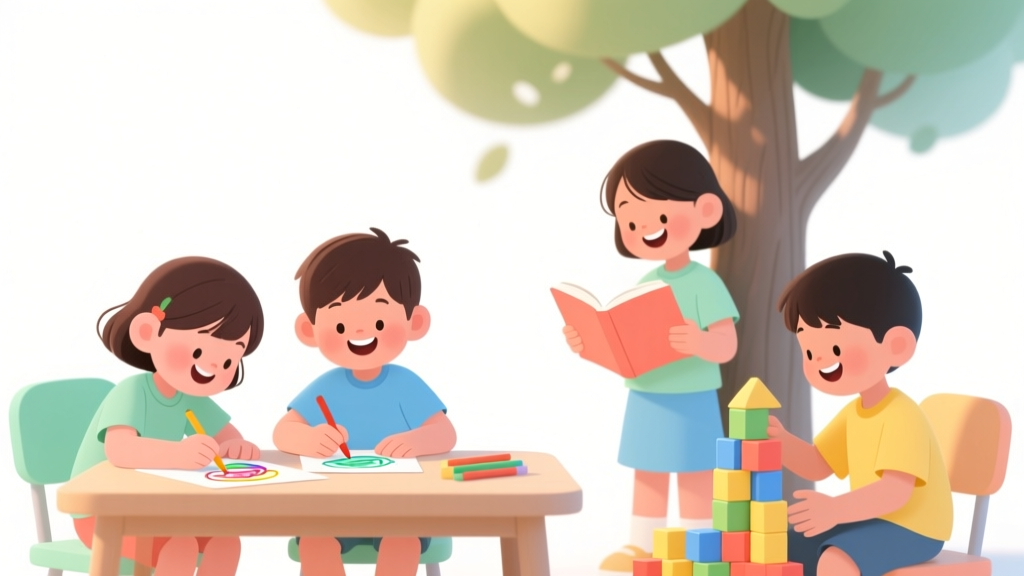
When Do Kids Start Learning to Read? (2026)
Why This Question Matters More Than Ever Right Now
When do kids start learning to read isn’t just a curiosity—it’s a quiet source of mounting anxiety for millions of parents navigating preschool applications, kindergarten readiness checklists, and social media feeds flooded with ‘3-year-old readers’ videos. But here’s what leading child development experts want you to know: reading is not a switch that flips on a birthday—it’s a layered, biologically timed process built over years of oral language, phonological awareness, and print exposure. And getting the timing right—neither rushing nor overlooking subtle red flags—can shape not just literacy outcomes, but a child’s lifelong relationship with books, confidence, and learning itself.
What ‘Learning to Read’ Actually Means (Spoiler: It Starts Way Before ‘Sight Words’)
Many parents picture reading as the moment a child sounds out ‘cat’ or reads a sentence aloud. In reality, learning to read begins long before formal instruction—often as early as 6–9 months old, when babies begin attending to speech rhythms and turning toward voices. According to the American Academy of Pediatrics (AAP), the foundation of reading is laid in three interwoven domains: oral language (vocabulary, grammar, narrative skills), phonological awareness (hearing and playing with sounds in words), and print knowledge (understanding how books work, letter names, environmental print).
Dr. Susan B. Neuman, former U.S. Assistant Secretary of Education and early literacy researcher, emphasizes: “Reading is not acquired naturally like speaking—it requires explicit, responsive, and repeated experiences with language and print.” That means ‘starting to learn’ isn’t about flashcards at age two—it’s about how many times you point to pictures while naming them, how often you pause to let your toddler predict ‘what’s next?’ in a familiar story, and whether your home environment treats books as objects of joy—not assessments.
Here’s the developmental arc most children follow—supported by longitudinal studies like the NICHD Early Child Care Research Network and the UK’s Effective Provision of Pre-School Education (EPPE) project:
- 0–12 months: Attends to voices, babbles rhythmically, recognizes own name, responds to simple verbal requests.
- 12–24 months: Says first words, follows one-step directions, points to pictures on request, enjoys repetitive rhymes and songs.
- 2–3 years: Uses 2–3 word phrases, names letters (especially those in their name), pretends to ‘read’ by narrating picture books, claps syllables in names (e.g., ‘El-i-zab-eth’).
- 3–4 years: Recognizes some letters and matches them to sounds (‘B says /b/’), generates rhymes spontaneously, identifies beginning sounds (‘What sound does ‘dog’ start with?’), understands that print carries meaning.
- 4–5 years: Blends sounds into words (‘/c/ /a/ /t/ → cat’), segments words into individual sounds, writes some letters or attempts spelling, recognizes common sight words (e.g., ‘the’, ‘and’, ‘go’) in context.
- 5–7 years: Decodes unfamiliar words using phonics, reads simple texts with growing fluency and comprehension, self-corrects errors, asks ‘why’ and ‘how’ questions about stories.
The ‘Sweet Spot’ for Formal Instruction—and Why Timing Varies Widely
So, when do kids start learning to read in a structured sense? Most public school systems introduce systematic phonics instruction in kindergarten (age 5–6), with significant decoding skill development occurring between ages 6–7. But crucially, readiness—not age—is the true predictor of success. A landmark 2022 study published in Developmental Psychology tracked 1,247 children across seven countries and found that children who began formal reading instruction before age 5.5 showed no long-term advantage in reading fluency or comprehension by Grade 3—and were significantly more likely to report reading-related anxiety and task avoidance.
Why? Because the brain’s neural circuitry for reading—including the left occipito-temporal ‘word form area’—doesn’t fully mature until around age 5–6. As Dr. Maryanne Wolf, cognitive neuroscientist and author of Proust and the Squid, explains: “You can’t rush synaptic pruning and myelination. Teaching reading before the brain is wired for it is like trying to grow tomatoes in January—it might sprout, but it won’t thrive.”
That said, readiness isn’t uniform. Some children show strong phonemic awareness and letter-sound knowledge by age 4; others need more time—and that’s perfectly normal. What matters is observing developmental cues, not calendar dates. Look for these five evidence-based readiness indicators (per the International Literacy Association):
- Consistently recognizes and names at least 10+ uppercase letters (especially those in their own name)
- Can isolate the first sound in familiar words (e.g., ‘What sound does ‘sun’ start with?’ → /s/)
- Enjoys being read to daily—and can retell key parts of a story with prompting
- Shows interest in print: points to words while ‘reading’, asks ‘What does this say?’, scribbles with letter-like forms
- Has strong oral language: uses full sentences, describes events in sequence, asks complex questions
If 3+ of these are present consistently over 4–6 weeks, your child is likely entering the ‘pre-reading readiness’ window. If fewer than two apply, prioritize rich language experiences—not drills.
5 Gentle, Research-Backed Strategies That Build Real Reading Skills (No Worksheets Required)
Forget flashcards and timed quizzes. The most powerful reading support happens in everyday moments—when adults model curiosity, patience, and delight in language. Here’s what actually moves the needle, backed by randomized controlled trials and classroom efficacy data:
- 1. Dialogic Reading (The ‘PEER’ Method): Used in Head Start programs nationwide, PEER stands for Prompt, Evaluate, Expand, Repeat. Instead of reading *to* your child, you prompt (“What’s happening here?”), evaluate (“Yes! The dog is jumping!”), expand (“The brown dog is jumping over the fence to chase the butterfly”), then repeat the concept in a new context. A 2021 meta-analysis in Early Childhood Research Quarterly found children using dialogic reading 3x/week gained 40% more vocabulary and 2.3x stronger narrative recall than peers.
- 2. Sound Play, Not Spelling Drills: Turn phonological awareness into play: ‘I Spy’ with beginning sounds (“I spy something that starts with /m/”), sing tongue twisters (“Mickey Mouse mows my meadow”), stretch out words slowly (“ssssuuuunnn”). Avoid asking “What letter is this?”—instead ask “What sound does it make?” This builds the auditory scaffolding essential for decoding.
- 3. Print-Rich, Pressure-Free Environments: Label household items with simple words (*door*, *window*, *cup*)—but don’t quiz. Keep baskets of board books near play areas, rotate titles weekly, and let your child ‘read’ backwards or invent stories. Children in homes with >50 children’s books score, on average, 6 months ahead in reading readiness (OECD PISA data).
- 4. Shared Writing Experiences: Co-author grocery lists (“We need apples!”), write thank-you notes together, caption your child’s drawings (“You drew a big red bus!”). This reinforces directionality (left-to-right, top-to-bottom), letter-sound links, and the purpose of writing.
- 5. Strategic Book Selection: Choose 70% predictable, rhythmic texts (e.g., The Very Hungry Caterpillar, Brown Bear, Brown Bear) and 30% informational books with rich vocabulary (Over in the Meadow, Actual Size). Predictable texts build confidence and pattern recognition; nonfiction builds background knowledge—the #1 predictor of later reading comprehension (per Duke University’s ‘Knowledge Matters’ research).
When to Pause, Observe, or Seek Support: Red Flags vs. Normal Variation
Every child develops at their own pace—but certain patterns warrant gentle observation or professional input. The AAP and National Institute of Child Health and Human Development (NICHD) identify these evidence-based ‘watchful waiting’ signals:
- By age 3: Doesn’t enjoy listening to stories, rarely points to pictures, shows little interest in books or letters
- By age 4: Cannot rhyme simple words (e.g., ‘cat’/‘hat’), struggles to clap syllables, doesn’t recognize any letters in their own name
- By age 5: Cannot blend 2–3 sounds into a word (e.g., /b/ /i/ /g/ → ‘big’), avoids looking at print, becomes frustrated or shuts down during shared reading
- By age 6: Still relies solely on memorization (not sounding out), confuses similar-looking letters (b/d/p/q) frequently, reverses words when reading aloud (‘was’ for ‘saw’)
Importantly: One red flag isn’t cause for alarm—but clusters or persistence across multiple domains may indicate underlying needs, such as language delay, auditory processing differences, or dyslexia risk. Early intervention is highly effective: 90% of children with reading difficulties who receive evidence-based support (like Orton-Gillingham or Lindamood-Bell protocols) before Grade 2 achieve grade-level proficiency. Contact your school’s reading specialist or a certified speech-language pathologist (SLP) for screening—not diagnosis, but guidance.
| Age Range | Typical Reading-Related Behaviors | Supportive Actions | When to Gently Monitor |
|---|---|---|---|
| 12–24 months | Turns pages (even if upside down), points to pictures on request, babbles with intonation, responds to ‘Where’s the ball?’ | Label objects during routines (“Here’s your cup. CUP.”); sing nursery rhymes daily; offer sturdy board books with high-contrast images | Lack of response to voice or names; no babbling or gesture use by 18 months |
| 2–3 years | Names some letters (esp. in name), recites rhymes, ‘reads’ familiar books from memory, scribbles with intent | Play sound games (“What rhymes with ‘shoe’?”); trace letters in sand or shaving cream; ask open-ended questions about stories (“What do you think happens next?”) | No pretend play with books; inability to follow 2-step directions; limited vocabulary (<50 words) |
| 3–4 years | Matches some letters to sounds (/m/ for ‘moon’), generates rhymes, counts syllables, understands story sequence (beginning/middle/end) | Use magnetic letters to build names; read same book repeatedly and change one word (“The *red* cat…” → “The *blue* cat…”); play ‘sound scavenger hunts’ (find things that start with /s/) | No rhyming by age 4; cannot identify beginning sounds; avoids books entirely |
| 4–5 years | Blends 3 sounds into words, writes some letters/numbers, recognizes environmental print (STOP sign, cereal box), knows alphabet song | Introduce simple CVC (consonant-vowel-consonant) word building; write short notes together (“Love, Mom”); visit libraries and let child choose books | Cannot segment words into sounds; confuses all letter names/sounds; extreme frustration with print tasks |
| 5–7 years | Decodes unfamiliar words, reads aloud with expression, self-corrects errors, summarizes stories, asks inferential questions | Read chapter books aloud *to* them nightly; discuss character motives; encourage journaling with invented spelling; celebrate effort, not just accuracy | Relies only on memorization; guesses based on pictures; avoids reading aloud; fatigue or headaches during reading |
Frequently Asked Questions
Is it harmful to teach reading before kindergarten?
It depends on how it’s taught. Play-based, child-led exposure to letters and sounds (e.g., singing alphabet songs, playing with letter magnets) is beneficial at any age. However, formal, worksheet-driven instruction before age 5–5.5—especially with correction, testing, or comparison to peers—can increase anxiety, reduce intrinsic motivation, and even interfere with developing oral language foundations. As pediatrician Dr. Alan Greene states: “The best pre-reading curriculum is joyful conversation, rich storytelling, and abundant time outdoors—not flashcards.”
My child reads early—should I accelerate them?
Early decoding (e.g., reading Level 3 books at age 4) doesn’t guarantee deeper comprehension or sustained engagement. Many ‘early readers’ plateau if oral language, vocabulary, and background knowledge aren’t nurtured alongside decoding. Focus instead on: asking ‘why’ and ‘how’ questions about stories, introducing complex nonfiction, visiting museums or nature centers to build schema, and encouraging creative storytelling. The goal isn’t speed—it’s depth, joy, and lifelong curiosity.
Does bilingualism delay reading?
No—bilingualism does not cause reading delays and, in fact, strengthens executive function and metalinguistic awareness (understanding how language works). However, bilingual children may initially mix languages or have smaller vocabularies in each language—but their combined vocabulary typically matches or exceeds monolingual peers. Best practice: maintain rich input in both languages, read in both, and avoid switching mid-sentence. Consistency matters more than quantity in any single language.
Are reading apps effective for young children?
Most commercial reading apps lack the responsive feedback and social interaction critical for early literacy. A 2023 JAMA Pediatrics review of 32 apps found only 3 demonstrated evidence of improving phonological awareness—and all required active adult co-use. Passive screen time (e.g., watching animated letters) shows no transfer to real-world reading skills. If using apps, choose ones rated by Common Sense Media for literacy support, and always engage alongside your child: “What sound does that letter make?” “Can we find another word that starts like that?”
How much time should we spend on reading activities daily?
Quality trumps quantity. Just 10–15 minutes of engaged, joyful interaction with books and language daily yields greater gains than an hour of pressured drill. Think: 5 minutes of dialogic reading, 3 minutes of sound play, 2 minutes of shared writing, and 5 minutes of free book exploration. Consistency matters far more than duration—daily micro-moments build neural pathways more effectively than sporadic ‘lessons’.
Common Myths About Early Reading
Myth 1: “If my child isn’t reading by 5, they’ll fall behind forever.”
Reality: The vast majority of children who begin reading between ages 6–7 catch up quickly—and many surpass early readers in comprehension and motivation by upper elementary. Finland, whose children don’t begin formal reading instruction until age 7, consistently ranks among the world’s top in literacy outcomes (PISA 2022). Developmental timing is diverse—and normal.
Myth 2: “Phonics-only instruction is the fastest path to reading.”
Reality: While phonics is essential, the National Reading Panel and Science of Reading research confirm that balanced literacy—integrating phonics, vocabulary, fluency, comprehension, and motivation—is most effective. Over-emphasizing phonics in isolation leads to ‘word calling’ without understanding. Children need rich language experiences to attach sounds to meaning.
Related Topics (Internal Link Suggestions)
- Signs of Dyslexia in Preschoolers — suggested anchor text: "early dyslexia indicators"
- Best Books for Emergent Readers (Ages 3–6) — suggested anchor text: "top phonics-friendly picture books"
- How to Choose a Kindergarten Reading Curriculum — suggested anchor text: "evidence-based kindergarten literacy programs"
- Screen Time Guidelines for Language Development — suggested anchor text: "healthy media use for preschoolers"
- Montessori-Inspired Literacy Activities at Home — suggested anchor text: "hands-on pre-reading materials"
Your Next Step: Notice One Thing Today
You don’t need a lesson plan or a reading curriculum to support your child’s journey. Start with just one intentional observation today: When you read together, notice where their eyes go—are they tracking print, or just pictures? When they hear a rhyme, do they smile or try to echo it? When they scribble, do they assign meaning (“This says ‘Mommy’”)? These micro-moments are your compass. Trust your intuition, lean on evidence—not trends—and remember: the goal isn’t to produce a reader by age five. It’s to nurture a thinker, a storyteller, and a lifelong learner who sees words as doorways—not deadlines. Ready to go deeper? Download our free Printable Reading Readiness Tracker—a pediatrician-reviewed, 2-page guide to observing and celebrating your child’s unique literacy path.
More Articles
 How Many Kids Is Too Many? Capacity Over Numbers
 Marty Supreme for Kids: Safety & Development Review
 Is Emergen-C Safe for Kids? Pediatrician Facts
 Does Tim Tebow Have Kids? Adoption Story (2026)
 Kids School Attendance Laws: What’s Required in 2026
 Child Marriage Laws in the U.S. (2026)
 Can Kids Have Magnesium Citrate? Pediatric Facts (2026)
 Fogo de Chão Kids Menu: What’s Included & Cost (2026)
 Michael Chandler Kids: Verified Family Facts (2026)
 Does Summit1G Have a Kid? The Truth (2026)