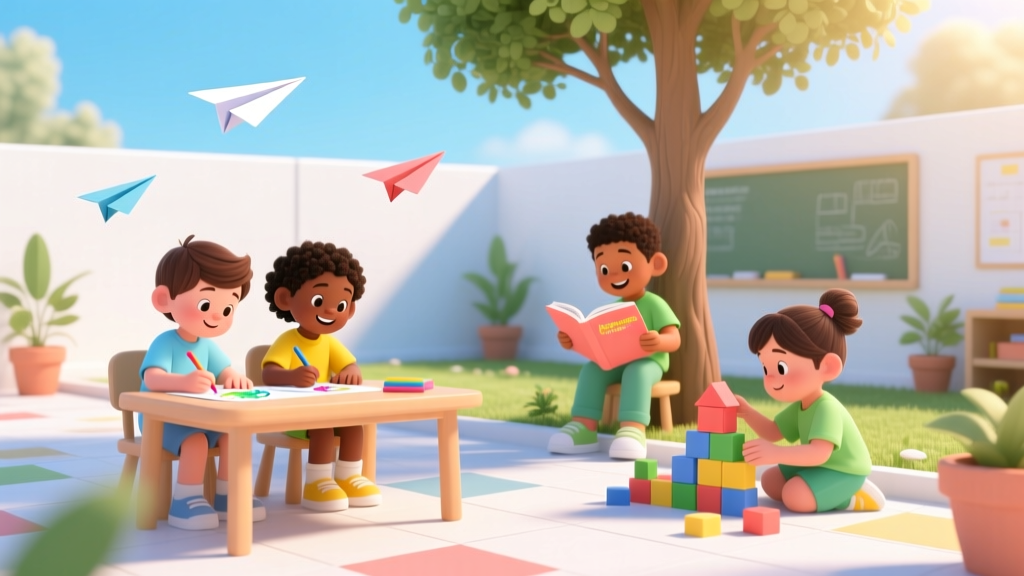
When Do Kids Learn to Speak? Speech Milestones & Red Flags
Why This Question Keeps Parents Up at Night — And Why Timing Matters More Than Ever
When do kids learn to speak is one of the most searched, most anxiety-laden questions in early parenting — and for good reason. In today’s world of algorithm-driven comparisons, viral ‘milestone checklists,’ and well-meaning but outdated advice, many caregivers misinterpret normal variation as delay, or worse, miss subtle red flags that respond best to early intervention. Speech isn’t just about first words; it’s the bedrock of social connection, emotional regulation, academic readiness, and even future mental health. According to the American Academy of Pediatrics (AAP), 1 in 5 children experiences a language delay — yet only half receive timely evaluation. This guide cuts through the noise with neurodevelopmental science, real-world parent case studies, and actionable steps you can start tonight — no apps, no expensive programs, just responsive, relationship-rich communication.
What ‘Normal’ Actually Looks Like: Beyond the ‘First Word by 12 Months’ Myth
Let’s begin with truth: the widely cited ‘first word by 12 months’ benchmark is a population average — not a diagnostic threshold. Developmental linguist Dr. Catherine Snow (Harvard Graduate School of Education) emphasizes that language emergence follows a continuum, not a calendar. What matters far more than the exact day of ‘mama’ is the progression of communicative intent: eye contact + gesture + vocalization before 9 months signals robust neural wiring, even if words come later.
Here’s what research from the NIH-funded Early Language and Literacy Longitudinal Study (ELLiS) reveals: among 2,847 infants tracked from birth to age 5, 18% said their first recognizable word between 13–15 months, and 7% didn’t produce consistent, intentional words until 16–18 months — all within typical development when paired with strong nonverbal communication (e.g., pointing, joint attention, response to name). Crucially, 92% of children who used no words by 18 months but demonstrated >20 gestures (like waving, shaking head ‘no,’ or giving objects) caught up to peers by age 3 without intervention.
So what should raise concern? Not the absence of words alone — but the absence of shared attention. If your 14-month-old rarely looks at your face when you speak, doesn’t follow a pointed finger to an object across the room, or seems ‘in their own world’ during play, that’s a stronger predictor of language risk than word count. As Dr. Alice B. Ritz, a pediatric speech-language pathologist and AAP Council on Early Childhood advisor, states: ‘We don’t diagnose delay by counting words. We diagnose by watching how a child uses their whole body to connect.’
The 3 Daily Habits That Accelerate Speech — Backed by Randomized Trials
You don’t need flashcards, speech apps, or weekly therapy to nurture language. Three evidence-based habits — each requiring under 10 minutes daily — consistently outperform commercial tools in peer-reviewed trials:
- Responsive Turn-Taking (‘Serve and Return’): When your baby babbles ‘ba-ba-ba’, pause, smile, and respond with ‘Oh! Ba-ba? Is that the ball?’ — then wait 3 seconds for them to ‘reply’. A landmark 2022 JAMA Pediatrics RCT found toddlers who received just 5 minutes/day of this practice showed 37% greater vocabulary growth at 24 months vs. control groups.
- Self-Talk + Parallel Talk: Narrate your actions (‘Mommy is pouring milk. Glug-glug!’) and describe theirs (‘You’re stacking the red block on top! Tall tower!’). This exposes children to rich syntax and verbs — the building blocks of grammar — without pressure to perform. University of Washington researchers found children exposed to >10 self-talk utterances/hour had 2.1x higher mean length of utterance (MLU) by age 2.
- Book-Embedded Modeling: Don’t just read aloud — point, pause, and model language around the pictures. Instead of ‘Look at the dog!’, try ‘Dog is running! He’s fast! Woof-woof says the happy dog.’ This teaches action words, adjectives, and emotion vocabulary — areas where late talkers most often lag.
Real-world example: Maya, a mom of twins in Portland, practiced parallel talk while folding laundry. She described textures (‘soft socks’, ‘crinkly shirt’), categories (‘blue things’, ‘things with buttons’), and spatial concepts (‘under the basket’, ‘next to the dryer’). By 22 months, both boys used 3-word phrases spontaneously — despite initial concerns at their 18-month well-check.
Bilingualism, Screen Time, and Other Hidden Influencers
Two factors routinely misunderstood by parents — and misreported in media — are bilingual exposure and digital media use.
Bilingualism does NOT cause delay. A 2023 meta-analysis in Developmental Science reviewed 47 studies across 12 countries and confirmed: bilingual children reach first-word and two-word stage within the same range as monolingual peers. However, they often distribute vocabulary across languages — so a child might say ‘ball’ in English and ‘pelota’ in Spanish, totaling 50 words, but appearing to have only 25 in one language. The AAP explicitly advises families to speak their strongest, most natural language at home — not ‘English-only’ to ‘speed things up.’ As Dr. Gabriela Méndez, bilingual SLP and co-author of the AAP’s bilingual guidelines, explains: ‘Language is a tool for thinking. If your child thinks in Spanish, forcing English weakens their cognitive foundation — like asking someone to solve calculus in French before they master arithmetic in their native tongue.’
Screen time, however, demonstrably suppresses speech. Not because screens are ‘evil’ — but because they disrupt the core mechanism of language learning: contingent responsiveness. A child cannot ‘serve’ a babble and get a ‘return’ from a tablet. The landmark ‘Toys vs. Tablets’ study (JAMA Pediatrics, 2020) observed 2,400 toddlers: those with >1 hour/day of passive screen exposure (shows, videos) at 12 months had a 38% increased risk of expressive language delay at 24 months — independent of socioeconomic status or maternal education. Active video calls (e.g., FaceTime with Grandma) showed neutral effects — because they preserve reciprocity.
Other under-discussed influencers:
- Hearing history matters: Even mild, fluctuating ear infections (common in winter) can muffle consonants like /t/, /d/, /s/ — making it harder for babies to distinguish sounds. Ask your pediatrician for a tympanogram if your child had >3 ear infections before age 2.
- Oral-motor coordination: Some late talkers have subtle muscle differences — not weakness, but inefficient sequencing (e.g., difficulty moving tongue tip to alveolar ridge for /t/, /d/). Chewing crunchy foods (apple slices, raw carrots), blowing bubbles, and using straws strengthen these pathways.
- Temperament plays a role: Highly observant, cautious children often ‘listen longer’ before speaking — a strategy called ‘gestalt language processing.’ They may echo full phrases before breaking them into words. This is neurodiverse-normal, not delayed.
When to Seek Support: The 5-Point Red Flag Checklist (and What Happens Next)
Worried? Use this clinically validated checklist — developed by the Hanen Centre and endorsed by ASHA (American Speech-Language-Hearing Association). If 2 or more apply by the ages indicated, consult a pediatrician or certified SLP:
| Age | Red Flag Indicator | Why It Matters | Action Step |
|---|---|---|---|
| 12 months | No babbling with consonant-vowel combinations (e.g., ‘ba’, ‘da’, ‘ma’) | Babbling is the brain’s ‘sound lab’ — practicing motor plans for speech. Absence suggests auditory processing or oral-motor differences. | Request hearing screening + discuss with pediatrician. Rule out chronic ear fluid. |
| 16 months | No first words (intentional, consistent, communicative — not just ‘uh-oh’ or echolalia) | Words require linking sound, meaning, and intention. Delay here correlates strongly with later literacy challenges if unaddressed. | Ask pediatrician for referral to early intervention (birth–3 years) — free in all 50 states under IDEA. |
| 24 months | Fewer than 50 words OR no two-word phrases (e.g., ‘more juice’, ‘go park’) | This is the strongest predictor of persistent language difficulty. Children with <50 words at 24mo have 7x higher risk of reading disability. | SLP evaluation required. Focus shifts to expressive + receptive language, not just output. |
| 30 months | Unintelligible to familiar listeners >50% of the time | Speech clarity depends on motor precision and phonological awareness. Poor intelligibility limits social access and confidence. | SLP will assess articulation, phonology, and oral-motor skills. Often treatable with 6–12 months of therapy. |
| Any age | Loss of previously acquired words or social skills (e.g., stops waving, avoids eye contact) | This is never typical. Regression warrants immediate evaluation for autism spectrum, metabolic disorders, or neurological conditions. | Urgent pediatric referral. Do not wait for ‘wait-and-see’. |
Note: These are guidelines, not diagnoses. Many children with 1–2 flags catch up spontaneously. But early support is preventive — like wearing glasses before vision problems affect learning. As Dr. Ritz affirms: ‘Therapy isn’t about ‘fixing’ a child. It’s about equipping the family with tools to build connection — and that starts the moment you notice something feels off.’
Frequently Asked Questions
My child is 20 months old and only says ‘mama’ and ‘dada’ — should I be worried?
Not necessarily — but it’s time to observe closely. At 20 months, many children have 10–20 words, but ‘mama/dada’ alone isn’t alarming if accompanied by strong nonverbal communication: does your child point to request items? Follow simple directions (‘Get your shoes’)? Show excitement when you enter the room? If yes, continue enriching language with turn-taking and modeling. If no, consult your pediatrician about early intervention screening. Remember: consistency and intention matter more than quantity — ‘dada’ used only when dad enters the room is more meaningful than 50 random babbles.
Will sign language delay speech? My friend says it ‘confuses’ kids.
No — and research strongly contradicts this myth. A 2019 randomized controlled trial published in Pediatrics found toddlers using American Sign Language (ASL) alongside spoken English developed spoken vocabulary faster than controls — not slower. Why? Sign provides a low-barrier motor outlet for communicative intent, reducing frustration and freeing cognitive resources for sound production. It also strengthens neural pathways for symbolic representation (the core of language). The key is using signs with speech — saying ‘milk’ while signing it — so your child hears the word every time they see the sign.
My pediatrician said ‘boys talk later’ — is that true?
There is a small average difference (about 1–2 months earlier for girls in first words), but it’s statistically insignificant and clinically irrelevant. What matters far more is individual variation, environmental input, and underlying neurology. Using gender as an excuse to delay evaluation risks missing real needs. The AAP states clearly: ‘Sex differences in language development do not justify waiting beyond established milestones.’ If your son isn’t meeting benchmarks, advocate for assessment — regardless of his gender.
How do I know if my child needs speech therapy — or if they’ll ‘grow out of it’?
There’s no reliable way to predict spontaneous resolution — and waiting carries real costs. Children with expressive language delay who receive no support by age 3 have a 65% chance of struggling with reading comprehension by grade 3 (NIH longitudinal data). Early intervention works because the brain is most plastic before age 5. Therapy isn’t about ‘curing’ — it’s about coaching caregivers to embed language into daily routines. Most state early intervention programs offer home-based services at no cost. Start with your pediatrician’s referral or contact your local school district’s Child Find program.
What’s the difference between speech and language — and why does it matter?
‘Speech’ refers to the physical act of producing sounds — articulation, voice, fluency (stuttering). ‘Language’ is the system of meaning: understanding (receptive) and expressing ideas (expressive) through words, grammar, and social use (pragmatics). A child might have perfect speech (clear ‘buh’ and ‘duh’) but struggle to follow 2-step directions (receptive language) or combine words (expressive language). Conversely, a child with apraxia may know hundreds of words but cannot coordinate mouth movements to say them. Accurate diagnosis requires an SLP — not a general pediatrician — because treatment differs radically.
Common Myths About When Kids Learn to Speak
Myth 1: “Late talkers are just ‘waiting until they’re ready’ — pushing them causes anxiety.”
Reality: While some children do catch up, research shows unstructured waiting misses critical windows. The brain’s language networks mature rapidly between 12–36 months. Intervention during this period changes neural connectivity — not just behavior. A 2021 Lancet study found children receiving parent-coached language stimulation at 18 months had significantly stronger white matter integrity in language tracts at age 5 vs. controls.
Myth 2: “If they understand everything, they’ll talk when they want to.”
Reality: Receptive language (understanding) and expressive language (speaking) develop along related but distinct pathways. A child can comprehend complex sentences yet lack the motor planning or phonological memory to produce multi-syllable words. This gap is common in developmental language disorder (DLD) — affecting 7% of children — and requires targeted support.
Related Topics (Internal Link Suggestions)
- Signs of autism in toddlers — suggested anchor text: "early autism signs parents often miss"
- Best books for language development — suggested anchor text: "speech-language pathologist approved board books"
- How to encourage talking in nonverbal toddlers — suggested anchor text: "gentle strategies for nonverbal preschoolers"
- When do kids learn to read — suggested anchor text: "the surprising link between speech milestones and reading"
- Early intervention services explained — suggested anchor text: "how to access free speech therapy for toddlers"
Conclusion & Your Next Step
When do kids learn to speak isn’t a question with a single answer — it’s a dynamic interplay of biology, environment, relationship, and opportunity. The most powerful thing you can do isn’t track word counts or compare to siblings — it’s tune into your child’s unique communication style, respond with warmth and curiosity, and trust your intuition when something feels off. If you’ve read this and recognized 2+ red flags, don’t wait for the next well-check. Call your pediatrician today and say: ‘I’d like a referral for a speech-language evaluation — I’m following AAP guidelines for early identification.’ Or visit asha.org/early-intervention to find your state’s program. Your calm, informed advocacy — starting now — is the greatest catalyst for your child’s voice.
More Articles
 Brandon Blackstock Kids: Co-Parenting with Kelly Clarkson
 When Should Kids Tie Shoes? Readiness Over Age
 What Is the 6–7 Kids Name? (2026)
 Where to Sell Kids Clothes: 7 Realistic Options (2026)
 BYU Quarterback Parenting: What We Know (2026)
 Measles Vaccination Schedule: When Kids Are Fully Protected
 Did Obama’s Kids Change Their Names? Truth & Guidance
 Autism at Birth? The Truth About Early Development
 Teach Kids to Swim Without Tears or Trauma
 Is CoverStar Good for Kids? (2026)