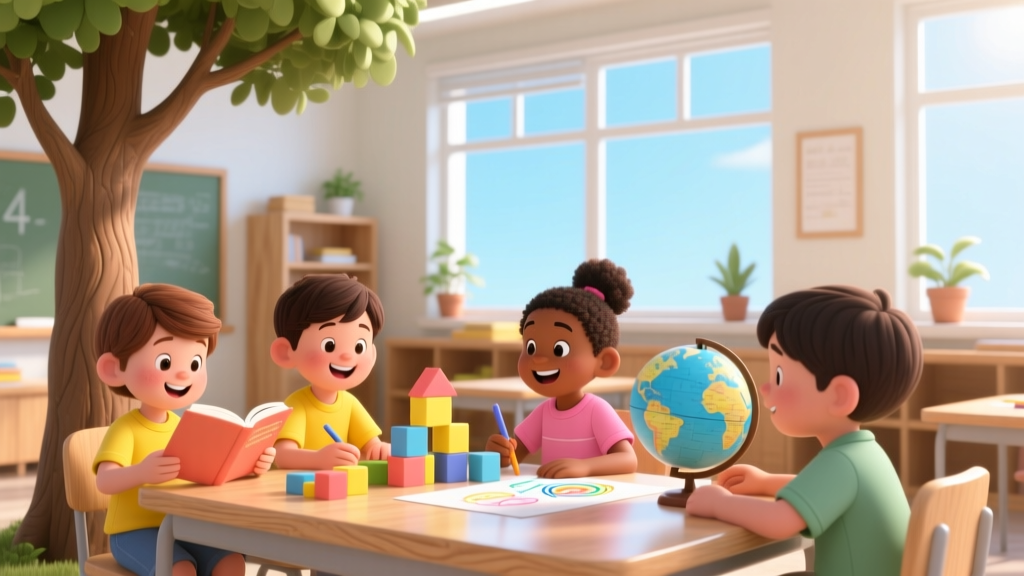
When Do Kids Learn to Read? Science-Backed Timeline
Why This Question Keeps Parents Up at Night — And Why Timing Isn’t Everything
When do kids learn to read? That simple question carries layers of quiet anxiety for millions of parents — especially in an era where kindergarten classrooms now expect letter-sound fluency, social media feeds overflow with 'genius toddler readers,' and well-meaning relatives ask, 'Is she reading yet?' Yet developmental science tells a far gentler, more individualized story. Reading isn’t a switch that flips on a birthday; it’s a complex neurological cascade built over years of spoken language, phonological awareness, print exposure, and emotional safety. Getting the timeline right matters — not to rush, but to recognize when support is needed, when celebration is warranted, and when comparison does more harm than good. In fact, according to the American Academy of Pediatrics (AAP), only 17% of children read fluently before age 6, and early decoding without comprehension often masks underlying gaps in oral language or executive function.
What Reading Development *Really* Looks Like: From Babbling to Book Club
Reading acquisition isn’t linear — it’s a spiral. Children loop back through foundational skills even as they advance, refining earlier abilities while layering new ones. Dr. Hollis Scarborough, a leading literacy researcher, models this as the ‘Reading Rope’: two intertwined strands — language comprehension (vocabulary, background knowledge, syntax, verbal reasoning) and word recognition (phonological awareness, decoding, sight word fluency). Both must be strong and coordinated for skilled reading to emerge.
Here’s how those strands develop across ages — backed by longitudinal studies like the NICHD Early Child Care Study and decades of classroom observation:
- 0–2 years: Focus is entirely on oral language. Babies coo, babble, respond to voices, point to pictures, and begin understanding hundreds of words before saying any. A child who consistently follows simple directions ('Give me the ball'), points to named body parts, and imitates sounds is building the bedrock of reading comprehension — even if they can’t hold a book.
- 2–4 years: Emergent literacy blooms. Children start recognizing logos (McDonald’s arches, cereal boxes), scribble with intention, ‘pretend read’ familiar books from memory, and play with rhymes ('cat, hat, bat'). This is not formal instruction — it’s joyful, sensory-rich exploration. As Dr. Susan Neuman, former U.S. Assistant Secretary for Elementary and Secondary Education, emphasizes: “Play is the curriculum of early literacy.”
- 4–6 years: The ‘pre-reading’ engine revs. Kids identify most letters (by name AND sound), segment words into syllables, blend sounds orally ('c-a-t' → 'cat'), and understand that print moves left-to-right. They may write their name, match beginning sounds, and retell stories with key details. This is when evidence-based, playful phonemic awareness activities — like singing songs with alliteration or clapping syllables in names — yield the highest ROI.
- 6–7 years (Kindergarten–Grade 1): Formal decoding begins. With explicit, systematic phonics instruction (not just memorization), children start sounding out CVC words ('dog', 'sun'), recognizing common digraphs ('sh', 'ch'), and building a bank of high-frequency 'sight words' (the, and, said). Fluency emerges slowly — first word-by-word, then phrase-by-phrase, then with expression. Comprehension remains tightly tied to oral language strength.
- 7–9 years (Grades 2–3): Reading shifts from learning to read to reading to learn. Decoding becomes automatic, freeing cognitive space for inference, prediction, and connecting text to prior knowledge. Struggles here often signal deeper issues — like weak vocabulary, limited background knowledge, or undiagnosed dyslexia — not lack of effort.
The 5 Non-Negotiable Foundations — And How to Nurture Each One
You don’t teach reading — you cultivate the ecosystem where reading grows. These five pillars, validated by the National Institute for Literacy and thousands of classroom interventions, are far more predictive of long-term success than early flashcard drills:
- Rich Oral Language: Talk constantly — narrate your actions ('I’m stirring the batter, swirling it round and round'), ask open-ended questions ('What do you think will happen next?'), and expand on their utterances ('You said “dog run!” — yes, the brown dog is running fast across the grass!'). Vocabulary size at age 3 predicts reading comprehension at age 11 more strongly than IQ scores.
- Phonological Awareness Play: Rhyme games, clapping syllables in family names, ‘sound scavenger hunts’ (‘Find something that starts with /b/!’), and singing nursery rhymes build the brain’s ability to hear and manipulate sounds — the single strongest predictor of later decoding success.
- Print-Rich Environment: Label objects ('door', 'window'), leave notes for your child ('Daddy loves you!'), keep books accessible and varied (nonfiction, poetry, comics), and let them see you reading for pleasure — not just emails or news. Children whose homes have >50 books score significantly higher on literacy assessments, per UNESCO research.
- Shared Storytelling & Retelling: Read aloud daily — even 10 minutes — with expression and pauses for prediction. Then ask: ‘What was the problem? How did the character solve it? What would YOU do?’ Retelling strengthens memory, sequencing, and narrative structure — essential for understanding chapter books later.
- Emotional Safety & Autonomy: Reading under pressure triggers avoidance. Let your child choose books (even if it’s the same one for 47 days), stop when they’re tired, and celebrate effort ('You tried that tricky word!') over perfection. As pediatric neuropsychologist Dr. Mona Delahooke states: “Stress shuts down the learning brain. Curiosity lights it up.”
When to Pause and Pivot: Recognizing True Red Flags (Not Just Late Bloomers)
Every child develops at their own pace — and many brilliant readers didn’t decode until age 7 or 8. But certain patterns warrant professional insight *before* Grade 2. These aren’t about speed; they’re about the quality and consistency of foundational skills. The table below outlines key milestones and what to do if they’re consistently missed — based on AAP screening guidelines and the International Dyslexia Association’s framework:
| Age Range | Expected Milestone | What to Watch For | Action Step |
|---|---|---|---|
| 3–4 years | Enjoys rhyming games; identifies some letters; understands stories read aloud | Doesn’t recognize own name in print; rarely pretends to read; struggles to follow 2-step directions; avoids books altogether | Consult pediatrician for speech-language evaluation; increase daily shared reading & sound-play |
| 4–5 years | Names most letters; matches beginning sounds; segments 3-syllable words; knows story parts (beginning/middle/end) | Cannot rhyme simple words ('cat'/'hat'); confuses similar-sounding letters (b/d/p); cannot clap syllables in own name; avoids writing attempts | Request preschool screening; seek evaluation from certified reading specialist or SLP; avoid worksheets — prioritize multisensory games (sandpaper letters, magnetic sounds) |
| 5–6 years | Blends 3 sounds orally; writes letters/numbers legibly; recognizes common environmental print; ‘reads’ predictable books using pictures & memory | Still reverses letters frequently (b/d, p/q) beyond occasional slips; cannot connect letters to sounds consistently; guesses words from first letter only; shows extreme frustration or avoidance during literacy tasks | Formal evaluation for phonological processing & phonics foundations; request school-based RTI (Response to Intervention) Tier 2 support; explore Orton-Gillingham or Wilson Fundations approaches |
| 6–7 years | Decodes simple CVC words; reads familiar texts with some fluency; self-corrects obvious errors | Relies heavily on pictures/context to guess; cannot sound out unfamiliar words; reads word-by-word with no expression; omits small words (the, and, is); comprehension collapses when reading independently | Comprehensive psychoeducational assessment; rule out dyslexia, auditory processing disorder, or language impairment; advocate for structured literacy instruction aligned with Science of Reading |
Frequently Asked Questions
My child is 5 and still doesn’t know all letter names — is this a problem?
Not necessarily — but context matters. By age 5, most children know 18+ uppercase letters and 15+ lowercase, especially those in their own name. If your child is engaged with books, enjoys rhymes, and understands stories, this may simply reflect a slower pace. However, if letter knowledge is paired with difficulty hearing sounds in words, poor memory for nursery rhymes, or trouble following multi-step directions, it’s wise to consult a speech-language pathologist. Remember: letter naming is a tool, not the goal — phonemic awareness (hearing sounds) is the engine.
Should I push my 4-year-old to read early to get ahead?
No — and here’s why: Early academic pressure often backfires. A landmark study published in Early Childhood Research Quarterly tracked children who received intensive pre-K reading instruction versus play-based literacy. By Grade 4, the ‘early reader’ group showed lower motivation, higher test anxiety, and no advantage in comprehension. Their brains hadn’t matured enough for sustained decoding work, so they learned to ‘perform’ reading without deep processing. Playful, responsive interactions — like acting out stories or building letters with clay — build neural pathways far more effectively than drill-and-kill.
My child reads fluently but doesn’t understand what they’ve read — what’s going on?
This is called ‘hyperlexia’ or, more commonly, a ‘decoding-comprehension gap.’ It signals strong word recognition skills but underdeveloped language comprehension — often rooted in limited vocabulary, weak background knowledge, or difficulties with inference and mental imagery. This is extremely common in children with ADHD, autism, or language disorders. The fix isn’t more phonics — it’s richer oral language: discuss complex topics, watch documentaries together and talk about them, use ‘why’ and ‘how’ questions constantly, and choose books slightly above their independent reading level to stretch comprehension with your support.
Are apps and tablets helpful for early reading?
Some are — but most aren’t. A 2023 review in Pediatrics found that interactive e-books with adult co-reading (where you pause to ask questions, point to words, connect to real life) boosted vocabulary. Passive apps with flashy animations and isolated letter drills? They correlated with lower phonological awareness. The key is the adult’s presence and responsiveness — not the screen. Think of tech as a tool for connection, not a tutor. And always enforce the AAP’s screen-time limits: under 18 months, none (except video-chatting); 2–5 years, ≤1 hour/day of high-quality programming WITH you.
What’s the best way to support a child who’s struggling — without making them feel broken?
Start with strengths. Does your child tell hilarious stories? Build on narrative skill. Love building with blocks? Connect spatial reasoning to story structure (‘What’s the beginning? The middle tower? The ending bridge?’). Frame challenges as ‘brain puzzles’ — ‘Our brains are like muscles; this sound-blending game is weightlifting for your reading brain!’ Celebrate tiny wins: ‘You held that /s/ sound longer — that’s amazing focus!’ Most importantly, protect their identity as a *learner*, not a ‘struggling reader.’ As literacy expert Pam Allyn says: ‘Every child is a reader — some just haven’t met the right book, the right teacher, or the right moment yet.’
Common Myths
Myth 1: “If they’re not reading by first grade, they’ll fall behind forever.”
Reality: Countless successful adults were late readers — including Winston Churchill, Agatha Christie, and Steven Spielberg. Brain plasticity remains high through adolescence. What matters most is identifying the root cause (e.g., undiagnosed dyslexia, language delay, vision issues) and providing targeted, evidence-based support — not rushing through grade-level expectations. Early intervention helps, but ‘late’ doesn’t mean ‘lost.’
Myth 2: “Learning sight words first is the fastest path to reading.”
Reality: Memorizing 100+ ‘sight words’ without phonics creates a fragile foundation. When kids hit unfamiliar words (like ‘giraffe’ or ‘yacht’), they stall. Systematic phonics teaches the code — enabling them to decode *any* word. The National Reading Panel found phonics instruction boosted reading achievement across all demographics, especially for at-risk learners.
Related Topics (Internal Link Suggestions)
- How to Choose the Right Phonics Program — suggested anchor text: "best evidence-based phonics programs for home"
- Signs of Dyslexia in Preschoolers — suggested anchor text: "early dyslexia indicators before kindergarten"
- Best Books for Emerging Readers — suggested anchor text: "high-interest, low-difficulty books for new readers"
- Screen Time Guidelines for Preschoolers — suggested anchor text: "healthy digital habits for 3- to 5-year-olds"
- Speech Delay vs. Language Delay — suggested anchor text: "understanding the difference and when to seek help"
Conclusion & Your Next Step
When do kids learn to read? The answer isn’t a date on a calendar — it’s a dynamic, deeply personal journey shaped by biology, environment, relationship, and joy. There is no universal ‘right age,’ only a spectrum of healthy development anchored by consistent, responsive interaction. Your role isn’t to produce a reader by age 5 — it’s to be the calm, curious, celebrating presence who makes language feel safe, fascinating, and full of possibility. So tonight, put down the flashcards. Pick up a book with vibrant pictures and rhythmic language. Sit close. Ask, ‘What do you notice?’ — and truly listen to their answer. That’s where reading truly begins. Your next step: Download our free ‘Pre-Reading Skills Tracker’ (a printable, month-by-month checklist of observable milestones with gentle prompts) — no email required. It’s your compass, not a stopwatch.
More Articles
 What Size Is 7 Womens in Kids? Exact Conversion (2026)
 Vince Vaughn Kids: How He & Kyla Parent Intentionally
 Does Medical Insurance Cover Braces for Kids?
 Does Kristin Cabot Have Kids? The Truth Behind Her Choice
 Fire Kids Tablet Without Subscription (2026)
 Are Kids Vitamins FSA Eligible? (2026)
 Can a Kid Sit in the Front Seat? (2026 Guide)
 How Often Can a Kid Take Tylenol? (2026)
 Is House of David Appropriate for Kids? (2026)
 How Many Kids Does Ice T Have? (2026)