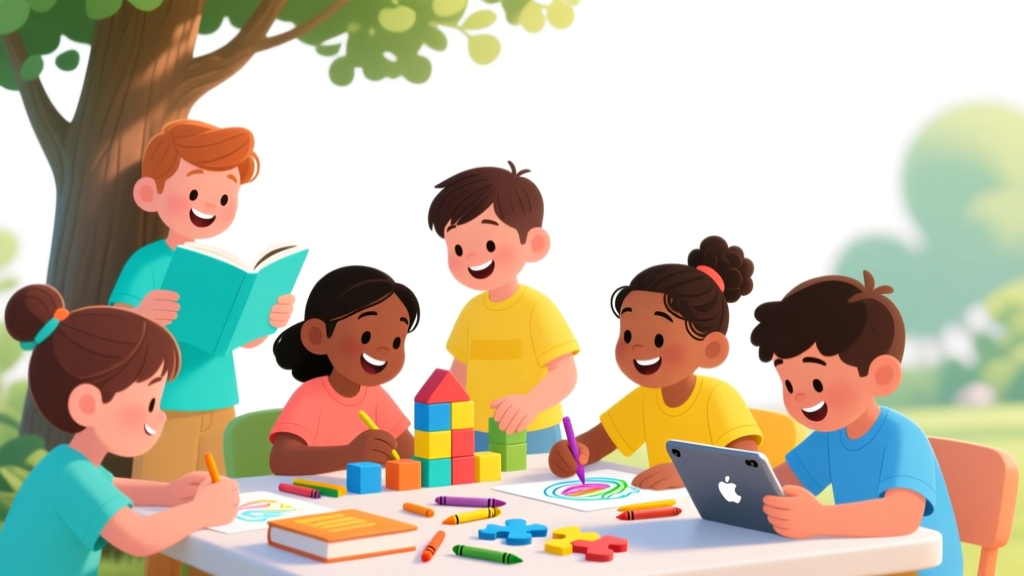
When Do Kids Learn Alphabet? Evidence-Based Timeline
Why 'When Do Kids Learn Alphabet?' Isn’t Just About Age — It’s About Readiness, Not Rote
The question when do kids learn alphabet is one of the most frequently searched parenting queries — and for good reason. In an era of early academic pressure, social comparison on parenting forums, and preschool admissions that subtly prioritize pre-literacy skills, caregivers often feel anxious about whether their child is ‘on track.’ But here’s what decades of developmental research confirm: alphabet mastery isn’t a single event like a birthday — it’s a layered, multi-year process built on sensory exposure, motor development, language foundations, and joyful repetition. And crucially, the *timing* varies widely — and that variation is almost always normal.
According to the American Academy of Pediatrics (AAP), letter knowledge emerges along a predictable but flexible continuum — beginning with visual discrimination (noticing differences between shapes like ‘b’ and ‘d’) as early as 24 months, progressing through naming and sound association by age 4–5, and culminating in automatic, fluent recognition and phonemic application by kindergarten entry. Yet nearly 30% of U.S. kindergarteners enter school without full letter-name knowledge — not because they’re ‘behind,’ but because their environments lacked consistent, multimodal, low-pressure exposure. This article cuts through the noise to give you what you actually need: a realistic, research-backed timeline; actionable, screen-free strategies grounded in how young brains learn; red flags worth discussing with a pediatrician or early intervention specialist; and — most importantly — permission to trust your child’s pace while actively nurturing their foundation.
What ‘Learning the Alphabet’ Really Means (And Why Most Parents Misdefine It)
Before diving into timelines, let’s clarify what ‘learning the alphabet’ entails — because many parents equate it with reciting A–Z, which is only the first, shallowest layer. True alphabet knowledge involves four interdependent competencies, each developing at different rates:
- Letter Recognition: Identifying uppercase and lowercase forms visually (e.g., pointing to ‘M’ among other letters).
- Letter Naming: Accurately saying the letter’s name (‘em,’ not ‘muh’).
- Letter–Sound Association: Linking the letter to its most common phoneme (‘B’ → /b/ as in ‘ball’).
- Letter Discrimination & Memory: Distinguishing similar letters (‘p’ vs. ‘q’) and retaining names/sounds across contexts (books, signs, games).
Dr. Susan B. Neuman, former U.S. Assistant Secretary for Elementary and Secondary Education and early literacy researcher, emphasizes: “Alphabet knowledge is not memorization — it’s cognitive scaffolding. Every time a child matches a letter to a familiar word (‘S’ for ‘sun’), they’re building neural pathways that later support decoding, spelling, and comprehension.” That’s why rote chanting without meaning rarely transfers to reading — and why playful, contextual exposure outperforms flashcards 3-to-1 in longitudinal studies (National Institute for Literacy, 2022).
Consider Maya, a bright 3½-year-old who could sing the ABC song flawlessly but couldn’t identify a single letter in print — until her caregiver started labeling objects during daily routines (“Look — your cup starts with C!”) and tracing letters in sand. Within eight weeks, she named 14 uppercase letters and linked 7 to sounds. Her progress wasn’t accelerated — it was anchored.
The Evidence-Based Timeline: What to Expect (and When to Pause and Observe)
Below is the consensus timeline from AAP guidelines, the National Early Literacy Panel, and longitudinal data from the Early Childhood Longitudinal Study (ECLS-K). Note: These are median ages — not deadlines. Up to 25% of typically developing children fall outside these ranges without clinical concern.
| Age Range | Typical Milestones | Supportive Strategies | When to Gently Monitor |
|---|---|---|---|
| 24–30 months | Notices letters in environment (e.g., points to ‘O’ on a cereal box); may name 1–3 letters, often those in own name. | Label letters in context (“That’s the ‘T’ in ‘truck’!”); use magnetic letters during snack time; sing alphabet songs *while pointing to letters*. | Zero letter recognition by 30 months — especially if child shows no interest in print or symbols. |
| 30–42 months | Names 5–10 uppercase letters consistently; begins matching letters to beginning sounds in familiar words (e.g., ‘D’ for ‘dog’); enjoys letter puzzles and tracing. | Play ‘letter hunt’ around the house; create a personalized ‘name book’ with photos labeled with initials; use tactile materials (pipe cleaners, playdough) to form letters. | No growth in letter naming over 3+ months; avoids all print-related activities; confuses all letters visually (e.g., calls ‘X’ ‘plus sign’ repeatedly). |
| 42–60 months | Names 15–20+ letters; identifies both upper- and lowercase forms; links ~10 letters to sounds; writes some letters spontaneously (often first name letters). | Introduce simple phonics games (“What sound does ‘F’ make?”); read alphabet books *backward* to disrupt rote memory and boost attention; sort objects by starting sound. | Cannot name >10 letters by age 4½; mixes up letters with similar shapes (b/d/p/q) *and* sounds (m/n, t/d) consistently; shows frustration or avoidance during literacy play. |
| 5–6 years (Pre-K/K) | Names all 26 letters; matches most letters to sounds; writes many letters legibly; begins blending sounds (e.g., /c/ /a/ /t/ → ‘cat’). | Use letter cards for sorting by sound family (‘s’/‘z’, ‘k’/‘c’); play ‘I Spy’ with initial sounds; write short messages together using invented spelling. | Cannot name >18 letters or link >8 letters to sounds by age 5½; reverses letters frequently *and* struggles with directionality (left/right, top/bottom); family history of dyslexia + delayed speech. |
5 Play-Based, Research-Backed Strategies That Outperform Flashcards Every Time
Forget drill-and-kill. The most effective alphabet learning happens when children are physically engaged, emotionally invested, and cognitively active. Here’s what the data shows works — and why:
- Name-First Immersion: Children learn letters tied to personal meaning fastest. Start with the letters in their name — especially the first letter. Use it everywhere: on artwork, water bottles, lunchboxes. A 2023 study in Early Childhood Research Quarterly found toddlers learned their name-letter 4.2x faster than random letters — and generalized that learning to similar shapes within 2 weeks.
- Multisensory Tracing: Have children trace letters in textured materials (sandpaper, shaving cream, rice) while saying the name *and* sound. This activates visual, tactile, auditory, and motor pathways simultaneously — strengthening memory encoding. Occupational therapists recommend this for children with dyspraxia or sensory processing differences.
- Environmental Print Hunting: Turn grocery stores, street signs, and packaging into scavenger hunts. “Find something that starts with ‘B’!” This teaches functional literacy — that letters carry meaning in the real world — far more powerfully than isolated worksheets.
- Phoneme-Rich Storytime: Choose books heavy in alliteration and rhyme (The Very Hungry Caterpillar, Chicka Chicka Boom Boom). Pause to exaggerate sounds: “Look — ‘S’ slithers! Say it with me: /ssss/!” This builds phonemic awareness — the strongest predictor of later reading success (National Reading Panel, 2000).
- Move-the-Letter Games: Tape large letters to the floor and call out actions: “Jump to ‘J’! Crawl to ‘C’! Hop to ‘H’!” Gross motor movement boosts engagement and retention — especially for kinesthetic learners. Teachers report 35% higher letter recall after movement-integrated lessons (Journal of Educational Psychology, 2021).
Remember: Consistency trumps duration. Five minutes of joyful, focused interaction daily beats 30 minutes of stressed drilling. As Dr. Laura Jana, pediatrician and author of The Toddler Brain, advises: “Your child’s brain isn’t a bucket to be filled — it’s a fire to be kindled. Spark curiosity, not compliance.”
Red Flags vs. Normal Variation: When to Talk to Your Pediatrician or Early Intervention Specialist
It’s natural to compare — but comparison is the enemy of discernment. Here’s how to distinguish typical variation from potential concerns:
- Normal variation includes: Learning letters out of order (e.g., knows X, Y, Z before A, B, C); mixing up similar-sounding letters (‘g’/‘j’, ‘v’/‘b’); naming letters inconsistently when tired or distracted; preferring lowercase over uppercase (or vice versa).
- Red flags warranting professional input include:
- No letter recognition by age 36 months — especially if accompanied by limited vocabulary (<100 words), difficulty following simple directions, or lack of joint attention (not pointing to share interest).
- Persistent letter reversals (b/d, p/q) beyond age 7 — though occasional reversals are common through first grade.
- Strong aversion to books, print, or drawing — not just disinterest, but active avoidance or distress.
- Family history of dyslexia, language delay, or hearing loss — early screening can prevent years of struggle.
If any red flag resonates, request a free developmental screening through your state’s Early Intervention program (ages 0–3) or your school district’s Child Find team (ages 3–5). These services are federally mandated and cost $0. According to the AAP, early identification before age 5 improves outcomes dramatically — not by ‘fixing’ a child, but by providing tailored supports that honor their neurodiversity.
Frequently Asked Questions
Can watching alphabet videos help my toddler learn letters?
Passive screen time (e.g., YouTube alphabet songs) has minimal impact on letter learning before age 2½ — and can even displace richer, interactive experiences. A landmark JAMA Pediatrics study (2019) found toddlers who watched >1 hour/day of educational videos scored lower on language assessments at age 2. However, co-viewing changes everything: Sit with your child, pause the video, point to letters, ask questions (“Which one is ‘R’?”), and connect sounds to real objects. Active mediation transforms passive media into a scaffold — not a substitute.
My child knows all the letters but can’t connect them to sounds — is that normal?
Yes — and very common. Letter naming and phonemic awareness develop along separate (though related) pathways. Many children master names first, then sounds, then blending. Focus on playful sound games: ‘I Spy’ with beginning sounds, clapping syllables in names, singing songs that emphasize consonants (‘Bingo,’ ‘The Muffin Man’). Avoid correcting — instead, model: If they say ‘A’ for ‘apple,’ respond warmly, “Yes — A says /a/ like apple!” Repetition + positive reinforcement builds sound-letter bridges naturally.
Should I teach uppercase or lowercase letters first?
Start with uppercase — they’re simpler to recognize and write (fewer curves, less fine motor demand). But introduce lowercase early and intentionally: Point out both forms in books (“Look — ‘B’ is big, and ‘b’ is small!”), use alphabet charts showing pairs, and write your child’s name with proper case (capital first letter, lowercase rest). By age 4, aim for balanced exposure — since most texts use lowercase, and handwriting requires both.
Is it harmful to push alphabet learning before age 3?
Not inherently harmful — but counterproductive if it replaces essential developmental work. Before age 3, children’s brains prioritize oral language, social-emotional regulation, and gross/fine motor skills. Forcing abstract symbol learning too early can lead to frustration, negative associations with learning, and missed opportunities for foundational growth. As Montessori educator Angeline Lillard notes: “Children don’t learn letters because we teach them — they learn because they’re ready, and our role is to prepare the environment, not the child.” Prioritize talking, listening, playing, and exploring — the alphabet will follow naturally.
Common Myths About Alphabet Learning
Myth #1: “If my child can’t name all letters by age 4, they’ll struggle with reading.”
Reality: Letter naming is just one predictor — and not the strongest. Phonemic awareness (hearing sounds in words), vocabulary size, and oral language comprehension are more powerful indicators. Many children with strong oral language catch up rapidly once formal instruction begins. Conversely, a child who memorizes letters early but lacks phonemic awareness often hits a wall in first grade.
Myth #2: “Alphabet apps and tablets are the best way to teach letters.”
Reality: While well-designed apps (like Endless Alphabet) offer engaging reinforcement, they’re most effective as *supplements* — not primary tools. A 2022 University of Michigan study found children learned 68% more letters through hands-on, adult-guided play than through tablet-based instruction alone. Screens lack the responsive feedback, physical manipulation, and emotional connection that cement learning.
Related Topics (Internal Link Suggestions)
- Phonemic Awareness Activities for Toddlers — suggested anchor text: "phonemic awareness games for 2-year-olds"
- Best Alphabet Books for Preschoolers — suggested anchor text: "top research-backed alphabet picture books"
- Signs of Dyslexia in Preschool — suggested anchor text: "early dyslexia indicators before kindergarten"
- How to Support Late Talkers — suggested anchor text: "language development milestones and when to seek help"
- Sensory-Friendly Learning Tools — suggested anchor text: "tactile alphabet resources for neurodiverse learners"
Conclusion & Your Next Step
So — when do kids learn alphabet? The answer isn’t a date on a calendar. It’s a dynamic, individualized journey shaped by relationship, repetition, and relevance. Most children begin recognizing letters between 2 and 3, name 10–15 by age 4, and achieve full mastery by kindergarten — but the path matters more than the pace. What truly accelerates learning isn’t pressure or products — it’s presence: pointing, playing, pausing to wonder, and celebrating every ‘aha’ moment, however small.
Your next step? Pick just one strategy from this article — the one that feels most joyful and sustainable for your family — and try it for five minutes a day for the next week. Name-first immersion? Environmental print hunting? Multisensory tracing? Track what happens: Does your child point to more letters? Hum a new sound? Ask, “What letter is that?” That tiny spark is the real milestone — and it’s already within your reach.
More Articles
 When Do Kids Get Permanent Teeth? (2026)
 Musk Child-Trump Viral Clip: Fact Check & Parenting Tips
 June’s Rescue Mission: Parent Guide to Gilead’s 52 Kids
 Paxlovid for Kids: Age Limits & Dosing (2026)
 Is 1mg Melatonin Safe for Kids? Evidence-Based Answers
 How Many Kids Does Gilbert Arenas Have? (2026)
 How Long Does Motrin Last for Kids? (2026)
 School Uniforms: What Research Shows (2026)
 How Many Carter Kids Are Still Alive? (2026)
 How to Block YouTube Shorts on YouTube Kids (2026)