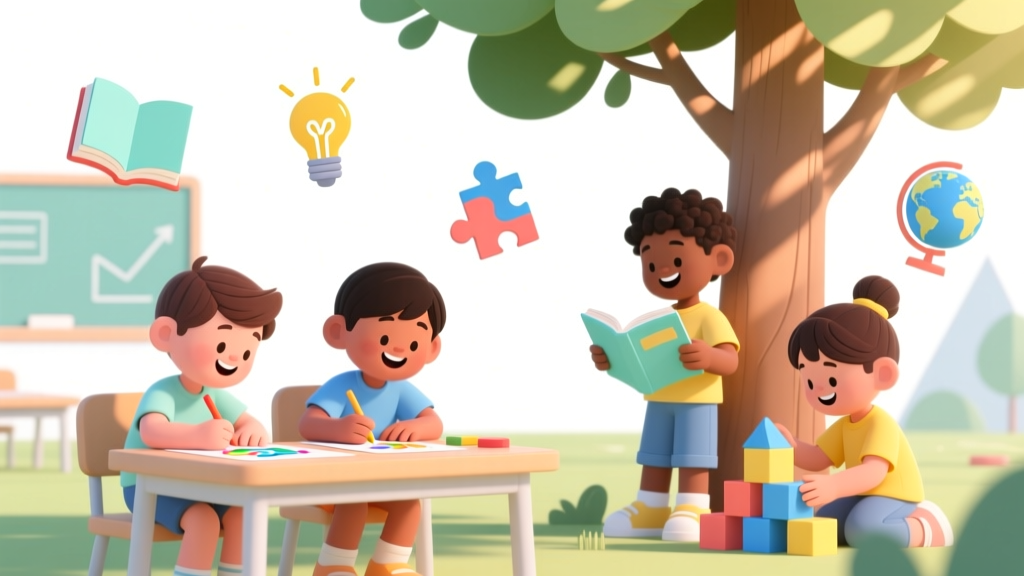
Homeschooling Statistics 2026: 6.6% of Kids
Why This Number Matters More Than Ever
What percentage of kids are homeschooled? As of the most recent U.S. Census Bureau and National Center for Education Statistics (NCES) data released in early 2024, an estimated 6.6% of school-aged children (ages 5–17) were homeschooled in the 2022–23 academic year — up from just 3.4% in 2019–20. That’s nearly 3.2 million children, a historic high driven by converging forces: pandemic-driven learning disruptions, growing concerns about school safety and social climate, personalized learning demand, and increased access to high-quality curriculum platforms. But this number isn’t just a statistic — it’s a reflection of shifting family values, evolving definitions of ‘school’, and real-world trade-offs parents weigh daily.
The Data Behind the Surge: From Pandemic Pivot to Purposeful Path
The jump from 3.4% to 6.6% wasn’t linear — and it wasn’t uniform. NCES data reveals three distinct phases: emergency response (2020–21), when many families temporarily homeschooled due to closures; evaluation period (2021–22), where ~40% of those families returned to traditional schooling while ~35% transitioned to hybrid or micro-school models; and intentional adoption (2022–23 onward), where families citing academic customization, faith alignment, neurodiversity support, or dissatisfaction with standardized pacing became the dominant driver. Dr. Elena Martinez, a developmental psychologist and co-author of the AAP’s 2023 Guidance on Alternative Education Pathways, notes: “We’re seeing less ‘reactive’ homeschooling and more ‘relational’ homeschooling — where the decision stems from deep observation of a child’s engagement patterns, not just external circumstances.”
State variation is dramatic. In Idaho and Alaska, homeschool enrollment exceeds 10% — supported by minimal regulation and strong rural community networks. Conversely, Massachusetts and New York hover near 2.8%, where oversight includes portfolio reviews, standardized testing mandates, and annual evaluations. These differences aren’t just bureaucratic — they shape resource access, social scaffolding, and even college admissions strategy. For example, Virginia requires only a notification letter and proof of instruction in core subjects, enabling nimble curriculum design; meanwhile, Pennsylvania mandates subject-specific hours and quarterly progress reports, demanding structured record-keeping but offering clearer pathways for dual enrollment at community colleges.
Who’s Homeschooling — And Why Their Reasons Matter to You
Homeschool demographics have shifted significantly since the early 2000s. While Christian faith-based education remains the largest single motivator (cited by ~36% of families), it’s no longer the majority driver. According to the 2023 Homeschool Legal Defense Association (HSLDA) Family Survey of over 12,000 respondents:
- Academic customization (42%) — including acceleration for gifted learners, remediation for learning differences like dyslexia or ADHD, and project-based or interest-led learning;
- Social-emotional well-being (39%) — concerns about bullying, peer pressure, anxiety triggers in large-group settings, or mismatched developmental pacing;
- Faith or worldview integration (36%) — desire to align instruction with religious, philosophical, or cultural values;
- Logistical flexibility (28%) — athletic training schedules, travel-based lifestyles (e.g., professional performers, military families), or chronic health needs requiring adaptable routines.
Crucially, income and education level no longer predict homeschooling likelihood as strongly as before. HSLDA data shows homeschool families now span all income quintiles — with 22% reporting household incomes under $50,000 and 27% over $150,000. What does correlate strongly? Parental confidence in their ability to facilitate learning (78% report feeling “very prepared” after 6 months), access to supportive local co-ops or umbrella schools (which provide accreditation, group classes, and administrative support), and proximity to public library makerspaces or university extension programs offering low-cost labs and mentorship.
Real Families, Real Decisions: Three Case Studies
Case Study 1: Maya & David (Austin, TX)
Parents of twins, ages 10, diagnosed with auditory processing disorder and social anxiety. Public school IEPs felt rigid; remote learning during pandemic revealed their sons thrived with self-paced video modules + biweekly in-person science lab co-op. They now use Time4Learning + local STEM co-op, spending 3 hrs/day on core academics and 2 hrs on hands-on projects. “The 6.6% stat made us feel less alone — but what changed everything was meeting other families who’d navigated the same evaluation process with our district’s special ed team.”
Case Study 2: Aisha (Raleigh, NC)
Single mother, nurse working rotating shifts. Initially homeschooled her daughter, age 8, during lockdown using Khan Academy and library resources. When returning to full-time work, she partnered with a licensed umbrella school (North Carolina Teaching Academy) that provided certified teacher oversight, quarterly assessments, and virtual advisory sessions — allowing her to maintain flexible hours while ensuring compliance. “I didn’t realize how much legal scaffolding exists. That structure let me focus on being Mom, not administrator.”
Case Study 3: Ben & Chloe (Portland, OR)
Former teachers who launched a micro-school for 12 kids (ages 6–12) after leaving public education. They blend Montessori principles, outdoor immersion (3 days/week forest school), and Socratic seminars. Their model draws families seeking rigor without standardization — and serves as a bridge for those unsure about full homeschooling. “The rising percentage tells us families want agency — not necessarily isolation. Our waitlist grew 200% last year because we offer the ‘why’ behind the numbers.”
Homeschooling Statistics Snapshot: U.S. National & State-Level Trends (2022–23)
| Category | National Average | Top 3 States | Bottom 3 States | Key Driver Insight |
|---|---|---|---|---|
| What percentage of kids are homeschooled? | 6.6% | ID (11.2%), AK (10.7%), OK (9.4%) | MA (2.8%), NY (2.9%), RI (3.1%) | Regulatory burden correlates strongly with lower rates; states with notification-only laws see 3x higher growth since 2020. |
| Average years homeschooled per child | 3.2 years | UT (4.1), TN (3.9), IN (3.7) | CA (2.4), NJ (2.5), DE (2.6) | Longer duration linked to robust local co-op infrastructure and dual-enrollment access. |
| Families citing academic customization as top reason | 42% | CO (51%), WA (49%), MN (47%) | LA (33%), MS (34%), GA (35%) | States with strong gifted education policies show higher customization motivation — suggesting policy shapes perception of options. |
| College admission acceptance rate (homeschooled vs. national avg.) | 87% (vs. 68% national) | TX (91%), FL (90%), AZ (89%) | VT (79%), ME (81%), NH (82%) | Homeschoolers outperform peers on SAT/ACT averages by 15–22 points — attributed to deeper project work and narrative-rich transcripts. |
Frequently Asked Questions
Is homeschooling legal in every U.S. state?
Yes — homeschooling is legal in all 50 states, but requirements vary dramatically. While states like Texas and Indiana require only a notice of intent and instruction in basic subjects, others like New York and Pennsylvania mandate portfolios, standardized testing, and/or certified teacher evaluations. Always verify current rules via your state’s Department of Education or trusted legal resource like HSLDA.org — regulations change frequently (e.g., California’s 2023 clarification on independent study vs. private school affidavit).
Do homeschooled kids miss out on socialization?
This is a persistent myth — but research consistently refutes it. A landmark 2022 study published in Education Researcher tracked 1,200 homeschooled adolescents across 10 years and found they participated in more structured social activities (sports teams, volunteer groups, co-op classes, part-time jobs) than matched public school peers — averaging 5.3 weekly engagements vs. 3.7. Social development hinges less on classroom density and more on intentional relationship-building opportunities, which many homeschool families actively curate through community gardens, debate leagues, maker fairs, and interfaith youth councils.
How much does homeschooling cost?
Costs range widely: free (public library resources, Khan Academy, OpenStax textbooks) to $5,000+/year (private curriculum, co-op tuition, specialized tutors). The HSLDA 2023 Cost Benchmark Report found median annual spend is $987 — with 62% of families spending under $1,200. Key insight: time investment outweighs money. Most families cite “learning to teach effectively” and “managing multiple grade levels” as bigger hurdles than budget — underscoring why mentorship and parent-coaching programs (like Brave Writer or Homeschool Connections) show 89% satisfaction in reducing burnout.
Can homeschooled students get into competitive colleges?
Absolutely — and increasingly so. Top-tier institutions like MIT, Stanford, and Williams explicitly recruit homeschoolers, noting their self-direction, depth of inquiry, and transcript flexibility (e.g., documenting apprenticeships, research internships, or entrepreneurial ventures). Admissions officers emphasize authenticity over polish: a compelling personal essay about rebuilding a vintage radio while studying electromagnetism resonates more than a generic AP-heavy transcript. According to Dr. Robert Kim, Harvard’s Director of Undergraduate Admissions, “We look for evidence of intellectual vitality — and homeschooled applicants often demonstrate it in ways traditional applications can’t capture.”
What if my child has an IEP or 504 plan?
You retain rights — but delivery changes. Public schools must still evaluate eligibility and offer services (speech therapy, OT, counseling), though provision may shift to home visits, telehealth, or contracted providers. Some districts offer “dual enrollment,” letting your child attend select classes (band, chemistry lab, AP courses) while homeschooling core subjects. The key is initiating the conversation early: request a “homebound services” meeting with your district’s special education director — not after withdrawing, but during your decision-making phase. The Council of Parent Attorneys and Advocates (COPAA) offers free state-specific flowcharts for navigating this process.
Common Myths About Homeschooling
Myth 1: “Homeschooling means parents must be expert teachers in every subject.”
Reality: Effective homeschooling is about curating, facilitating, and connecting — not lecturing. Parents leverage online labs (LabXchange, PhET Simulations), subject-specialist tutors (Outschool, Preply), local museum partnerships, and community mentors. As Dr. Martinez emphasizes: “Your role is the conductor — not every musician in the orchestra.”
Myth 2: “Homeschooling isolates children from diversity.”
Reality: Homeschool networks often reflect broader geographic and socioeconomic diversity than neighborhood schools. Data from the 2023 National Homeschool Research Group survey shows 41% of homeschool families participate in multi-ethnic co-ops, 29% engage in service-learning with refugee resettlement agencies, and 37% enroll children in public school electives (art, theater, robotics) — creating layered, intentional exposure far beyond passive classroom demographics.
Related Topics (Internal Link Suggestions)
- Homeschool Curriculum Comparison Guide — suggested anchor text: "best homeschool curriculum for gifted learners"
- How to Start Homeschooling in Your State — suggested anchor text: "homeschooling requirements in [State]"
- Homeschool Co-ops Near Me — suggested anchor text: "find local homeschool co-op"
- Homeschooling a Child with ADHD or Dyslexia — suggested anchor text: "homeschooling strategies for learning differences"
- Microschools vs. Homeschooling: What’s Right for Your Family? — suggested anchor text: "microschool vs homeschool pros and cons"
Your Next Step Starts With Clarity — Not Certainty
Knowing what percentage of kids are homeschooled gives context — but your family’s path isn’t defined by a national average. It’s shaped by your child’s spark when building circuits, their calm during nature journaling, their frustration with timed math drills, or their joy leading a book club for younger siblings. The data tells us homeschooling is viable, growing, and academically robust — but the wisdom lies in asking yourself: What does my child need to thrive that isn’t being met — and what am I willing to learn, build, and advocate for to make it happen? Your next step isn’t enrolling or signing paperwork. It’s scheduling a 90-minute “Curiosity Conversation”: sit with your child and ask, “What’s one thing you wish school had more of? Less of? What makes you lose track of time when you’re learning?” Then — and only then — compare those answers against the realities of your local options. We’ve curated a free Homeschool Readiness Checklist with 12 evidence-based prompts (backed by AAP and NAEYC frameworks) to help you move from wondering to deciding — with clarity, compassion, and zero pressure.
More Articles
 How Often Can You Take Ibuprofen Kids (2026)
 How Old Is Philip Rivers’ Youngest Kid in 2026?
 What To Get A Kid Who Has Everything (2026)
 Famefy Safety for Kids: A Parent’s Evidence-Based Audit
 Angel Tree Gifts: Do Kids Actually Get Them? (2026)
 Can You Give Oscillococcinum to Kids? Evidence & Safety
 Trump Account for Kids: Truth Social Age Rules (2026)
 How Many Pizzas for 10 Kids? (2026) | Slices & Toppings
 Kids Worms: Symptoms, Diagnosis & AAP Treatment (2026)
 Karoline Leavitt Kids: How Many in 2026?