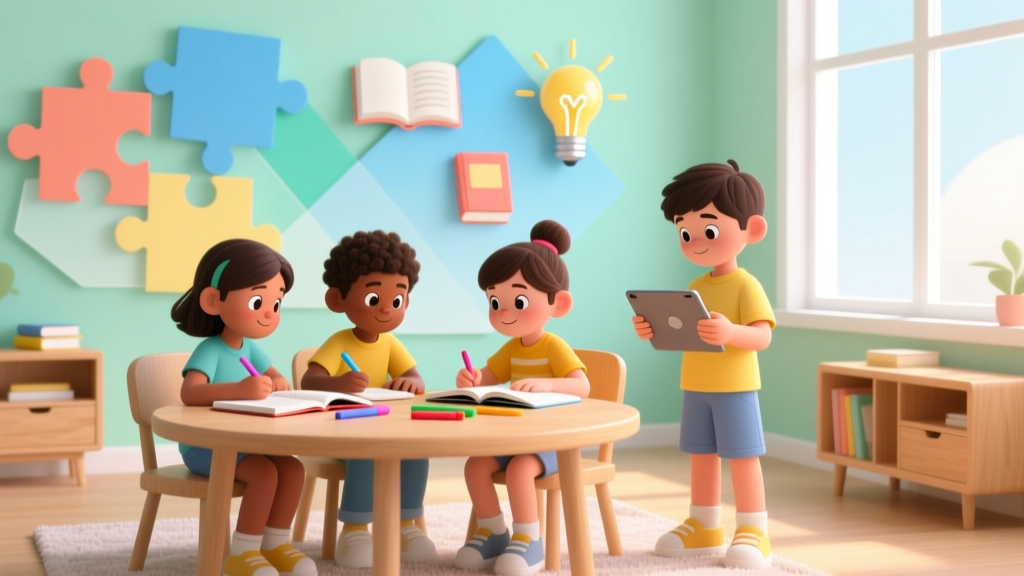
Kids with Divorced Parents: Stats & Resilience (2026)
Why This Number Matters More Than You Think — Right Now
What percent of kids have divorced parents? As of the most recent U.S. Census Bureau and National Center for Health Statistics (NCHS) data, approximately 34% of children under age 18 live in households where at least one parent is divorced — and when accounting for those who’ve experienced parental separation (including never-married or widowed parents), nearly half of all American children will witness a significant family structure change before turning 18. That’s not a distant statistic — it’s your neighbor’s child, your child’s best friend, your own son or daughter sitting quietly at the kitchen table, processing unspoken questions. And yet, far too often, this reality triggers anxiety, shame, or fatalism instead of informed action. The truth? Divorce itself isn’t the primary predictor of child outcomes — it’s how adults respond, communicate, protect, and co-regulate that shapes developmental trajectories. In this guide, we move beyond the headline number to deliver what you actually need: clarity grounded in decades of longitudinal research, real-world case examples from licensed child psychologists and family therapists, and five concrete, clinically validated practices you can start applying this week.
The Data Behind the Number: Context, Not Crisis
Let’s begin by grounding the ‘what percent’ question in nuance — because raw percentages without context risk oversimplification. The widely cited ‘34%’ figure comes from the 2022–2023 American Community Survey (ACS), which defines ‘divorced parents’ as children residing with a parent whose marital status is reported as ‘divorced’ — but crucially, this does not capture children living with both parents post-divorce (joint custody), those in blended families, or those whose parents separated without legal divorce. When researchers from the University of Michigan’s Panel Study of Income Dynamics (PSID) tracked over 5,000 children across 30 years, they found that 46% experienced at least one parental separation by age 18, with median age of first separation at 7.2 years. Importantly, only ~20% of those separations involved high-conflict litigation; the majority occurred with low-to-moderate conflict and strong ongoing parental cooperation.
Here’s what the data consistently shows — and what pediatricians want you to know: Children of divorce are not a monolithic group. Outcomes vary dramatically based on protective factors: consistent routines, warm parent-child relationships, minimal exposure to interparental hostility, access to mental health support when needed, and socioeconomic stability. According to Dr. Robert Emery, clinical psychologist and director of the Center for Children, Families, and the Law at the University of Virginia, “The single strongest predictor of child adjustment after divorce is the quality of the parent-child relationship — not the marital status of the parents.” This reframes everything: It’s not about avoiding family change, but about cultivating relational resilience.
Five Evidence-Based Strategies to Build Resilience — Not Just Manage Fallout
Resilience isn’t inherited — it’s cultivated through daily interactions, intentional communication, and emotionally intelligent scaffolding. Below are five strategies backed by peer-reviewed studies, clinical practice guidelines from the American Academy of Pediatrics (AAP), and real-world implementation from school-based social-emotional learning (SEL) programs.
- Use ‘Developmentally Anchored Language’ — Not Adult Euphemisms: Avoid phrases like “Mommy and Daddy aren’t happy together” or “We’re just taking a break.” Young children interpret these literally and often blame themselves. Instead, use clear, age-appropriate statements: “Your mom and dad decided not to live together anymore. That’s a grown-up decision. It has nothing to do with you. You are loved, safe, and will always be our child.” For tweens and teens, add: “This doesn’t change our commitment to you — but it does mean we’ll need to figure out new routines together.” Research published in Journal of Family Psychology (2021) found children who received direct, non-blaming explanations showed 42% lower rates of internalizing symptoms at 12-month follow-up.
- Create a ‘Stability Anchor Kit’ for Transitions: Frequent transitions between homes trigger cortisol spikes in children. A study in Pediatrics (2020) measured salivary cortisol in 8–12-year-olds during handoffs and found levels spiked 68% higher when transitions lacked predictability. Your kit: a laminated visual schedule (with photos if pre-literate), a ‘transition box’ containing favorite comfort items, a shared digital calendar with color-coded events (e.g., blue = Dad’s house, green = Mom’s house), and a ‘goodbye ritual’ (e.g., three hugs + one secret handshake). One family in Portland reduced meltdowns by 90% in 6 weeks using this system.
- Establish a ‘No-Blame Co-Parenting Communication Protocol’: Conflict between parents is the #1 stressor for children — far more damaging than divorce itself. The AAP recommends the ‘BIFF’ method (Brief, Informative, Friendly, Firm) for all written communication: state facts only, avoid emotion words, keep messages under 3 sentences, and never copy the other parent on emails to teachers or doctors. Use tools like OurFamilyWizard or TalkingParents — not text messages — for logistics. Therapist Dr. Lisa Schuman, author of Co-Parenting After Divorce, notes: “When parents stop debating history and focus on logistics, children stop feeling like messengers or mediators.”
- Normalize Feelings With ‘Emotion Mapping’: Children often suppress grief, anger, or confusion to ‘protect’ parents. Introduce an ‘Emotion Map’ — a simple chart with faces showing feelings (happy, sad, angry, confused, relieved, lonely) and space to draw or write ‘Where I feel this’ (e.g., ‘My tummy feels tight when I go to Dad’s on Friday’) and ‘What helps me feel better’ (e.g., ‘Calling Grandma,’ ‘Drawing with markers’). This builds emotional literacy and gives caregivers concrete entry points for support.
- Build External ‘Connection Anchors’ Beyond the Nuclear Family: Children with at least one consistent, caring adult outside their immediate household (a teacher, coach, grandparent, counselor) show significantly stronger long-term outcomes. A landmark Harvard Study of Adult Development found this ‘third adult’ buffered against adverse childhood experiences (ACEs) more powerfully than family income or education level. Proactively identify and nurture these relationships — invite that trusted aunt to weekly bike rides, ask your child’s music teacher to check in monthly, or enroll in a community mentorship program like Big Brothers Big Sisters.
What the Numbers Hide: Socioeconomic, Racial, and Cultural Realities
While national averages provide a useful benchmark, they mask critical disparities. According to the Urban Institute’s 2023 analysis of PSID data, children in households earning under $30,000 annually are 2.7x more likely to experience parental divorce than those in households earning $100,000+, largely due to economic stressors impacting relationship stability — not moral failing. Similarly, cultural context profoundly shapes meaning: In many Latino and Asian American communities, extended-family co-residence buffers the impact of divorce, while in some Black communities, high rates of non-marital childbearing mean ‘divorce’ statistics underrepresent actual family complexity. Crucially, the AAP emphasizes that ‘family structure is less important than family function’: Warmth, consistency, and safety matter more than legal labels. A 2022 study in Child Development followed 1,200 children across racial/ethnic groups and found that when controlling for parental warmth and cognitive stimulation, divorce status accounted for less than 3% of variance in adolescent academic achievement.
One powerful example: Maria, a single Latina mother in San Antonio, navigated divorce while living with her parents and two siblings. Her 9-year-old daughter attended school with a ‘two-home’ backpack (one set of supplies at each residence) and participated in weekly ‘abuela-led’ storytelling circles. When asked about her family, she said, “I have four parents — Abuela, Tata, Mommy, and Daddy. They all love me different ways.” This reframing — rooted in cultural strength, not deficit — exemplifies how intentionality transforms structure into security.
When to Seek Professional Support — And What to Look For
It’s normal for children to grieve, regress, or express confusion after divorce — but certain signs warrant professional evaluation. The AAP’s 2023 Clinical Report on Family Transitions flags these red flags: persistent sleep disturbances (>4 weeks), refusal to attend school for >3 days, somatic complaints (stomachaches, headaches) with no medical cause, aggressive behavior toward peers or pets, or self-referential statements like “I made them split up.” Importantly, therapy isn’t just for ‘problems’ — it’s preventive care. Play therapy for younger children, narrative therapy for tweens, and family systems approaches for co-parenting alignment all show strong efficacy.
When selecting a provider, prioritize those with specific training in child development and divorce transition — not just general counseling credentials. Ask: “Do you use evidence-based models like TF-CBT (Trauma-Focused CBT) or PCIT (Parent-Child Interaction Therapy)?” “How do you involve both parents in treatment, even if they’re not in the same room?” “Can you collaborate with our child’s school counselor?” Look for providers affiliated with university-affiliated clinics or members of the Association of Family and Conciliation Courts (AFCC). Many offer sliding-scale fees or accept Medicaid — and schools often provide free SEL support through Title I funding.
| Data Point | National Estimate (U.S.) | Key Context & Caveats | Source & Year |
|---|---|---|---|
| Percent of children under 18 living with a divorced parent | 34% | Based on ACS self-reported marital status; excludes children in joint physical custody where neither parent reports as 'divorced' in household surveys | U.S. Census Bureau, 2023 ACS 1-Year Estimates |
| Percent experiencing parental separation by age 18 | 46% | Includes divorce, separation, never-married parents splitting, and widowhood; reflects longitudinal tracking | University of Michigan PSID, 2022 Cohort Analysis |
| Average age of first parental separation | 7.2 years | Peak vulnerability period for attachment formation; underscores need for early intervention | Journal of Marriage and Family, 2021 |
| Children in high-conflict divorces showing clinical anxiety/depression symptoms | 28–35% | Contrasts sharply with 12–15% in low-conflict divorces — highlighting conflict, not divorce, as key driver | American Psychological Association, 2020 Meta-Analysis |
| Reduction in child behavioral issues with consistent co-parenting communication | Up to 57% | Measured via CBCL scores at 6-month intervals; requires sustained implementation of structured protocols | Pediatrics, 2020 |
Frequently Asked Questions
Does divorce cause long-term damage to children?
No — not inherently. Decades of longitudinal research, including the landmark 25-year study by Dr. E. Mavis Hetherington at the University of Virginia, show that 80% of children of divorce develop into well-functioning adults with healthy relationships, academic success, and emotional regulation. The critical factor isn’t the divorce itself, but whether children experience chronic interparental conflict, economic hardship, or disrupted attachments. As Dr. Hetherington concluded: “Divorce is a life event, not a life sentence.”
Should I stay married ‘for the kids’?
This is one of the most common and painful questions — and the answer depends entirely on your family’s reality. Research consistently shows that children exposed to high-conflict marriages (verbal aggression, contempt, stonewalling) fare worse than children in low-conflict divorced homes. The AAP advises: If staying together means modeling disrespect, fear, or emotional withdrawal, separation may be the healthier path — provided both parents commit to cooperative co-parenting and emotional safety. A therapist trained in family systems can help you assess your specific dynamics.
How do I explain divorce to a 4-year-old versus a 14-year-old?
For preschoolers (3–5): Use concrete, sensory language (“You’ll still sleep in your same bed at Mommy’s, and have your blue blanket at Daddy’s”) and repeat core messages: “This isn’t your fault,” “You get to love both of us,” “We’ll tell you what’s changing.” For tweens/teens: Acknowledge complexity (“This is confusing and unfair — it’s okay to feel angry”), invite questions without defensiveness, and clarify boundaries (“I won’t share details about our relationship, but I will tell you what changes for you”). Always validate their perspective — their grief is real, even if it looks different from yours.
Is joint custody always best for kids?
No — ‘best’ is determined by safety, stability, and developmental needs — not legal ideals. The AAP states joint physical custody is beneficial only when parents demonstrate low conflict, geographic proximity, flexible schedules, and mutual respect. For young children under 5, frequent transitions can disrupt attachment security; for teens, rigid schedules may impede autonomy development. Customized arrangements — like ‘nesting’ (child stays in one home, parents rotate) or graduated transitions — often serve children better than one-size-fits-all models.
What books or resources do you recommend for kids and parents?
For children: Dinosaurs Divorce (LaCour/Lazear) for ages 4–8; Two Homes (Claire Masurel) for ages 3–7; It’s Not Your Fault, Koko Bear (Vicki Lansky) for sensitive kids. For parents: The Co-Parenting Handbook (Karen Bonnell) offers practical scripts; Putting Children First (JoAnne Pedro-Carroll) is grounded in 30+ years of clinical research; and the free online resource afccnet.org provides vetted co-parenting tools and therapist directories.
Common Myths About Children and Divorce
- Myth #1: “Kids will ‘get over it’ if we just keep things normal.” — Reality: Minimizing the transition invalidates children’s grief. Normalcy is rebuilt, not preserved. Children need explicit acknowledgment of loss (“It’s okay to miss having everyone together”) and co-created new rituals (“Our Friday night pizza-and-movie tradition starts next week — just us!”).
- Myth #2: “If my child seems fine, they’re fine.” — Reality: Many children become ‘parentified’ — suppressing emotions to care for adults’ feelings. Watch for subtle signs: sudden perfectionism, excessive people-pleasing, withdrawal from friends, or somatic symptoms. As child psychologist Dr. Laura Markham reminds: “Silence isn’t peace — it’s often the sound of a child holding their breath.”
Related Topics (Internal Link Suggestions)
- Age-Appropriate Ways to Explain Divorce — suggested anchor text: "how to tell your child about divorce by age"
- Co-Parenting Communication Tools That Actually Work — suggested anchor text: "best co-parenting apps for divorced parents"
- School Support for Children of Divorce — suggested anchor text: "helping your child's teacher understand family changes"
- Blended Family Dynamics and Step-Parenting — suggested anchor text: "building trust in stepfamilies after divorce"
- Financial Planning for Single Parents After Divorce — suggested anchor text: "budgeting tips for divorced moms and dads"
Your Next Step: Choose One Anchor — Then Act
You don’t need to overhaul your entire co-parenting system today. Resilience grows in small, consistent actions — not grand gestures. Pick just one strategy from this guide that resonates most right now: maybe it’s drafting your first BIFF email, sketching your child’s ‘Emotion Map,’ or calling your school counselor to ask about SEL supports. Set a timer for 12 minutes — that’s all it takes to draft a message, print a visual schedule, or make one phone call. Because here’s what the data, the clinicians, and thousands of families confirm: your intentional presence — not perfection — is the greatest protective factor your child will ever have. You’ve already taken the hardest step: seeking understanding. Now, let’s build something steady, together.
More Articles
 Women’s Size 7 to Kids Shoe Size Conversion (2026)
 When Do Kids Go Through Growth Spurts? (2026)
 Ciara’s Kids, Fertility Journey & Co-Parenting Realities
 Why Do All Down Syndrome Kids Look Alike
 Does Charlie Kirk Have Kids? The Verified Facts
 How Long Should Kids Be in a 5-Point Harness?
 Are Schnauzers Good With Kids? (2026)
 Why Don't I Like Kids? You're Not Broken
 Tummy Tuck and Pregnancy: Wait 12–18 Months (2026)
 What Is a Kids Size 6 in Women’s? (2026)