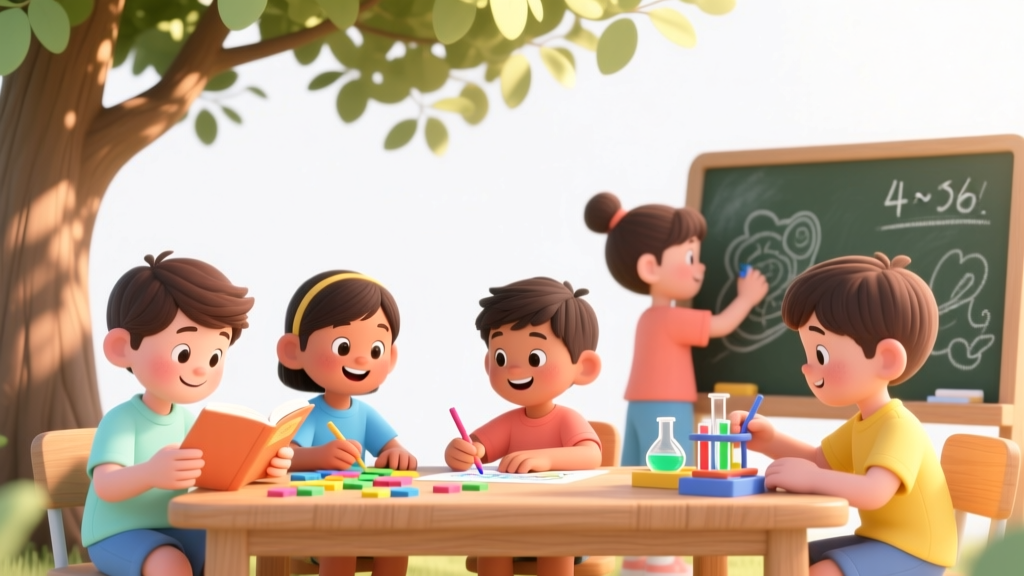
What Makes a Kid Autistic? 7 Evidence-Based Truths (2026)
Why This Question Matters More Than Ever — And Why 'What Makes a Kid Autistic?' Deserves Honest, Compassionate Answers
If you’ve recently asked yourself what makes a kid autistic, you’re not searching for labels — you’re seeking clarity, reassurance, and direction. You may have noticed your child lines up toys obsessively, avoids eye contact during storytime, repeats phrases in a sing-song voice, or becomes overwhelmed by the hum of fluorescent lights at preschool. These observations aren’t ‘just quirks’ — nor are they signs of poor parenting, vaccine exposure, or emotional neglect. Autism is a lifelong neurodevelopmental difference rooted in how the brain grows and connects — and understanding what makes a kid autistic starts with replacing fear with facts, stigma with science, and uncertainty with agency.
Today, 1 in 36 U.S. children receives an autism diagnosis (CDC, 2023), yet only 42% receive their first evaluation before age 3 — missing critical windows for early support. This article distills insights from pediatric neurologists, developmental-behavioral pediatricians, and decades of longitudinal research into practical, nonjudgmental guidance. We’ll walk you through the real biological underpinnings, clarify what *doesn’t* cause autism, explain how diagnosis actually works (hint: it’s not a blood test), and give you concrete tools to advocate — whether you’re waiting for an evaluation, navigating IEP meetings, or simply trying to understand your child’s beautiful, unique mind.
The Real Roots: What Science Says Actually Contributes to Autism
Autism isn’t caused by one thing — it’s the result of complex, layered interactions between biology and development. Think of it like a symphony: dozens of genetic ‘instruments’ tuning up, brain circuits wiring in distinctive patterns, and early sensory experiences shaping how those circuits fire. Here’s what peer-reviewed research consistently affirms:
- Genetics is the strongest known contributor — over 1,000 genes have been linked to autism risk, many involved in synapse formation, neuronal migration, and gene regulation. A 2022 study in Nature Genetics found that inherited common variants account for ~60% of autism liability; rare de novo mutations (not present in either parent) add another ~15–20%. Importantly: having a genetic variant doesn’t guarantee autism — it increases susceptibility within a developmental context.
- Early brain development differences are measurable — but not ‘deficits’. MRI studies show accelerated cortical growth in the first two years, particularly in regions governing social attention and sensory processing (Courchesne et al., 2011). This isn’t ‘abnormal’ — it’s a different trajectory. As Dr. Rebecca Landa, founding director of the Kennedy Krieger Institute’s Center for Autism and Related Disorders, explains: “We’re seeing alternative wiring, not broken wiring. The brain builds pathways optimized for pattern recognition, detail focus, or systemizing — sometimes at the expense of rapid social cue integration.”
- Environmental factors play a modulating role — not a causal one. Prenatal exposures like maternal infection (especially severe influenza in second trimester), certain medications (e.g., valproic acid), or extreme prematurity (<32 weeks) correlate with increased risk — but only in genetically predisposed children. Crucially, these are population-level associations, not deterministic causes. No credible study links autism to vaccines, diet, screen time, or parenting style.
Here’s what this means for you: If you’re wondering what makes a kid autistic, the answer isn’t blame, guilt, or a single ‘smoking gun’. It’s a constellation of inherited neurobiological traits that unfold uniquely in each child — shaped by their genes, their womb environment, and their lived experiences. Your role isn’t to ‘fix’ the cause — it’s to nurture the child who emerges from it.
How Diagnosis Actually Works: Beyond Checklists and Waiting Lists
Many parents assume diagnosis hinges on counting behaviors: ‘Does my child make eye contact? Does he respond to his name? Does she line up toys?’ While standardized tools like the ADOS-2 (Autism Diagnostic Observation Schedule) and M-CHAT-R/F (Modified Checklist for Autism in Toddlers) use structured observations and parent interviews, diagnosis is fundamentally a clinical judgment — not a pass/fail test. It requires ruling out other conditions (hearing loss, language disorders, anxiety, trauma responses) and assessing how traits impact daily functioning across settings.
A gold-standard evaluation involves a multidisciplinary team: a developmental pediatrician or child psychologist, a speech-language pathologist, and often an occupational therapist. They observe your child playing, interacting, communicating, and responding to sensory input — then integrate findings with your detailed history. According to the American Academy of Pediatrics (AAP), diagnosis can be reliably made as early as 18–24 months, yet average age of first evaluation remains 4 years, 4 months (CDC, 2023).
Why the delay? Often, it’s systemic: long waitlists, insurance barriers, or providers misattributing early signs to ‘shyness’ or ‘speech delay’. But here’s your action plan:
- Document specifics, not generalizations: Note exact examples — e.g., “At 22 months, ignores name 8/10 times when focused on spinning wheels, but responds immediately when offered preferred snack.”
- Request referral — in writing: Ask your pediatrician for a referral to Early Intervention (for kids under 3) or a developmental specialist. Under IDEA law, states must provide free evaluations if concern is documented.
- Trust your instinct — especially if professionals dismiss you. A 2021 study in Pediatrics found parental concern predicted autism diagnosis with 89% sensitivity — higher than any screening tool alone.
What Absolutely Does NOT Cause Autism: Debunking Harmful Myths with Data
Misinformation about autism causes persists because it offers false simplicity — and sometimes, misplaced blame. Let’s dismantle three dangerous myths with unambiguous evidence:
- Myth #1: Vaccines cause autism. This claim originated from a 1998 fraudulently retracted paper. Since then, over 25 large-scale studies involving >20 million children across 7 countries have found zero link between vaccines (including MMR) and autism. The CDC, WHO, and American Academy of Pediatrics all state unequivocally: vaccines do not cause autism.
- Myth #2: Poor parenting or ‘refrigerator mothers’ create autism. Coined in the 1940s, this theory blamed emotionally detached mothers — causing profound harm and delaying research for decades. Modern neuroscience confirms autism arises prenatally; parenting style influences outcomes (supportive vs. punitive), but does not cause the condition itself.
- Myth #3: Screen time or digital overstimulation triggers autism. While excessive screen time correlates with delayed language in toddlers (per AAP guidelines), it does not alter neurodevelopmental trajectories toward autism. Children who are autistic may seek screens for predictable sensory input — but screens don’t rewire the brain to become autistic.
These myths aren’t just wrong — they’re corrosive. They waste precious time, fuel parental shame, and divert resources from evidence-based supports. When you ask what makes a kid autistic, the answer must center biology, not blame.
Support That Changes Trajectories: From ‘What Causes It?’ to ‘How Do We Thrive?’
Understanding causation matters — but what changes lives is knowing how to support. Research shows early, individualized intervention leads to measurable gains in communication, social engagement, and adaptive skills. Key evidence-based approaches include:
- Speech-Language Therapy (SLP) using Naturalistic Developmental Behavioral Interventions (NDBIs) like JASPER — which embed learning in play, follow the child’s lead, and build reciprocity, not rote imitation.
- Occupational Therapy (OT) focused on sensory integration and motor planning — helping children regulate responses to sound, touch, or movement so they can participate in school or family meals.
- Parent-Mediated Intervention (e.g., Hanen’s More Than Words®): Parents learn strategies to boost communication during daily routines — proven to increase child-initiated communication by 40% in randomized trials (Green et al., 2010).
Crucially, effective support honors neurodiversity. It doesn’t aim to ‘normalize’ — it builds capacity, reduces distress, and amplifies strengths. A child who hyperfocuses on train schedules may become an exceptional logistics planner; one who notices minute visual details might excel in coding or forensic science. As autistic self-advocate and researcher Dr. Wenn Lawson says: “Don’t ask what’s wrong with me. Ask what’s working — and how we can build on that.”
| Intervention Type | Best For | Key Evidence-Based Outcomes (per NIH & AAP Reviews) | Typical Age Range | Parent Role |
|---|---|---|---|---|
| Naturalistic Developmental Behavioral Intervention (NDBI) | Children with emerging language, social motivation, but difficulty with back-and-forth interaction | ↑ 30–50% in spontaneous communication; ↑ joint attention duration by 2.5x; ↓ caregiver stress | 18–60 months | Trained to embed goals in play, meals, bath time — no extra ‘therapy hours’ needed |
| Sensory Integration Therapy (SI) | Children with significant sensory sensitivities impacting daily function (e.g., meltdowns at haircuts, refusal of clothing textures) | ↓ Sensory avoidance behaviors by 65%; ↑ participation in school routines; ↑ sleep quality | 2–12 years | Collaborate with OT to create ‘sensory diets’ — movement breaks, weighted blankets, noise-canceling headphones |
| Social Communication Intervention (e.g., SCERTS) | Children with stronger language but challenges reading social cues, managing emotions, or flexible thinking | ↑ Peer engagement by 42%; ↑ problem-solving flexibility; ↓ anxiety in group settings | 4–12 years | Practice scripts, role-play scenarios, co-create visual supports (emotion charts, ‘what to expect’ calendars) |
| Augmentative & Alternative Communication (AAC) | Nonverbal or minimally verbal children, regardless of cognitive ability | ↑ Expressive language by 200%+ in 6 months; ↓ frustration-related behaviors; ↑ academic participation | All ages — start as young as 12 months | Model AAC use constantly (‘I want juice’ → tap icon); presume competence; avoid forcing speech |
Frequently Asked Questions
Can autism be ‘cured’ or ‘outgrown’?
No — autism is a lifelong neurodevelopmental variation, not a disease. While some children lose their diagnosis (often those with milder support needs and strong early intervention), their neurology remains autistic. The goal isn’t cure, but support: reducing disabling barriers (sensory overload, communication gaps, social misunderstanding) so autistic individuals can thrive authentically. As the Autistic Self Advocacy Network states: “We don’t need to be fixed. We need acceptance, accommodations, and opportunity.”
Is autism more common now — or are we just diagnosing better?
Both. Improved awareness, broader diagnostic criteria (DSM-5), and reduced stigma explain much of the rise — but epidemiological studies also suggest a true increase of ~10–15% beyond detection effects, likely tied to older parental age and improved neonatal survival for preterm infants. What hasn’t changed: autism has always existed. What’s new is our capacity — and commitment — to recognize it.
Do girls present differently — and get missed more often?
Yes — profoundly. Girls often mask symptoms more effectively: mimicking peers socially, internalizing anxiety instead of acting out, developing intense special interests that appear ‘typical’ (e.g., animals, celebrities, literature). They’re diagnosed 3–4 years later on average and frequently misdiagnosed with anxiety or depression first. Clinicians trained in female autism presentation are essential.
What’s the difference between autism and ADHD, sensory processing disorder, or social communication disorder?
These conditions share overlapping features (e.g., executive function challenges, sensory sensitivities), but differ in core domains. Autism involves persistent differences in social communication *and* restricted/repetitive behaviors/interests. ADHD centers on attention regulation, impulse control, and hyperactivity. SPD focuses solely on sensory modulation without the social-communication or RRB components. Social Communication Disorder (SCD) affects pragmatics (e.g., taking turns, understanding sarcasm) but lacks RRBs. Accurate differential diagnosis requires expert assessment — because treatment paths differ significantly.
How do I talk to my child about their autism diagnosis?
Start early, positively, and honestly — using age-appropriate language. For preschoolers: “Your brain works in a super cool way! It helps you notice tiny details and remember train schedules, and sometimes it makes loud noises feel too big — so we use headphones.” For older kids: Frame autism as a neurological identity, not a deficit. Share strengths (pattern-finding, honesty, deep focus) alongside challenges (social exhaustion, sensory overwhelm) — and emphasize supports exist *because* of who they are, not to change them. Resources like the book All My Stripes (by Shaina Rudolph) or videos from autistic creators (e.g., Amythest Schaber) offer excellent models.
Common Myths About Autism Causes
Myth: Autism is caused by bad gut health or ‘leaky gut’. While some autistic individuals experience GI issues (constipation, reflux), large-scale studies find no causal link between gut microbiome composition and autism onset. GI symptoms are more likely comorbidities — possibly due to shared genetic pathways or sensory-driven food selectivity — not root causes.
Myth: Heavy metals like mercury or aluminum cause autism. Extensive toxicology research, including CDC and WHO reviews, finds no association between environmental heavy metal exposure and autism prevalence. Blood and hair mercury levels in autistic children match neurotypical peers. Vaccine preservatives (like thimerosal, removed from childhood vaccines in 2001) were never linked to autism in rigorous studies.
Related Topics (Internal Link Suggestions)
- Early Signs of Autism in Toddlers — suggested anchor text: "early autism signs by age"
- How to Get an Autism Evaluation for Your Child — suggested anchor text: "autism evaluation process step-by-step"
- Best Evidence-Based Therapies for Autistic Children — suggested anchor text: "autism therapies backed by science"
- Creating a Sensory-Friendly Home for Autism — suggested anchor text: "sensory-friendly home setup"
- Autism and School: IEPs, 504 Plans, and Advocacy Tips — suggested anchor text: "IEP guide for autistic students"
Conclusion & Your Next Step
So — what makes a kid autistic? It’s not a single trigger, a parenting failure, or a mystery to be solved. It’s the natural expression of a neurology shaped by hundreds of genetic variants, early brain development patterns, and life experiences — resulting in a mind that perceives, processes, and interacts with the world in beautifully distinct ways. Understanding this doesn’t remove challenges — but it transforms them from sources of confusion into opportunities for tailored support.
Your next step isn’t waiting for answers — it’s taking one concrete action today. Pick *one*: document three specific observations about your child’s communication or sensory responses; call your pediatrician and request a written referral for Early Intervention or developmental evaluation; or download the free M-CHAT-R/F screener (from mchatscreen.com) and complete it with honesty and compassion. You don’t need all the answers right now. You just need to begin — with knowledge, kindness, and the unwavering belief that your child’s neurology is valid, valuable, and worthy of celebration.
More Articles
 Chia Pudding for Kids: Safety, Age & Prep Guide
 How Many Kids Does Matt Barnes Have? (2026)
 How Old Are 2012 Kids Now? (2024)
 Kids Blood Pressure Ranges: AAP Guidelines (2026)
 Walking Pneumonia in Kids: Signs, Treatment & Prevention
 How to Get Kids to Eat: 7 Science-Backed Strategies
 Does Wade Wilson Have Kids Deadpool Fatherhood Explained
 Is David Appropriate for Kids? Pediatrician-Approved Guide
 Are Kids Off School Today? Real-Time Closure Checker
 Summer Jobs for Kids: Legal, Safe & Skill-Building (2026)