
Kindergarten Readiness Skills That Actually Matter
Why This Isn’t Just About Letters and Numbers — It’s About Readiness
If you’ve ever scrolled through Pinterest boards titled 'Kindergarten Readiness Checklist' and felt your stomach drop at the sight of 47 bullet points — from 'can write full name' to 'identifies all 50 states' — you’re not alone. But here’s the truth no one shouts loudly enough: what kids should know before kindergarten has almost nothing to do with academic acceleration and everything to do with how safely, confidently, and independently they can navigate a new social world. According to the American Academy of Pediatrics (AAP), over 80% of kindergarten teachers report that the top predictors of early school success aren’t letter recognition or counting fluency — they’re emotional regulation, sustained attention, and basic self-care competence. This isn’t about pushing kids harder; it’s about preparing them *smarter*, with empathy, evidence, and zero guilt.
1. The Social-Emotional Foundation: Why ‘Can Share’ Matters More Than ‘Can Spell’
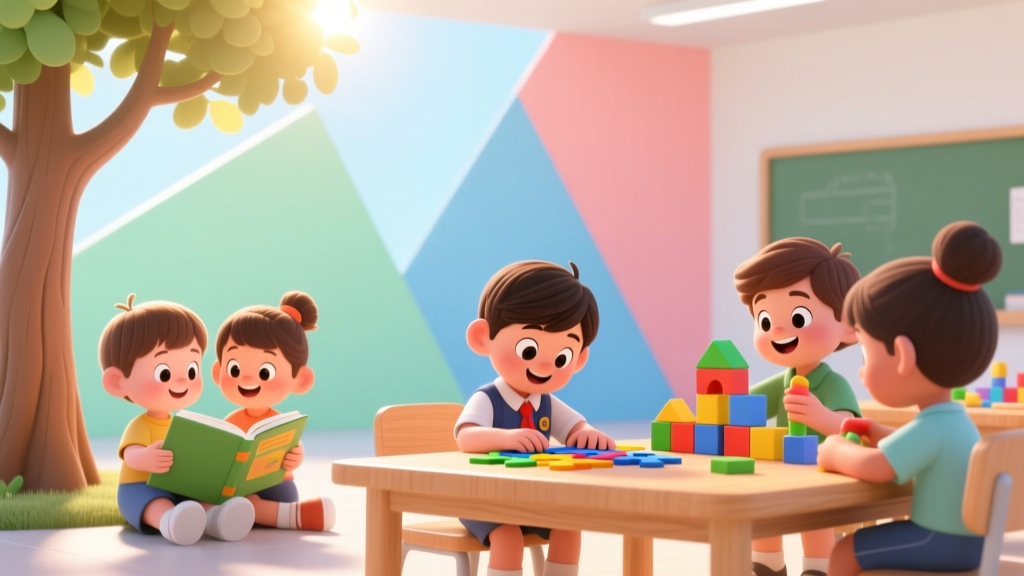
Kindergarten is the first real test of group living for most children. It’s where they learn to wait in line, manage disappointment when their turn is delayed, read facial cues during circle time, and ask for help without melting down. These aren’t ‘soft skills’ — they’re neurobiological necessities. Research from the Yale Child Study Center shows children with strong early social-emotional skills are 4x more likely to graduate high school and 3x less likely to require behavioral intervention by Grade 3.
So what does this look like in practice? It starts long before August. Try this simple daily ritual: During snack time, pause and say, ‘I notice you waited patiently while Maya finished her story. That was really kind.’ Name the behavior *and* the feeling behind it. Avoid generic praise like ‘Good job!’ — instead, use descriptive language: ‘You used your words to ask for the blue crayon instead of grabbing. That helped us keep our art table peaceful.’
A real-world example: When 5-year-old Leo started kindergarten, he’d scream and hide under tables during transitions. His teacher didn’t label him ‘disruptive’ — she partnered with his parents to co-create a visual ‘transition cue card’ (a laminated photo of Leo walking calmly to the rug) and practiced it at home for 90 seconds each morning. Within three weeks, his meltdowns dropped from 5–7 per day to zero. Why? Because his brain wasn’t being asked to ‘behave better’ — it was being given a predictable, sensory-friendly roadmap.
2. Executive Function in Action: Beyond ‘Sit Still’ to ‘Manage Myself’
‘Executive function’ sounds clinical — but it’s simply the brain’s air traffic control system: working memory (holding instructions in mind), cognitive flexibility (shifting between tasks), and inhibitory control (pausing before acting). A child who can follow two-step directions (“Put your shoes in the bin, then wash your hands”) is demonstrating executive function — not obedience.
Here’s what works — and what doesn’t:
- DO: Use physical anchors. Instead of saying, ‘Remember to hang up your coat,’ place a bright sticker shaped like a coat hanger next to the hook. Visual cues reduce working memory load by 60%, per a 2023 University of Washington early learning study.
- DO: Play ‘Red Light, Green Light’ with intentional variations — e.g., ‘Green Light = hop on one foot,’ ‘Yellow Light = freeze and name something yellow.’ This builds cognitive flexibility through joyful repetition.
- AVOID: Over-scheduling. One 2022 longitudinal study tracked 2,100 children and found those with ≥2 unstructured play hours per day had significantly stronger inhibitory control at age 6 than peers in highly structured enrichment programs — even after controlling for socioeconomic status.
Dr. Laura Jana, pediatrician and co-author of The Toddler Brain, puts it plainly: ‘We’re not training future CEOs. We’re helping little brains build the neural pathways to *stop*, *think*, and *choose*. That happens in play — not worksheets.’
3. Communication & Self-Advocacy: The Power of ‘I Need…’
Many kindergarten struggles begin not with academics, but with silence. A child who can’t articulate ‘My tummy hurts,’ ‘I don’t understand,’ or ‘I need help tying my shoe’ is at high risk for withdrawal, frustration, or misbehavior. Yet most parents focus on expressive language (‘Say the word’) while overlooking pragmatic language — the social use of speech.
Build pragmatic skills with these low-effort, high-impact habits:
- Model ‘I’ statements: Replace ‘You need to use the potty’ with ‘I see your diaper is wet. I need you to tell me *before* it gets wet so we can go together.’
- Create safe ‘mistake moments’: Intentionally misplace a toy and say aloud, ‘Oops! I lost the truck. I need help finding it. Can you help me?’ Then celebrate their response — even if they just point.
- Use ‘choice architecture’: Offer only two options — ‘Do you want apple slices or banana for snack?’ — rather than open-ended questions. This reduces cognitive load and builds confidence in decision-making.
Case in point: Maya, age 5, rarely spoke in preschool. Her parents stopped asking ‘How was school?’ and started using photo journals: each evening, they’d flip through 3 pictures from her day (a classmate, her cubby, her lunchbox) and ask, ‘Which one made you smile today?’ Within six weeks, Maya began initiating stories unprompted — not because her vocabulary expanded, but because the *structure* gave her brain scaffolding to access it.
4. Practical Independence: Why Dressing, Wiping, and Pouring Are Academic Skills
Here’s a hard truth: Children who rely on adults for basic self-care spend precious cognitive energy on shame, anxiety, or avoidance — leaving little bandwidth for learning letters or numbers. The National Association for the Education of Young Children (NAEYC) identifies dressing, toileting, handwashing, and managing lunch containers as critical ‘readiness behaviors’ — not ‘extras.’
But independence isn’t about perfection. It’s about *process competence*: knowing the sequence, tolerating mess, and persisting through frustration. A child who can unzip their jacket — even if it takes 45 seconds and they get stuck halfway — is building neural stamina far more valuable than reciting the alphabet backward.
Try the ‘Backward Chaining’ method: For handwashing, do *all* steps except the last one (turning off the faucet), then let your child finish. Next time, do all but the last two (drying hands + turning off faucet). Gradually fade support — this builds mastery *and* agency.
| Skill Domain | What ‘Ready’ Actually Looks Like (Age 5–5.5) | Red Flag vs. Normal Variation | Simple Home Practice (5 mins/day) |
|---|---|---|---|
| Self-Regulation | Can calm down within 5 minutes after upset with minimal adult support; uses simple strategies (deep breaths, hugging stuffed animal) | Red Flag: Frequent, prolonged meltdowns (>15 min) requiring physical restraint or complete disengagement Normal: Occasional big feelings — especially with fatigue or transition |
Practice ‘turtle time’: When calm, teach child to tuck chin, wrap arms around knees, and breathe slowly while whispering ‘I am safe’ |
| Language & Communication | Uses 4–5 word sentences consistently; tells simple stories with beginning/middle/end; asks ‘why’ and ‘how’ questions | Red Flag: Limited vocabulary (<50 words); no two-word combinations by age 2.5; difficulty understanding simple directions Normal: Mispronounces sounds (e.g., ‘wabbit’ for ‘rabbit’) — resolves naturally by age 7 |
Play ‘story chain’: Start a sentence (‘The dog saw a…’), child finishes, then they start next sentence — builds narrative sequencing |
| Fine Motor & Independence | Can hold pencil with tripod grasp; copies circle, cross, and vertical line; manages zippers/buttons; washes hands independently | Red Flag: Cannot hold utensil; avoids drawing/writing entirely; still needs full assistance with clothing or toileting at age 5.5 Normal: Messy handwriting; occasional accidents during stressful days |
‘Clothing challenge’: Lay out 3 items (shirt, pants, socks) — time how long it takes to dress (no pressure, just curiosity); celebrate speed *and* effort |
| Early Math Awareness | Counts 10 objects accurately; matches sets (‘same number’); understands ‘more/less’ in concrete contexts (e.g., ‘Who has more crackers?’) | Red Flag: Cannot count beyond 3; confuses numbers with letters; no concept of quantity Normal: Counts with ‘number words’ but skips numbers or double-counts — typical pre-counting stage |
Count stairs going up/down; sort laundry by color/size; measure ingredients while baking (‘We need 2 cups — watch the line!’) |
Frequently Asked Questions
Is it okay if my child can’t write their name yet?
Absolutely — and it’s far more common than most parents realize. According to Dr. Rebecca Palacios, early childhood education specialist and former Head Start director, only about 40% of children enter kindergarten able to write their full name legibly. What matters more is whether they understand that letters represent sounds and can attempt to form *some* letters (even backwards or upside-down). Focus on fine motor strength (play-dough, stringing beads, tearing paper) and phonemic awareness (rhyming games, sound-matching) — writing will follow naturally.
Should I enroll my child in ‘kindergarten prep’ classes?
Only if they’re play-based, child-led, and led by certified early childhood educators. Many commercial ‘prep’ programs overemphasize rote academics and can actually backfire: a landmark 2021 Vanderbilt study found children in academically accelerated pre-K programs showed higher stress biomarkers and lower intrinsic motivation by Grade 2 compared to peers in play-rich settings. Ask providers: ‘What percentage of the day is unstructured play? How do you support emotional regulation?’ If they can’t answer concretely — walk away.
My child is advanced academically — do they still need these skills?
Yes — emphatically. Academic precocity without social-emotional grounding often leads to ‘gifted burnout’ or peer isolation. A child who reads at a 2nd-grade level but cannot tolerate losing a game may struggle more than a peer reading at grade level with strong coping tools. The AAP explicitly warns against skipping developmental stages: ‘Cognitive advancement does not negate the need for foundational self-regulation. In fact, it increases the demand for it.’ Prioritize balance — not acceleration.
What if my child has a diagnosed delay or IEP?
That changes everything — and nothing. The core principles remain: safety, dignity, and joyful engagement. Work closely with your child’s therapist and special educator to adapt goals. For example, if verbal communication is challenging, co-create a picture exchange system for classroom requests. Remember: kindergarten readiness isn’t a pass/fail test — it’s a collaborative launchpad. Under IDEA law, schools must provide appropriate supports. Document everything, ask for transition meetings *before* summer, and trust your advocacy.
How much screen time is too much before kindergarten?
The AAP recommends no screens (except video-chatting with family) for children under 18 months, and no more than 1 hour per day of high-quality programming for ages 2–5. Crucially, ‘high-quality’ means co-viewing with active discussion — not passive consumption. A 2023 JAMA Pediatrics study linked >2 hours/day of solo screen time before age 5 to 40% higher odds of attention difficulties in kindergarten. Swap screens for sensory bins (rice, dried beans, water beads), obstacle courses, or ‘listening walks’ (‘What 3 sounds can you hear right now?’).
Common Myths
Myth #1: “If they’re not reading by kindergarten, they’ll fall behind forever.”
False. The average child learns to read between ages 5–7 — and neuroimaging studies show no difference in long-term literacy outcomes between ‘early’ and ‘on-time’ readers. What *does* predict lifelong reading success is oral language richness: the number of words heard, quality of conversations, and exposure to varied vocabulary. Read *with* your child — ask open-ended questions about characters’ feelings, predict endings, connect stories to real life.
Myth #2: “Kindergarten is like ‘real school’ — they need to sit still and focus for 30+ minutes.”
Outdated and harmful. Modern kindergarten blocks rarely exceed 12–15 minutes of seated instruction. The rest is centers, movement breaks, outdoor time, and collaborative projects. Expecting sustained attention beyond a child’s developmental capacity stresses their nervous system and teaches them they’re ‘not good enough.’ Watch for engagement — not stillness.
Related Topics (Internal Link Suggestions)
- Kindergarten supply list essentials — suggested anchor text: "what every kindergarten teacher wishes parents knew about supplies"
- Separation anxiety before school starts — suggested anchor text: "gentle separation strategies that actually work"
- Montessori-inspired home activities — suggested anchor text: "practical life skills for preschoolers"
- When to delay kindergarten enrollment — suggested anchor text: "the red flags that signal your child might need an extra year"
- Screen time guidelines for preschoolers — suggested anchor text: "what the science says about tablets, TV, and developing brains"
Your Next Step Starts Today — Not Tomorrow
You don’t need a perfect plan, a Pinterest-worthy checklist, or a curriculum. You need presence — noticing your child’s efforts, naming their feelings, and trusting their innate drive to grow. Start with just one thing this week: choose one skill from the table above and weave it into your routine — not as a test, but as a shared experiment. Notice what lights them up. Celebrate the tiny wins: the deep breath before frustration, the ‘I did it!’ after buttoning a shirt, the quiet moment of focused stacking. Kindergarten readiness isn’t about filling a bucket — it’s about nurturing a flame. And you already have everything you need to tend it.
More Articles
 Retinol for Kids: Dermatologist Advice (2026)
 Kids Teeth Chart: Realistic Teething Timeline (2026)
 Does Fernando Tatis Jr. Have Kids? (2026)
 How Many Kids Does Cooper Manning Have? (2026)
 Zofran for Kids: FDA Ages, Dosing & Side Effects (2026)
 How to Raise Nice Kids: Science-Backed Habits (2026)
 How Many Kids Does Terrence Crawford Have?
 Kids Size 6 vs Women’s Size 6: What Parents Must Know
 Is Ella Ola Safe for Kids? Science-Backed Safety Facts
 Tisha Campbell’s Kids’ Ages: Family Timeline (2026)