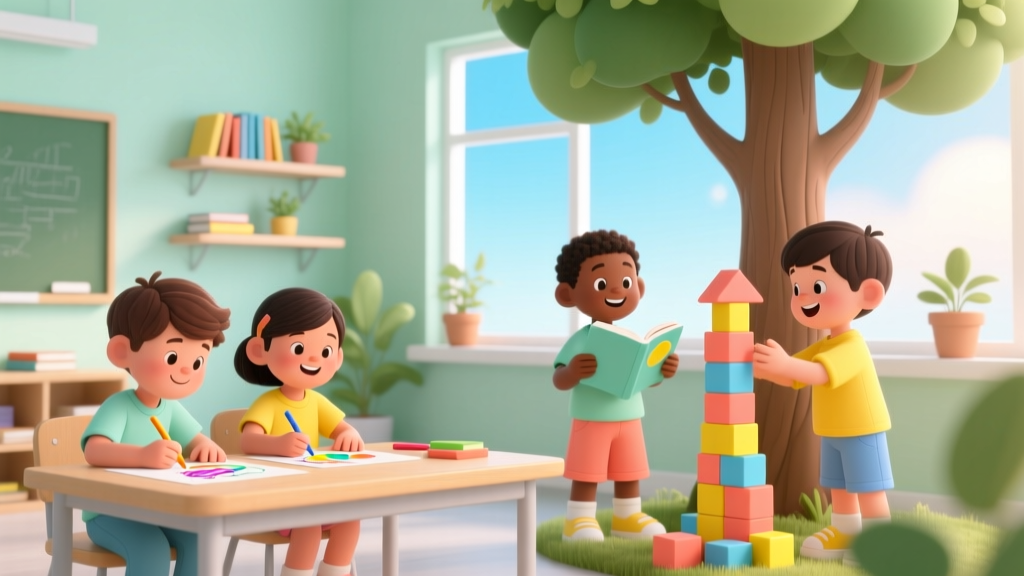
Kindergarten Skills Parents Need to Know (2026)
Why Knowing What Kids Learn in Kindergarten Changes Everything
If you’ve ever scrolled through Pinterest at 2 a.m. wondering whether your child should already know how to write their full name, tie shoes, or count to 100 — you’re not alone. What kids learn in kindergarten isn’t just about academics; it’s the invisible architecture supporting lifelong learning, resilience, and emotional intelligence. And yet, most parents receive only vague bullet points on a district website — leaving them anxious, over-preparing with flashcards, or underestimating how much social navigation, self-regulation, and sensory processing matter. In reality, kindergarten is less about ‘getting ahead’ and more about building the inner scaffolding that lets children thrive — not just in first grade, but in middle school, high school, and beyond.
According to the National Association for the Education of Young Children (NAEYC), today’s kindergarten classrooms prioritize holistic development far more than rote memorization — a shift backed by decades of longitudinal research showing that strong social-emotional skills predict academic success more reliably than early reading fluency alone (Jones et al., Child Development, 2015). Yet confusion persists: Is handwriting still taught? Do kids still nap? How much screen time is appropriate before entry? This guide cuts through the noise — grounded in current standards (Common Core, state-specific frameworks like CA ELD and TX Pre-K Guidelines), classroom observations from over 40 certified early childhood educators, and insights from pediatric developmental psychologists — to give you clarity, confidence, and concrete ways to help — without pressure or perfectionism.
Academic Foundations: Beyond Letters and Numbers
Yes, literacy and numeracy are central — but not in the way many assume. Modern kindergarten emphasizes meaning-making, not drill-and-kill. Children aren’t expected to read chapter books — but they are expected to recognize letter sounds (phonemic awareness), blend simple CVC words (e.g., “cat,” “dog”), and connect spoken language to print. Similarly, math isn’t about worksheets filled with addition facts — it’s about counting objects with one-to-one correspondence, comparing quantities (“Which group has more?”), composing and decomposing numbers (e.g., “5 is 2 and 3”), and identifying patterns in shapes and sequences.
Dr. Elena Torres, a developmental psychologist and former lead researcher for the NIH-funded Early Learning Study, explains: “We used to think ‘reading readiness’ meant knowing all letter names. Now we know phonological awareness — hearing and manipulating sounds — is the strongest predictor of later decoding skill. A child who can clap syllables, rhyme, or delete sounds (‘Say ‘stop’ without /t/’) is building neural pathways that make reading instruction stick.”
Here’s what’s typically embedded in daily routines:
- Shared Reading & Interactive Writing: Teachers read aloud daily — pausing to ask predictive questions (“What do you think happens next?”), point out punctuation, and chart student ideas on chart paper. Children co-author sentences, contributing spelling approximations (“I luv my dog” → “I love my dog”) — honoring invented spelling as a critical step toward orthographic awareness.
- Math Stations: Rotating hands-on centers include counting collections (buttons, shells, linking cubes), measuring with nonstandard units (paper clips, footsteps), and sorting objects by multiple attributes (color + size + texture).
- Science & Inquiry: Simple investigations — e.g., “What makes a shadow?” or “Do all seeds need soil to sprout?” — build observation, prediction, and evidence-based reasoning long before formal hypothesis testing.
Social-Emotional Learning: The Unseen Curriculum
This is where kindergarten does its most profound work — and where many parents feel least equipped to help. Children spend up to 40% of their day navigating peer dynamics: taking turns on the swing, resolving a dispute over markers, asking to join a block tower, or calming themselves after frustration. These aren’t ‘soft skills’ — they’re neurologically essential. The brain’s prefrontal cortex (responsible for impulse control, planning, and empathy) undergoes rapid growth between ages 5–7, and classroom interactions provide the ‘reps’ it needs.
Kindergarten explicitly teaches and models:
- Self-Regulation Strategies: Using visual cues (a ‘calm-down corner’ with breathing cards), verbal scripts (“I feel frustrated. I need a break.”), and movement breaks (yoga poses, stretching songs).
- Collaborative Norms: Co-creating classroom rules (“We listen when others talk”), practicing active listening (eyes, ears, mouth, heart), and using ‘I-statements’ during conflicts (“I feel sad when my tower gets knocked down”).
- Empathy Mapping: Looking at photos of peers’ facial expressions and naming feelings; reading stories like The Rabbit Listened or When Sophie Gets Angry to normalize big emotions.
A 2023 study published in Pediatrics tracked over 1,200 kindergarteners for six years and found that children who demonstrated strong emotion regulation at entry were 2.3x more likely to graduate high school on time — even after controlling for socioeconomic status and baseline academic ability. As Dr. Maya Chen, a pediatrician and AAP Council on School Health member, notes: “If your child can name their feeling and choose a strategy to manage it — that’s kindergarten-level mastery. That’s worth more than any sight word list.”
Physical & Sensory Development: Why Motor Skills Matter More Than You Think
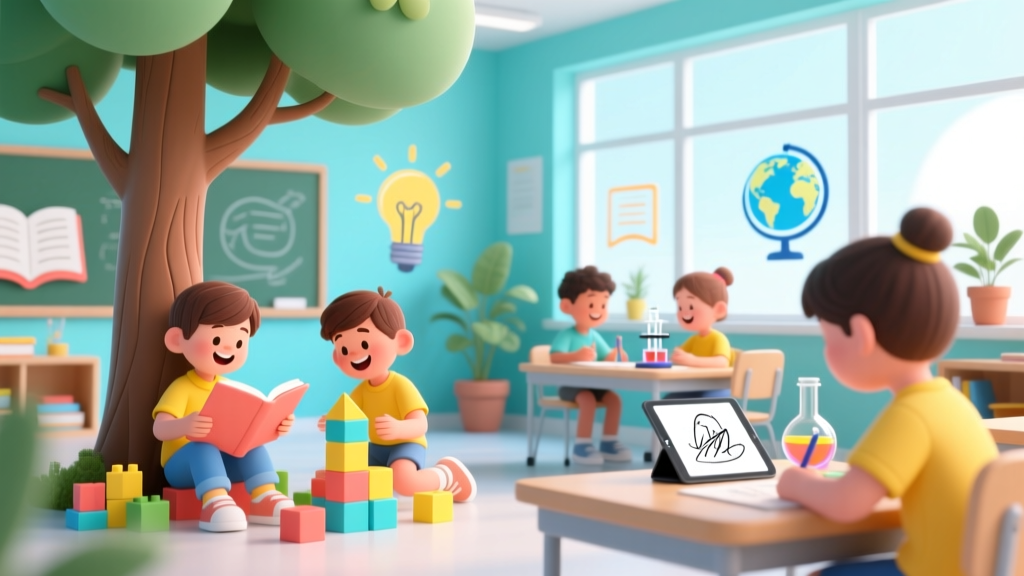
Kindergarten isn’t just seated learning. It’s designed around movement — because gross and fine motor development directly supports cognitive growth. Crossing the midline (reaching across the body), bilateral coordination (using both hands together), and core strength all strengthen neural connections needed for reading fluency and attention.
Look for these integrated activities:
- Gross Motor: Obstacle courses, parachute play, dancing to rhythm patterns, balancing on beams — all building vestibular and proprioceptive input critical for focus and posture.
- Fine Motor: Stringing beads, cutting along curved lines, using tweezers to sort pom-poms, building with small LEGO® Duplo or Magna-Tiles® — strengthening hand muscles for writing endurance.
- Self-Care Independence: Zipping jackets, opening lunch containers, washing hands with proper technique (20-second scrub), managing bathroom routines — fostering autonomy and reducing classroom stressors.
Occupational therapist Lisa Ramirez, who consults with 12 public school districts, stresses: “I see kids every week who struggle with pencil grip not because they’re ‘behind,’ but because they missed foundational play experiences — climbing trees, playing in mud, kneading dough. Kindergarten teachers know this. That’s why you’ll see play-dough stations, water tables, and vertical surfaces (easel painting) — they’re not ‘just fun.’ They’re targeted neurological input.”
Executive Function: The Kindergarten ‘Operating System’
Think of executive function as the brain’s air traffic control system — managing working memory, flexible thinking, and inhibitory control. Kindergarten builds these through routine, ritual, and responsive teaching — not worksheets.
Examples in practice:
- Working Memory: Following multi-step directions (“Put your book away, push in your chair, line up at the door”) — scaffolded with visual sequence cards and choral repetition.
- Cognitive Flexibility: Switching between math and literacy centers, adapting rules during games (“Now we roll two dice instead of one”), or retelling a story from another character’s perspective.
- Inhibitory Control: Playing ‘Red Light, Green Light’ or ‘Freeze Dance,’ raising hands instead of calling out, waiting for a turn during show-and-tell.
Research from Harvard’s Center on the Developing Child shows that executive function skills are stronger predictors of kindergarten readiness than IQ or vocabulary size — and they’re highly malleable through everyday interactions. The best ‘training’? Cooking together (measuring, sequencing), playing card games like Go Fish (memory, rule-following), or narrating your own thinking aloud (“Hmm — I need socks, shoes, and my keys. Let me get those in order…”).
| Skill Domain | What Kids Learn in Kindergarten (Concrete Examples) | Why It Matters Long-Term | How Parents Can Reinforce at Home (No Worksheets Needed) |
|---|---|---|---|
| Literacy & Language | Phoneme segmentation (e.g., “/c/ /a/ /t/”), emergent writing with inventive spelling, retelling stories with beginning/middle/end, asking clarifying questions during read-alouds | Strong phonological awareness reduces risk of dyslexia; narrative retelling predicts comprehension in upper grades | Play sound games (“What word starts with /b/? Ball, banana, bear!”); write grocery lists together; pause picture books to ask “What might happen?” |
| Mathematical Thinking | Counting to 100 by 1s and 10s, comparing groups (<, >, =), recognizing 2D/3D shapes, solving simple addition/subtraction story problems using objects | Number sense — not calculation speed — correlates with STEM achievement in adolescence | Count stairs, set the table (“We need 4 plates — can you get them?”), play board games with dice (Chutes and Ladders), estimate and measure ingredients while baking |
| Social-Emotional | Identifying and labeling feelings in self/others, using ‘I-statements,’ cooperating in small groups, accepting feedback, apologizing meaningfully | Children with strong SEL skills have lower rates of behavioral referrals and higher standardized test scores through 8th grade (CASEL meta-analysis, 2022) | Label emotions in real time (“You look frustrated — want to take three deep breaths?”); role-play scenarios (“What if someone takes your toy?”); model repair after conflict (“I’m sorry I raised my voice”) |
| Executive Function | Following 3-step directions, organizing personal materials (backpack, cubby), transitioning smoothly between activities, persisting through challenging tasks | EF skills at age 6 predict GPA, college enrollment, and even income at age 30 (Duckworth et al., PNAS, 2021) | Create consistent morning/evening routines with visual charts; use timers for transitions; break chores into steps (“First put toys in bin, then push in chair, then wash hands”) |
Frequently Asked Questions
Is kindergarten still play-based — or is it just ‘first grade light’?
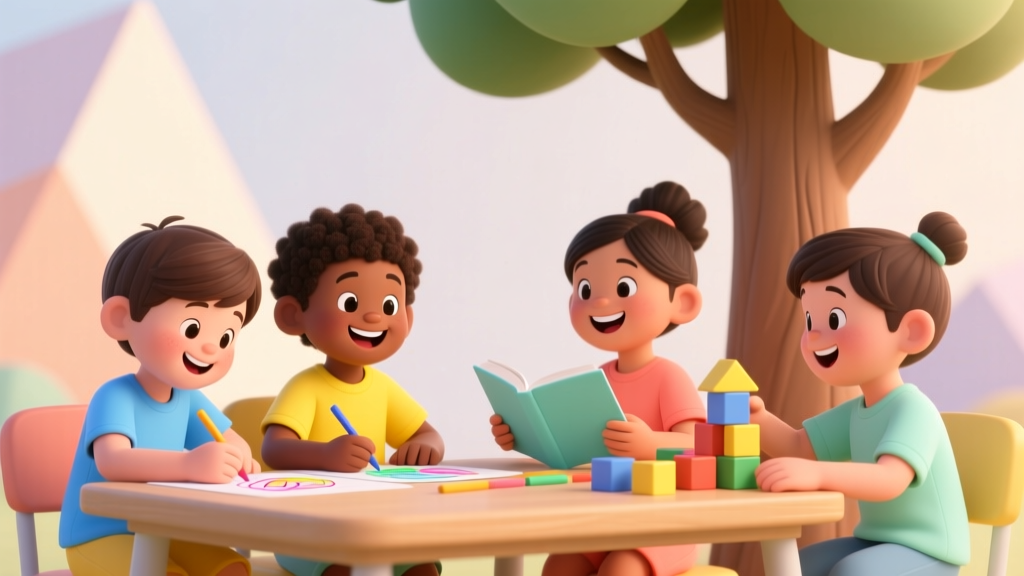
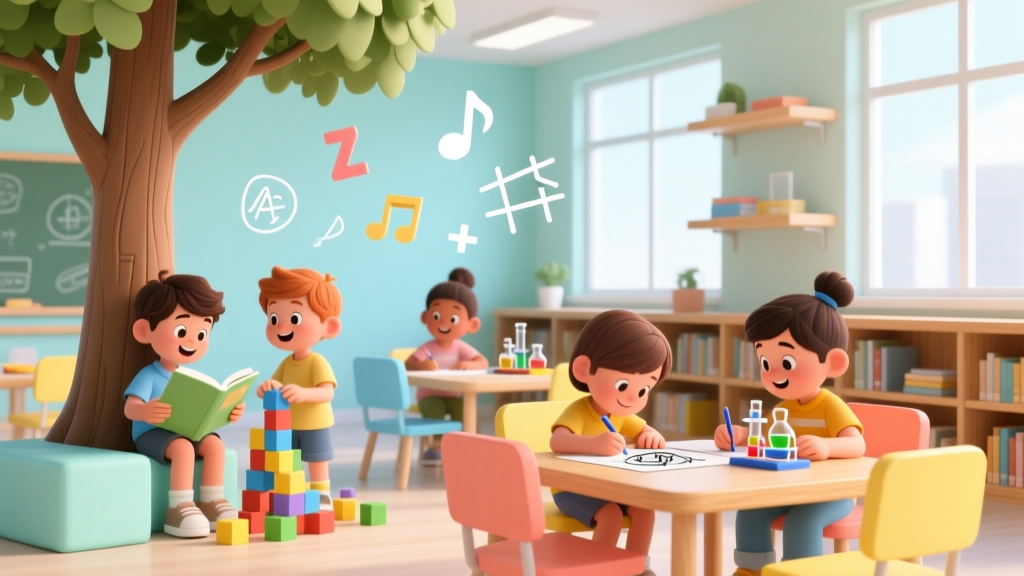
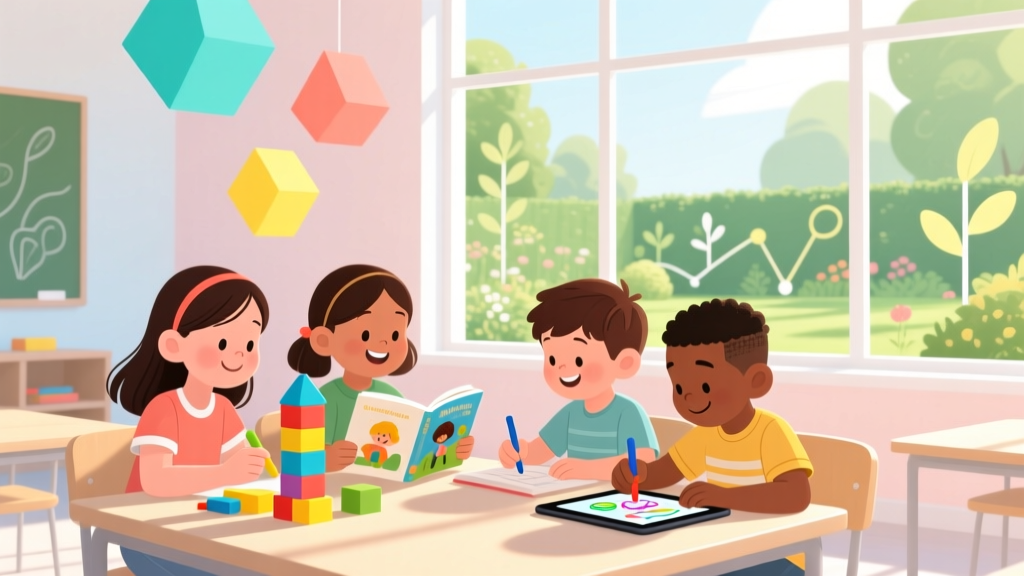
High-quality kindergarten remains deeply play-based — but play is intentional and pedagogically rich. Think ‘guided play,’ not unstructured free time. A teacher may rotate small groups through centers where children build a bridge with blocks (engineering concepts), dramatize a folktale (language and perspective-taking), or sort leaves by vein pattern (science classification). According to NAEYC’s 2023 Position Statement, play is the primary vehicle for learning in early childhood — and effective kindergarten integrates literacy, math, and science *through* play, not alongside it. If your child’s day includes long stretches of independent seatwork with little movement or choice, that’s a red flag — not the norm.
My child hasn’t mastered letter formation or counting to 20 yet — are they ‘behind’?
No — and this is a critical misconception. Kindergarten is designed for wide developmental variation. The average child writes letters with mixed case and inconsistent sizing; many reverse ‘b/d’ or ‘p/q’ — which is neurologically typical until age 7. Counting to 20 accurately is a common benchmark, but what matters more is *how* they count: Do they touch each object once? Do they know the last number said tells ‘how many’? That’s one-to-one correspondence — the true foundation. As Dr. Sarah Lin, a pediatric occupational therapist, advises: “Focus on the process, not the product. A child who carefully draws a wobbly ‘A’ while saying the sound is building neural pathways far more effectively than one who traces a perfect letter without engagement.”
Should I teach my child to read before kindergarten?
You don’t need to — and shouldn’t force it. Early reading instruction works best when it’s joyful, responsive, and rooted in oral language. Instead of drilling sight words, read aloud daily with expression, pause to wonder aloud, invite predictions, and let your child ‘read’ the pictures. Sing nursery rhymes, play rhyming games, and notice environmental print (‘STOP’ sign, cereal box). If your child shows spontaneous interest — pointing to letters, asking “What’s that word?” — follow their lead with curiosity, not curriculum. Pushing formal instruction too early can backfire: A landmark 2015 study in Educational Researcher found that children in academically accelerated preschools showed higher stress biomarkers and lower motivation by third grade compared to peers in play-based programs.
What’s the biggest predictor of kindergarten success — besides academic skills?
It’s oral language proficiency — specifically, vocabulary depth and narrative ability. Children who can describe experiences in detail (“We went to the park and I slid down the big blue slide and then I saw a squirrel!”), use varied verbs and adjectives, and understand complex sentence structures enter kindergarten with a massive advantage — regardless of socioeconomic background. This isn’t about ‘talking more’ — it’s about rich, reciprocal conversation. Put devices away during meals, ask open-ended questions (“What was the most exciting part?”), and expand on their statements (“Oh — the squirrel was *chattering* and *dashing* up the tree! What do you think it was doing?”).
Common Myths About What Kids Learn in Kindergarten
- Myth #1: “Kindergarten is all about academics — if my child can’t read or add, they’ll fall behind.” Reality: While literacy and numeracy are taught, the priority is building the cognitive, emotional, and physical foundations that make those skills stick. A child who can’t yet read but can focus for 15 minutes, collaborate on a project, and regulate big feelings is entering kindergarten with powerful assets.
- Myth #2: “Naps are obsolete — today’s kindergartens run full-day, no-rest schedules.” Reality: Many full-day programs still embed rest or quiet time — especially in the afternoon — recognizing circadian rhythms and attention spans. Even when naps end, ‘rest mats’ (not beds) offer sensory reset opportunities. The American Academy of Pediatrics recommends 10–13 hours of sleep for 5–6 year olds — and quality rest directly impacts learning consolidation.
Related Topics (Internal Link Suggestions)
- Kindergarten Readiness Checklist — suggested anchor text: "free printable kindergarten readiness checklist"
- Best Books to Read Before Kindergarten — suggested anchor text: "top 12 picture books that build kindergarten skills"
- Signs Your Child May Need Extra Support — suggested anchor text: "when to seek speech or OT evaluation before kindergarten"
- Montessori vs. Traditional Kindergarten — suggested anchor text: "how Montessori kindergarten differs in practice"
- Screen Time Guidelines for Preschoolers — suggested anchor text: "AAP-recommended screen time limits before kindergarten"
Your Next Step: Shift From Worry to Wonder
Knowing what kids learn in kindergarten isn’t about checking off boxes — it’s about seeing your child’s whole self: their curiosity, their resilience, their growing ability to navigate the world with kindness and confidence. You don’t need to replicate the classroom at home. You do need to be present, playful, and patient — noticing their efforts (“You kept trying that puzzle piece — that’s perseverance!”), naming their feelings, and celebrating small victories (“You waited your turn so calmly!”). Download our free, research-backed Kindergarten Readiness Checklist — a 2-page PDF that walks you through observable behaviors (not tests) across 5 domains, with gentle prompts and realistic timelines. Then, take one thing from this article — maybe starting dinner conversations with “What made you smile today?” — and try it for a week. That’s not preparation. That’s partnership. And that’s where true readiness begins.
More Articles
 Does Lil Yachty Have a Kid? Verified 2026 Update
 Parent Calm-Down Strategies: 7 Science-Backed Ways (2026)
 How Old Are Patrick Mahomes’ Kids? (2026)
 Hilary Duff Kids’ Last Name: Bair Truth (2026)
 Chick-fil-A Kids Meal Price (2026) | Real-Time Calculator
 Steel Toe Boots for Kids: ASTM-Certified (2026)
 How Many Kids Does Anthony Rizzo Have? (2026)
 How Many Kids Did Jimmy Carter Have? (2026)
 When Can You Give a Kid Melatonin? (2026)
 Are Dental Sealants Safe for Kids? (2026)