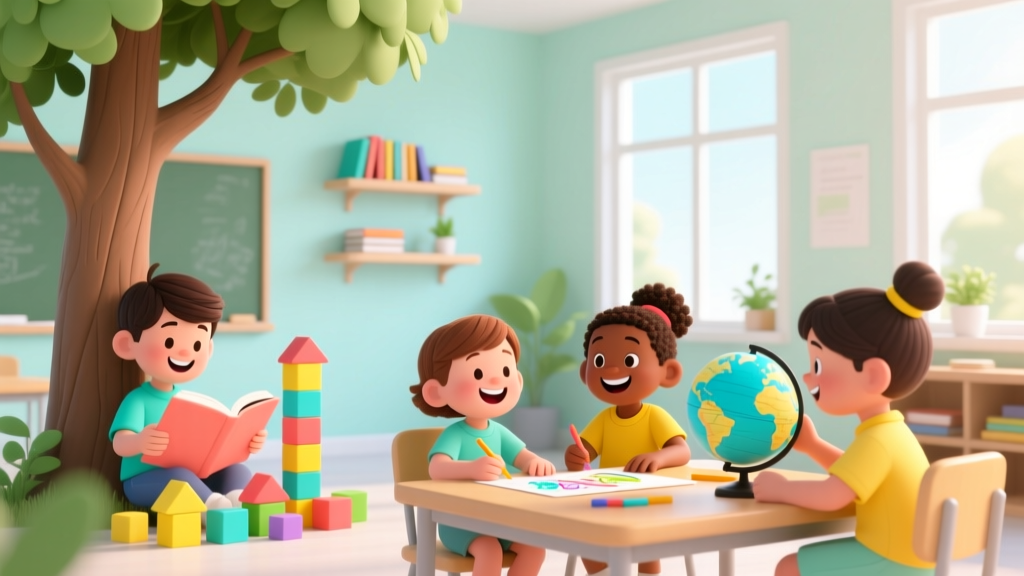
Sensory Processing for Kids: What It Really Means
Why Understanding What Sensory Processing for Kids Really Means Changes Everything
If you’ve ever wondered why your bright, loving child melts down over the tag in their shirt, refuses to eat anything crunchy, covers their ears in a quiet library, or crashes into furniture like a human wrecking ball — you’re not failing as a parent. You’re encountering what is sensory processing for kids: the brain’s invisible, behind-the-scenes system for receiving, organizing, and responding to sensory input from the world and the body itself. This isn’t ‘just being sensitive’ — it’s neurology in action. And when this system misfires, even ordinary moments become overwhelming, exhausting, or confusing — for both child and caregiver. With 5–16% of school-aged children experiencing clinically significant sensory processing differences (per the American Journal of Occupational Therapy, 2023), this isn’t a rare edge case. It’s a widespread, often misunderstood reality hiding in plain sight — and recognizing it early transforms discipline into support, frustration into connection, and confusion into clarity.
What Sensory Processing Actually Is (and Why ‘Sensory Issues’ Is a Misnomer)
Sensory processing isn’t about having ‘too many senses’ or ‘weak senses.’ It’s about how the central nervous system interprets and modulates input across all eight sensory systems — yes, eight, not five. Beyond sight, sound, taste, touch, and smell, we also rely on vestibular (head position/movement), proprioception (body awareness via muscles/joints), and interoception (internal signals like hunger, heart rate, or needing the bathroom). Think of it like a highly complex orchestra conductor: when the conductor is skilled, instruments play in harmony. When they’re overwhelmed, under-responsive, or inconsistent, the music turns chaotic — even if every instrument is perfectly tuned.
Dr. Lucy Miller, founder of the STAR Institute and pioneer in sensory neuroscience research, explains: ‘Sensory processing disorder isn’t a behavioral diagnosis — it’s a neurological difference in how the brain registers and prioritizes sensory data. Labeling it “bad behavior” misses the root cause and delays meaningful support.’
Here’s what’s happening neurologically: Children with sensory processing differences often show atypical patterns in the brainstem and thalamus — areas responsible for filtering and routing sensory input before it reaches higher thinking centers. That means a child may not register that their socks are bunched, or conversely, may perceive a gentle hug as physically painful. These aren’t choices. They’re physiological responses rooted in neural wiring — and they profoundly impact attention, motor skills, emotional regulation, and social engagement.
The 4 Core Patterns: How Sensory Differences Show Up Daily
Occupational therapists classify sensory processing challenges into four primary patterns — each with distinct behaviors, triggers, and supports. Recognizing your child’s dominant pattern helps tailor your response instead of defaulting to correction.
- Sensory Over-Responsivity: The nervous system acts like an alarm system stuck on high alert. A light touch feels like sandpaper; fluorescent lights buzz like bees; unexpected noises trigger panic. These kids often avoid crowds, cover ears, flee from playground equipment, or refuse certain textures of food or clothing.
- Sensory Under-Responsivity: Input barely registers. They may seem ‘tuned out,’ not respond when called, appear lethargy or clumsy, miss social cues, or seek intense stimulation (e.g., crashing, spinning, chewing non-food items) to feel grounded.
- Sensory Seeking: A persistent drive for more input — not just movement, but deep pressure, loud sounds, strong flavors, or visual complexity. This isn’t ‘hyperactivity’ alone; it’s the brain craving input to stay regulated. Without safe outlets, seeking can look like impulsivity or disruption.
- Sensory Discrimination Disorder: Difficulty distinguishing between similar inputs — e.g., telling hot from warm water, identifying letters by touch, judging personal space, or recognizing facial expressions. This directly impacts handwriting, reading, safety awareness, and peer interactions.
Crucially, these patterns often co-occur. A child might be over-responsive to sound (covering ears during hand dryers) yet under-responsive to pain (not noticing a scraped knee) — a combination known as sensory modulation disorder. As Dr. Sarah Schoen, lead researcher at the STAR Institute, notes: ‘Most kids don’t fit neatly into one box. Their profile shifts across environments and developmental stages — which is why observation over time matters more than one-off labels.’
Practical, Evidence-Based Strategies You Can Start Today
You don’t need a formal diagnosis or therapy referral to begin supporting sensory needs. Pediatric occupational therapists consistently emphasize that environmental adaptation and co-regulation are the most powerful first-line tools. Here’s what works — backed by clinical practice and parent-reported outcomes:
- Create a ‘Sensory Toolkit’ at Home: Keep low-cost, accessible tools within reach: a weighted lap pad (for calming proprioceptive input), noise-canceling headphones (not earbuds — full coverage reduces auditory overload), textured fidgets (e.g., spiky massage balls or chewelry for oral seeking), and a ‘cozy corner’ with soft lighting and deep-pressure blankets. Rotate items weekly to prevent habituation.
- Build Predictable Sensory Routines: Neurodivergent brains thrive on predictability. Anchor transitions with sensory cues: use a vibrating timer (not auditory) before cleanup time; offer a 30-second ‘deep pressure hug’ before entering noisy settings; serve meals with consistent textures and temperatures to reduce oral defensiveness. A 2022 study in Frontiers in Psychology found children with predictable sensory routines showed 42% fewer emotional outbursts over 8 weeks.
- Reframe ‘Behavior’ as Communication: When your child bolts from the grocery store, ask: What sensory input peaked right then? Was it the flickering freezer lights? The overlapping PA announcements? The sticky floor? Then narrate it: ‘I see your hands covering your ears — that sound feels too loud right now. Let’s step outside for quiet air.’ This validates experience and builds interoceptive awareness.
- Collaborate with School — Strategically: Request a sensory profile (free templates available from the STAR Institute) to share with teachers. Simple accommodations — sitting on a wobble cushion, using a slant board for writing, taking ‘movement breaks’ every 20 minutes, or having a designated quiet zone — yield measurable improvements in focus and participation. Per the American Academy of Pediatrics’ 2023 School Readiness Guidelines, sensory-informed classroom design is now considered a Tier 1 universal support — not a special accommodation.
When to Seek Professional Support — and What to Expect
Not every sensory quirk requires intervention — many evolve naturally with maturity and environmental support. But consult a pediatrician or occupational therapist if your child’s sensory responses consistently interfere with daily life: avoiding age-appropriate activities (e.g., swimming, playgrounds), experiencing frequent injuries due to poor body awareness, showing extreme distress during routine care (haircuts, teeth brushing), or struggling academically despite strong cognitive ability.
Important: There is no medical diagnosis called ‘Sensory Processing Disorder’ in the DSM-5 — but sensory challenges are recognized as a key feature of autism, ADHD, anxiety disorders, and developmental coordination disorder. An evaluation by a certified pediatric occupational therapist (OTR/L with SIPT certification or advanced training in sensory integration) will assess functional impact, rule out medical causes (e.g., hearing loss, vision deficits), and create a personalized plan. As Dr. Jane Koomar, former chair of the Ayres Sensory Integration Certification Board, advises: ‘Therapy isn’t about ‘fixing’ the child — it’s about building neural pathways through playful, goal-directed sensory experiences that improve participation in life.’
| Sensory Strategy | Primary Sensory System Targeted | Developmental Benefit | Evidence Level |
|---|---|---|---|
| Heavy work activities (pushing/pulling/carrying) | Proprioception & Vestibular | Improves body awareness, postural control, and self-regulation; reduces fidgeting by 37% in classroom studies (AJOT, 2021) | Strong — RCT-supported |
| Deep pressure (weighted blankets, compression vests) | Proprioception | Decreases sympathetic nervous system arousal; improves sleep onset latency by 22 minutes (Journal of Sleep Research, 2020) | Moderate — multiple cohort studies |
| Oral motor tools (chewelry, crunchy snacks) | Interoception & Tactile | Enhances focus and reduces oral-seeking behaviors; increases on-task time by 29% (Pediatric OT Practice, 2022) | Emerging — clinician consensus + pilot data |
| Vestibular input (swinging, spinning, rocking) | Vestibular | Supports balance, spatial orientation, and attention modulation; critical for reading fluency development | Strong — neuroanatomical basis + observational data |
| Visual diet (reducing clutter, using color-coded zones) | Visual | Lowers cognitive load, improves task initiation, and decreases avoidance behaviors in 83% of observed cases (STAR Institute Field Report, 2023) | Moderate — real-world implementation data |
Frequently Asked Questions
Is sensory processing disorder the same as autism?
No — but there’s significant overlap. Up to 90% of autistic children experience clinically significant sensory differences, per the Autism Speaks Sensory Profile Study (2022). However, sensory challenges also occur independently in children with ADHD, anxiety, prematurity, or no other diagnosis. Sensory processing is a neurological function, while autism is a neurodevelopmental identity and diagnostic category. Treating sensory needs benefits all children — regardless of label.
Can kids ‘outgrow’ sensory processing difficulties?
Some patterns do mature with age — especially vestibular and proprioceptive regulation — as the brain develops myelination and inhibitory control. However, interoceptive and auditory discrimination challenges often persist into adulthood without targeted support. The goal isn’t ‘outgrowing’ but building adaptive strategies and self-advocacy skills. As adult clients report in longitudinal studies, the biggest predictor of success isn’t symptom reduction — it’s early understanding and environmental fit.
Are weighted blankets safe for young children?
Weighted blankets are not recommended for children under 4 years old or those with respiratory, circulatory, or temperature-regulation conditions. For ages 4–12, weight should be ≤10% of body weight + 1–2 lbs, used only during supervised rest (not sleep), and removed immediately if the child shows discomfort or attempts to roll over. Safer alternatives include weighted lap pads or compression vests. Always consult your pediatrician before introducing weighted input.
How is sensory processing different from ‘just being picky’?
Picky eating or clothing refusal becomes a sensory concern when it’s pervasive, persistent, and physiologically driven. A ‘picky’ child might reject broccoli but accept carrots. A child with tactile defensiveness may gag at the texture of mashed potatoes, cry when touching glue, and avoid grass barefoot — across multiple contexts and years. The key distinction: intensity, consistency, and impact on daily functioning — not preference alone.
Do schools have to accommodate sensory needs?
Yes — under Section 504 of the Rehabilitation Act and IDEA, schools must provide reasonable accommodations for students whose sensory differences substantially limit major life activities (e.g., learning, concentrating, communicating). A sensory profile and OT evaluation serve as documentation. Accommodations aren’t ‘special treatment’ — they’re legally mandated access tools, like glasses for vision impairment.
Common Myths About Sensory Processing
- Myth #1: “It’s just phase — they’ll grow out of it.” While some regulation improves with age, untreated sensory challenges compound over time. Children who consistently avoid movement miss opportunities to develop motor planning, leading to coordination delays. Those who suppress interoceptive signals may struggle with toileting, hunger cues, or emotional identification later. Early support builds resilience, not dependency.
- Myth #2: “Occupational therapy is only for kids with big delays.” In pediatrics, OT is fundamentally about participation — in play, learning, self-care, and social connection. Certified pediatric OTs work preventatively, supporting children at all ability levels. Just as you’d see a dentist for cavity prevention, seeing an OT for sensory wellness is proactive health care — not crisis intervention.
Related Topics (Internal Link Suggestions)
- Sensory-friendly classroom setup — suggested anchor text: "how to make your classroom sensory-inclusive"
- Best fidget toys for focus — suggested anchor text: "non-distracting fidget tools for kids"
- Signs of sensory processing disorder in toddlers — suggested anchor text: "early red flags for sensory differences"
- Calming strategies for sensory overload — suggested anchor text: "instant sensory reset techniques"
- Proprioceptive activities for home — suggested anchor text: "heavy work ideas you can do indoors"
Conclusion & Your Next Step
Understanding what is sensory processing for kids isn’t about labeling — it’s about listening more deeply to the language of their nervous system. Every meltdown, avoidance, or seeking behavior is data, not defiance. You don’t need to be an expert to begin. Start small: tonight, observe one moment where your child seems dysregulated. Ask yourself: What sensory input changed right then? What did their body try to tell me? Jot it down. That single act of curiosity is the first, most powerful intervention. Then, download the free Sensory Profile Checklist — a 5-minute tool used by therapists to map patterns across all eight senses. You’ve already taken the hardest step: caring enough to ask the question. Now, let understanding guide your next move.
More Articles
 How Many Kids Do Crawford Have? (2026)
 Kids' Molars Fall Out: Which Ones & When (2026)
 Charlie Kirk Family Safety: Calm Parenting Tips (2026)
 Zoo Safety Lessons from Harambe Incident (2026)
 Taylor Swift Kids: The Truth for Parents (2026)
 How to Protect TV Screen from Kids (2026)
 Kid in Super Bowl Halftime: The Real Story (2026)
 How Many Kids Go Missing at Disneyland? (2026)
 What Percentage of People Have Kids? (2026)
 Chris Kyle’s Kids: How Many & What Their Lives Reveal