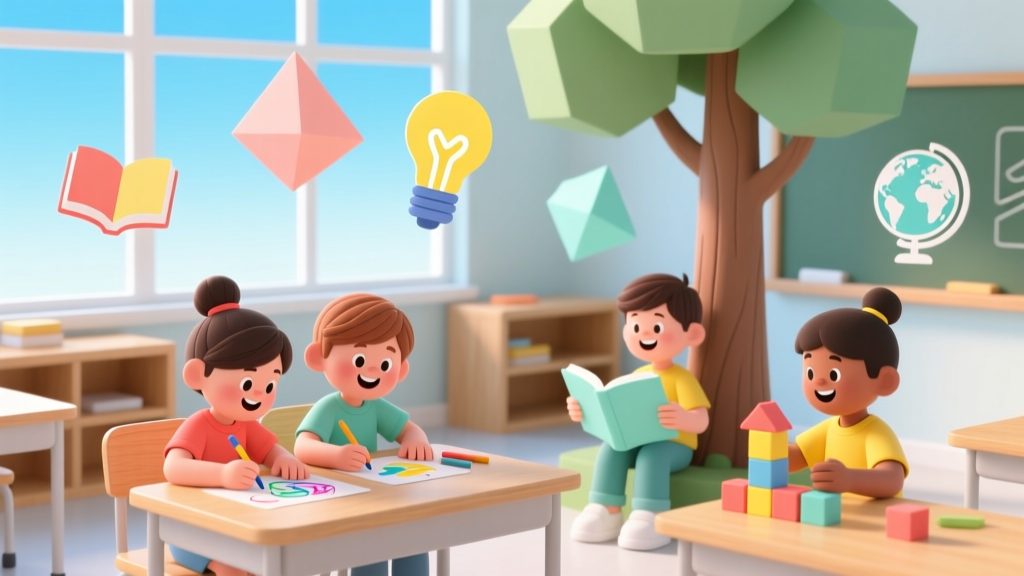
Play Therapy for Kids: What It Really Is
Why Understanding What Play Therapy for Kids Really Is Could Change Your Parenting Journey
If you've ever wondered what is play therapy for kids, you're not alone — and your curiosity may be the first sign your child needs more than traditional talk-based support. Play therapy isn’t just supervised recess or arts-and-crafts time; it’s a structured, evidence-based mental health intervention grounded in developmental neuroscience and attachment theory. For children under age 12 — especially those navigating anxiety, trauma, ADHD, autism-related communication challenges, or family transitions like divorce or loss — play is their native language. When words fall short, their hands speak: stacking blocks to express control, burying toys to symbolize grief, or reenacting school conflicts with dolls to rehearse coping. According to the Association for Play Therapy (APT), over 90% of children referred for emotional or behavioral concerns show measurable improvement after 12–20 sessions of licensed play therapy — yet fewer than 15% of parents can accurately define it. That gap isn’t trivial. It delays access, fuels stigma, and leaves families relying on well-intentioned but untrained interventions. This guide cuts through the myths to give you clarity, science, and actionable insight — whether you’re considering therapy for your child, supporting a teacher’s recommendation, or simply deepening your understanding of how children heal.
How Play Therapy Works: The Science Behind the Sandbox
At its core, what is play therapy for kids comes down to neurobiology. Children’s prefrontal cortex — the brain region responsible for logic, self-regulation, and verbal processing — isn’t fully developed until their mid-20s. Meanwhile, the limbic system (emotion center) and sensory-motor pathways mature much earlier. Play therapy leverages this asymmetry: it meets kids where their brains are wired to learn and heal. A licensed play therapist doesn’t direct play — they observe, reflect, narrate, and gently mirror. When a 6-year-old repeatedly crashes toy cars into a wall, the therapist might say, “That car went *very fast* and hit the wall *hard* — like something big happened inside.” That reflection validates emotion without judgment and invites integration. Research published in the International Journal of Play Therapy (2022) tracked fMRI scans of children before and after 16 weeks of nondirective play therapy: participants showed increased coherence between amygdala (fear center) and prefrontal cortex activity — a neural signature of improved emotional regulation.
Two primary models dominate clinical practice:
- Nondirective (Child-Centered) Play Therapy: Developed by Virginia Axline in the 1940s and rooted in Carl Rogers’ humanistic principles. The child leads entirely; the therapist provides unconditional positive regard, empathic reflection, and consistent boundaries. Ideal for children with low self-worth, selective mutism, or complex trauma.
- Directive Play Therapy: Therapist introduces specific activities (e.g., sand tray storytelling, emotion card games, puppet role-play) to target goals like identifying feelings, practicing social scripts, or processing medical procedures. Often used for anxiety disorders, school refusal, or post-hospitalization adjustment.
Crucially, both require specialized training — not just an ‘early childhood degree.’ The APT mandates at least 150 hours of play-specific coursework, 500 supervised clinical hours, and ongoing supervision. A general counselor or school psychologist *without* this credential cannot ethically call themselves a play therapist.
When Does Your Child Benefit Most? Recognizing the Quiet Signals
Parents often wait until behaviors escalate — tantrums lasting 45+ minutes, aggression toward siblings, or school suspensions — before seeking help. But early indicators are subtler and equally urgent. Dr. Laura Keston, a pediatric clinical psychologist and APT-certified play therapist with 18 years’ experience, emphasizes: “Look for *regression*, not just escalation. A previously potty-trained 4-year-old suddenly wetting the bed after a move. A chatty 7-year-old who stops making eye contact. A creative 5-year-old who only draws black scribbles for three weeks. These aren’t ‘phases’ — they’re the nervous system signaling overload.”
Here’s what evidence shows correlates strongly with positive outcomes from play therapy:
- Age 3–10: Peak neuroplasticity window for emotional learning
- Nonverbal expression dominance: Children who use gestures, sounds, or actions more than words to communicate distress
- History of relational disruption: Adoption, foster care, parental addiction, or chronic illness in the family
- Sensory processing differences: Over-responsivity to sound/touch or under-responsivity leading to risk-taking
A real-world example: Maya, age 5, began biting her nails raw and refusing to sleep alone after her father deployed overseas. Her pediatrician suggested behavioral charts — which backfired, increasing her shame. After eight sessions of child-centered play therapy, Maya started building elaborate ‘safe houses’ out of blocks and stuffed animals. In session 12, she placed a tiny soldier doll beside a bed and whispered, “He’s watching.” Her therapist reflected, “You made a place where he’s close, even when he’s far.” Within weeks, Maya slept in her own room again. No lectures. No rewards. Just witnessed, symbolic healing.
What to Expect: From First Session to Last — And How to Support It
Play therapy isn’t drop-off-and-forget. Parent involvement is integral — but not as observers in the room. Instead, therapists typically hold parallel parent sessions every 2–3 weeks to translate play themes into daily life. You’ll learn to recognize metaphors (“My dinosaur stomped all the others” = frustration at sibling rivalry) and respond with reflective language (“That sounded really loud and powerful”) instead of correction (“Don’t stomp!”).
Progress isn’t linear. Some children show rapid shifts in behavior (e.g., reduced meltdowns within 4 weeks); others cycle through phases of resistance, regression, or intense play themes before breakthroughs. A 2023 longitudinal study in Journal of the American Academy of Child & Adolescent Psychiatry followed 127 children in play therapy for 6 months: 68% showed clinically significant improvement in emotional regulation scores by session 16, but 22% plateaued briefly at session 10–12 before surging ahead — a pattern therapists call the “integration dip.”
Your role includes:
- Consistency: Same day/time weekly minimizes anxiety
- Transition rituals: A 5-minute ‘wind-down’ walk or calm breathing before entering the office
- No interrogation: Avoid “What did you do today?” — try “Did anything feel fun or tricky in there?”
- Home extension: Simple practices like emotion charades, co-building LEGO stories, or ‘feeling weather reports’ (“Today my sky feels stormy but has one sunny spot”)
Developmental Benefits Backed by Evidence
Play therapy delivers measurable gains across four core developmental domains — validated by standardized assessments like the Behavior Assessment System for Children (BASC-3) and Vineland Adaptive Behavior Scales. Unlike generic ‘play-based learning,’ these outcomes stem from therapeutic intentionality and clinician expertise.
| Developmental Domain | Specific Benefit | Evidence Source & Key Finding |
|---|---|---|
| Social-Emotional | 27% average reduction in externalizing behaviors (aggression, defiance) after 16 sessions | American Psychological Association meta-analysis (2021) of 42 RCTs |
| Cognitive | Improved executive function: 34% gain in working memory tasks, 22% in impulse control (measured via NEPSY-II) | Journal of Clinical Child & Adolescent Psychology (2020) |
| Language & Communication | 2.3x increase in spontaneous use of feeling vocabulary (e.g., “frustrated,” “scared,” “hopeful”) in natural settings | International Journal of Play Therapy, longitudinal case series (2023) |
| Sensory-Motor Integration | Significant improvement in tactile defensiveness and postural stability (per Sensory Profile-2 scores) | Occupational Therapy in Mental Health (2022) |
Frequently Asked Questions
Is play therapy only for kids with diagnosed disorders?
No. While it’s highly effective for clinical conditions like PTSD, anxiety, or autism, play therapy also supports children navigating normative stressors: starting kindergarten, parental divorce, grief, relocation, or chronic illness in the family. The American Academy of Pediatrics (AAP) explicitly recommends play-based therapeutic support for any child exhibiting persistent changes in sleep, appetite, play patterns, or emotional regulation — regardless of diagnosis. Think of it less as ‘treatment’ and more as ‘emotional scaffolding’ during developmental leaps.
How is play therapy different from regular playtime at home or school?
Ordinary play is vital — but it’s not therapy. Play therapy requires three non-negotiable elements: (1) A credentialed therapist trained in developmental psychopathology and play techniques, (2) Intentional therapeutic framing (e.g., consistent boundaries, reflective responses, thematic tracking), and (3) Structured parent collaboration. Unstructured play at home builds connection and joy; play therapy builds neural pathways for regulation and resilience. As Dr. Keston puts it: “You wouldn’t expect a parent to perform surgery because they love their child — and you shouldn’t expect them to do trauma-informed therapeutic work without training.”
Can play therapy be done virtually?
Yes — but with important caveats. Tele-play therapy works best for children age 6+ using directive, activity-based models (e.g., digital sand trays, emotion bingo, guided storytelling). It’s less effective for younger children or those with severe sensory dysregulation, who need tactile input and spatial safety. The APT issued updated telehealth guidelines in 2023 requiring therapists to assess tech access, caregiver capacity to co-facilitate, and environmental safety before proceeding. In-person remains gold-standard for complex cases — but virtual options expanded access meaningfully during pandemic recovery.
How long does play therapy usually last?
Most children engage in 12–20 weekly 45-minute sessions, though duration varies by need. Children with single-incident trauma (e.g., dog bite, minor accident) may stabilize in 8–12 sessions. Those with chronic adversity (e.g., neglect, repeated moves) often benefit from 6–12 months of support, with frequency tapering from weekly to biweekly. Progress is assessed every 4–6 sessions using parent-report measures and therapist observation — not arbitrary timelines. The goal isn’t ‘finishing therapy’ but achieving sustainable regulation strategies your child internalizes.
Do I need a referral to start play therapy?
No — in most U.S. states, you can contact a licensed play therapist directly (look for RPT or RPT-S credentials). However, insurance reimbursement often requires a diagnosis from a pediatrician or psychiatrist. Many therapists offer sliding-scale fees or accept HSA/FSA payments. Pro tip: Use the APT’s Find a Play Therapist directory and filter by ‘in-network insurance’ and ‘telehealth availability.’ Always verify licensure with your state board — credentials like ‘Certified Play Therapist’ without an underlying license (LPC, LCSW, LMFT) are not legally protected.
Common Myths About What Play Therapy for Kids Really Is
Myth #1: “It’s just playing — any attentive adult can do it.”
While loving, responsive play is essential for development, play therapy is a clinical intervention requiring graduate-level training in psychopathology, attachment theory, and neurodevelopment. An untrained adult misinterpreting a child’s aggressive play as ‘bad behavior’ — rather than symbolic processing — can retraumatize. As the AAP states: “Therapeutic play is distinct from recreational play in intent, structure, and outcome measurement.”
Myth #2: “If my child seems ‘fine’ at school, they don’t need it.”
Many children compartmentalize distress — appearing compliant at school while exhibiting severe symptoms at home (night terrors, somatic complaints, sibling aggression). Teachers see 6 hours/week; parents see 100+. A 2022 survey of 1,200 school counselors found 63% reported children showing ‘school-home discrepancy’ — where emotional regulation collapsed only in safe, familiar environments. Play therapy addresses the whole child, not just the classroom persona.
Related Topics (Internal Link Suggestions)
- Signs of Childhood Anxiety — suggested anchor text: "early signs of anxiety in children"
- How to Talk to Kids About Big Feelings — suggested anchor text: "helping children name emotions"
- Therapy Options for Young Children — suggested anchor text: "child therapy approaches compared"
- When to Seek Help for Behavioral Changes — suggested anchor text: "red flags for childhood mental health"
- Building Emotional Resilience at Home — suggested anchor text: "daily routines for emotional regulation"
Next Steps: From Understanding to Action
Now that you know what is play therapy for kids — not as a vague concept but as a precise, research-backed bridge between a child’s inner world and outer reality — you hold meaningful agency. You don’t need to diagnose or fix. You do need to notice, validate, and connect. Start small: this week, replace one ‘What’s wrong?’ with ‘What’s happening inside you right now?’ Observe your child’s play without directing it. Notice recurring themes — water, walls, rescues, storms. Then, if concerns persist beyond 3–4 weeks, consult your pediatrician or search the Association for Play Therapy’s verified directory. Remember: Seeking play therapy isn’t admitting failure — it’s exercising profound love and wisdom. As Dr. Keston reminds parents: ‘You’re not hiring someone to fix your child. You’re inviting a skilled witness to help your child finally feel seen — so they can begin to heal, grow, and thrive, exactly as they are.’
More Articles
 Nick Love Island Kid? Family Truth & Parenting Lessons
 What Age Can Kids Use Regular Toothpaste (2026)
 Is Twitch Safe for Kids? A Parent’s Evidence-Based Guide
 Does Peter Billingsley Have Kids? (2026)
 Texas Child Support for 3 Kids: Real Calculations & Tips
 Kids Listen Without Yelling: 7 Neuroscience Strategies
 Does RFK Jr. Have Kids? Parenting Truths Revealed
 Millie Bobby Brown Adoption Rumor Debunked (2026)
 Soda for Kids: Hidden Sugar, Dental & Behavior Risks (2026)
 Foster Care Payments: State Rates & Tax Facts (2026)